
The National Association of Lobbyists of Ukraine (NALU) is initiating an official appeal to the European Parliament regarding the rules for registering Ukrainian organizations in the EU Transparency Register.
“The National Association of Lobbyists of Ukraine will soon send an official appeal to the European Parliament requesting clear and unambiguous clarification on which Ukrainian organizations are required to register in the European Union Transparency Register in order to interact with European institutions,” she told the Interfax-Ukraine news agency.
The association will also raise the question of whether Ukrainian entities—public organizations, professional associations, business associations, consulting companies, charitable foundations, and other structures—should undergo additional registration and obtain lobbyist status when working with EU bodies in accordance with the requirements of European legislation.
The association notes that with the entry into force of Ukraine’s Law on Lobbying and the state’s active course towards European integration, the issue of harmonizing Ukrainian lobbying practices with European Union approaches is becoming critically important. The lack of clear instructions and a unified position may create legal uncertainty for Ukrainian organizations seeking to operate within the EU legal framework and represent Ukraine’s interests at the international level.
“We seek to obtain an official explanation so that Ukrainian organizations can act in accordance with European rules, avoid risks, and ensure maximum transparency in their activities. This is also important for protecting Ukraine’s image as a state that is moving towards civilized interaction and open advocacy,” notes the NALU.
The explanations received from the European Parliament are planned to be published and forwarded to Ukrainian institutions, businesses, and public organizations as an official guideline for further work with EU bodies.

The National Association of Lobbyists of Ukraine (NALU) supports the European Parliament’s initiatives to establish a minimum age for access to social networks, video platforms, and digital AI services, as well as to ban the most harmful and addictive digital practices targeting minors.
“NALU fully supports this initiative of the European Parliament and considers it an important step towards creating a safe, ethical, and responsible digital environment,” said a statement from the NALU board, as reported by the Interfax-Ukraine agency.
NALU notes that the European recommendations provide, in particular, for setting the minimum age for access to social networks at 16, allowing children aged 13-16 to access social networks only with parental consent, banning the most harmful elements of digital design, including autoplay, infinite scroll, dark patterns, intrusive recommendation algorithms, a ban on targeted advertising and influencer marketing aimed at minors, as well as increased responsibility of digital platforms for the protection of children, including the personal responsibility of company executives and the implementation of technologies in them.
“In the context of Ukraine’s European integration and the adaptation of national regulations to EU standards, NALU officially supports the European Parliament’s proposals to reform digital safety rules for children. Ukrainian lobbyists in Brussels are already beginning consultations with European institutions to agree on approaches that can be implemented in Ukraine,” the statement said.
It is noted that the association will recommend that the Verkhovna Rada and relevant committees consider the possibility of adapting the proposed European standards to national legislation.
“NALU is ready to provide expert, analytical, and regulatory and methodological support to Ukrainian authorities in developing relevant legislative changes. The association believes that the protection of minors online is a matter of national security, digital health of society, and the state’s responsibility to the younger generation,” the document notes.
The association emphasized that NALU will continue to work on the adoption of transparent and European standards in the field of digital policy and advocacy, contributing to the formation of modern legislation that will protect children and support the development of an ethical digital space in Ukraine.
On November 26, 2025, the European Parliament adopted a report calling for the introduction of a unified minimum age of 16 in the European Union for access to social networks, video platforms, and digital AI services, as well as a ban on the most harmful and addictive digital practices targeting minors.
The EU Council announced on Saturday that it has agreed with the European Parliament on a €192.8 billion EU budget for 2026.
“Today’s agreement demonstrates that Europe is able to act even in challenging times. The EU budget for 2026 will allow us to realize our common priorities: security, competitiveness and border management – while ensuring that we can respond quickly and effectively to unforeseen needs and crises,” said Nicolai Wammen, Minister of Finance of the Danish Presidency of the Council of the EU and the Council’s chief negotiator on the 2026 budget.
The total EU budget commitment for 2026 is €192.8 billion and total disbursements €190.1 billion. “Commitments are legally enforceable promises to spend money on activities whose implementation is spread over several financial years. Payments cover expenditure arising from commitments made under the EU budget in the current and previous financial years,” the council explains in a published communiqué.
This is the sixth annual budget of the EU’s long-term budget for 2021-2027. The 2026 budget is complemented by measures to support post COVID-19 recovery under the special NextGenerationEU program, the document notes.
Disbursements for EU defense and security in 2026 are planned at €2.25 billion. For migration and border management – 3.88 billion euros. For neighborhood policy and foreign policy – 16.56 billion euros. For the common market, innovation and digitalization – 23.33 billion euros.
Now the EU Council and the European Parliament must formally approve the agreement reached. The EU Council is expected to approve it on November 24. A qualified majority vote is required to pass the budget, according to the communiqué.

On Thursday, the European Union will hold elections to the European Parliament (EP), which will last until June 9.
The Netherlands will hold elections on June 6. Ireland – on June 7. Latvia, Malta, and Slovakia – on June 8. The Czech Republic will vote on two days: June 7 and 8, and Italy – June 8 and 9. The rest of the EU states are holding elections on June 9.
More than 370 million European citizens are eligible to vote in 27 EU countries to elect 720 members of the European Parliament.
These elections are held in one round and are intended to determine the national contingents of representatives – members of the European Parliament. Voting is conducted on full lists of candidates nominated by political parties or coalitions. Lists that do not receive 5% of the votes do not get into the EP.
The first estimates of the new composition of the European Parliament will be published on June 9 around 20:15-20:30 Brussels time (21:15-21:30 Kyiv time). The preliminary results are expected between 23:15 and 23:30 (00:15 and 00:30 CET, June 10).
The EP plenary session is scheduled for July 16-19 in Strasbourg. The elected MEPs will gather to structure political factions, elect the leadership of the European Parliament and distribute other organizational posts.
After that, the leaders of the EU countries and the European Parliament will elect the President of the European Commission (EC) and form the EC Executive Board – 27 European Commissioners.
In order to be elected as the head of the EC, a candidate must first receive the support of a qualified majority of the leaders of the 27 EU countries. After that, he or she must receive at least 361 votes from the 720 new members of the European Parliament.
The current head of the European Commission, Ursula von der Leyen, has already announced her desire to run for a second presidency. In early March, the center-right European People’s Party, which has the largest faction in the European Parliament, approved her candidacy for a second term as head of the European Commission during the Congress.
Earlier, Experts Club presented an analytical material on the most important elections in the world in 2024, more detailed video analysis is available here – https://youtu.be/73DB0GbJy4M?si=eGb95W02MgF6KzXU
You can subscribe to the Experts Club YouTube channel here – https://www.youtube.com/@ExpertsClub
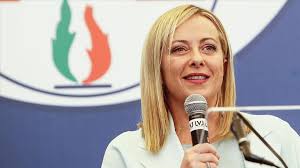
Italian Prime Minister Giorgia Meloni said at a party conference in Pescara that she would stand as a candidate in June’s European Parliament elections, Reuters reports.
“We want to do in Europe what we have done in Italy … to create a majority that will unite the center-right forces and send the left into opposition,” Meloni said.
Meloni’s name will be the first on ballots from Italy’s leading Brothers of Italy party in all five Italian constituencies in the European elections.
The Italian prime minister will try to bolster her party’s support, but she will not win a seat in the European Parliament if elected, the agency noted.
She has promised that she will not use “a single minute” of her time as prime minister to campaign.
According to the latest polls, Reuters notes, her party is the most popular in Italy with 27% support.
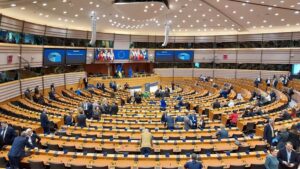
The European Parliament of the current convocation will hold its last plenary session this week. The new parliament will be elected in the European elections in the EU member states to be held from June 6 to 9.
During a press conference held on Monday in Strasbourg before the session, the head of the EP press service, Jame Duch, said that 600 journalists would cover the last session of the parliament, and 90 bills would be put to a vote. Among them is a bill to extend Ukraine’s liberal trade regime, which also provides protective measures for EU farmers. The vote will take place on Tuesday. In total, from 2019 to 2024, this ninth parliament passed 3,599 pieces of legislation.
The press service of the European Parliament told Interfax-Ukraine that in the last two years of the institution’s work alone, from September 2021 to April 2024, 40 resolutions related to Ukraine were adopted.
In front of the EP building, among the flags of the European Union member states, which are installed in two parallel rows, the flag of Ukraine, which has been raised since the day of Russia’s invasion, continues to fly. The Ukrainian flag is first, next to the EU flag, symbolizing support. “The Parliament has played a key role in the EU’s response to Russia’s war of aggression, including several rounds of macro-financial assistance, acting to support increased munitions production and the Ukraine Facility,” Duch said.
Earlier, Experts Club and Maksim Urakin presented an analytical material on the most important elections in the world in 2024, more detailed video analysis is available here – https://youtu.be/73DB0GbJy4M
You can subscribe to the channel here: https://www.youtube.com/@ExpertsClub



