

The USAID Rural and Agricultural Development Program has announced the launch of a program to co-finance 20 Ukrainian agricultural processing enterprises that intend to restore and develop their export potential, the press service of the Ministry of Agrarian Policy and Food reports.
According to the report, the competition is open to non-state (private) enterprises/companies that have export-oriented development strategies and are regular exporters.
The companies can receive co-financing to increase the volume of purchases and processing of raw materials, in particular, by attracting micro, small and medium-sized agricultural producers for long-term partnership. Grant recipients will also be able to introduce new grain processing technologies to increase productivity by at least 25%.
It is expected that with the grant funds, the companies will be able to develop a long-term export strategy and increase sales by 20% through 5 new export channels and markets for processed products and increase sales in foreign markets.
The USAID AGRO program will focus on restoring and strengthening processing capacities to produce value-added products for export, such as corn for feed and food; wheat for food, industrial and feed purposes; rye for industrial and feed purposes; industrial sunflower seeds; high oleic sunflower seeds; soybeans for industrial and feed purposes; varietal and regular cycle seeds.
The donor organization has drawn the attention of applicants to the fact that projects aimed at storing grains, oilseeds and pulses, including receiving, cleaning, drying, storing, and shipping grain by rail and road, are not eligible.
The application deadline is May 31, 2024.

In March 2024, Ukraine exported 339 thsd tonnes of barley, which is a record for the season, while prices for Ukrainian barley on the world market have leveled with corn, which contributes to the growth of demand, according to the analytical cooperative “Start”, created within the framework of the All-Ukrainian Agrarian Council (AAC).
Analysts predict that Ukraine will be able to export another 200 thousand tons of barley in April and May.
“In the fodder group of grains, prices have formed in favor of barley: corn is $10/ton more expensive than barley. Thus, Ukrainian barley has become more competitive and is in demand from the EU and Turkey. The main barley trade takes place in Odesa ports, where the notional price is about $145/ton. We predict that the price tags will rise by another $1-2 per ton this week,” the experts said.
They said that barley prices on the domestic market have also increased.
“A week ago, processors could buy barley at 4700-5000 UAH/ton, as of April 2, real prices rose to 5200-5400 UAH/ton on a CPT basis,” Pusk stated.
Experts also noted that barley is actively sown in Ukraine.
“The sowing campaign continues, almost 292 thou hectares have been sown, which is a normal pace. According to the forecasts of the Ministry of Agrarian Policy, barley planted areas will amount to about 810 thou hectares. The main regions where barley is cultivated are Odesa and Mykolaiv. The farther away from the port the region is located, the lower the profitability of barley cultivation there,” they explained and added that the indicative prices of the new barley harvest are $145-155 per ton on CPT port basis.
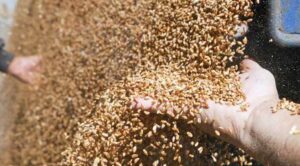
In 2023, Agrotrade agricultural holding exported grain to 13 countries, with Egypt and Tunisia being the largest buyers, the company’s press service reported on Facebook.
According to the report, Egypt, Tunisia, Turkey, and Spain were the largest buyers of grain from Agrotrade. Grain was also supplied to Italy, Vietnam, Greece, Hungary, Romania, Latvia, Cyprus, Bulgaria, and Austria.
“Last year, we worked mainly with our usual destination countries, except for Tunisia, to which we exported large batches of corn for the first time – almost 56 thsd tonnes. Thus, this country immediately took the second place in the structure of our foreign trade. In general, Egypt purchased the largest volumes of grain from the company – over 35 thsd tonnes of corn and over 25 thsd tonnes of soybeans. Traditionally, we supplied large volumes of agricultural products to Turkey and Spain. Our southern neighbors bought soybeans and corn, while the Spaniards bought wheat. The smallest volumes of goods went to Austria – 320 tons of soybeans,” said Andriy But, Director of the agroholding’s Foreign Economic Activity Department.
As reported, in 2023, Agrotrade supplied about 350 thsd tonnes of grain to the global market. The share of own agricultural products amounted to 35% or 116 thsd tonnes, and third-party producers – 65% or 230 thsd tonnes.
The Agrotrade Group is a vertically integrated holding company with a full agro-industrial cycle (production, processing, storage and trade of agricultural products). It cultivates over 70 thousand hectares of land in Chernihiv, Sumy, Poltava and Kharkiv regions. Its main crops are sunflower, corn, winter wheat, soybeans and rapeseed. It has its own network of elevators with a simultaneous storage capacity of 570 thousand tons.
The group also produces hybrid seeds of corn and sunflower, barley, and winter wheat. In 2014, a seed plant with a capacity of 20 thousand tons of seeds per year was built on the basis of Kolos seed farm (Kharkiv region). In 2018, Agrotrade launched its own brand Agroseeds on the market.
Vsevolod Kozhemiako is the founder and CEO of Agrotrade.

The volume of Ukrainian exports in March this year amounted to 11.8 million tons of cargo worth $3.2 billion, First Deputy Prime Minister and Minister of Economy Yulia Svyrydenko said on Monday.
“In January, Ukraine reached record levels since the beginning of the full-scale invasion – 12 million tons per month. The vast majority went by sea. In March, we exported 11.8 million tons of cargo. In monetary terms, it was worth $3.2 billion,” she wrote on Facebook.
According to the State Customs Service, in January-February this year, goods worth $6.8 billion were exported.
It is specified that in March, exports by rail amounted to 8 million tons of cargo, of which 3.2 million tons were grain, while 6.3 million tons of cargo were delivered through the sea corridor during this period, of which 2.1 million tons were agricultural products.
“The main task this year is to maintain economic growth and become more economically self-sufficient,” Svyrydenko emphasized.
The Vice Prime Minister reminded that last year the country’s economy grew by 5.3%, mainly due to the partial unblocking of maritime exports, business resilience and support from international partners.
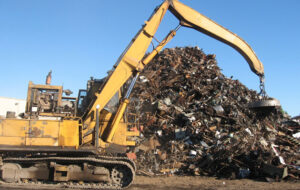
In January-February this year, Ukrainian companies increased exports of ferrous scrap by 62.6% year-on-year to 40,354 thousand tons from 24,822 thousand tons.
According to statistics released by the State Customs Service (SCS) on Wednesday, exports of scrap metal increased 2.15 times in monetary terms to $12.903 million from $7.104 million.
Scrap metal exports in January-February were carried out to Poland (95.50%), Germany (4.39%) and Lithuania (0.09%).
In February, 23,194 thousand tons of scrap metal were exported (17,160 thousand tons in January) for $7.825 million ($5.078 million in January).
In the first two months of the year, the country imported 191 thousand tons of scrap metal for $68 thousand. Imports were carried out from Slovakia (77.94% in monetary terms), Poland (16.18%) and Moldova (5.88%), while in January-February 2023, 45 thousand tons were imported for $16 thousand.
As reported, in 2023, the scrap collecting enterprise of Ukraine increased the export of scrap metal from the country by 3.4 times compared to the previous year – up to 182,485 thousand tons from 53,557 thousand tons. In monetary terms, exports increased 2.74 times to $52.723 million from $19.271 million.
Earlier, Ukrmetallurgprom President Oleksandr Kalenkov stated in an op-ed on the Interfax-Ukraine website that scrap metal is exported through the European Union, which has a preferential export duty of EUR3 per ton, and from there the raw materials are redirected to real customers. He noted that exporting raw materials directly to customers would cost EUR180 in export duties, and the Ukrainian budget has already lost UAH 350 million.
The head of Ukrmetallurgprom called for a temporary ban on the export of ferrous scrap to provide steelmakers with strategically important raw materials in the ongoing war. He also clarified that a ton of scrap metal processed into steel brings in 10 times more to the budget than the EU export duty, which is about $300 per ton.
In 2022, Ukraine reduced exports of ferrous scrap by 11.5 times compared to the previous year, to 53,557 thousand tons, and in monetary terms, it decreased by 12.4 times, to $19.271 million.

In January-February of this year, Ukrainian mining companies increased exports of iron ore in physical terms by 2.64 times compared to the same period last year, to 5 million 664.230 thousand tons.
According to the statistics released by the State Customs Service on Wednesday, foreign exchange earnings from iron ore exports increased 2.34 times to $552.818 million over the period under review.
Iron ore was exported mainly to China (40.32% of supplies in monetary terms), Slovakia (17.22%) and Poland (11.50%).
In the first two months of 2024, Ukraine imported iron ore worth $29 thousand in a total volume of 102 tons, while in January-February 2023, it imported iron ore worth $17 thousand in a volume of 28 thousand tons. Imports in January-February 2024 were carried out from Norway (44.83%), Slovakia (27.59%) and Italy (27.59%).
As reported, in 2023, Ukraine decreased exports of iron ore in physical terms by 26% compared to 2022 – to 17 million 753.165 thousand tons, foreign exchange earnings from iron ore exports amounted to $1 billion 766.906 million (down 39.3%). Iron ore was exported mainly to Slovakia (28.39% of supplies in monetary terms), the Czech Republic (19.74%) and Poland (19.56%).
Last year, Ukraine imported iron ore worth $135 thousand in the total amount of 250 tons. During this period, imports were made from Norway (34.81%), Italy (28.89%) and the Netherlands (28.89%). While in 2022, iron ore was imported for $65 thousand in a total volume of 101 tons.
In 2022, Ukraine decreased exports of iron ore in physical terms by 45.9% compared to 2021 – to 23 million 984.623 thousand tons, while foreign exchange earnings decreased by 57.8% to $2 billion 912.974 million. Iron ore was exported mainly to Slovakia (19.23% of supplies in monetary terms), the Czech Republic (17.32%) and Poland (16.49%).
In 2022, Ukraine imported iron ore worth $65 thousand in a total volume of 101 tons, while in 2021 – $184 thousand in a volume of 1,202 thousand tons. Imports were carried out from Norway (36.92%), the Netherlands (27.69%) and the UK (16.92%).



