

Foreign buyers account for about 60% of the demand for ultra-luxury housing in Spain, and prices in this segment have risen by approximately 30% over the past five years. Alongside traditional British and German buyers, the most notable activity is currently being driven by citizens of the Netherlands, Poland, and the United States, as well as affluent clients from the Gulf States. Ukrainians also remain among the most active foreign buyers of Spanish real estate.
These estimates are contained in data published in August by Hiscox on the Spanish ultra-luxury housing market. This primarily refers to properties valued at EUR3 million or more.
Most of the demand is concentrated in just a few regions. The Balearic Islands, the province of Málaga, Madrid, and Barcelona account for 83% of Spanish real estate listings priced at over EUR3 million.
A particularly high proportion of foreign buyers is observed in resort markets. In Benahavís, in the province of Málaga, foreign buyers account for about 84% of luxury real estate transactions, while in Andratx, on Mallorca, they account for about 79%. In Madrid, the situation is the opposite: in the capital itself, foreign buyers account for only about 14% of transactions in this segment, while in the prestigious suburb of Alcohendas, the figure is 17%. Thus, Madrid’s luxury market remains focused to a much greater extent on affluent Spanish buyers.
At the same time, non-resident foreigners pay some of the highest prices per square meter, as they focus on properties in the most prestigious neighborhoods. According to Hiscox’s assessment, international capital has been one of the factors driving the approximately 30% increase in prices for luxury real estate in Spain over the past five years.
The Hiscox study does not provide a detailed breakdown by nationality of buyers specifically for homes priced above EUR 3 million. However, the latest data from Spanish property registries reveal which foreign groups are currently the most active in the country’s market as a whole.
In the second quarter of 2026, foreigners purchased more than 26,800 residential properties in Spain, accounting for a record 15.98% of all registered transactions.
British citizens took first place with a 6.99% share of foreign purchases, virtually tying with Dutch citizens at 6.94%. They were followed by Germany (6.11%), Morocco (6.09%), Romania (5.70%), Italy (5.13%), France (4.97%), and Poland (4.33%).
In the first half of the year, British buyers purchased approximately 3,570 properties, while buyers from the Netherlands purchased about 3,490. Dutch demand grew by approximately 12% year-over-year, while Polish demand rose by about 11%.
In the luxury market itself, the structure of demand is shifting even more noticeably. In June, Reuters noted a sharp influx of affluent buyers from Poland, the U.S., and the Gulf states to Madrid and the Costa del Sol. Meanwhile, British and German buyers remain traditionally strong groups of foreign property owners along the Spanish coast.
Polish demand has grown particularly rapidly in recent years. The share of Poles among all foreign buyers increased from approximately 1.6% in 2019 to 4% in 2025. In the Santa Clara luxury complex in Marbella, which was completed last year, about 70% of the 102 homes were sold to Polish clients. Polish buyers also make up the majority of clients for the 64-story residential skyscraper currently under construction in Benidorm.
At the same time, American investment is growing rapidly. According to the real estate agency Gilmar, the share of U.S. clients in its transactions rose from 0.5% in 2024 to 6.2% in 2025, with Americans having already surpassed Britons as the agency’s top foreign buyers on the Costa del Sol. Across Spain as a whole, U.S. buyers also stand out for the high value of the homes they purchase.
Ukrainians are also among the most prominent foreign real estate buyers in Spain, although their purchases are not exclusively concentrated in the luxury segment.
In the first quarter of 2026, Ukrainian citizens accounted for 3.08% of all foreign home purchases, ranking tenth among nationalities. This corresponds to approximately 760–765 transactions over three months. In the second quarter, the share of Ukrainians was about 2.94%, placing them 11th among foreign buyers. In the first half of the year, Ukrainians purchased approximately 1,500 residential properties. This last figure is an estimate, as Spanish registrars did not publish the absolute number of Ukrainian transactions for the half-year separately.
For comparison, in the second quarter, Ukrainian buyers ranked just behind China, which accounted for 3.02%. At the same time, Ukraine remained ahead of a number of traditional markets for foreign buyers.
As early as the first half of 2025, Ukrainians set a record for themselves by purchasing 2,165 properties. At that time, the number of transactions by Ukrainian citizens increased by 4.5% year-over-year. The average price of housing purchased by Ukrainians was approximately EUR1,832 per square meter, which is significantly lower than the levels paid by American, German, or Scandinavian buyers and indicates that a significant portion of Ukrainian demand is concentrated not in the ultra-luxury segment, but in the standard and mid-range segments.
From a regional perspective, Ukrainians are particularly prominent in the Valencian Community, where they accounted for 5.92% of all home purchases by foreigners as of the end of 2025.
It is noteworthy that Spain’s cancellation of the Golden Visa program as of April 3, 2025, had virtually no impact on the situation in the high-end price segment.
According to Hiscox’s estimates, transactions related to obtaining a residence permit through investment accounted for only about 0.5% of the total number of deals. A typical buyer of real estate worth several million euros chooses Spain primarily for its quality of life, climate, safety, infrastructure, and the opportunity to diversify their capital—rather than to obtain a residence permit.
Reuters also confirms this trend: geopolitical instability has become an additional driver of demand. For some Polish and Ukrainian families, a home on the Costa del Sol is viewed as a safe haven far from Europe’s eastern border; American buyers are seeking an alternative place to live and invest their capital; and clients from the Gulf states are beginning to view Spain as a potential alternative to Dubai.
As a result, Spain’s luxury real estate market is becoming increasingly international.
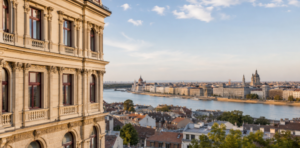
The Hungarian housing market continued its recovery in 2025, with prices rising by 20% in nominal terms and by 15% after adjusting for inflation. The number of registered transactions approached 136,000, and the final figure, according to estimates by the Hungarian Central Statistical Office (KSH), is expected to exceed 140,000 transactions, according to the latest annual market review.
However, the KSH has not yet published detailed statistics for 2025 breaking down homebuyers by citizenship. The latest available comprehensive snapshot shows that in 2024, foreign nationals purchased 6,600 residential properties in Hungary with a total value of approximately 834 million euros. This represented a 5.2% increase in the number of properties compared to the previous year.
Thus, foreigners accounted for about 5% of all real estate transactions in Hungary in 2024, and in monetary terms, they accounted for 6.4% of the market’s turnover. In total, approximately 131,100 real estate properties were sold in the country that year.
Following a decline in activity in 2023, the number of transactions in Hungary rose by 25% in 2024—to 131,100. Growth continued in 2025: as of the data cutoff, the Hungarian Central Statistical Office (KSH) had received information on 135,700 sales, of which 128,200 were in the resale market and approximately 7,600 were new construction units. The final number of transactions is expected to exceed 140,000.
The market picked up particularly noticeably in the second half of the year following the launch of the Home Start government program for subsidized housing loans. In September, the number of sales was 47% higher than a year earlier, and in the fourth quarter, KSH estimated annual growth in the number of transactions at approximately 10%.
In Budapest, the average price per square meter for resale housing in the fourth quarter of 2025 was approximately 3,240 euros.
The average price of a sold property reached approximately 184,000 euros. Prefabricated apartments sold for an average of approximately 165,000 euros, while single-family homes sold for 284,000 euros.
The price per square meter in the capital rose by 21% over the year. At the same time, growth was even higher in certain segments: prefabricated apartments rose in price by approximately 35%.
Outside the capital, the highest prices among administrative centers at the end of 2025 were observed in Debrecen—about 2,620 euros per square meter, Dióra—2,450 euros, Veszprém—2,440 euros, and Szeged—about 2,380 euros per square meter.
Although comprehensive statistics for 2025 are nearly complete, the most recent detailed ranking of buyers by citizenship published by the KSH still pertains to 2024.
Foreign nationals purchased 6,600 residential properties that year, which is 5.2% more than in 2023.
The total value of real estate purchased by foreigners amounted to approximately 834 million euros, or 6.4% of the Hungarian housing market’s turnover.
Statistics by major groups of foreigners in 2024:
Germany — 1,369 properties
China — 708
Romania — 671
Slovakia — 671
Netherlands — 438
Vietnam — 329
Austria — 268
Russia — 185
Ukraine — 144
Israel — 137
Differences between groups of foreign buyers are particularly noticeable in terms of the geographic location of purchases.
Chinese citizens completed 91.5% of their transactions in Budapest, Vietnamese buyers — 96%, and Russians — 84.9%.
Ukrainians were significantly less focused on the capital: only 39.6% of the homes they purchased were located in Budapest. Thus, the majority of Ukrainian buyers chose other cities and regions of Hungary.
Germans, despite ranking first in the number of transactions, showed virtually no concentration in the capital—Budapest accounted for only 8% of their purchases. The KSH notes high activity among German citizens in small towns in the Southern and Western Transdanubia regions.
The average price of a property purchased by a Ukrainian citizen was approximately 96,000 euros, and the average price per square meter was about 1,350 euros.
Nationwide in Hungary, foreigners account for about 5% of the total number of transactions, but their share is significantly higher in Budapest. In 2024, foreign citizens accounted for 7.8% of residential purchases in the capital and 10% of their total value.
In the inner districts of Pest, foreigners accounted for approximately 19% of all transactions and, in terms of value, represented about 26% of the market. Chinese and Vietnamese buyers were particularly prominent here.
Thus, the latest official statistics already allow us to assess the Hungarian real estate market for 2025: approximately 136,000 registered transactions, with the prospect of exceeding 140,000 after final data processing; a 20% increase in prices; and a further significant rise in housing costs in Budapest and most major cities.
However, the breakdown of purchases by citizenship for 2025 has not yet been published.
Source: Hungarian Central Statistical Office (KSH).

The number of inquiries from foreign clients regarding the purchase of luxury real estate in the U.S. during the first five months of 2026 doubled compared to the same period last year, according to an interim report by Coldwell Banker Global Luxury published on July 14.
The calculation is based on data from the international platform JamesEdition and reflects trends in buyer inquiries from January 1 through May 10, 2026, compared to the same period in 2025. Thus, this reflects a rise in interest among potential clients, rather than a doubling in the number of closed deals.
California accounted for the largest share of inquiries from foreign buyers. New York and Florida followed, with New York in particular showing the highest growth rate in interest from abroad. Foreign investors view American premium-class properties as a way to geographically diversify their assets and preserve capital over the long term.
Another trend has been the rise of so-called “landmaxxing”—the acquisition of neighboring homes and land parcels to expand one’s estate, enhance privacy, preserve the view from windows, or create multi-generational family estates. Demand for unique properties—including estates, historic buildings, branded residences, and private islands—has risen by 146%, while interest in land parcels has increased by 97%.
Nearly 40% of luxury real estate professionals surveyed reported that affluent buyers are willing to purchase homes in need of renovation if they are located in a prestigious neighborhood. At the same time, 63% of real estate agents noted an increase in the share of cash transactions among clients in the premium segment, compared to 51% a year earlier.
According to the latest study published by the National Association of Realtors, covering transactions from April 2024 through March 2025, foreigners purchased 78,100 U.S. residential properties with a total value of $56 billion. The number of purchases rose by 44%, and their total value increased by 33.2%. The median price of residential properties purchased by foreign buyers reached a record $494,400, with 47% of transactions paid for entirely in cash.
The top 10 countries of origin for foreign buyers included China with a 15% share, Canada with 14%, Mexico with 8%, India with 6%, the United Kingdom with 4%, as well as Brazil, Colombia, Nigeria, and the UAE, each with 3%. Israel ranked tenth with a 2% share. These figures apply to the entire U.S. residential real estate market, not just the luxury segment.
Among U.S. states, the top destinations for foreign buyers remained Florida, which accounted for 21% of transactions, California—15%, Texas—10%, New York—7%, and Arizona—5%.



