
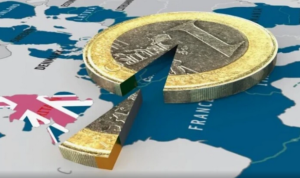
The European Union is tightening the rules for screening foreign direct investments. The EU Council has approved an updated regulation that will strengthen oversight of deals in strategic sectors—energy, transportation, artificial intelligence, digital infrastructure, critical raw materials, and dual-use goods.
The new rules will replace the mechanism in place since 2020. The main change is that all EU countries must have their own investment screening systems, and the approach to such deals will become more uniform across the entire union.
This is particularly important for Ukraine amid EU accession negotiations and future post-war reconstruction. The country needs significant foreign capital for energy, infrastructure, industry, logistics, defense technologies, IT, and raw material extraction. It is precisely these sectors that will now be under closer scrutiny from Brussels.
In practice, this means that Ukraine will have to gradually align its regulations with European standards for investor screening. This may apply to major deals involving capital from third countries, especially when it comes to strategic assets, critical infrastructure, or dual-use technologies.
For Ukrainian businesses, the new rules are also important when entering the EU market. The acquisition of assets, the creation of joint ventures, or investments in sensitive sectors in EU countries may be subject to more detailed scrutiny.
On the other hand, this could be an advantage for Ukraine. If Kyiv establishes a transparent system for monitoring foreign investments, it will boost confidence from the EU and major international investors.
For Ukraine, the main takeaway is simple: in the country’s recovery, it will be not only the volume of foreign capital that matters, but also its origin, transparency, and compliance with EU economic security standards.

The net inflow of foreign direct investment into Montenegro in the first quarter of 2026 amounted to EUR75.6 million, which is almost 40% less than the figure for the same period last year, when it reached EUR122.2 million, according to data from the Central Bank of Montenegro.
At the same time, the Telegram channel “Serbian Economist” reports that the total volume of foreign direct investment received by the country decreased only slightly — by 2.5%, to EUR206.5 million. The main pressure on the final indicator was exerted by the growth in capital outflow: foreign investors withdrew EUR130.9 million from Montenegro, compared with EUR89.5 million a year earlier.
Thus, the Central Bank’s data show not so much a sharp decline in interest in Montenegro on the part of foreign investors as an intensification of the reverse movement of capital. Money continues to flow into the country, but at the same time there is an increase in the divestment of companies, the repayment of loans previously provided to local firms, and the withdrawal of funds through the sale of real estate.
The largest volume of capital outflow in the first quarter accounted for investors from Turkey — EUR24.8 million. Of this amount, EUR21.1 million was related to the withdrawal of funds from companies in Montenegro, while another about EUR3 million was related to the sale of real estate.
Investors from Serbia were in second place, having withdrawn EUR17.5 million. EUR8.3 million accounted for the sale of real estate in Montenegro, EUR3.7 million for the purchase of real estate abroad, and another EUR3.2 million for the withdrawal of funds from companies. They were followed by investors from the UAE with EUR17 million.
The growth in capital outflow is especially important for Montenegro, since the country’s economy traditionally depends heavily on foreign investment, primarily in real estate, tourism, construction and related services. In recent years, investors from Turkey, Serbia, Russia, EU countries and the Middle East have played a noticeable role in the market.
The decline in net inflow may become a signal for the authorities of the need to assess the quality of investments more carefully. For the economy, it is important not only how much money is received, but also how much of it remains in the country, creates jobs, supports productivity and forms a long-term tax base.

The Decree of the President of the Republic of Uzbekistan “On additional measures to stimulate the attraction of foreign direct private investment” has been adopted.
The document is aimed at further improving the investment climate, supporting privatization processes, modernizing production facilities, and creating new jobs, especially in regions with excessive labor force.
According to the Decree, enterprises established with the involvement of foreign direct investment and operating in priority industries are entitled to tax incentives for a period of
The benefits apply to all cities and rural settlements of the republic, except for Tashkent city and Tashkent region. At the same time, these restrictions do not apply to companies operating in the tourism and waste management sectors.
Particular attention is paid to the industries to which these incentives apply. The list includes, in particular
production of radio electronics and components, light and silk industry, manufacture of construction materials, food and meat and dairy industries, chemical and medical industries, machine building, tourism, and waste management.

Foreign investors are looking for transparency, openness and willingness to cooperate in companies. This helps build trust and break down myths about corruption and instability.
This was stated by Marina Cheban, Head of the Legal Department of DIM Group, in an article for thepage.ua.
“While diplomats and politicians are discussing government investments, businesses should actively explore opportunities for existence and development in the new environment. An important aspect of successfully attracting investment from foreign companies is establishing partnerships with foreign investors. Foreign investors are looking for transparency, openness and willingness to cooperate in companies. This helps to build trust and break myths about corruption and instability,” she emphasizes.
Maryna Cheban shared an example of a successful partnership with a foreign investor company and attracting investment in the LUCKY LAND residential complex, which is notable for its scale and comprehensive social facilities. Foreign investors are interested not only in profit, but also in social issues and meeting the needs of the population. In particular, this applies to residents who migrated due to the war. The social aspect, along with well-thought-out planning and various services, creates a comfortable living environment, which makes the complex liquid and extends the product’s life cycle.
“At the moment, we cannot disclose the name of our partner and the size of the investment, but we can say with certainty that foreign investors are looking for long-term investments that bring passive income in the future, which means millions of dollars for construction and an example for other investors that the Ukrainian real estate market is potentially interesting to invest in. For the Ukrainian market, the cases of cross-border partnerships are an opportunity to share experiences, bring best practices, as well as a strategic opportunity to develop and create a positive image for the cumulative effect of building the Ukrainian real estate and development market,” Cheban said.
However, according to Cheban, attracting foreign investors to Ukrainian residential projects is not an easy task, and risk management plays an important role. An important step is project due diligence, which allows investors to understand all aspects of Ukrainian legislation, urban planning regulations, and other norms. Risk management includes a detailed analysis of risks that may arise, including military, political, tax, and economic factors. It is important for Ukrainian companies to demonstrate openness, trust and a deep understanding of the risks involved in attracting foreign investment. This is an important step for Ukraine’s development and building a safe investment environment.
DIM Group was founded in 2014 and consists of six companies covering all stages of construction. To date, it has commissioned 12 buildings in six residential complexes with a total residential area of over 218 thousand square meters. Six residential complexes of “comfort+” and “business class” categories are under construction: “New Autograph, Metropolis, Park Lake City, Lucky Land, etc.

The Government of Ukraine is initiating a mechanism for insuring war risks for foreign investment, Prime Minister Denys Shmygal said.
“We see the interest of potential investors and understand their warnings. One of them is security. Therefore, the government of Ukraine is initiating a mechanism for insuring war risks for foreign investment. In particular, through the Multilateral Investment Guarantee Agency (MIGA) and the World Bank,” he said at the cabinet meeting on Friday.
The prime minister recalled that MIGA had already allocated $30 million for the pilot project.
According to him, the German Ministry of Economy and other partners promise to join the insurance procedure.
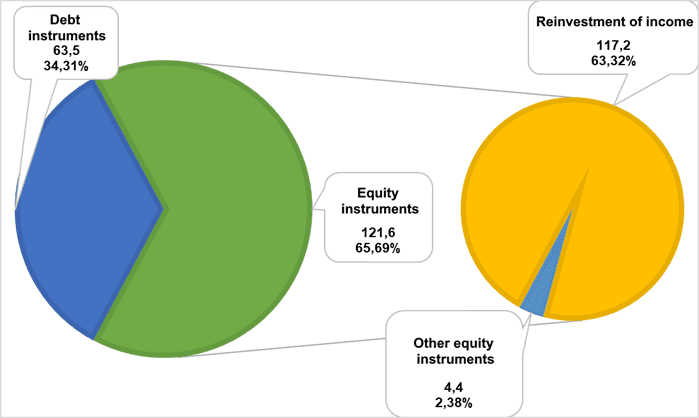
FOREIGN DIRECT INVESTMENTS IN THE ECONOMY OF UKRAINE IN 2020 (OPERATIONS, $ MILLION)
ECONOMY, ECONOMY OF UKRAINE, FOREIGN DIRECT, FOREIGN INVESTMENT



