
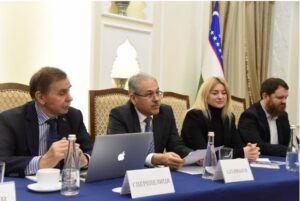
The Embassy of the Republic of Uzbekistan in Ukraine, together with the Institute for Foreign Policy Studies, held a round table on “The Updated Foreign Policy of the Republic of Uzbekistan.” The event was attended by diplomats, experts, and analysts. Participants discussed the transformation of Uzbekistan’s foreign policy against the backdrop of global turbulence, growing interstate conflicts, and the restructuring of the international relations system.
It was noted that under the presidency of Shavkat Mirziyoyev, Tashkent is stepping up its international activity and consistently forming new areas of cooperation, paying attention to strengthening good neighborliness and trust in Central Asia, developing multi-vector political and economic ties, and diversifying trade and investment.
Other priorities included expanding cooperation in the areas of transport and logistics, green energy, water management, and the climate agenda. The participants emphasized the practical effectiveness of economic diplomacy and the growth of Uzbekistan’s interaction with international organizations, noting the holding of major international events in the country under the auspices of the Inter-Parliamentary Union and UNESCO.
A separate section of the discussion was devoted to Uzbekistan’s cooperation with the European Union. Experts pointed to the convergence of interests between the parties on issues of energy security, sustainable transport corridors, the green economy, water management, as well as educational and humanitarian programs, emphasizing Uzbekistan’s role as one of the EU’s key partners in Central Asia.
The cultural and humanitarian component of foreign policy was also discussed, including the development of cultural diplomacy and tourism as tools for strengthening the country’s positive international image and “soft power.”
At the end of the round table, participants described Uzbekistan’s foreign policy as open, pragmatic, and predictable, based on internal modernization and a reform agenda.
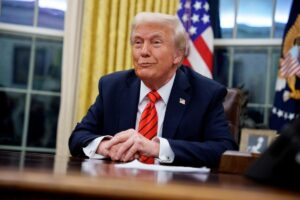
Beijing urges Washington to adhere to previously reached consensuses and considers President Donald Trump’s threats of new tariffs a mistake, the Chinese Ministry of Commerce said.
“China urges the United States to immediately reconsider its mistaken actions, adhere to the important consensuses reached during telephone conversations between the two heads of state, safeguard the hard-won results of consultations, and continue to use the mechanism of China–US trade and economic consultations,” the statement published on the ministry’s website said.
Beijing emphasized that it stands for resolving differences through dialogue, and if Washington insists “on the wrong path,” China will take measures to protect its legitimate rights and interests.
“Deliberate threats of high tariffs are the wrong way to build relations with China,” the ministry stressed. The agency also noted that US statements about possible new tariffs are an example of double standards.
On Saturday night, Trump announced that he intends, starting November 1, “or maybe even earlier,” to impose additional 100% tariffs on goods imported from China.
“Starting November 1, or perhaps earlier, depending on China’s actions, the United States will impose 100% tariffs in addition to the existing ones. In addition, starting November 1, we will implement export control measures for any vital software,” he wrote on Truth Social.
Trump explained that he made this decision because China “declared that starting November 1 it would implement serious export control measures on almost all products manufactured in the PRC.” “This will affect all countries and is clearly a plan that China has been preparing for years,” the US president said.

President of Ukraine Volodymyr Zelensky, by his decree, put into effect the decision of the National Security and Defense Council of July 30, 2021 On the Strategy of Ukraine’s Foreign Policy.
The corresponding decree No. 448/2021, together with the decision of the NSDC and the text of the Strategy, was published on the website of the head of state on Thursday, August 26 and comes into force from the day of its publication.
According to the decree, the secretary of the Council Oleksiy Danilov is responsible for the implementation of the NSDC decision.
The strategy contains the main priorities and strategic goals of Ukraine’s foreign policy: the state’s course towards membership in the EU and NATO, restoration of territorial integrity and countering Russian aggression, promotion of Ukrainian exports and attraction of investments, cooperation with other states and international organizations, etc.
FOREIGN POLICY, PRESIDENT OF UKRAINE, PRESIDENT ZELENSKY, STRATEGY



