

For most of us, “five stars” is synonymous with perfection. However, in Ukraine, this rating often reflects only the quality of the building, not the quality of the stay itself.
The official hotel classification system in Ukraine still relies on state building codes (GSN). The system thoroughly checks the infrastructure: whether the hotel has an elevator and a restaurant, the size of the reception area, and whether it operates 24/7. However, the standards do not regulate the softness of the mattress, the availability of parking spaces, or the staff’s genuine willingness to help in unusual situations.
At the beginning of 2026, only about 220 establishments out of approximately 3,700 had an official category in Ukraine—less than 10% of the market. Among them, there were only about 40 five-star hotels. And when most of the industry operates outside the formal classification system, the premium segment focuses not on state requirements but on international service standards.
For example, in the U.S., Forbes Travel Guide evaluates hotels based on more than 900 criteria, with service accounting for about 70% of the rating. As a result, the Ukrainian market has begun to develop its own hospitality standards—often significantly exceeding the minimum requirements of government regulations.
To understand what the transformation of modern service standards looks like in practice, we analyzed the experience of the Ukrainian complex Apartel Skhidnytsya, which received the prestigious World Luxury Hotel Awards in the category of Luxury Wellness Resort 2025 in Europe. Using this case study as an example, we can see what guests actually pay for at a modern five-star resort.

One of the main shifts in the approach to leisure is the move from basic infrastructure to what hoteliers call “overservice.” This refers to the level of a boutique hotel, but on the scale of a large resort complex.
“In the premium segment, service has long ceased to be merely a set of amenities. Today, it is first and foremost about comfort that requires no extra effort from the guest—from booking dinner to organizing leisure activities or accommodating individual requests. The less a person has to control or decide on their own, and the more they feel that their needs have been taken care of in advance, the higher the actual level of service,” explains Vasily Krulko, entrepreneur and co-founder of the Apartel Resorts hotel chain.
True service begins even before arrival. If a guest’s child loves to play tennis but the property doesn’t have its own courts, the team won’t just shrug their shoulders—they’ll book a court nearby.
All guest requests are recorded in the CRM system: if you’ve ever asked for an extra pillow or four liters of water a day, they’ll be waiting for you automatically on your next visit. It is precisely these details that make guests want to return, and for resorts, this is a key indicator: if the service is consistently good, people return not because of advertising, but because of their own experience.
A beautiful photo shoot no longer gives a hotel an edge. However, a detailed 3D tour that allows guests to walk around the property and view rooms even during the selection phase can be a deciding factor for a guest.
At a Swedish buffet, you might encounter a robot delivering yogurt between tables—a small but noticeable detail that adds a sense of novelty to a premium vacation.
Gradually, technology will also streamline the check-in process. In the future, traditional check-in at the front desk is expected to be replaced by pre-check-in. The idea is that guests can submit their documents and confirm their details while still en route, thereby reducing formalities upon arrival. After arriving, they’ll simply need to pick up their key, without unnecessary waiting or paperwork.

Domestic tourism has grown significantly following the full-scale invasion. According to a study by the digital agency Inweb, 85% of Ukrainians planned to spend their summer vacation within the country in 2025. The Carpathians became the most popular destination, and 54.3% of respondents planned to travel with children. Therefore, a comfortable family vacation and appropriate infrastructure for children have already become a basic requirement.
In addition, about a third of guests travel with pets. Therefore, a pet-friendly hotel must also have a full range of amenities for pets: beds, bowls, welcome kits, and convenient walking routes.
To ensure the vacation remains comfortable for everyone, the space itself becomes crucial. While DBN standards allow a five-star hotel to have rooms starting at 16 m², the Luxury Wellness Resort 2025 standard requires a minimum of 34 m² of fully functional living space, complete with a dining table and a full-size balcony.
Family travel has also driven demand for scale—the “resort-within-a-resort” format, where guests can spend their entire vacation without leaving the premises.
This is achieved through seasonal spaces that operate in different formats: in winter—an ice rink or event venue; in the warmer months—a lounge area or concert stage. The grounds host tea ceremonies, master classes in floristry and pottery, themed tastings, concerts, and other events.
Having a SPA is no longer a competitive advantage today—even lower-category hotels have them. Therefore, the focus is not on the number of zones, but on the guest experience.
Thus, a parmeister appears in the SPA zone, transforming the sauna into a ritual with gongs, and instead of standard wellness programs, a full-fledged biohacking center operates. This is the first complex in Ukraine to implement such an approach, at a time when the market was barely familiar with the term. It involves restoring physical and mental well-being through a combination of natural factors and preventive medicine.
The contrast with formal requirements is telling, since according to DBN, having a nurse on staff is sufficient to obtain 5-star status. Everything else is a matter of the hotel’s own approach to service.

A high level of service is inextricably linked to safety—and to the guest’s sense of that safety. For example, if a guest doubts the cleanliness of a plate in the restaurant, staff can take it to the dishwashing area and demonstrate the entire dishwashing process, including their plate. Such transparency builds trust, as neglecting hygiene can lead to viral outbreaks—as has already happened at popular resorts.
Even technical details affect comfort. For example, using quiet electric equipment instead of gas-powered lawn mowers so the noise doesn’t wake guests in the morning.
Such details may seem insignificant, but they are precisely what shape the overall sense of relaxation. People come to the mountains for peace and quiet, so even technical solutions on the premises begin to influence the quality of the experience.
And finally, privacy. In the premium segment, this is one of the key principles. The resort team has deliberately refrained from publishing photos and videos from actual events where guests are present. If footage from events does appear on social media, it features only people invited specifically for the shoot. “Today, a real guest’s privacy is valued higher than any reach.”
“In many hotels, quality service has long since gone far beyond the formal five-star standard and actually already corresponds to a six- or even seven-star level. It would be interesting if Ukraine were to become the country that introduces such an additional rating. And if the market offers an opportunity to compete for a hypothetical sixth star, we will definitely be among those ready to prove it,” says Ruslan Kachan, CEO of Apartel Skhidnytsya.
As a result, today’s guest pays not so much for square footage or a formal star rating, but for the feeling of a well-planned vacation. A hotel’s ability to anticipate guests’ needs and create a relaxing experience is increasingly referred to as the “sixth star”—a standard that does not exist in official documents but which guests clearly feel during their stay.
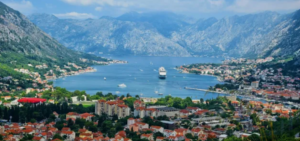
According to Serbian Economist, Iberostar has opened sales for its new Iberostar Selection Montenegro property on the Bar Riviera coast. The promotional offer is tied to the period of stay from May 1 to October 31, 2026, which indicates a launch at the beginning of the summer season.
Iberostar is located on the seafront and has direct access to a private bay/beach; The property is approximately 9 km from the old town of Bar, and the distance to Podgorica and Tivat airports is 45 km and 57 km, respectively. The hotel is located in the coastal area of Ratac, between Bar and Sutomore, and is advertised as “new for 2026.”
The key focus of the project is on leisure and wellness infrastructure. There will be indoor and outdoor swimming pools, a 3,700 sq m spa complex (saunas, hammam, steam room, cold room, massages and treatments), and a gym with sea views. In terms of accommodation, Iberostar is promoting rooms and suites with views of the Adriatic, as well as options with private amenities, such as terraces with jacuzzis and categories with private or swim-up pools.
Dining will include several formats, from the main restaurant to à la carte, cafes, and beach bars. An all-inclusive option and the Star Camp children’s program are also announced.
Iberostar is expanding its presence in the Adriatic through existing hotels in Montenegro, including Iberostar Waves Slavija and Iberostar Waves Bellevue in the Budva area.
https://t.me/relocationrs/2367

Foreign and local investors have stepped up deals in Thailand’s hotel market, betting on buying properties in prime locations for subsequent renovation, upgrading, and “repositioning” in a more expensive segment, The Nation Thailand reported.
Colliers Thailand estimates that the value of hotel deals in the country could exceed 12 billion baht in 2026, while in 2025, about six hotels with 1,574 rooms were sold for a total of 10.14 billion baht, with the main locations of interest to investors being Bangkok, Phuket, Samui, Pattaya, Krabi, and Chiang Mai.
Colliers also points to the typical “investment profile” of such deals: investors are more likely to choose properties with an expected return of 6% per annum, buildings up to 10-15 years old, and hotels with more than 150 rooms in order to reduce capital expenditures and improve the economics of the project. Against the backdrop of a decline in the average occupancy rate across the country in 2025 to approximately 72%, hoteliers maintained and increased their rates, which supported RevPAR and interest in upgrading product quality.
Separately, JLL Hotels & Hospitality Group reported that 2025 was a record year for Thailand’s hotel transaction market, with total deal volume estimated at 26.4 billion baht, and investors increasingly considering reconceptualization projects and mixed formats, including hotels with branded residences.

Demand for short trips within one to two hours of the metropolis is steadily growing: 69% of Ukrainians need this type of recreation, Artur Lupashko, founder of Ribas Hotels Group, told Interfax-Ukraine.
“According to a survey of regular guests of Ribas Hotels, 69% of Ukrainians want to recharge their batteries without having to travel long distances. It is this demand that has generated interest in short suburban vacations,” he said.
According to Lupashko, most popular tourist destinations require significant travel time, which makes one- or two-day trips ineffective. In line with the latest trends, the most popular are complexes focused on short suburban vacations.
Overall, the demand for short-term vacations among city dwellers has a positive impact on the financial performance of such hotels. In particular, in January 2026, compared to January 2025, occupancy rates in Odessa hotels increased by 7%, and revenues by 25-28%.
In the Kyiv region, in the new cottage town of Mandra Petrichor (Makariv district), demand is increasing occupancy on weekdays and leading to 100% room reservations on weekends. That is why, after the opening of the first phase of Mandra Petrichor, where 20 A-frame cottages are available for booking, the launch of the second phase is planned for 2026. In general, the project envisages three conceptually different phases, focused on different types of recreation — for couples, families with children, and groups of friends.
Ribas Hotels Group is an international full-cycle management company and hotel business ecosystem founded in 2014 in Odesa. It brings together the entire process — from site selection, design, and construction to management, franchising, and investment. Ribas Hotels Group is the only hotel group that independently covers all stages of hotel project creation and development.
The company’s portfolio includes 56 projects under construction, launch, or management, including in Ukraine, Poland, Turkey, and Bali. The company develops 3-, 4-, and 5-star city and resort hotels under the Ribas Hotels, Ribas Rooms, WOL home + hotel, and Mandra Moments brands. The operator’s total room capacity is over a thousand rooms.

According to Srpski Ekonomist, several top international brands – InterContinental, Swissotel and Ritz-Carlton – are entering the Belgrade hotel market, amid expectations of increased demand in connection with preparations for EXPO 2027 and plans to expand the room stock in the capital.
According to estimates cited by market participants, in 2027, during the EXPO period, Belgrade could receive about 4 million guests in just three months, while Serbia as a whole had about 4 million tourists in 11 months of 2025. In this logic, the acceleration of hotel projects is perceived as an infrastructural necessity, but there is already a question whether the market after the EXPO will be able to sustainably “digest” the growth of supply, especially in the segment of high categories.
InterContinental returns to Serbia in partnership with Delta Holding: IHG reported that InterContinental Belgrade is planned to open by the end of 2026. The project is part of the Delta District mixed-use complex in Belgrade’s business and financial center; 203 rooms are announced, and features include a sky pool, rooftop restaurant and bar, spa and conference infrastructure.
Swissotel is planned in the EXPO zone in Surcin. Euro KB Rent will receive state aid in the amount of EUR 15.986 million, which will be paid in two tranches in 2026 and 2027. The minimum investment for the project is estimated at EUR 79.9 million; the materials also indicate that the hotel will include a congress center and spa/wellness with two swimming pools, and a room stock of 378 rooms.
The Ritz-Carlton in Belgrade is planned as part of the redevelopment of the former Hotel Jugoslavija site on the Danube waterfront. Marriott International reported that the property is envisioned with 193 rooms and more than 1,700 square meters of event space, while the project itself also includes residential and office towers, a conference center, a marina and a promenade area. Millennium Team, associated with the project through Danube Riverside, estimates the total investment in the complex at almost 500 million euros, with the hotel opening announced for 2027.
EXPO-2027 in Belgrade will take place from May 15 to August 15, 2027, with more than 130 countries having already officially confirmed their participation, according to the organizing committee’s data
https://t.me/relocationrs/2178

Tourists spent a total of 3.08 billion nights in hotels, hostels, and rented apartments in the European Union in 2025, according to preliminary data from the EU statistical office.
This is 2% (61.5 million) higher than in 2024 and is a record. Compared to pre-pandemic 2019, the growth was 7.2%.
At the same time, the number of overnight stays by foreign guests increased by 46.1 million last year, while for EU residents this figure rose by 15.4 million. The former account for 48.6% of the total, while the latter account for 51.4%.
An increase in tourist activity was observed in all EU countries except two. The most significant growth in tourist numbers was recorded in Malta (+9.9%) and Poland (+7%), while the number of overnight stays in Romania fell by 1.4% and in Ireland by 1.8%.
The most popular tourist destinations for foreigners were Spain (330 million overnight stays), Italy (264 million), France (150 million), and Greece (131 million).



