

According to Serbian Economist, a project to build a large resort on the Albanian coast linked to Jared Kushner and Ivanka Trump has faced protests and environmental criticism due to its proximity to protected natural areas inhabited by flamingos, sea turtles, and other species.
The project in question is a tourism development on Albania’s Adriatic coast, in the area of Vlorë, Sazan Island, and the Vjosa-Narta zone. Thousands of Albanian residents took to the streets in Tirana to protest against a resort complex worth approximately EUR 1.4 billion linked to Jared Kushner’s investment firm, Affinity Partners. The project involves the creation of a luxury tourist complex on one of the most valuable stretches of the Albanian coast.
Environmentalists’ main concerns stem from the fact that construction could impact natural areas near the Narta Lagoon and the Vjosa-Narta region, which is considered a critical habitat for migratory birds and other species. Activists point out that the region is home to pink flamingos, seals, and sea turtles, and that large-scale development could damage coastal ecosystems.
BirdLife International stated that work related to the resort threatens one of Europe’s most important coastal habitats. The organization claims that construction and preparatory work could damage areas critical for biodiversity and migratory birds.
The protests have been dubbed the “flamingo revolution” by Albanian and international media. Protesters are using flamingos as a symbol of the protection of the natural area. According to media reports, the protests intensified after fences and construction equipment appeared on part of the site, as well as following reports of clashes between activists and security guards.
Albanian Prime Minister Edi Rama defends the project, stating that it is important for the development of high-end tourism and attracting foreign investment. According to Reuters and AP, authorities view the development as part of a strategy to transform Albania into a more prominent destination for premium tourism on the Adriatic.
Critics, for their part, point to the need for greater transparency, environmental impact assessments, and public debate. At the heart of the controversy are not only flamingos and sea turtles, but also a broader question: can Albania develop luxury tourism without losing natural areas that are themselves part of the country’s tourist appeal?
The project has also taken on a political dimension due to its connection to the family of U.S. President Donald Trump. Jared Kushner is his son-in-law, and Ivanka Trump has publicly supported the idea of developing a tourism project in Albania. At the same time, international media emphasize that this is a private development project linked to Kushner’s investment firm, not a U.S. government project.
For Albania, the conflict surrounding the resort has become a test for its entire model of tourism development. The country is actively promoting the Adriatic and Ionian coasts as an alternative to the more expensive Mediterranean markets, but the growth in investment is increasing pressure on natural areas, infrastructure, and local communities.
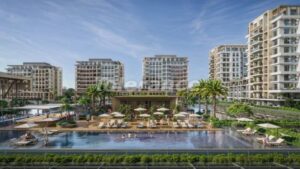
Turkey has started opening some districts that were previously closed for foreigners applying for residence permits, which may support demand for real estate in popular resort locations, primarily in Alanya and other areas of Antalya province, local media report.
This concerns a review of restrictions that in recent years applied to districts with a high concentration of foreign residents. Such zones were closed for first-time residence permit applications, including through the purchase or rental of housing. It was possible to buy real estate there, but it was impossible to obtain a residence permit at an address in a closed district.
After long appeals from businesses, migration authorities lifted some of the strict restrictions in sought-after areas of Alanya. Among the locations that are again being discussed as available for full legalization of foreigners are Mahmutlar, Avsallar and other popular areas of the resort market.
The industry publication Türkiye Today also writes that in June 2026 Turkey effectively returned to broader availability of districts for residence permit applications, with the exception of certain restrictions, particularly in two districts of Istanbul – Fatih and Esenyurt. At the same time, the market is still waiting for additional official clarifications on legal details, including the link between property purchases, address registration and the right to resident status.
Previously, Turkey had a system of closed districts if the share of foreigners in the local population exceeded a set threshold. In 2022-2025, this became one of the factors cooling foreign demand for housing in resort cities, especially in Antalya, Alanya, Mersin and Istanbul.
For the real estate market, the opening of previously closed districts may become an important signal. Foreign buyers often view the purchase of housing in Turkey not only as an investment or resort asset, but also as a basis for long-term residence. Therefore, the ability to register an address and submit documents for a residence permit directly affects the liquidity of such properties.
This change may be especially sensitive for Alanya. In recent years, Mahmutlar, Kestel, Avsallar, Kargicak and other districts actively attracted buyers from Russia, Ukraine, Kazakhstan, Iran, Germany and Middle Eastern countries. After the introduction of restrictions, part of demand shifted to other locations or was postponed.
Restored access to residence permits may support both the primary new-build market and the secondary market, where many apartments were purchased by foreigners in 2020-2023. However, experts expect demand to be more cautious than during the peak relocation period after 2022: buyers have become more attentive to legal risks, housing maintenance costs, the lira exchange rate and the prospects for obtaining documents.
According to the Turkish Statistical Institute, in April 2026 foreigners purchased 1,516 residential properties in Turkey, 1.1% less than a year earlier. The share of foreigners in total sales was 1.2%. In January-April 2026, foreign buyers purchased 5,681 properties, 11.6% less than in the same period of 2025.
The main centers of sales to foreigners in April 2026 remained Antalya and Istanbul. According to specialized Turkish platforms based on TURKSTAT statistics, foreigners bought 453 properties in Antalya, 412 in Istanbul and 120 in Mersin. They were followed by Yalova – 68, Ankara – 53, Bursa – 49, Izmir – 41, Mugla – 27, Kocaeli – 24 and Sakarya – 21.
Among foreign buyers in April 2026, Russian citizens were the leaders, purchasing 263 real estate properties. Chinese citizens ranked second with 110 properties, followed by Iranians with 100. Ukrainians ranked fourth with 78 purchases. They were followed by citizens of Iraq – 65, Germany – 61, Kazakhstan – 54, Azerbaijan – 48, Saudi Arabia – 39 and the United Kingdom – 35.
Thus, Ukrainians remain one of the notable groups of foreign buyers of Turkish real estate, although in April 2026 they were no longer in the top three. For comparison, in January 2026 Ukrainians ranked third among foreigners, purchasing 77 properties and trailing only Russians and Iranians.
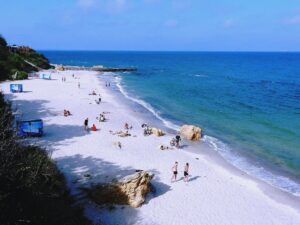
Active preparations for the resort season are underway in Odessa, according to the city’s military administration.
“The top priority is the safety of vacationers. Therefore, before the start of the season, eight additional mobile shelters will be installed along the coast at the city’s expense. They will be located along the stretch from Langeron Beach to the 16th station of the Great Fountain. The total number of functional shelters along the coast will increase to 19,” reads a statement on the CMA’s Telegram channel.
According to the information, this year there are plans to increase the number of public beaches to six, and two inclusive beaches will be operational. As agreed with the leaseholders, infrastructure for people with disabilities will be installed at the city’s other beaches.
Currently, tenants and the relevant municipal enterprise are carrying out a range of preparatory work: setting up lifeguard stations, installing buoys, conducting underwater surveys of the seabed, and testing alarm systems.
Reportedly, a joint commission of the city council and the Regional State Administration has been established to assess the readiness of the coastline; the decision to partially open the beaches will be made solely based on the results of its work. After the commission’s inspection and the signing of the inspection reports confirming the beaches’ compliance with requirements, the final list of beach areas open to visitors will be published.

The vacation rental market in neighboring Bulgaria may see a significant increase in housing prices—by approximately 25–30%. According to the Novinite website, the reason cited is the entry into force on May 20, 2026, of new European regulations for short-term rentals, which could result in up to half of the listings on major online platforms being removed due to non-compliance.
According to market participants, the main effect will be linked not to a surge in demand but to a reduction in supply. If some small-scale landlords exit the market due to new administrative requirements and rising costs, the number of legally available apartments in popular resorts will decrease, which will drive prices up. At the same time, representatives of the hotel sector believe that the market will become more transparent, and consumers will be better protected from informal and misleading offers.
Based on available market indicators, in 2025, renting resort accommodation in Bulgaria remained relatively affordable by EU standards. As of April 2026, average rental rates in resort areas ranged from approximately 5 to 11 euros per square meter per month, depending on location and type of accommodation. This means that a 35–40-square-meter studio typically cost around 175–440 euros per month, while a 55–70-square-meter apartment cost approximately 275–770 euros per month.

For most of us, “five stars” is synonymous with perfection. However, in Ukraine, this rating often reflects only the quality of the building, not the quality of the stay itself.
The official hotel classification system in Ukraine still relies on state building codes (GSN). The system thoroughly checks the infrastructure: whether the hotel has an elevator and a restaurant, the size of the reception area, and whether it operates 24/7. However, the standards do not regulate the softness of the mattress, the availability of parking spaces, or the staff’s genuine willingness to help in unusual situations.
At the beginning of 2026, only about 220 establishments out of approximately 3,700 had an official category in Ukraine—less than 10% of the market. Among them, there were only about 40 five-star hotels. And when most of the industry operates outside the formal classification system, the premium segment focuses not on state requirements but on international service standards.
For example, in the U.S., Forbes Travel Guide evaluates hotels based on more than 900 criteria, with service accounting for about 70% of the rating. As a result, the Ukrainian market has begun to develop its own hospitality standards—often significantly exceeding the minimum requirements of government regulations.
To understand what the transformation of modern service standards looks like in practice, we analyzed the experience of the Ukrainian complex Apartel Skhidnytsya, which received the prestigious World Luxury Hotel Awards in the category of Luxury Wellness Resort 2025 in Europe. Using this case study as an example, we can see what guests actually pay for at a modern five-star resort.

One of the main shifts in the approach to leisure is the move from basic infrastructure to what hoteliers call “overservice.” This refers to the level of a boutique hotel, but on the scale of a large resort complex.
“In the premium segment, service has long ceased to be merely a set of amenities. Today, it is first and foremost about comfort that requires no extra effort from the guest—from booking dinner to organizing leisure activities or accommodating individual requests. The less a person has to control or decide on their own, and the more they feel that their needs have been taken care of in advance, the higher the actual level of service,” explains Vasily Krulko, entrepreneur and co-founder of the Apartel Resorts hotel chain.
True service begins even before arrival. If a guest’s child loves to play tennis but the property doesn’t have its own courts, the team won’t just shrug their shoulders—they’ll book a court nearby.
All guest requests are recorded in the CRM system: if you’ve ever asked for an extra pillow or four liters of water a day, they’ll be waiting for you automatically on your next visit. It is precisely these details that make guests want to return, and for resorts, this is a key indicator: if the service is consistently good, people return not because of advertising, but because of their own experience.
A beautiful photo shoot no longer gives a hotel an edge. However, a detailed 3D tour that allows guests to walk around the property and view rooms even during the selection phase can be a deciding factor for a guest.
At a Swedish buffet, you might encounter a robot delivering yogurt between tables—a small but noticeable detail that adds a sense of novelty to a premium vacation.
Gradually, technology will also streamline the check-in process. In the future, traditional check-in at the front desk is expected to be replaced by pre-check-in. The idea is that guests can submit their documents and confirm their details while still en route, thereby reducing formalities upon arrival. After arriving, they’ll simply need to pick up their key, without unnecessary waiting or paperwork.

Domestic tourism has grown significantly following the full-scale invasion. According to a study by the digital agency Inweb, 85% of Ukrainians planned to spend their summer vacation within the country in 2025. The Carpathians became the most popular destination, and 54.3% of respondents planned to travel with children. Therefore, a comfortable family vacation and appropriate infrastructure for children have already become a basic requirement.
In addition, about a third of guests travel with pets. Therefore, a pet-friendly hotel must also have a full range of amenities for pets: beds, bowls, welcome kits, and convenient walking routes.
To ensure the vacation remains comfortable for everyone, the space itself becomes crucial. While DBN standards allow a five-star hotel to have rooms starting at 16 m², the Luxury Wellness Resort 2025 standard requires a minimum of 34 m² of fully functional living space, complete with a dining table and a full-size balcony.
Family travel has also driven demand for scale—the “resort-within-a-resort” format, where guests can spend their entire vacation without leaving the premises.
This is achieved through seasonal spaces that operate in different formats: in winter—an ice rink or event venue; in the warmer months—a lounge area or concert stage. The grounds host tea ceremonies, master classes in floristry and pottery, themed tastings, concerts, and other events.
Having a SPA is no longer a competitive advantage today—even lower-category hotels have them. Therefore, the focus is not on the number of zones, but on the guest experience.
Thus, a parmeister appears in the SPA zone, transforming the sauna into a ritual with gongs, and instead of standard wellness programs, a full-fledged biohacking center operates. This is the first complex in Ukraine to implement such an approach, at a time when the market was barely familiar with the term. It involves restoring physical and mental well-being through a combination of natural factors and preventive medicine.
The contrast with formal requirements is telling, since according to DBN, having a nurse on staff is sufficient to obtain 5-star status. Everything else is a matter of the hotel’s own approach to service.

A high level of service is inextricably linked to safety—and to the guest’s sense of that safety. For example, if a guest doubts the cleanliness of a plate in the restaurant, staff can take it to the dishwashing area and demonstrate the entire dishwashing process, including their plate. Such transparency builds trust, as neglecting hygiene can lead to viral outbreaks—as has already happened at popular resorts.
Even technical details affect comfort. For example, using quiet electric equipment instead of gas-powered lawn mowers so the noise doesn’t wake guests in the morning.
Such details may seem insignificant, but they are precisely what shape the overall sense of relaxation. People come to the mountains for peace and quiet, so even technical solutions on the premises begin to influence the quality of the experience.
And finally, privacy. In the premium segment, this is one of the key principles. The resort team has deliberately refrained from publishing photos and videos from actual events where guests are present. If footage from events does appear on social media, it features only people invited specifically for the shoot. “Today, a real guest’s privacy is valued higher than any reach.”
“In many hotels, quality service has long since gone far beyond the formal five-star standard and actually already corresponds to a six- or even seven-star level. It would be interesting if Ukraine were to become the country that introduces such an additional rating. And if the market offers an opportunity to compete for a hypothetical sixth star, we will definitely be among those ready to prove it,” says Ruslan Kachan, CEO of Apartel Skhidnytsya.
As a result, today’s guest pays not so much for square footage or a formal star rating, but for the feeling of a well-planned vacation. A hotel’s ability to anticipate guests’ needs and create a relaxing experience is increasingly referred to as the “sixth star”—a standard that does not exist in official documents but which guests clearly feel during their stay.

On the night of January 1, a major fire broke out at Le Constellation bar during New Year’s celebrations in the Swiss ski resort of Crans-Montana (canton of Valais). According to updated data from the authorities, about 40 people died and another 119 were injured, many with severe burns.
As reported by representatives of the Valais cantonal police at a briefing on January 2, 113 of the 119 victims have already been officially identified. Among them are 71 Swiss citizens, 14 French citizens, 11 Italian citizens, 4 Serbian citizens, and one citizen each from Bosnia and Herzegovina, Belgium, Luxembourg, Poland, and Portugal. The nationality of 14 other victims is still being determined.
A detailed breakdown of the nationalities of the victims has not yet been officially published, as identification is still ongoing. However, the Italian Golf Federation has reported the death of 16-year-old athlete Emanuele Galepini; Reuters has named him as the first confirmed Italian citizen among the victims.
According to the Ministry of Foreign Affairs, Ukraine has not yet received confirmation of the presence of Ukrainian citizens among the dead or injured; the Ukrainian Embassy in Switzerland is in contact with local authorities and law enforcement agencies.
The investigation into the cause of the fire is ongoing; among the versions discussed by the media with reference to the investigation is the use of sparklers/spark candles during service in the crowded establishment.



