
The international forum “Rebuilding Ukraine: Security, Opportunities, Investment” will take place on October 22–23, 2026, in Bucharest, Romania, at the ROMEXPO exhibition center, Pavilion C2. The event will bring together representatives of government agencies from Ukraine, Romania, and other European countries, as well as international financial organizations, investors, the business community, and experts.
The forum is organized by the Romanian think tank New Strategy Center in partnership with the Romanian Chamber of Commerce and Industry. The academic partner of the event is the University of Agronomic Sciences and Veterinary Medicine in Bucharest (USAMV).
According to the updated program, 31 thematic panel discussions are scheduled over the course of two days, focusing on attracting international capital for Ukraine’s reconstruction, the development of transportation and energy infrastructure, industrial cooperation, defense technologies, food security, and cross-border cooperation.
One of the forum’s key focuses will be a discussion of Romania’s role as a regional logistics and investment hub for Ukraine’s reconstruction. In particular, participants will examine the prospects for developing transport corridors between Ukraine, Romania, and Moldova, expanding the capacity of Danube ports, and creating new rail and road routes between the Baltic and Black Seas.
Special attention will be given to investment opportunities in Ukrainian regions. The program includes special presentations on projects in the Kyiv, Zakarpattia, Ivano-Frankivsk, Vinnytsia, Chernivtsi, Odesa, and Kherson regions. Representatives of local authorities, regional development agencies, and the business community will discuss attracting foreign investors, implementing infrastructure projects, and developing cooperation with Romanian partners.
On October 22, the main focus will be on economic recovery, financing, and investments. Participants will examine mechanisms for attracting private capital, opportunities offered by international development banks, support programs for Ukrainian businesses, and prospects for the restoration of residential and industrial infrastructure.
Among the announced participants for the first day are Gennadiy Chizhikov, President of the Ukrainian Chamber of Commerce and Industry; Marina Khlistun, Executive Director of UkraineInvest; Kateryna Glazkova, Executive Director of the Union of Ukrainian Entrepreneurs; and representatives of the European Investment Bank, the German development bank KfW, Japan’s JBIC, Poland’s BGK, and other international financial institutions.
As part of the discussion on financing reconstruction, a remote address by a representative of the Ukrainian government is scheduled. Separate panels will be dedicated to the development of the agricultural sector, ensuring global food security, the modernization of the energy sector, and the development of renewable energy sources.
Also on October 22, there will be a presentation of the “Together for Ukraine” platform, initiated by the New Strategy Center to foster cooperation and support for Ukraine.
Human capital issues will be the subject of a separate discussion featuring Ella Libanova, director of the M.V. Ptukha Institute of Demography and Social Studies of the National Academy of Sciences of Ukraine. Participants will discuss challenges related to the return of Ukrainian citizens from abroad, staffing the economy, and training specialists for reconstruction.
On October 23, the forum’s program will focus on security challenges, the development of the defense industry, energy resilience, and cross-border cooperation.
In particular, panel discussions are planned on international security guarantees for Ukraine, the prospects for ending Russian aggression, the use of unmanned systems, and the development of joint production of defense products by Ukrainian and European companies.
Participants in the discussion on security guarantees will include Igor Zhovkva, Advisor to the President of Ukraine on Foreign Policy; Kiril Petkov, former Prime Minister of Bulgaria; and representatives from the United States, Japan, and European think tanks.
A separate session will be dedicated to the reintegration of veterans and the utilization of their professional potential in economic recovery. Among the participants listed is Ruslan Prykhodko, Ukraine’s Deputy Minister for Veterans’ Affairs.
The energy segment on the second day will include discussions on preparing the Ukrainian power grid for the winter season, protecting critical infrastructure, cooperation in the Black Sea region, and prospects for involving international companies in energy projects. Among the announced participants are representatives of Naftogaz of Ukraine, OMV Petrom, ROMGAZ, Japan’s JICA, and other energy companies and organizations.
Issues related to the participation of Romanian businesses in Ukraine’s reconstruction will play a significant role in the program. A special panel will be dedicated to financial instruments, institutional support, and opportunities for implementing joint investment projects.
The forum’s concluding discussions will address the prospects for post-war security in Europe, the development of defense-industrial cooperation, Russia’s international responsibility, and mechanisms for compensating Ukraine for damages caused by the war.
The organizers note that the forum’s goal is to create a practical platform for dialogue between Ukrainian and international companies, financial institutions, and representatives of government agencies and local authorities. Particular emphasis is placed on identifying specific investment opportunities and forming partnerships aimed at Ukraine’s long-term economic recovery.
The New Strategy Center is an independent Romanian think tank specializing in security, defense, foreign policy, energy, and regional cooperation. The organization hosts international conferences and expert events dedicated to strategic challenges in the Black Sea region and Central and Eastern Europe. This forum continues a series of events on Romania’s role in Ukraine’s recovery, organized by the New Strategy Center in 2023 and 2025.
The detailed forum program and information about the participants are available on the event’s official website.
Open4Business is a media partner of the event.
Bucharest, INVESTMENT, RECONSTRUCTION, ROMANIA, UKRAINE, ЧИЖИКОВ
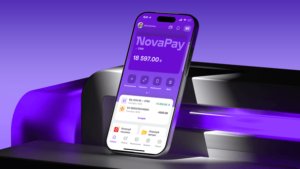
The international financial service “NovaPay” (TM NovaPay, issued by NovaPay Credit LLC) has registered and begun sales of its 16th issue of Series “P” corporate bonds with a face value of 200 million UAH.
According to the company’s press release, the 16th issue consists of 200,000 registered interest-bearing corporate bonds with a face value of 1,000 UAH each.
The interest rate on the “P” series bonds is 18% per annum, and maturity is scheduled for September 10, 2029.
The company emphasized that it plans to use the raised funds to further develop lending to individuals and businesses.
“For us, this is an effective tool for raising funds to develop our business, and for investors, it’s an opportunity to diversify their savings and earn additional income,” noted László Udut, NovaPay’s head of treasury, in the press release.
According to data from the financial service, more than 8,500 customers became bondholders, while total sales exceeded 5.1 billion UAH.
NovaPay noted that it had redeemed three bond issues with a total face value of 300 million UAH. These include Series “C” (maturing in September 2025), Series “A” (maturing in April 2026), and Series “B” (maturing in July 2026).
NovaPay was founded in 2001 as an international financial service provider, part of the Nova Group (“Nova Poshta”), and offers financial services both online and offline at “Nova Poshta” branches. In 2023, the company became the first non-bank financial institution in Ukraine to receive an expanded license from the NBU, which allowed it to open accounts and issue cards.
In July, the National Securities and Stock Market Commission registered NovaPay’s 15th issue of “O” series bonds with a face value of 200 million UAH. In early June, the company announced the full placement of its 14th “N” series issue of the same volume.
Based on the results of the first half of 2026, NovaPay Credit increased its net profit 3.2-fold compared to the same period in 2025—to 172.01 million UAH—and its revenue 2.2-fold, to 586.42 million UAH.
The company’s equity as of the end of June stood at 688.5 million UAH, compared to 516.5 million UAH at the beginning of the year, while liabilities totaled 1.69 billion UAH, compared to 1.37 billion UAH.
The company’s proceeds from bond sales during this period rose to 693 million UAH from 355.63 million UAH a year earlier, while expenses related to their redemption increased to 578.80 million UAH from 244.92 million UAH, respectively.
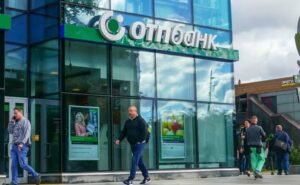
OTP BANK JSC and the Ukrainian company Unisolar have entered into a partnership agreement to finance solar energy projects for businesses with a starting interest rate of 0.01% per annum. The program provides loans for the installation of solar power plants and the implementation of energy solutions aimed at increasing the energy independence of Ukrainian businesses.
According to a press release, the partnership will allow businesses to receive comprehensive solutions that include design, equipment supply, installation, and financing of energy facilities.
Under the terms of the program, loans will be provided in hryvnia for a term of up to 84 months, or seven years. During the first seven months, the interest rate will be 0.01% per annum, and starting from the eighth month, a compensatory rate of 7% per annum will apply.
Preferential terms will apply under the state program “Affordable Loans 5-7-9%,” provided the borrower meets its requirements. The loan may be secured by the equipment purchased with the financing.
Unisolar specializes in the construction of solar power plants, energy storage systems, and automated energy consumption management systems. The company also provides insurance, maintenance, and technical support for completed projects.
According to the company, over more than 16 years in the renewable energy market, Unisolar has completed over 300 projects with a total capacity of more than 350 MW in Ukraine, Moldova, and Lithuania.
The launch of the new program comes amid growing demand from Ukrainian businesses for their own power sources. Due to the risks of damage to centralized energy infrastructure, businesses are increasingly investing in solar power plants, energy storage systems, and backup power supplies.
The ability to secure long-term loans allows companies to spread investment costs over several years and reduce the initial financial burden during the implementation of energy projects.
OTP BANK is also developing partnership programs with other companies to finance energy-efficient solutions. In particular, in 2026, the bank announced a partnership with ALTEK, Freedom Energy Ukraine, and DELA ENERGY to provide loans for business energy projects.
OTP BANK JSC is a Ukrainian commercial bank that is part of the international OTP Group, headquartered in Hungary. The bank provides services to corporate and retail clients, including business lending, payment and cash management services, deposit products, trade finance, and investment services. The OTP Group operates in the banking markets of Central and Eastern Europe.

On October 26, Kyiv will host the 12th Kyiv International Economic Forum (KIEF). More than 500 participants are expected—owners and executives of Ukrainian and international companies, government officials, investors, diplomats, and experts. The main theme of this year’s forum is “People. Business. Economy. What’s Next?”. Discussions will focus on how business and the economy can weather the new conditions, adapt, and return to growth.
In the fifth year of full-scale war, pressure on the Ukrainian economy is intensifying. Manufacturing, the energy sector, ports, railways, logistics centers, and other business-critical infrastructure are under attack. According to estimates by the Ministry of Economy, direct losses from destruction could reach about $10 billion annually, and combined with the blockade of seaports, they have already cost Ukraine about 1.5 percentage points of GDP in 2026. According to the World Bank’s October forecast, Ukraine’s economic growth will slow to 1.2% in 2026 and reach 1.5% in 2027 if active hostilities continue. In previous forecasts for 2027, the bank projected 4% growth, assuming hostilities would end by the end of 2026.
“While the discussion used to center on Ukraine’s recovery, the focus has now shifted to ensuring the economy’s resilience right now. Businesses need solutions that will help them protect their assets, maintain production, and continue investing even amid the war,” notes Vasyl Khmelnytskyi, initiator of the Kyiv International Economic Forum (KIEF) and founder of the UFuture holding company.
The KIEF 2026 program features 12 panel discussions. The discussions will center on the physical protection of businesses, operations during air raid alerts, decentralized logistics and energy supply, communication resilience, insurance against war risks, compensation for lost assets, access to financing, and maintaining macroeconomic stability. Other key topics include adapting the state’s industrial development strategy and energy policy to new conditions, the state’s economic priorities, international cooperation, and European integration in the face of new challenges. Special attention will be given to the experiences of frontline cities and the solutions already in place there.
Speakers at the forum include:
The Ukrainian economy already has experience adapting quickly during a crisis. In 2022, following the destruction of the Kremenchuk Oil Refinery and a fuel shortage, the country restructured its fuel logistics, and thousands of businesses relocated from frontline regions to the interior of the country. Following the blockade of traditional maritime routes in 2023, the Ukrainian maritime corridor became operational, and after last year’s large-scale attacks on the power grid, businesses and the government began actively developing distributed generation.
“Today, any discussion about the future must begin with finding practical solutions that businesses, the government, and international partners can adopt right now to maintain stability and return the economy to growth. That is exactly what this year’s KIEF is all about,” says KIEF CEO Yuriy Pivovarov.
Title partners of the forum: UFuture, Mastercard, AEQUO, PrivatBank, Kyivstar
Forum partners: Sense Bank, NEQSOL Holding, PUMB, DTEK, Ajax Systems, Uklon, TERWIN, Eclectic Talents Group, BALEX, CEO Club Ukraine.
Interfax-Ukraine and Open4Business are the forum’s media partners.
The beginning of October showed that market volatility is still very much present. After a strong third quarter, investors once again began to partially lock in profits: in a single week, approximately $681 million was withdrawn from Bitcoin ETFs, and over the two trading days of October 7–8, outflows approached $730 million.
According to Experts Club, the situation in the crypto market in 2026 bears less and less resemblance to previous cycles, which were entirely dependent on retail speculation. ETFs, institutional portfolios, corporate reserves, and regulated exchange-traded products are playing an increasingly significant role.
At the same time, this makes the market more sensitive to global interest rates, the dollar exchange rate, capital flows between tech stocks and digital assets, as well as decisions by major asset management firms.
Therefore, the strong growth in the third quarter should, for now, be viewed more as a recovery from the sharp decline in the first half of the year rather than as a guarantee of sustained one-sided growth.
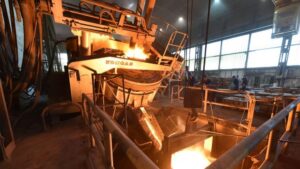
According to the Serbian business media outlet Parametar, Serbia has put up for sale, through the Belgrade Stock Exchange, a 6.35% stake in Termovent SC Livnica čelika, based in Bačka Topola.
The company specializes in the production of steel castings, including those made of carbon, stainless, heat-resistant, and wear-resistant steel. The foundry has been in operation since the 1960s and has been part of Termovent SC since 2003.
The company supplies its products to both domestic and international markets. The Termovent Group also manufactures industrial valves and is a certified supplier to the Paks Nuclear Power Plant in Hungary.
According to data for 2025, the foundry’s revenue exceeded 1 billion dinars, net profit amounted to approximately 7.8 million dinars, and the number of employees was 168.
The sale of the state’s stake effectively continues the consolidation of ownership in this already privatized industrial asset.



