
According to Relocation, Argentina has officially announced the launch of a citizenship-by-investment program that will allow foreigners to obtain an Argentine passport without going through the standard, multi-year naturalization process. The government plans to begin accepting applications as early as the fourth quarter of 2026.
The program was announced on October 2 during Argentina Week in Paris by Argentine Economy Minister Luis Caputo and Prime Minister Diego Santilli.
The government is offering foreigners two main options for participation.
The first is a non-refundable contribution of $350,000 to the Argentine treasury.
The second is the purchase of a special government bond worth $800,000, which will be issued specifically for program participants. The government has not yet published the detailed terms of this security.
The program allows for the inclusion of family members.
The spouse of the primary applicant, as well as unmarried and childless children between the ages of 18 and 25, will be eligible for citizenship subject to an additional contribution of $100,000 per person.
For a child under the age of 18, the additional contribution will be $25,000.
Thus, a family consisting of two adults and two minor children will be eligible for Argentine citizenship upon making a total non-refundable contribution of $500,000
. One of the program’s key features is that it grants citizenship itself, rather than a residence permit or permanent residency in exchange for investment.
The legal framework for the new program was established back in May 2025, when the government amended Argentina’s citizenship law and created a special Agency for Citizenship-by-Investment Programs. Its mission is to manage such programs and attract foreign capital.
However, it will not be possible to obtain a passport simply by transferring money. The government promises to conduct extensive background checks on applicants.
The origin of funds, the applicant’s financial transparency, and potential risks related to money laundering and terrorist financing will be scrutinized. The authorities state that due diligence procedures will comply with OECD and FATF recommendations. All investments must go through the official financial system.
Another important point for potential participants: the acceptance of applications had not yet begun at the time the program was announced.
The government has announced that the program is scheduled to launch during the fourth quarter of 2026. Therefore, until the final procedures, application forms, review deadlines, and investment bond parameters are published, it is premature to transfer funds or pay for the services of intermediaries who are already promising a guaranteed Argentine passport.
Argentine citizenship is of interest primarily as a tool for international mobility. The country’s passport provides extensive visa-free access, particularly to Schengen Zone countries, and Argentine citizenship opens up additional opportunities for residence and economic activity within South America thanks to the country’s integration into Mercosur.
Before the investment program was introduced, foreigners could obtain Argentine citizenship through the standard naturalization process. The new model creates a separate pathway for wealthy applicants willing to invest significant capital.
Argentina spent over a year preparing the program. In May 2025, a decree by President Javier Milei established the legal framework for obtaining citizenship through investment, and in April 2026, the leadership of a special government agency was appointed. The authorities first announced the official financial terms on October 2.
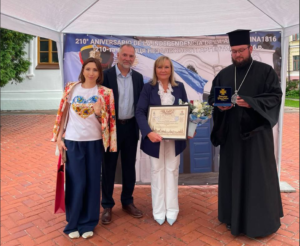
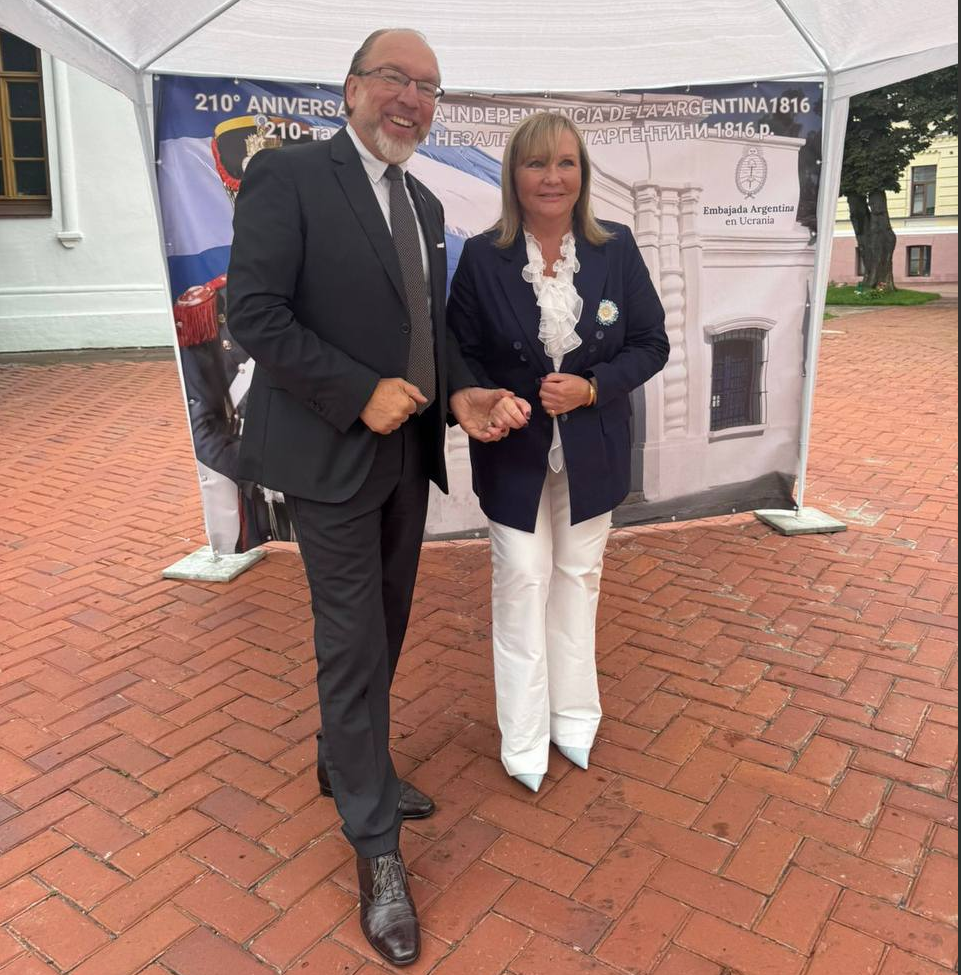
The Embassy of the Argentine Republic in Ukraine hosted a gala reception in Kyiv to mark the 210th anniversary of Argentina’s declaration of independence. The event took place at the “Sofia Kyivska” National Reserve and brought together representatives of the Ukrainian government, the diplomatic corps, the business community, religious organizations, and the Ukrainian-Argentine community.
In her opening remarks, Argentine Ambassador to Ukraine Elena Leticia Mikusinski noted that Independence Day is not only a memorable historical date for Argentines but also a symbol of their commitment to freedom, sovereignty, and the right of peoples to determine their own future.
According to the diplomat, holding the celebrations at St. Sophia Cathedral in Kyiv has special symbolic significance, as this monument is the cradle of Ukrainian statehood and national identity. She emphasized that, despite the differences in the historical paths of Argentina and Ukraine, both countries are united by a desire to defend freedom, independence, and national sovereignty.
The ambassador emphasized that Argentina continues to support Ukraine on the international stage. In particular, the country participates in the International Coalition for the Return of Ukrainian Children, is a member of the Ramstein-format Contact Group on Ukraine’s Defense, and consistently supports most UN General Assembly resolutions concerning Russian aggression against Ukraine. According to her, this position reflects Argentina’s unwavering commitment to the principles of international law, respect for Ukraine’s sovereignty and territorial integrity, and the achievement of a just and sustainable peace.
A special highlight of the evening was the presentation of an award to Elena Leticia Mikusinski, Argentina’s Ambassador to Ukraine. The Kyiv-Pechersk Lavra National Reserve awarded her the title of “First Ambassador of Lavra” in recognition of her contribution to the development of Ukrainian-Argentine relations, her support for Ukrainian cultural heritage, and her efforts to strengthen international cooperation.
In her speech, she paid special attention to the historical ties between the two nations. The ambassador recalled Nobel laureate César Milstein, the son of Ukrainian emigrants who made an outstanding contribution to world science, as well as Spanish language teacher Olga Anechkina-Shafran, who was born in Argentina and worked for many years in Kryvyi Rih. According to the diplomat, it is precisely such people who have been strengthening friendship and mutual understanding between the two countries for decades.
The head of the diplomatic mission also noted that modern Argentina is known not only for soccer, tango, and Malbec wine, but also for significant achievements in science and high technology. She recalled that the country is among those that independently develop and operate satellites, as well as build research nuclear reactors and develop technologies for nuclear medicine.

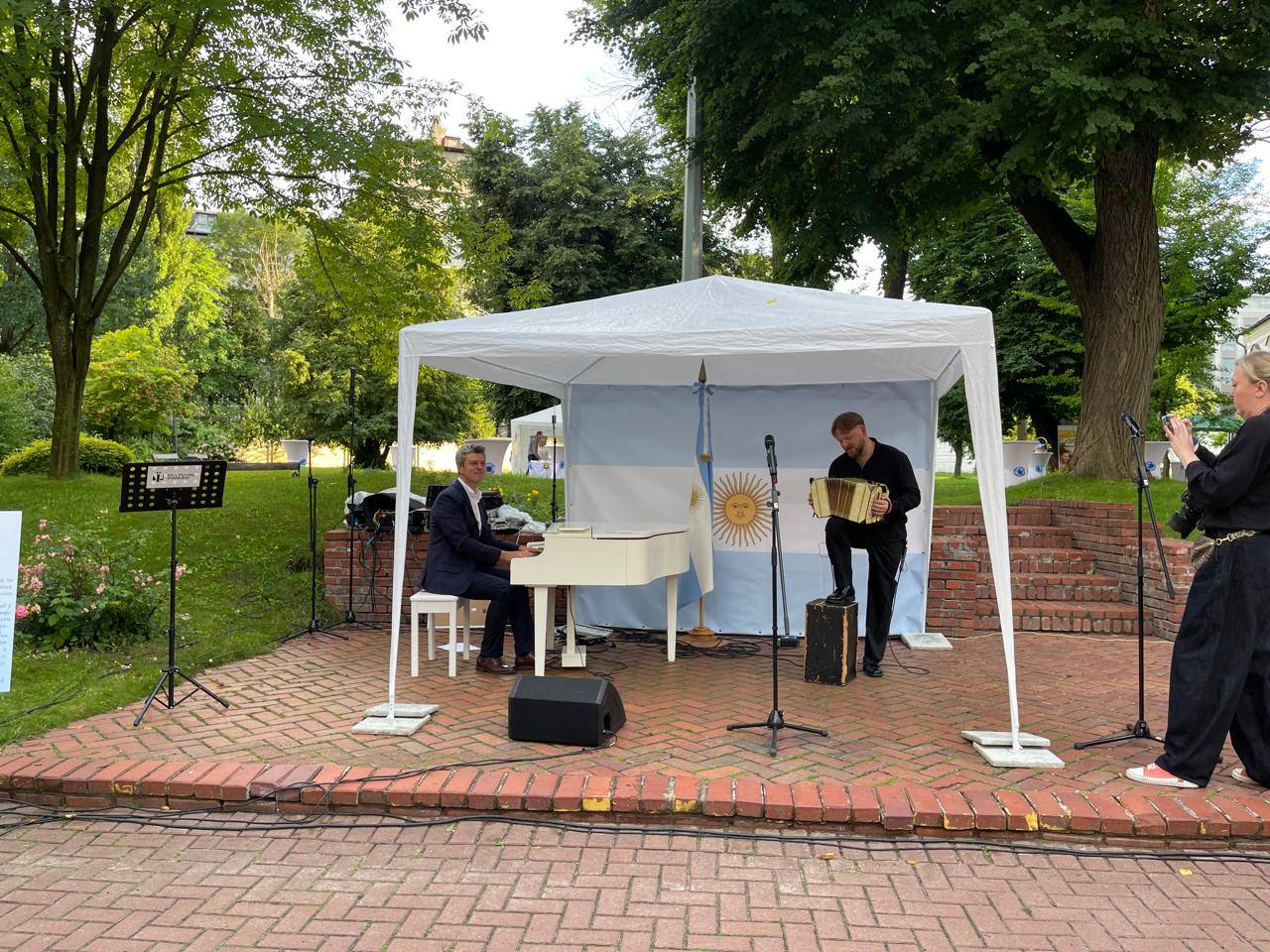
During the gala evening, guests were entertained by Ukrainian composer and pianist Yevhen Khmara, opera singer and defender of Ukraine Yuriy Ivaskievych, and guitarist Oleksandr Alekseenko. Guests were also treated to Argentine wines and traditional dishes.
Argentina recognized Ukraine’s independence on January 5, 1992, and diplomatic relations between the two countries were established on January 6, 1992. The Argentine Embassy in Kyiv began operations in 1993, and the Ukrainian Embassy in Buenos Aires has been in operation since 1993.
ARGENTINA, DIPLOMACY, EMBASSY, Saint Sophia of Kyiv, Мікусінські

The government of Argentine President Javier Milei is preparing a citizenship-by-investment program that could become one of the largest in the global “golden passport” market, according to the Financial Times.
According to sources, authorities are considering two options for investor participation: a non-refundable donation to a state fund in the amount of approximately $500,000, or the purchase of special zero-coupon sovereign bonds worth approximately $1 million.
It is expected that the funds raised could be used to service and repay Argentina’s national debt. Following its 2020 debt restructuring, the country continues to face limited access to international capital markets and is seeking additional sources of foreign currency inflows.
If the program is implemented, Argentina could become the largest G20 country to offer a direct path to citizenship through investment. This is particularly notable against the backdrop of a crackdown on “golden passports” in Europe, where such programs face political and legal pressure.
One of the key advantages of the Argentine passport is said to be its high level of global mobility. It provides visa-free access to nearly 170 countries, including the Schengen Area and the United Kingdom. For investors, this could make Argentina more competitive compared to smaller Caribbean and Pacific jurisdictions that have traditionally offered investment citizenship.
Another important condition may be the absence of a requirement for permanent residence in the country. For wealthy investors, this is crucial, as it allows them to obtain a passport without relocating and without automatically becoming full-fledged tax residents of Argentina.
However, the draft is not yet a definitively approved program. Details are still being finalized, and the initiative is already facing criticism within the country. Opponents point out that, according to the Argentine Constitution, citizenship matters must be regulated by Congress, not solely by presidential decrees.
There are also external risks. International partners are taking an increasingly critical view of citizenship-by-investment programs due to the risks of money laundering, sanctions evasion, and insufficient vetting of applicants. Previously, the United Kingdom restricted visa-free travel for a number of countries precisely because of concerns regarding their citizenship programs.

American billionaire and tech investor Peter Thiel has temporarily moved his family to Argentina and is considering the country as a potential fallback base amid political, economic, and security risks in the U.S., according to the Financial Times and The New York Times.
According to media reports, Thiel has frequently visited Buenos Aires in recent months, meeting with Argentine President Javier Milei and representatives of his government. The investor has also purchased a mansion in a prestigious neighborhood of the Argentine capital and enrolled his children in a local private school.
One factor cited for Thiel’s interest in Argentina is Javier Milei’s policies. The Argentine president is implementing a program of large-scale deregulation, cuts in government spending, and libertarian economic reforms. These ideas align with Thiel’s views, as he has long advocated for reducing the role of the state, taxes, and regulation.
According to The New York Times, Argentine authorities have also explored the possibility of granting Thiel permanent residency or citizenship, though the investor himself has not yet applied for Argentine citizenship.
Thiel’s move to Argentina is being discussed against the backdrop of a broader trend among some American tech entrepreneurs and investors who are seeking alternative jurisdictions for residency, asset management, and capital protection. Among the reasons cited by the media are tax risks, political polarization, security concerns, and interest in countries with more flexible regulations.
For Argentina, Thiel’s presence holds symbolic significance. One of Silicon Valley’s most famous investors is effectively demonstrating interest in Milei’s economic agenda, as he seeks to transform the country into a hub for capital, tech companies, and entrepreneurs focused on minimal regulation.
Peter Thiel is a co-founder of PayPal, one of Facebook’s earliest investors, and chairman of the board of directors at Palantir Technologies. He is also known as a major political donor in the U.S. and an ally of parts of the Republican establishment, including Donald Trump’s inner circle. His fortune is estimated at tens of billions of dollars.
The Argentine government has confirmed its readiness to resume bilateral talks with the UK regarding the sovereignty dispute over the Falkland Islands, which Buenos Aires refers to as the Malvinas. According to Reuters, Argentine Foreign Minister Pablo Kirno made this statement after a spokesperson for British Prime Minister Keira Starmer reiterated that sovereignty over the islands belongs to the United Kingdom.
According to Kirno, Argentina once again declares its readiness to return to negotiations to find a “peaceful and definitive solution” to the sovereignty dispute and put an end to what Buenos Aires calls a “special colonial situation.” The British side, in turn, reaffirmed its unchanged position and emphasized the right of the islands’ inhabitants to self-determination.
The current surge in discussion arose against the backdrop of reports about an internal Pentagon memo that allegedly considered the possibility of revising the U.S. position on the Falkland Islands as a means of pressuring London over disagreements regarding the war with Iran. Following this, the British government separately stated that its position on the islands had not changed.
The situation is significant not only in diplomatic discourse but also in a geoeconomic context. The Falkland Islands have a small population but retain strategic importance in the South Atlantic due to their fishing zone, control of maritime routes, hydrocarbon development potential, and the UK’s military presence. According to official data from the island government, fishing remains the largest sector of the economy and accounted for approximately 58% of the territory’s nominal GDP as of 2024.
The history of the conflict over the islands dates back to the 19th century. Argentina has considered them its territory since the early 1800s, but the United Kingdom established control over the archipelago in 1833 and has rejected Argentina’s claims ever since. The most acute episode was the armed conflict of 1982, when Argentina attempted to retake the islands by force, but after a brief war, British troops reestablished control over the archipelago.
Since then, the dispute has remained unresolved but has been played out primarily on the diplomatic front.
The United Kingdom relies on the principle of self-determination of the islands’ inhabitants, who in a 2013 referendum voted almost unanimously to retain the status of a British Overseas Territory. Argentina does not recognize this approach and continues to insist on negotiations regarding sovereignty.
Thus, Buenos Aires’s latest statement does not signal an immediate breakthrough in negotiations, but it does indicate that the Falklands issue may once again return to the international agenda amid broader turbulence in relations between Western allies.

Argentina has suspended the practical launch of its citizenship-by-investment program following the cancellation of an international tender to select a consultant tasked with developing and implementing its operational model. The country’s Ministry of Economy has canceled the tender for consulting and technical services for the Citizenship by Investment program, according to official tender documents.
This does not involve the repeal of the program’s legal framework, but rather a suspension of its launch. The basis for the mechanism was previously established by Argentine President Javier Milei’s Decree No. 524/2025. The document allowed foreigners who had made a “significant investment” to apply for Argentine citizenship through a special agency under the Ministry of Economy.
To prepare for the practical launch, the authorities announced an international tender in December 2025 for “consulting and technical services” for the Citizenship by Investment program. It is this tender that has now been canceled.
Sources familiar with investment migration note that following the cancellation of the tender, the program’s parameters—including final investment requirements and launch dates—have once again become uncertain.
It was previously expected that Argentina would become one of the first countries in Latin America with a distinct citizenship-by-investment model. However, the launch will now likely be postponed at least until the organizational structure is revised and a new operational model for the program is selected.



