

In January–June 2026, Paraguay issued 29,765 thousand residence permits to foreigners, an 81% increase over the 16,456 thousand issued during the same period last year, according to the country’s National Migration Office. The number of applications filed rose by 62% to 33,243 thousand, compared to 20,567 thousand in the first half of 2025. The immigration service described the volume of applications as unprecedented and introduced additional work shifts, including on weekends.
Of the total number of documents issued, 23,833 thousand were for temporary residence permits, and another 5,932 thousand were for permanent residence status. Applicants submitted 27,024 thousand applications for temporary residence and 6,219 thousand for permanent residence.
Neighboring Brazil remains the main source of migration. Its citizens were issued 22,628 thousand permits, or 76% of the total.
Citizens of Argentina ranked second with 2,210 thousand permits. Next came Germany with 1,132 thousand, Spain with 821, Venezuela with 495, the United States with 450, the Netherlands with 426, France with 358, and Bolivia with 357.
Russia ranked tenth. In the first half of the year, 345 Russian citizens received Paraguayan residence permits, accounting for about 1.2% of all foreigners granted residency status.
Ukraine did not make the published list of the top ten countries. The National Migration Service did not provide a separate figure for Ukrainian citizens in its public press release. It was not possible to determine the exact number of Ukrainians based on available statistics.
Throughout 2025, Paraguay received a record 47,687 applications and issued 40,600 residence permits. Thus, in just the first six months of 2026, the country had already issued 73% of the total number of residence permits and permanent residence permits granted last year.
Ukrainian citizens may enter Paraguay without a tourist visa for up to 90 days. However, to extend their stay, obtain resident status, or engage in paid employment, they must comply with specific immigration requirements.

Paraguayan vori-vori soup took first place in the TasteAtlas Awards 2025/26 ranking of the world’s 100 best dishes, receiving a score of 4.64 out of 5.
The ranking was compiled based on 453,720 user ratings validated by the system, which were assigned to 11,781,000 dishes from the TasteAtlas culinary guide database.
“Vori-vori” is a thick soup with small balls made of corn flour and cheese. It is usually prepared in meat or chicken broth with vegetables and herbs. The dish is considered one of the most recognizable dishes of Paraguayan cuisine.
Second place went to Neapolitan pizza from Italy, with a score of 4.58. In third place was the Italian dish tajarin al tartufo bianco d’Alba—thin egg pasta with white truffles—which scored 4.52.
The top ten also included the Indonesian goat kebab sate kambing, the Turkish Oltu cağ kebabı, the Greek kontosouvli, the Peruvian arroz tapado, the Serbian komplet lepinja, the Mexican quesabirria, and the Italian pasta dish pappardelle al cinghiale.
Italy had the most entries in the top ten—three. Turkey, Paraguay, Indonesia, Greece, Peru, Serbia, and Mexico each have one dish represented.
TasteAtlas compiles its rankings based on audience ratings, using mechanisms to filter out invalid votes. Therefore, rankings may change as new ratings are submitted.
Ukrainian dishes are absent from the published list of the world’s 100 best dishes. Borscht, varenyky, syrnyky, and other Ukrainian dishes did not make it into this particular ranking.
TasteAtlas is an international online guide to traditional cuisine, local ingredients, and authentic restaurants. The project was founded by Croatian journalist and internet entrepreneur Matija Babić, who previously created the news portal Index.hr. After approximately three years of development, TasteAtlas was officially launched in 2018. The guide’s database includes about 19,900 traditional dishes and local ingredients, as well as over 21,000 restaurants. The project team collects historical and gastronomic information, recipes, critics’ reviews, and recommendations from local experts. TasteAtlas’s goal is to catalog the world’s traditional cuisines and preserve recipes and ingredients that may disappear from everyday use.
TasteAtlas ratings are primarily based on user reviews. The platform states that its system filters out bot votes, mass national voting, and suspicious activity, while giving greater weight to ratings from users whom the system recognizes as experienced and knowledgeable.
TasteAtlas is widely cited by international and national media and is one of the most well-known digital gastronomic guides. However, its rankings are not an official assessment by a professional jury or the equivalent of Michelin stars. They are best viewed as an indicator of the popularity of dishes among the platform’s international audience, rather than as a definitive expert classification of world cuisine.
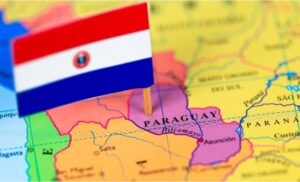
Paraguay has introduced new requirements for obtaining investor status, under which foreigners can apply for permanent residency by investing at least $200,000 in real estate.
According to information published by the Paraguayan Cabinet, the reform is enshrined in Decree No. 0283/2026 and involves the introduction of the Investor Pass system, which allows investors to obtain permanent residency directly, bypassing the temporary status stage. The new rules formalize four main tracks for investors: industrial investments of $70,000 or more, real estate investments of $200,000 or more, investments in financial instruments of $200,000 or more, and investments in tourism projects of $150,000 or more.
A key innovation for the real estate market is that applicants will be able to apply for investor status not only after full payment for the property. For the first time, Paraguay allows applicants to apply for permanent residency after paying just 30% of the property’s value, provided the transaction is formalized through a notarized purchase agreement and the commitment to pay the remaining amount is confirmed.
In effect, this means that Paraguay offers one of the most flexible investment migration models in South America. Unlike many programs that require full capital investment before status is granted, the Paraguayan scheme allows investors to join a project during the construction or design phase, thereby lowering the entry barrier for investors.
For the real estate market, this model could become an additional driver of demand from foreigners seeking both immigration status and investment opportunities in a relatively affordable market.
Paraguay is a landlocked country in central South America. The country borders Brazil, Argentina, and Bolivia, and its capital is Asunción. Paraguay is traditionally considered one of the most affordable countries in the region in terms of cost of living and doing business, and its economy relies on agriculture, hydropower, trade, and the processing of agricultural products.

According to the Relocation project, the Paraguayan government has launched the new Paraguay Investor Pass program, which allows foreign investors to obtain permanent residency directly, without a prior temporary residency phase. According to the country’s official authorities, the program offers several investment options. To obtain permanent residency, foreigners can invest $150,000 in tourism projects or $200,000 in real estate or the Paraguayan stock market.
The program will be administered through the SUACE single-window system under the Ministry of Industry and Trade. Most of the procedure has been digitized, while in-person visits will be required primarily for obtaining an identity card.
The Paraguayan government expects that the new scheme will increase the country’s appeal to foreign capital and simplify the relocation of investors interested in launching or developing projects locally.
The government cites tax benefits for residents as an additional incentive. Specifically, the dividend tax rate for residents has been reduced from 15% to 8%.
According to official data, Paraguay issued 40,600 residence permits last year, with the majority going to Brazilian citizens. The government expects a further increase in the number of residency permits in 2026.
The new program may contribute to capital inflows primarily into tourism, real estate, and the financial sector, as well as increase foreign investors’ interest in Paraguay as one of the relatively affordable jurisdictions for obtaining permanent residency through investment.

The government action plan for 2024 envisages measures to open Ukrainian embassies in the Philippines, Colombia, Panama, Guyana, Paraguay and Uruguay.
According to the Government Action Plan, during 2024 it is planned to undertake administrative, organizational and financial measures to start the activities of the Embassy of Ukraine in the Republic of the Philippines. It is also planned to start the process of opening embassies in Colombia, Panama, Guyana, Paraguay and Uruguay. It is noted that it is envisaged to open one full-time consular office of Ukraine and five non-staff consular offices.
COLOMBIA, embassies, Guyana, PANAMA, PARAGUAY, PHILIPPINES, URUGUAY

A citizen of Paraguay intends to acquire 100% of the charter capital of PrJSC Wild Orchid, Ukraine, the lingerie manufacturer (Lubny, Poltava region), according to the information disclosure system of the National Securities and Stock Market Commission. According to the report, Rocio Esther Guerrero Lopez, registered in Paraguay, announced its intention to independently acquire 1,424 common registered shares of Wild Orchid, Ukraine (100% of the charter capital), while as of June 25 of this year, she and the persons affiliated with her did not own the shares of the company.
According to the National Securities and Stock Market Commission, in the first quarter of this year, 100% of the shares of the joint-stock company belonged to Irina Meier, registered in Malta, and until December 2019, this package belonged to Russian businessman Vyacheslav Balabaev.
As reported, PrJSC Wild Orchid, Ukraine (then it was CJSC) was founded in 2005 as a chain of luxury lingerie stores and was a subsidiary of the Moscow-based lingerie retailer Wild Orchid Group.
According to the National Securities and Stock Market Commission, in 2014, Russia’s Etamin LLC became the owner of 100% of the shares of the Ukrainian company instead of CJSC Wild Orchid Group, and already in 2015 an individual from Ukraine, who was replaced by Balabaev in the second quarter of 2017, was the owner.



