
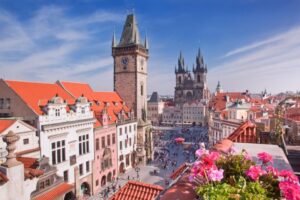
Residential real estate prices in the Czech Republic rose by 10.06% year-over-year in the first quarter of 2026; adjusted for inflation, real growth stood at 8.33%, marking the highest rate since the 2021 housing boom, according to data from the Czech Statistical Office analyzed by Global Property Guide.
According to data from Ukraine’s largest international real estate agency, Homium, the nominal value of residential real estate in the Czech Republic has more than doubled over the past 11 years and is now 18% higher than the previous cyclical peak in the third quarter of 2022.
At the same time, the growth rates of the primary and secondary markets have virtually evened out. New housing prices rose by 10.01% over the year, while existing housing prices increased by 10.07%.
According to Homium, a company that deals in Czech real estate among other markets, price growth is being driven by a combination of limited supply of new housing and a recovery in mortgage demand. The company is also seeing particularly high interest in Prague and Brno, where the supply shortage is most pronounced.
“The Czech market is currently interesting because, following the 2022–2023 correction, it returned to growth fairly quickly. At the same time, buyers are becoming more price-sensitive, so demand is gradually shifting toward small apartments in Prague, outlying areas, and resale properties. For investment buyers, not only the potential appreciation of a property but also its liquidity in the rental market is becoming increasingly important,” Homium commented on the situation.
According to Homium, in May–June 2026, studio apartments and 1+kk apartments in central Prague were listed for approximately 248–414 thousand euros, in the capital’s outskirts for 186–269 thousand euros, and in Brno for 145–207 thousand euros. For 2+kk apartments, the price range was 331,000–580,000 euros, 248,000–373,000 euros, and 207,000–331,000 euros, respectively.
Prague remains the country’s most expensive market. According to data from the Global Property Guide, the average price of an apartment in the capital in 2025 was approximately 5,44 thousand euros per square meter, which was about 82% higher than the Czech average of approximately 3 thousand euros per square meter. In the Prague new-construction market, the average asking price reached about 7,310 euros per square meter, and in the most expensive district, Praha 1, it was about 10,850 euros per square meter.
Older residential properties remain more affordable. The average price of apartments in prefabricated buildings is estimated at approximately 2,94 thousand euros per square meter, while new housing from developers costs on average nearly twice as much—about 5,8 thousand euros per square meter.
Rapid price growth has already become a factor in the country’s monetary policy. On June 18, 2026, the Czech National Bank raised its key two-week repo rate by 0.25 percentage points to 3.75%. The regulator points to persistent inflationary pressures, including those stemming from housing and service costs.
In addition, in June, the CNB decided to increase the countercyclical capital buffer for banks from 1.25% to 1.5% starting in July 2027, citing active lending, rising household and corporate debt, and further increases in apartment prices as reasons for the decision.
The average gross yield on long-term residential leases in the Czech Republic in the second quarter of 2026 was 3.39% per annum. In the most expensive district, Prague 1, yields on individual apartments ranged from approximately 2.3% to 3.3%, while in more affordable areas of Prague, they could approach 4%.
Homium believes that, in the medium term, the main market drivers will remain limited construction rates, the cost of mortgage financing, and sustained demand for housing in major cities. At the same time, following the sharp growth of recent quarters, investors should evaluate the yield of a specific property more carefully, as purchase prices in Prague are rising faster than potential rental yields.
Homium has been operating in the international real estate market for over 10 years and offers properties in the Czech Republic, Spain, Turkey, Greece, Montenegro, Bulgaria, Croatia, Poland, and several other countries. In the Czech Republic, the majority of the properties listed by the company are concentrated in Prague and Karlovy Vary.
The primary source of price statistics is the Czech Statistical Office; the market analysis was published by Global Property Guide and updated in August 2026.
Source:
Global Property Guide – https://www.globalpropertyguide.com/europe/czech-republic/price-history
Homium – https://homium.ua/czech-republic/
CZECH REPUBLIC, housing. Homium, INVESTMENT, PRAGUE, REAL ESTATE

The Verkhovna Rada of Ukraine has approved, in its entirety, a bill to improve the operation of industrial parks (IPs). According to a correspondent for the “Interfax-Ukraine” news agency, 270 deputies voted in favor of the bill, exceeding the required minimum of 226 votes.
“Based on the results of ongoing monitoring of the development of industrial parks, we identified issues, the solutions to which have now been approved by the Rada. Essentially, these are technical issues that arose during the practical implementation of the legislation adopted in 2022. But resolving each of them will contribute to the faster development of this sector and the emergence of new manufacturing facilities,” wrote the bill’s sponsor, Dmytro Kysilevskyi, deputy chairman of the parliamentary committee on economic development.
He noted that the bill, in particular, more clearly delineates the functions of all entities within an industrial park, and grants the initiator of a park’s creation the ability to also act as the managing company without establishing a separate legal entity.
In addition, the concept of an “eco-industrial park” has been introduced, the Cabinet of Ministers has been granted the authority to establish criteria for them, and a new category of land use designation has been introduced: land for industrial parks.
The procedure for increasing and decreasing the area of an industrial park has also been regulated, as have issues regarding the transfer of ownership rights to a land plot within an industrial park from the park’s initiator to another party; opportunities for establishing industrial parks have been expanded: land plots may now be considered adjacent if there are forest buffer strips between them.
Among the issues addressed are improvements to the competitive selection process for management companies and the introduction of the possibility for management companies whose primary activity is the leasing of real estate to obtain loans under the “5-7-9” program.
Temporary restrictions on the acquisition of power capacity for small electricity distribution systems in industrial parks have also been lifted, and provisions regarding state incentives for industrial parks have been improved, in particular through the transfer of international technical assistance from local government bodies to industrial parks.
As of the end of 2025, 37 factories had been built or were under construction in Ukraine’s industrial parks. Throughout 2026, manufacturing enterprises in the parks continued to open.
As previously reported, Bill No. 12117 was adopted in principle on February 11, 2025, with amendments to its provisions, by a vote of 244 members of parliament.
According to the “Serbian Economist,” as of September 1, 2026, Serbia’s long-term government bonds denominated in dinars have become available to international investors through the Euroclear Bank system, which is expected to simplify global funds’ access to the Serbian debt securities market and increase its liquidity.
The Serbian Ministry of Finance announced this on August 31. At the same time, the National Bank of Serbia announced that Euroclear Bank has become a participant in its RTGS payment system and in the securities settlement system of the Central Registry, Depository, and Clearing House of Serbia.
In the first phase, transactions involving five long-term issues of Serbian government bonds denominated in dinars, which are already in circulation, can be conducted through Euroclear. In the future, the system will also be available for certain new issues of government securities.
International investors can now hold and settle Serbian dinar-denominated bonds through their existing Euroclear accounts, without having to set up a separate infrastructure directly in the Serbian market.
For large investment funds, this significantly reduces operational barriers. Banks, pension and investment funds, insurance companies, and asset management firms that already operate through Euroclear will find it easier to include Serbian dinar-denominated securities in their portfolios.
Serbian Finance Minister Sinisa Mali called the connection to Euroclear an important step toward transitioning from a domestic to an internationally integrated government securities market.
The project to integrate the Serbian market with the international settlement infrastructure has been underway since 2019, with the participation of the Ministry of Finance, the National Bank of Serbia, the Central Securities Register, and international partners.
The country’s credit rating has served as an additional factor in attracting international capital. Back in October 2024, S&P Global Ratings upgraded Serbia’s sovereign rating to investment grade BBB- with a stable outlook for the first time. In July 2026, Fitch maintained Serbia’s rating at BB+ with a positive outlook.
The issuance of dinar-denominated infrastructure bonds through Euroclear also has longer-term significance for Serbia. Expanding the pool of foreign buyers could increase trading volume in the secondary market and help establish a more liquid yield curve in dinars.
Euroclear Bank is one of the largest international clearing and depository institutions, enabling institutional investors to hold and settle securities from various countries through a single infrastructure.
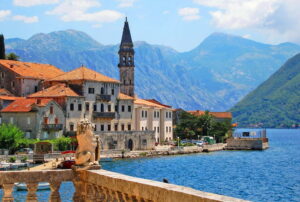
According to “Serbian Economist”, in the first half of 2026, Serbia became the largest source of foreign capital directed toward real estate purchases in Montenegro, according to data from the Central Bank of Montenegro (CBCG).
From January through June, foreign investors invested 237.77 million euros in Montenegrin real estate, which is 3.89% more than during the same period last year. Overall, gross foreign direct investment inflows into the country totaled 457.37 million euros, meaning real estate accounted for about 52% of all FDI inflows.
Serbia took the lead with 55.75 million euros, or 23.45% of all foreign investment in Montenegrin real estate.
Germany took second place with 22.9 million euros, and the United States came in third with 20.84 million euros. Switzerland contributed 18.5 million euros toward real estate purchases, and Turkey contributed 16.34 million euros.
Against this backdrop, the continuing decline in the role of Russian capital is particularly noticeable. In the first half of the year, only 5.37 million euros came from Russia for the purchase of Montenegrin real estate, placing it in tenth place. Poland and Belgium, among others, now rank higher than Russia in the list.
This trend began to take shape as early as last year. In the first quarter of 2025, Russia fell out of the top five largest markets for real estate buyers in Montenegro for the first time and ranked sixth. For 2025 as a whole, the volume of Russian investment across all sectors of Montenegro’s economy fell to 33.98 million euros, of which approximately 17.8 million euros went to real estate. By comparison, in the years 2020–2024, Russian capital was traditionally among the country’s largest sources of foreign investment.
However, it is not entirely accurate to refer directly to “Serbian citizens” or “Russians who purchased real estate” based on these figures. The CBCG methodology considers the country from which the payment originated, which may not correspond to the citizenship of the ultimate buyer or beneficiary. For example, a Russian citizen may pay for a property from an account in Serbia, the UAE, or another country. Therefore, the data primarily reflects a shift in the geography of financial flows in the real estate market.
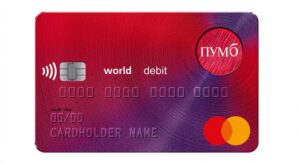
First Ukrainian International Bank (FUIB) has signed its first loan agreement with the National Development Institution (NUR) for EUR 2.9 million to finance Ukrainian entrepreneurs and companies, the bank announced on Monday.
The agreement was signed on August 28 by PUMB Deputy Chairman of the Board Artur Zagorodnikov and NUR Chairman of the Board Andriy Hapon.
“The signing of the first loan agreement with the NDR is an important practical outcome of the partnership we launched under state-sponsored preferential programs back in February 2020 and successfully continued several months ago by attracting funds from foreign investors,” Zagorodnikov said.
Under the terms of the agreement, NUR will provide PUMB with financial resources, which the bank will direct toward lending to individual entrepreneurs and micro, small, and medium-sized private enterprises operating and investing in Ukraine.
The funds may be used for investment projects, the modernization and development of production, the purchase of equipment, and the replenishment of working capital.
According to the National Bank, as of July 1, 2026, PUMB, with total assets of 248.63 billion UAH, ranked fifth among Ukraine’s 59 banks. The bank’s loan portfolio grew by 17.6% in the first half of the year, reaching 115.4 billion UAH.
BUSINESS, FUIB, INVESTMENT, LOAN, НУР
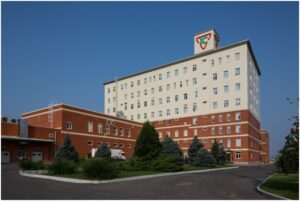
Bringing pharmaceutical production into compliance with European requirements demands significant investments from Ukrainian pharmaceutical manufacturers, which could lead to higher production costs, according to Anatoliy Reder, CEO of the pharmaceutical company “Interchem.”
“We are operating within the paradigm that our country is currently moving toward—alignment with European requirements. We must understand that compliance with European standards, EU directives, and the principles and approaches currently in effect in Europe will require significant additional investments from us—in production, regulatory processes, research, and so on. In other words, this involves enormous additional costs in order to meet, within a relatively short period of time, the requirements that are currently the norm in the European Union. With a gradual transition to these requirements, it must be acknowledged that production costs will rise significantly,” he said in an interview with the “Interfax-Ukraine” news agency.
As Reder noted, compliance with European standards—particularly those incorporated into Ukraine’s law on medicinal products—will automatically require additional investments, which will inevitably lead to price increases.
“We need to speak openly about this. You can’t make pills out of thin air. If additional controls are needed, additional costs will be incurred. Today, we monitor every batch of manufactured products throughout their entire shelf life—something that wasn’t required before—and this involves hundreds and thousands of manufactured batches and, consequently, enormous costs. The additional control points in production required of us by European Union legislation—this means additional equipment, additional laboratory staff, and additional production processes—represent objectively large-scale investments. These costs will inevitably lead to price increases,” he stated.



