

According to Fixygen, PJSC “Ukrainian Financial Housing Company” (“Ukrfinzhilia”), the operator of the state mortgage program “eOselya,” is working to prepare an issuance of securitized securities on international capital markets following the end of the war unleashed by Russia, with a potential volume of approximately EUR1 billion, said Chairman of the Board Yevhen Metzger.
“We are preparing and are indeed the company that will likely be the first to carry out securitization. We have JP Morgan advising us and guiding us into open capital markets,” he said during a discussion on the prospects of Ukraine’s stock market organized by the Kyiv International Economic Forum last week.
Metsger noted that to this end, “Ukrfinzhilye” will form mortgage pools worth the equivalent of $2–3 billion.
The head of “Ukrfinzhilye” clarified that it remains to be determined which markets to enter, as the American and European markets have significant differences. “We must be prepared for both scenarios,” he added.
According to him, the path for issuing securitized securities was paved by the Law on Securitization and Covered Bonds (No. 15172), which was developed jointly with the National Securities and Stock Market Commission and the European Bank for Reconstruction and Development (EBRD).
Metsger noted that there are many investors in the international market active in the housing finance sector, such as the Belgian fund Revive.
“Let’s be frank. We hope that securitization or the issuance of mortgage Eurobonds will be possible after the war. I do not believe that we will be able to do this now—this year, next year, or during the war,” the head of “Ukrfinzhylia” emphasized.
He added that it is also necessary to adopt subordinate legislation and regulations that will allow for proper preparation for the issuance of securitized securities.
“That is why we are moving forward; we hope to use this year and next year productively to prepare for securitization,” Metzger concluded.
“Ukrfinzhylia, ” securitization, INVESTMENTS, mortgages, еОселя

Tether, the issuer of the world’s largest stablecoin, USDT, has launched StableFund, a private credit investment fund, in partnership with the asset management firm Fasanara Capital, according to Fixygen.
The fund’s initial capital amounts to $400 million, provided by Tether and Fasanara. Going forward, the partners intend to raise up to $3 billion in institutional capital from third-party investors.
StableFund will provide loans primarily to small and medium-sized enterprises that face difficulties in securing bank financing. According to the project organizers’ estimates, the global funding gap for small and medium-sized businesses amounts to approximately $5.7 trillion.
Tether and Fasanara estimate the global private credit market itself at roughly $3 trillion, and it could grow to $5 trillion by 2029.
A key feature of the project is the use of stablecoin infrastructure to finance companies in the real economy. This means that USDT is gradually moving far beyond its traditional role as a settlement instrument for crypto exchanges.
For Tether, this marks a continuation of its business diversification. The company is already investing in government bonds, gold, Bitcoin, energy projects, artificial intelligence, and telecommunications.
The launch of StableFund demonstrates a new market trend: the largest stablecoin issuers are beginning to transform from infrastructure companies in the crypto sector into full-fledged financial intermediaries.
For USDT itself, this also potentially creates an additional source of real demand—the use of the stablecoin not only for crypto trading and international money transfers, but also for business lending.

According to the Relocation project, five Eastern Caribbean nations—Antigua and Barbuda, Dominica, Grenada, Saint Lucia, and Saint Kitts and Nevis—plan to send a joint delegation to Brussels for negotiations on the future of citizenship-by-investment (CBI) programs, Prian reports, citing Investment Migration Insider.
Dominica’s Prime Minister Roosevelt Skerrit stated that the negotiations are scheduled to take place toward the end of September 2026, although the exact date of the meeting has not yet been agreed upon. The delegation expects to hold consultations with the leadership of the European Commission, the European Council, and the European External Action Service.
The decision to launch the joint mission was made on July 10 at a meeting of leaders from the Eastern Caribbean at Roseau, Dominica. In an official statement, the meeting participants emphasized the economic importance of investment citizenship programs for small island states and the need to take into account their dependence on CBI-related revenues.
The negotiations are taking place against the backdrop of the European Union’s hardline stance on such programs. As previously reported, on June 25, European Commissioner for Home Affairs and Migration Magnus Brunner sent a letter to Antigua and Barbuda proposing that the investment citizenship program be phased out by June 1, 2028, with a 24-month transition period. According to industry sources, similar demands were also sent to four other countries.
The reason for the pressure from Brussels is primarily linked to visa-free access for citizens of these countries to the Schengen Area. The updated EU mechanism allows for the existence of a program that grants citizenship in exchange for investment—without the applicant having a substantial connection to the country—to be considered grounds for suspending the visa-free regime. EU documents also emphasize the need to strengthen vetting of applicants and to phase out such schemes.
As early as September, Caribbean states are to strengthen vetting of candidates and completely exclude individuals subject to EU sanctions from these programs. At the same time, the countries are working to establish a single regional supervisory body—Eastern Caribbean Citizenship by Investment Regulatory Authority (ECCIRA). The decision to form a common regulator was adopted by five states back in 2025.
ECCIRA is expected to set common standards for vetting investors, monitor the activities of national programs, and facilitate the exchange of information between countries. The regulator’s headquarters is to be located in Grenada.
Citizenship-by-investment programs remain an important source of revenue for small Caribbean economies. Foreigners can obtain citizenship after making a specified contribution to a government fund or investing in approved projects, particularly in real estate. As of 2026, all five programs continue to accept applications, and the minimum investment threshold starts at approximately $200,000, although specific requirements vary by country.
Caribbean governments intend to persuade the EU not to abruptly terminate the programs and are proposing that the EU take into account their role in financing infrastructure, climate projects, education, healthcare, and recovery from natural disasters.
According to Skerrit, the goal of the upcoming mission is to work with Brussels to find “practical and mutually beneficial solutions” that will allow for both the EU’s security requirements and the interests of small island economies to be taken into account.

Italy is preparing the TERRA program, with a total budget of up to 105 million euros, aimed at expanding access to financing for Ukrainian micro, small, and medium-sized enterprises in the agri-food sector, according to the Ministry of Agrarian Policy and Food of Ukraine following negotiations with the Italian side.
The program was presented during a meeting between Deputy Minister of Agrarian Policy Denys Bashlyk and Davide La Cecilia, the Italian Minister of Foreign Affairs’ Special Representative for Ukraine’s Recovery. The parties identified support for small farmers and the development of agricultural cooperatives as key priorities for cooperation.
According to materials from the Italian Ministry of Foreign Affairs and International Cooperation, TERRA Ukraine—Transforming and Empowering Resilient and Responsible Agribusiness—consists of two main components.
Up to 100 million euros are planned to be allocated to financial instruments managed by the Italian state-owned financial institution Cassa Depositi e Prestiti (CDP). The funds are to be used to mitigate risks for Ukrainian financial intermediaries and expand lending to micro, small, and medium-sized enterprises in the agri-food sector. The financial component includes a counter-guarantee from the European Commission under the Ukraine Investment Framework.
An additional 5 million euros is earmarked for technical assistance and capacity building, with this part of the program to be implemented primarily in collaboration with the Food and Agriculture Organization of the United Nations (FAO).
The Italian side views TERRA not merely as a mechanism for providing financing. The program is intended to facilitate the modernization of Ukrainian agricultural enterprises, the adoption of European sanitary, environmental, and corporate standards, as well as the transition to a more sustainable model of agricultural production in line with the European Green Deal.
“For us, it is important not just to teach farmers to work together, but to create a practical model that will enable them to pool resources, produce large volumes of goods, and enter new markets. If this approach proves successful, it can be scaled up to all regions of Ukraine,” Bashlyk noted.
The Ukrainian side also hopes to draw on Italy’s experience in developing agricultural cooperation and bringing together small-scale producers for joint processing, logistics, and access to larger markets.
Italian Ambassador to Ukraine Carlo Formosa previously reported on September 3, 2026, that TERRA is being prepared as one of the new tools to support the Ukrainian agricultural sector. According to him, the program is primarily aimed at facilitating access to credit for agricultural SMEs.
At the same time, Italy is expanding its agricultural projects in the Odesa region. According to Italian officials, approximately 25 million euros have already been allocated in the region for agricultural projects, including the Pro.UKR programs, support for viticulture and winemaking through the FAO, and a 6-million-euro project to modernize irrigation systems in Tatarbunary and Kiliya. In addition, a 7-million-euro ROOTS project is being prepared between the Friuli-Venezia Giulia region and the Odesa region.
Ukraine and Italy have agreed to expedite the organizational decisions necessary for the practical launch of TERRA. Specific dates for the start of funding disbursements to Ukrainian agricultural enterprises and the terms for obtaining loans have not yet been publicly announced.
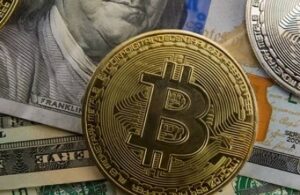
According to Fixygen, Bitcoin’s volatility remains at historically low levels, despite significant fluctuations in flows into cryptocurrency ETFs, shifting expectations regarding Fed interest rates, and sharp price swings on individual trading days.
An analysis by Glassnode shows that one of the most important factors behind the decline in monthly realized volatility has been the increase in the share of Bitcoin held by long-term holders. This metric better explains changes in volatility than the cryptocurrency’s market capitalization, open interest in derivatives, funding rates, or trading volume, according to The Block.
In other words, it is no longer just the market size that matters, but also the structure of BTC holders.
Bitcoin, which previously circulated largely among speculative investors and traders, is increasingly concentrated among long-term holders, ETFs, companies, and other participants who trade much less frequently.
This may reduce the number of coins constantly involved in trading and decrease the market’s sensitivity to short-term fluctuations in demand.
At the same time, more than 71% of the total Bitcoin supply is currently in profit, according to data cited by Bitfinex analysts.
This figure is approaching the historical average of approximately 74.7%. Analysts note that a sustained move above this level in previous cycles has often coincided with the market’s transition from a bear market to a more sustained bull market.
At the same time, the high proportion of coins in profit has a dual effect. On the one hand, it reflects an improvement in the financial situation of Bitcoin holders. On the other hand, it creates a potential supply that could enter the market in the event of further price increases, as investors begin to take profits.
On September 12, Bitcoin is trading around $77,000, remaining well below its 2025 all-time high.
At the same time, the market infrastructure itself is changing. Spot ETFs have become one of the largest channels of institutional demand, public companies are building multibillion-dollar Bitcoin reserves, and the share of long-term holdings is increasing.
This is gradually bringing Bitcoin closer to traditional financial assets in terms of investor structure, although the cryptocurrency’s absolute volatility remains significantly higher than that of most major stock indices or government bonds.
According to Bitfinex analysts, the current situation is, for now, more consistent with consolidation with upside potential than with a confirmed new bullish breakout.
Thus, the shift in Bitcoin’s ownership structure may gradually alter the familiar pattern of cryptocurrency cycles. If an increasing portion of the supply remains held by ETFs, corporations, and long-term investors, future cycles may become less volatile, although it is still too early to completely rule out significant price fluctuations for Bitcoin.

Turkey intends to participate in the Caspian Sea–Black Sea–Europe energy corridor (Black Sea Energy) project, which is designed to ensure the supply of “green” electricity from the South Caucasus to the European Union market, said Turkish Minister of Energy and Natural Resources Alparslan Bayraktar.
According to him, the project involves connecting the power grids of Azerbaijan and Georgia, followed by the transmission of electricity via an undersea cable across the Black Sea to Romania and on to Hungary. At the invitation of the Azerbaijani side, Turkey expressed its intention to join the initiative and supported its implementation.
Ankara’s interest in the project is also confirmed by preliminary negotiations with Baku. On August 1, Azerbaijan’s Minister of Energy Parviz Shahbazov reported following a meeting with Bayraktar in Istanbul that the parties had discussed Turkey’s potential cooperation within the framework of the “Caspian–Black Sea–Europe” energy corridor and had also agreed to accelerate the implementation of other joint energy projects.
According to Bayraktar, cooperation between Turkey and Azerbaijan in the electricity sector is currently developing along three fronts.
The first involves integrating Nakhchivan’s power grid with Turkey’s and organizing electricity exchanges. In the future, this route could be connected to the main territory of Azerbaijan via the Zangezur Corridor.
The second direction is the “green” energy corridor connecting Azerbaijan, Georgia, Turkey, and Bulgaria. It is intended to facilitate the export of renewable electricity generated in Azerbaijan through Georgia and Turkey to Bulgaria and onward to EU markets. In August 2026, Baku and Ankara separately agreed to accelerate the implementation of this project.
The third initiative is Black Sea Energy itself. The main participants in the project remain Azerbaijan, Georgia, Romania, and Hungary. The four countries signed an agreement on strategic partnership in the development and transmission of “green” energy in Bucharest on December 17, 2022. The European Union supports the project, viewing it as a new supply route for renewable electricity from the South Caucasus to the EU.
In July 2026, the project moved to the next phase of implementation following the completion and approval of feasibility studies. The project operator, Green Energy Corridor Power Company, has begun developing the conceptual design, engineering solutions, and procurement strategy.
According to recent statements by the Azerbaijani side, the plan is to gradually export up to 3.9–4 GW of green electricity through the corridor, starting in 2032. The project has also been included in the TYNDP 2026 portfolio of the European Network of Transmission System Operators for Electricity (ENTSO-E).
A key infrastructure element will be a high-voltage subsea direct-current cable between Georgia and Romania. The preliminary construction cost is estimated at approximately 3.5 billion euros, with a construction period of three to four years. It was previously reported that up to 2.3 billion euros in European funding could be secured. However, in the latest Global Gateway documents, 2.3 billion euros is also cited as the indicative investment amount for the strategic Black Sea electricity interconnector, so the final financing structure for the project is still to be finalized.
The European Commission views Black Sea Energy as one of the tools for diversifying the EU’s energy supply and integrating renewable generation from the South Caucasus. The project is intended to connect the Caspian Sea region to the European power grid via Georgia and Romania, while also strengthening the energy resilience of the participating countries.
If Turkey joins, the project will take on additional significance, as Ankara will be able to participate in several parallel transmission routes for Azerbaijani “green” electricity to Europe—via the Black Sea and via the Turkey–Bulgaria overland corridor.



