

According to Fixygen, the escalation around Iran, including strikes by the US and Israel and Tehran’s subsequent response, has been a factor in increased volatility in the cryptocurrency market: Bitcoin fell below $64,000 on the news, while Ethereum fell even further.
At the same time, markets reassessed the risks to commodities and inflation expectations. In particular, Barclays allowed for Brent to rise to $80 per barrel in the event of significant supply disruptions amid tensions between the US and Iran. Against this backdrop, some investors shifted to defensive assets: some materials noted an increase in interest in tokenized gold amid a decline in BTC and ETH.
Possible scenarios: with further escalation and increased oil risks, the crypto market may remain in risk-off mode with increased volatility for longer; with de-escalation and a return of risk appetite, a rebound is likely; if sanctions and payment restrictions are expanded, demand for stablecoins may increase, but compliance risks for infrastructure will also grow.

The Ukrainian Foreign Ministry urges citizens to refrain from traveling to Israel and Iran due to the escalating security situation in the Middle East and the threat of missile attacks.
This was reported by the Consular Service Department of the Ukrainian Foreign Ministry on Facebook on Saturday.
Due to the escalating security situation in the Middle East and the threat of missile attacks, the Ukrainian Foreign Ministry recommends that Ukrainian citizens refrain from traveling to Israel until the situation stabilizes. It also reminds citizens of the current recommendation to leave Iran, which was announced in early January.
Citizens who are already in countries in the region are advised to remain vigilant, closely follow official reports, and always carry identification documents with them.

The US virtual embassy in Iran has urged US citizens to “leave Iran now” if possible and to have a plan to leave independently, without expecting assistance from the US government.
The published warning notes that heightened security measures continue in the country, with road closures, public transport disruptions, and internet blockages. It also points to communication restrictions, including access to mobile and landline networks, and that airlines continue to restrict or cancel flights to and from Iran.
US citizens are advised, if safe to do so, to consider leaving by land, including via Armenia or Turkey, and to make alternative communication arrangements in advance in light of possible internet shutdowns.
The US State Department maintains a Level 4 – Do Not Travel advisory for Iran and separately emphasizes that there is no US embassy in the country and consular assistance is limited; Switzerland acts as the protecting power.

The son of Reza Pahlavi, the Shah of Iran who was overthrown in 1979, who lives in the US, has said that he is ready to return to the country “at the first opportunity” and is already preparing for this.
In an interview with Fox News, he also said that his task is to lead the transition process, “ensure complete transparency,” and prepare the conditions for free elections so that citizens can “freely choose their leaders and determine their future.”
According to Western media reports, mass protests in Iran have been ongoing since late December 2025 and have been accompanied by increased security measures and communication restrictions, including internet outages.

Growing domestic demand combined with huge oil reserves will lead to a significant increase in refining capacity in the Middle East, according to industry publication Offshore Technology, citing a study by GlobalData Energy.
“The Middle East is expected to be a key region in terms of growth in traditional refinery capacity worldwide, accounting for more than a quarter of the total increase by 2030. This growth is driven by large-scale projects, particularly in Iran and Iraq. Both countries are using their vast oil reserves to expand their oil refining infrastructure in an effort to meet growing domestic demand, reduce oil product imports, and strengthen their export capabilities,” the experts write.
In their opinion, Iran will dominate in terms of refinery commissioning, accounting for 40% of the total. The country plans to commission a total of 15 new and expanded projects. The largest of these is Jask II, with a declared capacity of 6,000 barrels per day. The project is currently in the preliminary design stage and is expected to be launched in 2028.
Oil refining capacity in Iraq is expected to increase by 1.9 million bpd. New projects are leading the way in terms of commissioning rates in the country, accounting for 65% of the total expected volume by 2030. About 28% of these are under construction. One of the significant projects, Basra II, involves increasing production by 300 bpd in 2027.
Oman ranks third in terms of oil refining capacity growth, with an increase of 695,000 bpd by 2030.
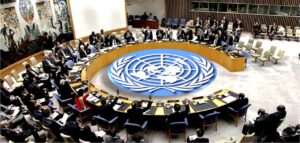
Amir Saeed Iravani, Iran’s permanent representative to the United Nations, has published a letter condemning President Trump’s airstrikes on three key nuclear sites in the Islamic Republic of Iran, Fox News reports.
“The Islamic Republic of Iran condemns in the strongest terms these unprovoked and deliberate acts of aggression. Undoubtedly, the United States’ military aggression against sovereignty and territorial integrity is a clear and flagrant violation of international law and the imperative international norms enshrined in the Charter of the United Nations,” Eraj Saeed wrote, after which he called on the UN Security Council to immediately convene an emergency meeting due to the “savage and barbaric” actions of the US administration. enshrined in the Charter of the United Nations,“ Iravani wrote, calling on the UN Security Council to immediately convene an emergency meeting over the ”savage and criminal actions“ of the US.
”The Islamic Republic of Iran urges the Security Council to immediately convene an emergency meeting to consider this flagrant and illegal act of aggression, condemn it in the strongest terms and take all necessary measures within its responsibilities under the Charter to ensure that those responsible for such heinous crimes are held fully accountable and do not go unpunished,” Iravani wrote.



