
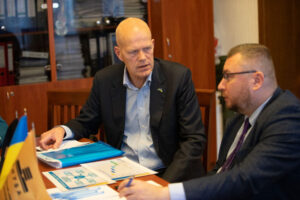
Kyiv National University of Construction and Architecture, together with the Swedish organization V94, is launching the SAFER Reconstruction project, aimed at training specialists in occupational health, safety, and the environment (HSE). The training process will be organized by the Vinnytsia Professional College of Construction, Architecture, and Design, a structural unit of KNUCA. The university will coordinate the program and provide expert support. This was announced by Rector Oleksiy Dniprov.
As part of the initiative, 30 Ukrainian veterans will undergo training to become HSE coordinators and implement EU standards in the construction industry during the reconstruction of Ukraine.
The training program will combine a theoretical component, practical training, and a module on democratic values and European integration. The program is currently being adapted to current market needs in compliance with Ukrainian and European standards.
KNUBA will provide coordination and academic support for the training process. The university’s role includes mentoring Vinnytsia College teachers, providing expertise in the preparation of training materials, quality control of educational content, and participation in the development of the theoretical and practical parts of the program. The KNUBA Institute for Reintegration, Rehabilitation, and Professional Development of Veterans “Architecture of Sustainability” is actively involved in the implementation of the program and is responsible for supporting participants and identifying their educational needs.
The SAFER Reconstruction project brings together an international consortium of partners: V94 – management and coordination, BDO Consulting – training of trainers, Vinnytsia Vocational College – implementation of training, Confederation of Builders of Ukraine – access to practical training at construction sites, Ukrainian Veterans Fund – selection and support of participants, Association of Civic Education Teachers – teaching of EU democratic values.
The project is funded by the Swedish Institute, a government agency of the Swedish Ministry of Foreign Affairs that supports international educational, cultural, and democratic programs. The Institute works to strengthen global cooperation, promote sustainable development, develop democracy, and engage citizens in public life, which is in line with the main objectives of the project in Ukraine.
V94 was founded in 2022 to promote Ukraine’s recovery, in particular by using Swedish experience to develop vocational training in the construction sector.
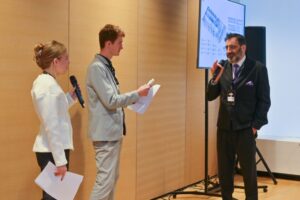
Students and young scientists from the Kyiv National University of Construction and Architecture, with the support of university scientists, presented five innovative projects in the field of construction and architecture as part of the VIRA! pilot project during the V Ukrainian Construction Congress, which took place in Kyiv.
VIRA! is the first pitching platform developed by entrepreneurs to promote innovative solutions in the construction industry. The platform aims to bring together experts and investors with young engineers, architects, and designers who are seeking change for real reconstruction projects.
Here is a brief overview of the projects presented by KNUBA students.
Veteran spaces: Yevheniia Horova, Yevheniia Kostinska, Artem Honcharenko.
A project to create a multifunctional space to provide comprehensive (psychological, medical, social, professional) support to veterans. The main challenge is to rebuild not only buildings but also communities. Each veteran space should be multifunctional and community-oriented. The project requires a flexible approach to design and a multidisciplinary approach involving the community.
Concrete for 3D printing using recycled materials from destroyed buildings and structures: Ivan Ivanov, Oles Lastivka
A project to implement promising 3D printing technology using the remains of war-destroyed buildings and agricultural waste. The goal is to ensure fast, high-quality, and cost-effective reconstruction and solve the problem of construction waste disposal, up to 90% of which consists of debris. The technology also allows for the creation of complex architectural forms for spaces that promote recovery, such as veterans’ spaces.
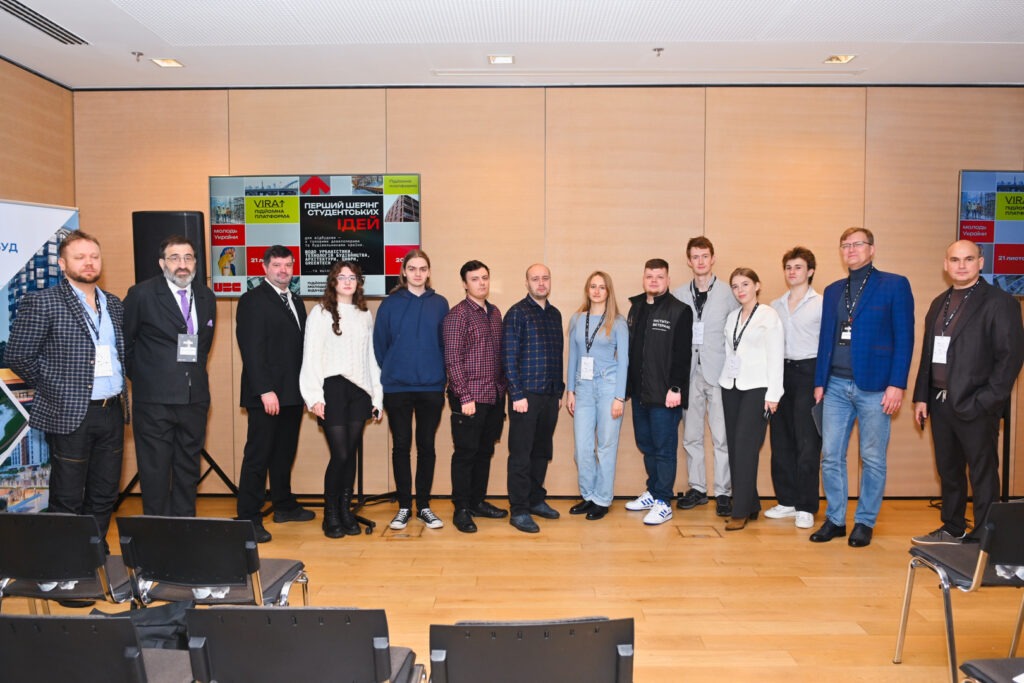
Fungal technologies and circularity in reconstruction: Kateryna Krolenko, Sofia Galat, Anastasia Melnyk
A project to apply mushroom technologies and circularity in the reconstruction of Ukraine. Taking into account the principle of build back better, testing of the latest environmentally friendly materials, in particular insulation based on mushroom mycelium, is ongoing—not only in laboratories but also in field conditions. The tasks for the next stages include improving the technical qualities of the fungal composite and R&D of the insulation in construction laboratories, as well as working with policymakers on certification and asbestos issues, resource mobilization, and community education.
Administrative Services Center: Yulia Gerya, Danylo Galik
The Administrative Services Center (ASC) project is the winner of an open architectural competition among KNUBA students for the best conceptual project for the reuse of an energy-efficient building to provide administrative services with improved environmental characteristics, “Green Reconstruction in Action.” The master plan includes the ASC building with solar panels on the roof, a shelter, a parking lot, and a utility area. The project demonstrates a comprehensive design that combines a modern facade with detailed planning of all areas.
Game-Based Learning for the Development of Management Competencies: Mykhailo Karpov, Artem Vasyuk, Vladyslav Kontsevyi
The project proposes the use of the Smart PM City educational computer game for building a “smart city,” which is based on project management principles, for the effective training of project managers. A safe environment for mistakes has been created, where participants can experiment with solutions without real risks, but with corresponding consequences in the game. The game develops management skills through the task of building a long-term city development strategy, balancing short-term benefits and long-term investments. It is a universal solution for integrating various educational topics: management, finance, marketing, ecology, etc.
Launched by the organizers of Ukrbudcongress, the VIRA! lifting platform has become a unique space where young people shared their ideas for the future reconstruction of Ukraine with an expert audience—construction business owners and leading industry specialists. The opportunity to receive professional feedback and recommendations for better implementation of ideas and developments became a real pitching of solutions for the future reconstruction of Ukraine and helped to understand how exactly it is possible to influence the future of the industry.
“University education cannot be separated from the market and the situation in the country. We can only develop and produce quality results in close cooperation with stakeholders at various levels. We are now presenting five projects and hope that there will be more next year. We are proud that the projects presented have developed from student initiatives or have arisen in response to requests from our stakeholders in the public sector and business. Businesses have a clear vision of their development path, and the advice of practitioners will be very useful for us, for students, and for young scientists,” said Oleksandr Kovalchuk, Vice Rector for Scientific Work and Innovative Development at KNUBA.
Mark Kestelboim, founder and moderator of the platform, CEO of Well-Being Contech, noted:
“Today, Ukraine has a real opportunity to set an incredible precedent: to become a laboratory of innovation, a startup platform within the entire country, where modern standards and inclusion are combined with sustainable technologies for the sake of the future. VIRA! is the first event that will serve as a bridge between young innovators and businesses seeking change. I hope that the platform will become a regular event and that its results will go beyond the platform and bring real benefits to the country.”
The experts in the professional dialogue with students were Anna Iskierdo, creative director and co-founder of AIMM (a graduate of KNUBA), Yaroslav Korniyachenko, founder and CEO of Vlasne misto, Mykhailo Tarasyuk, Big Waves development, Serhiy Odarych, founder of ODA Development, and Vitaliy Borul, CEO of Credo Development.
The topics that the VIRA! project will continue to focus on are urbanism and territorial development, digital technologies in construction management, architecture and new housing typologies, sustainability and green technologies, innovative materials and structures, community solutions, and social services.
ASC, GONCHARENKO, innovative project, Kestelboim, KNUBA, VIRA!, Ковальчук
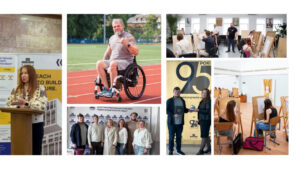
The admission campaign is in full swing at the Kyiv National University of Construction and Architecture (KNUBA) – creative competitions for applicants began in early July. Among those taking exams this summer are Ukrainian defenders. In particular, veteran Vadym Honcharenko and several of his comrades have decided to enroll at KNUBA. They have chosen modern and sought-after specialties, such as architecture, industrial and civil engineering (ICE), physical education and sports (coaching), cybersecurity, as well as a field to which the university pays special attention – ecology and environmental protection technologies (EPT). According to the veterans, they understand the importance of higher education and retraining: new knowledge will help them join the great reconstruction of the country and find themselves in a peaceful life. Vadym Honcharenko, who uses a wheelchair, notes that continuing his education is both a challenge and an opportunity for him. For the university and the Ukrainian Veterans Cluster, this case highlights the relevance of accessibility issues: they are now jointly seeking funding to adapt the educational space to the needs of students with disabilities.
“The war will end sooner or later, but education and reconstruction will definitely continue. We need to prepare for this now,” said Natalia Goncharenko, head of the Ukrainian Veterans Cluster, quoting a well-known opinion about the inevitability of peace and development. As the leader of a veterans’ organization, she emphasizes the need to invest in veterans’ knowledge today. Natalia added that the admission campaign is ongoing, and those who wish to obtain a master’s degree on a budgetary basis still have a chance to submit their documents—the state and partners provide separate funding opportunities for veterans. Thanks to the efforts of the Veterans Cluster and KNUBA, with the support of business partners, a program of special scholarships for veterans and their families has already been launched. The first benefactor of this initiative was Axor Industry. At a recent event dedicated to the launch of the Re:Veterans Platform reintegration program, Axor’s Deputy Marketing Director Olena Krekina presented a program of cooperation between employers on internships and employment for veterans. As a stakeholder representative, Olena is preparing to teach at the university starting next academic year in order to directly share her experience with veteran students.
These innovations are being implemented in line with the state policy of supporting defenders. On July 11, KNUBA and the Ministry of Veterans Affairs signed a memorandum of cooperation that expands opportunities for training and professional adaptation for veterans in Ukraine. “For the university, the veteran program is a response to one of the main challenges facing the country. We help veterans gain a new profession and return to civilian life with relevant knowledge and skills,” said KNUBA Rector Oleksii Dniprov. According to Deputy Minister for Veterans Affairs Yulia Kirillova, combatants and their families can now obtain a master’s degree at KNUBA free of charge, as well as obtain another specialty based on a previously obtained diploma. In addition, veterans and their children can study at colleges affiliated with the university under a state program (CMU Resolution No. 432). For its part, the university provides the Ministry with expert support in creating a modern infrastructure for veterans. In particular, specialists from KNUBA and the Institute for the Reintegration of Veterans “Architecture of Resilience” are involved in developing the concept of “veteran spaces” — a network of multifunctional support centers for veterans and their families. It should be noted that KNUBA students who are children of veterans are already eligible for compensation for one year of study. All these steps are designed to ensure a smooth transition from military service to a successful civilian career for our defenders.
Veteran reintegration: employment and entrepreneurship after the war
The Ukrainian Veterans Cluster emphasizes that the most important result of all educational initiatives is a veteran (and their family) who is employed or a veteran entrepreneur who has started their own business. The goal is not only to obtain a diploma, but also to enable defenders to become economically independent and successful in peaceful life. Global experience confirms that the integration of veterans into the economy through education, work, or entrepreneurship gives a powerful impetus to the development of a country.
“Veterans are not only a force that protects, but also a force that builds,” emphasizes Axor, a company that supports veteran initiatives. The main task is to help defenders realize their potential in peaceful life. In Ukraine, this philosophy is already being implemented through retraining programs, partnerships with businesses, and support for entrepreneurship among former military personnel. After all, every veteran who finds employment or starts a successful business is not only a personal victory for the soldier, but also a contribution to the sustainable development and recovery of the country.
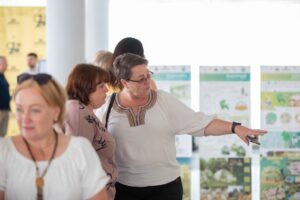
KNUBA presented the best of 300 architectural concepts for the Medvynska community in the Kyiv region, ranging from the renovation of existing buildings to visions for future public spaces. The work was carried out by students under the guidance of Tetyana Ladan, associate professor at the Department of Fundamentals of Architecture and Architectural Design at KNUBA. This was announced by Rector Oleksii Dniprov.
“Each of the concepts presented is part of a comprehensive spatial strategy, executed in a unified style and logic. I am convinced that these projects can be implemented in practice. This confirms one of our key missions – to participate in the reconstruction of Ukraine in cooperation with communities,” said Oleksii Dniprov.
He added that the projects were the result of a partnership between the university and the community, which was formalized in a memorandum.
The conceptual projects presented relate to both new architectural solutions and the transformation of existing facilities. Some of them were presented in VR format.
“300 conceptual projects are a significant contribution to the development of the Medvyn community’s development strategy and spatial planning. I am grateful to the students, teachers, and everyone who participated in this process. The Medvyn community is open to change, and we are ready to move forward together,” said Ignatius Sergienko, head of the Medvyn community.
Below are five concepts that reflect the implementation of the community’s urgent needs.
Modular medical facility in the village of Medvyn – the “Beehive” concept
The concept provides for a convenient modular layout with compact rooms for doctor consultations, physiotherapy procedures, and a day hospital. An X-ray room, laboratories, and other necessary facilities are also provided.
The penthouses have mezzanines and skylights in the pyramid roofs. The rooms also have open terraces with pergolas for sun protection.
The roof has space for a café-restaurant, connected to open terraces and therapeutic gardens.
The residential blocks are designed for 1 or 2 visitors and can be used to accommodate doctors invited to consult with community residents.
The basement can accommodate 50 people and can be converted into a multipurpose space that can also be used as a shelter. The site has parking and convenient access to emergency medical services.
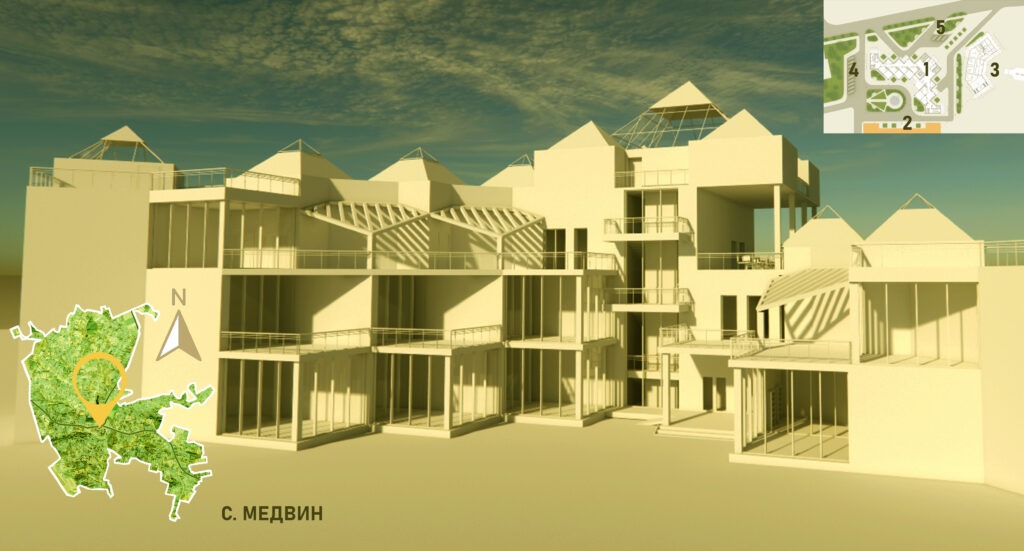
Modular outpatient clinic on Oleksandra Vasylenka Street in the village of Medvyn
1 – new general family medicine clinic, 2 – renovation of the old clinic into a rehabilitation center, 3 – Sunday school, 4 – visitor parking, 5 – ambulance parking.
Authors: architects, associate professors at KNUBA – Tetiana Ladan, Iryna Novosad, with the participation of Vladyslava Shevtsova, a student at the Department of Fundamentals of Architecture and Architectural Design.
Reconstruction of a school in the village of Shcherbashyntsi into a rehabilitation center – the “P’yatitsvit” concept
The concept involves insulating the facades, redesigning the premises for residential use, and dividing the master plan into five zones, like five petals: a playground, an area for active games (volleyball, tennis), a quiet area for elderly people to relax with tables for board games, a cherry orchard, barrier-free vegetable gardens accessible to people in wheelchairs. An amphitheater, a hairdresser’s, gazebos, and an apiary complete the cozy ecosystem for restoring strength and energy.
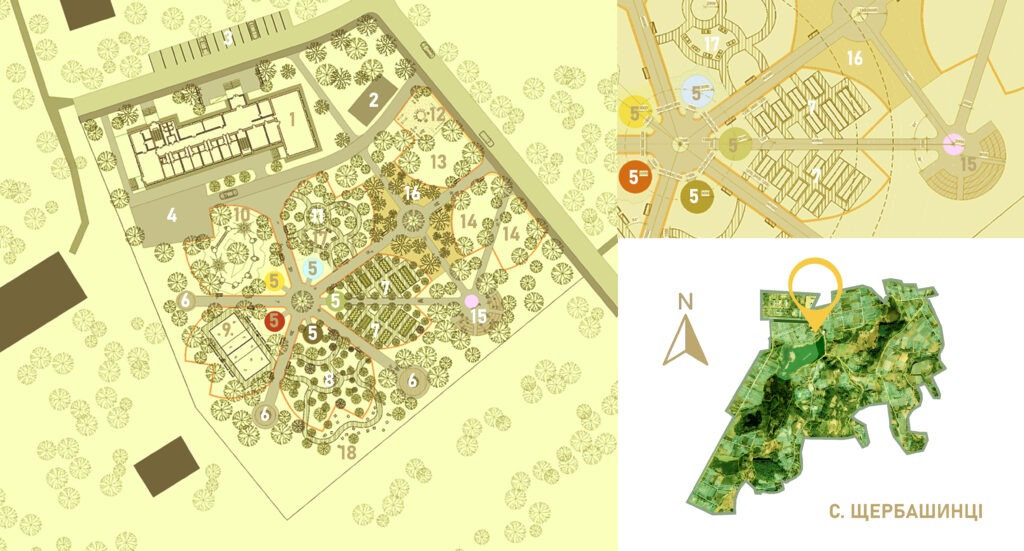
Schematic plan of the school’s reconstruction into a rehabilitation center at 1 Kvitneva Street in the village of Shcherbashyntsi
1 – rehabilitation center, 2 – hairdresser, 3 – parking lot, 4 – turning area for vehicles, 5 – symbolic place, 6 – gazebo, 7 – barrier-free vegetable gardens, 8 – young cherry orchard, 9 – volleyball and tennis court, 10 – playground, 11 – flower garden, 12 – sports ground with exercise equipment; 13 – common area, 14 – place for walking animals, 15 – amphitheater, 16 – old tree garden, 17 – area with tables for board games, 18 – apiary.
Authors: Tetiana Ladan, student of the Department of Theory of Architecture and Architectural Design, Artem Tmenov.
Stele at the entrance to the village of Huta and transport stops – concept “Perekotypole”
The stele attracts tourists to a quest – “find the letters of the alphabet.” The structure is kinetic, and the movement mechanism is powered by a solar panel.
Authors: Tetiana Ladan, student of the Department of Architectural Environment Design Anton Fesik.
The letters “Г”, “У”, ‘Т’, and “А” form the basis of the three-dimensional composition of the village bus stops. Uniform designs were used, which, with partial replacement of elements or reversal, can look like different objects. Lighting is powered by solar energy, and there is a possibility to charge gadgets. The roofs of the stops are proposed to be used for green gardens and the installation of solar panels.
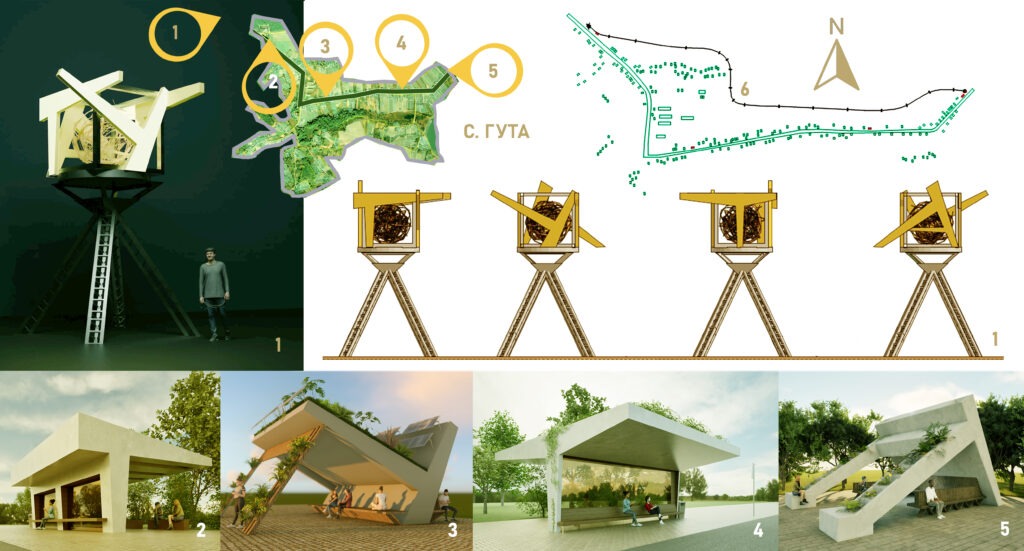
Transport stops in the village of Huta
1 – kinetic stele at the entrance to the village of Huta, 2 – stop in the shape of the letter “G”, 3 – stop in the shape of the letter “U”, 4 – stop in the shape of the letter ‘T’, 5 – stop in the shape of the letter “A”, 6 – string transport track
Authors: Tetiana Ladan, students of the Department of Architectural Design of Civil Buildings and Structures Maria Korf, Polina Lomachuk, Viktoria Yermolaieva, Yelyzaveta Chepurna, student of the Department of Fundamentals of Architecture and Architectural Design Ksenia Taran.
Recreation area, festival venue, and health complex in the village of Medvyn – concept “Parade of Planets”
Near the Medvyn House of Culture, there are plans to build a terrace, a wave-shaped ramp, a terrace park with an alley of fountains, an open-air amphitheater, a playground, and a footbridge.
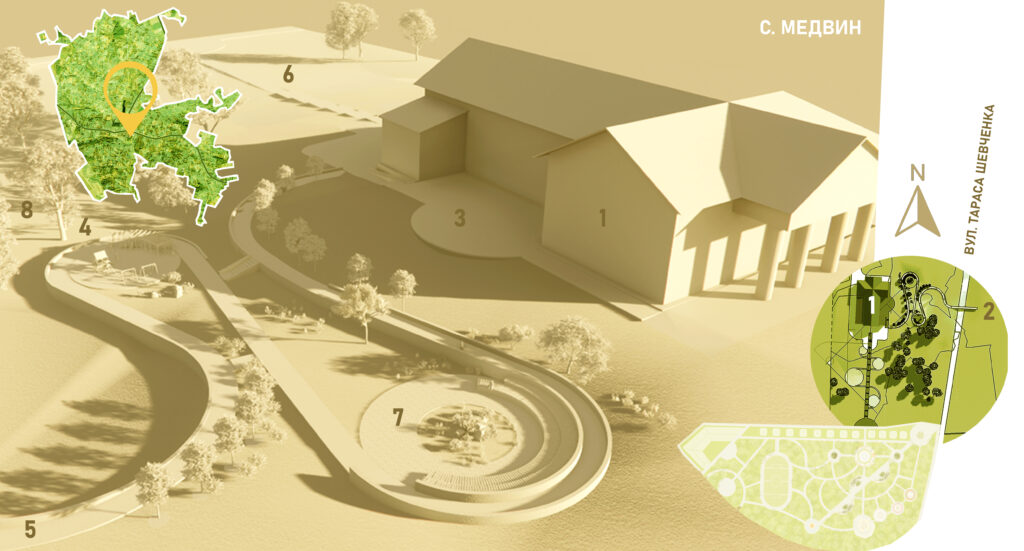
Recreation area on Shevchenko Street in the village of Medvyn
1 – cultural center, 2 – municipality, 3 – observation terrace, 4 – playground, 5 – footbridge, 6 – terrace park with an alley of fountains, 7 – amphitheater, 8 – skate park
Authors: Tetiana Ladan, student of the Department of Theory of Architecture and Architectural Design Alona Starostenko.
Below the relief, there is a fairground, a park for festivals and sports venues, a motel or themed houses on the slopes, integrated into the landscape with observation terraces.
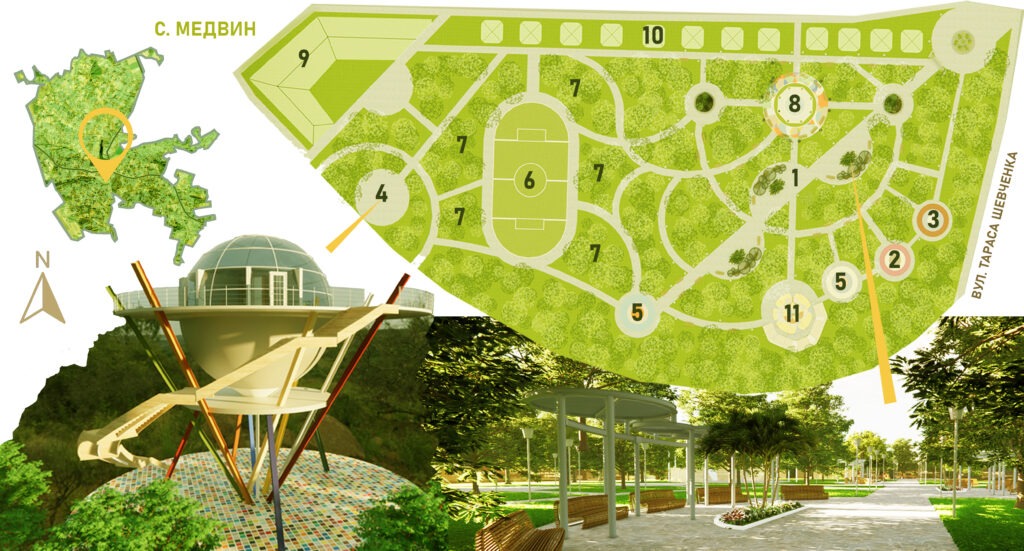
Festival area on Shevchenko Street in the village of Medvyn
1 – main alley, 2 – house-note for musicians, 3 – creative house for artists, 4 – house-shuttlecock for coaches, 5 – gazebo, 6 – mini stadium, 7 – sports grounds, 8 – fountain, 9 – motel, 10 – shopping arcade, 11 – stage
Authors: Tetiana Ladan, students of the Department of Urban Planning – Polina Nechai, Yelyzaveta Voloshchuk.
The concept also includes the creation of a health complex in the village of Medvina, with a waterfall, a water channel with bridges, a spa complex, resort terrace houses with swimming pools and sports grounds, which can be reached along the channel by winding ramps.
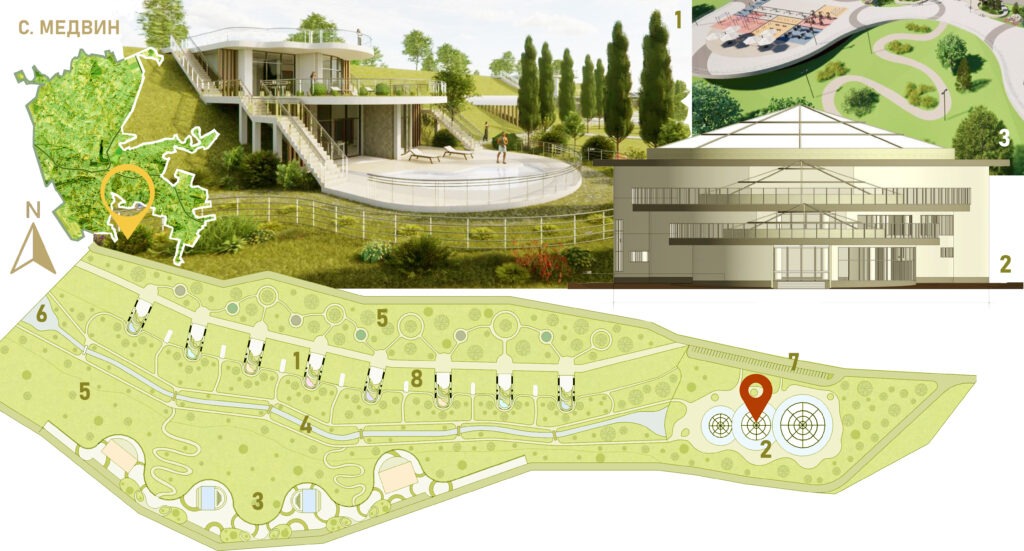
Health complex in the direction of Mount Totokha and the Totokhavud tourist complex in the village of Medvina
1 – resort house, 2 – spa complex, 3 – sports area, 4 – water canal, 5 – park area, 6 – waterfall, 7 – parking, 8 – shelter.
Authors: Tetiana Ladan, students of the Department of Urban Planning Anastasia Haidaienko, Eva Kazakova, Vladislav Yakunin, Oleksandra Rozumna.
Tourist complex in the village of Medvini – the “Totohavud” concept
A location for festivals, fairs, and other events. Located near a local landmark – Totohava Mountain. The pavilions consist of lightweight modular structures that blend harmoniously into the natural environment.
There is a utility area, public restrooms, an open-air cinema, venues for special events, a pavilion-café, photo zones, a water canal, and parking. The pavilions are designed to resemble male and female silhouettes performing folk rituals such as round dances, spring songs, and haymaking.
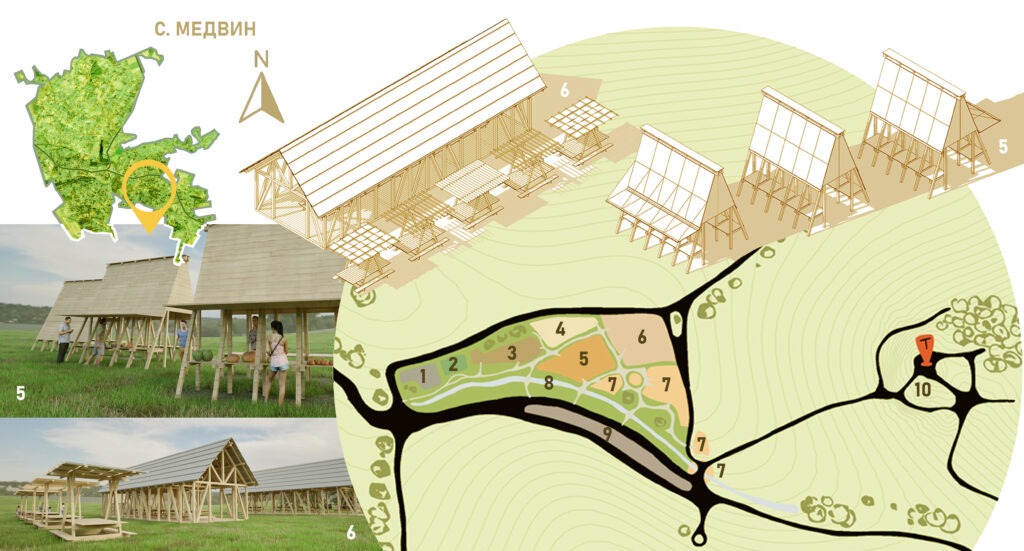
Zoning of the territory near Mount Totokha:
1 – utility area, 2 – public restroom area, 3 – open-air cinema area, 4 – area for special events, 5 – area for food and souvenir pavilions, 6 – café pavilions, 7 – photo zones and recreation areas, 8 – water channel area, 9 – parking area, 10 – Mount Totokha area.
Authors: Tetiana Ladan, students of the Department of Architectural Environment Design Dmytro Ryabets, Nataliia Demchenko, with the participation of Aliona Starostenko, a student of the Department of Theory of Architecture and Architectural Design.
Information and graphic materials for the publication were kindly provided by the authors’ teams led by Tetiana Ladan.
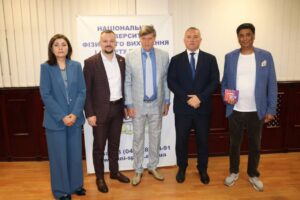
The National University of Physical Education and Sports of Ukraine hosted an official presentation of the social project “NUPES with Respect to the Armed Forces of Ukraine”. This is an initiative aimed at supporting war veterans through sports rehabilitation, physical activity and inclusion in a healthy social environment.
The presentation was attended by representatives of the Ministry of Youth and Sports of Ukraine, the Ministry of Veterans Affairs of Ukraine, the National Guard of Ukraine, the Veterans Cluster of Ukraine, the KNUBA Veterans Institute, veterans’ organizations, public initiatives, businesses, military personnel and the sports community.
The project makes it possible to purchase or give a veteran a special sports season ticket that includes
“We welcome the initiative of the NUFVSU, which combines professionalism, resources and decent treatment of veterans. Such projects are an example of how the state and educational institutions can create new models of support. The Ministry of Youth and Sports will continue to promote such initiatives,” said Deputy Minister of Youth and Sports of Ukraine Serhiy Tymofeev during the event.
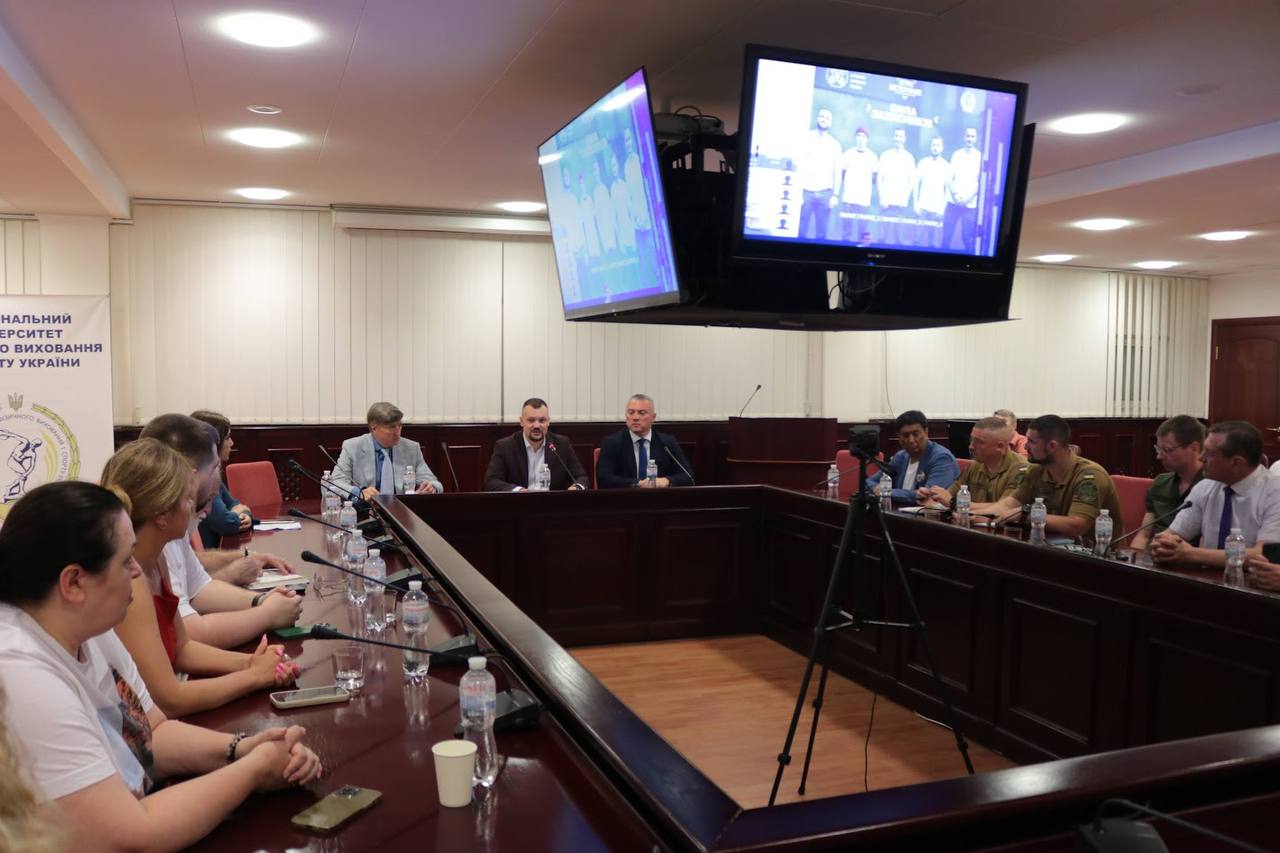
Each component of the season ticket is designed as part of a holistic recovery process. It is not just access to sports infrastructure, but a professionally developed program with an individual approach to each participant.
“NUFVSU has always been a place where champions were brought up, but today we set ourselves another important goal: to be a place where life is restored. We have created not just a product – we have created a support format that combines professionalism, care and gratitude,” said Oleksandr Pyzhov, Acting Rector of NUFVSU.
Special attention is paid to physical rehabilitation classes. The first three sessions are not standard workouts, but an individual diagnosis of the veteran’s condition, professional support from a rehabilitation therapist, testing the level of stress and selecting a personal program according to the physical condition, combat experience, injuries or psychological stress.
“This is not a set of services. It is a structured support system created by professionals who understand the specifics of post-traumatic recovery. It is an opportunity to return to a person a sense of control over the body, rhythm, and space. And – over life,” explained Viktor Korzh, Director of the Training and Rehabilitation Center of the NUFVSU.
As for the gym classes, each of the 12 workouts involves the support of an adaptive sports specialist or rehabilitation therapist. The goal is not just to provide physical activity, but to develop basic movement skills, restore the musculoskeletal system, build confidence in one’s own body, improve coordination and strength.
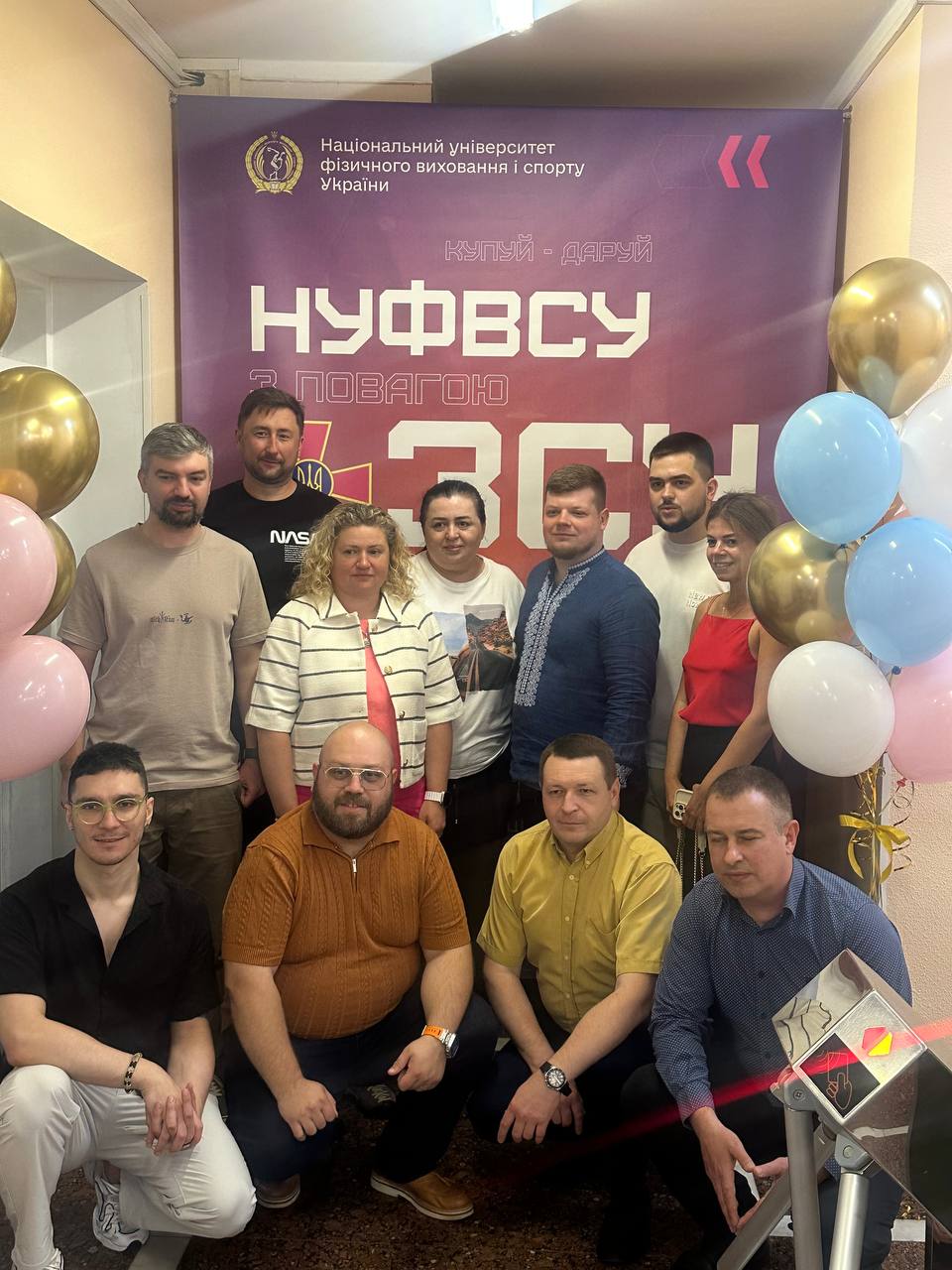
“It is important for a veteran not only to receive help, but also to feel that it is thoughtful, professional, and worthy. This project demonstrates exactly this approach – when every element is aimed at real recovery, not a formality. We appreciate the partnership with the NUFVSU and believe in the power of such initiatives,” said Talia Zharova, Head of the Veterans Sports Department of the Physical and Mental Health Department of the Ministry of Veterans Affairs.
The program also provides 8 visits to the sports pool, which can be used for relaxation, aqua therapy or muscle tone recovery after injuries.
Business representatives, Gledfarm LTD, was the first to support the project and purchase 20 season tickets for veterans.
“It is a great honor for us to join the initiative that helps our defenders return to a full life. Physical rehabilitation is not only about health, it is about faith in the future and the strength of the community,” said Rajiv Gupta, CEO of Gledpharm Ltd.
Anyone can buy a certificate – a relative, a fellow veteran, an organization, employers or just a person who cares. It can be presented to a veteran you know or transferred through the system of coordinators to a veteran who has applied to the program.
Join the program or give a subscription to a veteran:
Telegram: +380 98 230 74 65
Phone: +380 66 547 11 26
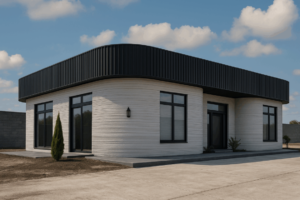
Scientists from the Kyiv National University of Construction and Architecture (KNUCA), together with partners, have launched an international project to create new concrete mixtures using waste, in particular, destroyed structures, for construction using 3D printing and traditional methods, according to the KNUCA press service.
The release states that as part of the project “Development of new approaches and construction materials for the restoration of Ukraine’s damaged infrastructure with consideration for environmental sustainability,” researchers are developing a concrete mixture with the addition of materials resulting from the destruction of buildings and other industrial and agricultural waste.
The restoration of housing in Ukraine requires the introduction of universal technologies for rapid construction that allow for the construction of sustainable and affordable buildings even in conditions of limited resources. Due to the war, many buildings in Ukraine have been destroyed. The remains of concrete structures can be effectively recycled and used for the construction of new housing. Compared to traditional construction methods, 3D printing of buildings can ensure faster construction rates, significantly reduce human resource use, and save materials and energy.
The project is co-funded by the US Office of Naval Research and the US National Science Foundation (NSF). The research is being conducted as part of the multilateral partnership initiative “International Multilateral Partnership for Ensuring the Sustainability of the Education and Science System in Ukraine (IMPRESS-U), launched by the Office of International Science and Engineering (OISE) of the US National Science Foundation with the participation of researchers from Stony Brook University in the US and the Jan and Jędrzej Sniadecki University of Technology in Bydgoszcz, Poland.
The project will last two years.
At KNUBA, the implementation of this project has been entrusted to lecturers, postgraduate students, and students of the Faculty of Construction and Technology, in particular, the Department of Building Materials and the Department of Building Structures and Products Technology.



