
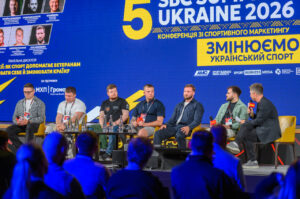
On Wednesday, May 27, the capital’s Parkovy Exhibition and Convention Center hosted the SBC Summit Ukraine, the All-Ukrainian conference on sports marketing, for the first time. This year’s summit marked the fifth anniversary of the event and was the largest in the history of the Sport&Business Club. It brought together nearly 1,500 participants from across the country, including athletes, presidents of federations and clubs, brand representatives, media professionals, entrepreneurs, marketers, investors, and managers. Throughout the day, guests networked, discussed future projects, exchanged experiences, and agreed on collaborations that are sure to continue after the summit.
The summit was co-organized by the Ukrainian Mass Sports Agency, the Kyiv City State Administration’s Department of Youth and Sports, the Sports Committee of Ukraine, and the Donetsk Regional Branch of the National Olympic Committee of Ukraine.
The event was hosted by Maria Skiba, a journalist for the “We Are Ukraine” TV channel, and Dmytro Yegorov, a radio host for “Autoradio.”
In a festive atmosphere, Alexei Braga, CEO of the Sport&Business Club, presented a certificate for 100,000 hryvnias to Artem Goncharenko, head of the “Architecture of Resilience” Institute for Veterans at KNUBA. The funds were raised through donations from participants in the Club’s events and will be used to purchase necessary rehabilitation equipment.
The summit took place simultaneously on two stages, featuring over 60 leading experts in the fields of sports, business, and media who are driving the industry forward today. The event served as a platform for candid dialogue on reforms, major investments, the survival of sports during wartime, attracting sponsors, integrating new technologies, rehabilitating veterans, and building athletes’ personal brands off the field.
Speakers on the main stage included: Matvii Bidnyi, Minister of Youth and Sports of Ukraine; Vadym Guttsait, President of the National Olympic Committee of Ukraine; Olga Saladukha, President of the Ukrainian Athletics Federation; Yulia Khan, Director of the Department of Youth and Sports at the Kyiv City State Administration; Ukrainian soccer legend Oleksandr Shovkovskyi; Ihor Marynych, Director of Adidas Ukraine; sports blogger and founder of Trendets Camp Dmytro Povooznyuk, CEO of Lenovo in Ukraine Taras Dzhamalov, President of the Ukrainian Premier League Yevhen Dykyi, Ukrainian and Turkish soccer champion and creator of a YouTube project Denys Boiko, MEGOGO journalist Oleksandra Kucherenko, Vice President of the NOC of Ukraine and President of the Ukrainian Padel Federation Oleksiy Dniprov, Olympic fencing champion Olena Kravatska, 6-time Ukrainian track and field champion and Biopell ambassador Daria Stavnycha, FC Shakhtar goalkeeper coach Andriy Pyatov, Olympic judo medalist Daria Bilodid, founder of the rhythmic gymnastics academy and Olympic bronze medalist Anna Rizatdinova, WowBody App owner Anita Lutsenko, three-time Olympic canoeing medalist Lyudmila Luzan, and others.
At the same time, practical discussions on the development of sports projects, audience engagement, and modern communication tools took place on the Best Practices Stage for three hours. Speakers included: European fencing champion Roman Svichkar, DuelDuck founder Stanislav Horuna, Spartan Ukraine director Oleksiy Vovk, X-Park founder Yuriy Zozulia, Red Foxes director Olena Rozhkova, and others.
“Holding the summit at the Parkovy Exhibition and Convention Center was our big dream, and I am truly proud that we managed to make it happen, even amid the war. This event has become the largest in our history, as we have broken absolutely all of our own records for the number of speakers, guests, and partners. When you see how this powerful synergy of sports, business, and media is working at full capacity on such a platform, you realize that nothing is impossible for our industry.
Our goal remains unchanged—to create a space for open dialogue, major investments, the emergence of new technological use cases, and collaborations that drive the industry forward. In today’s environment, maintaining this momentum and uniting sports and business is of the utmost importance. But, of course, we wouldn’t have achieved such an impressive scale without our reliable partners, the Club’s large community, and our strong team. Thank you to everyone who has been a part of this story—and see you soon!” – Alexey Braga, CEO of Sport&Business Club.
KYIV, MARKETING, SBC Summit Ukraine, Sport&Business Club, SPORTS
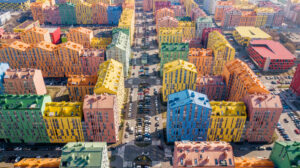
According to the think tank Experts Club, Kyiv ranked 36th out of 37 European cities in the Global Property Guide’s housing cost ranking, according to data from the updated “Square Meter Prices in European Cities” table for April 2026, published on the study’s website.
The average housing cost in the Ukrainian capital is estimated at €1,970 per square meter. Over the past year, the figure has risen by 2.6%, and over two years—by 0.9%.
In the ranking, Kyiv emerged as one of the most affordable markets in Europe. Only Chisinau ranks lower than the Ukrainian capital in the table, where the average price of apartments is 1,720 euros per square meter. At the same time, Kyiv is cheaper not only than Western European capitals but also than most cities in Central and Southeastern Europe.
For comparison, in Belgrade the average price of new properties is 3,333 thousand euros per square meter, in Podgorica—2,141 thousand euros, in Bucharest—2,250 thousand euros, in Sofia—€2,300, in Athens—€2,500, in Budapest—€3,061, and in Zagreb—€3,781
Kyiv’s low ranking in the European table reflects the war’s impact on the real estate market, investment risks, limited external demand, and buyer caution. Unlike many European capitals, where prices are supported by mortgages, migration, and stable investment demand, the Ukrainian market remains dependent on security, macroeconomics, and the recovery of business activity.
At the same time, positive annual dynamics indicate that the Kyiv market is not in a state of sharp decline. Year-over-year growth of 2.6% indicates the presence of domestic demand, particularly in the segments of completed housing, high-quality properties, and locations with developed infrastructure.
Kyiv remains Ukraine’s largest real estate market and the country’s main hub of business activity. It accounts for a significant portion of the demand for residential, office, retail, and rental properties. Once the active phase of the war ends, the capital could become one of the key hubs for the recovery of investment activity.
For now, Kyiv remains one of the most affordable major European cities in terms of housing costs in euros. For potential investors, this may mean a low entry threshold, but at the same time, a high level of country, military, and regulatory risk.
The Global Property Guide study is available at: https://www.globalpropertyguide.com/europe/square-meter-prices
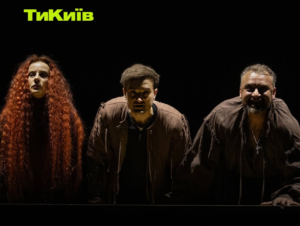
In June, Kyiv’s theaters will present several premieres and new stage adaptations—ranging from classics of Ukrainian drama to children’s theater, contemporary drama, and musical productions. Our selection includes events from the “TyKyiv” Instagram channel, as well as premieres by the National Operetta of Ukraine.
“TyKyiv” Instagram channel: https://www.instagram.com/tykyiv/

“Oh, Don’t Go, Hrytsiu…”
The Lesia Ukrainka National Academic Drama Theater will present a new interpretation of Mykhailo Starytsky’s play “Oh, Don’t Go, Hrytsiu, to the Evening Gathering.”
In this production, the story of love and betrayal is transposed into a modern urban setting. As noted in the announcement, here “feelings quickly become weapons, and the struggle for attention and significance often outweighs the truth.”
Where: Lesya Ukrainka National Drama Theater, 5 Bohdan Khmelnytsky St.
When: June 8 at 7:00 p.m., June 9 at 7:00 p.m.

“Winnie-the-Pooh”
The Kyiv Municipal Puppet Theater on the left bank of the Dnipro will present a puppet version of the adventures of Winnie-the-Pooh. The performance is based on the children’s stories by English author A. A. Milne.
The story centers on the teddy bear Winnie the Pooh and his toy friends. The director of the production is Gleb Gyutin.
Where: Kyiv Municipal Puppet Theater on the left bank of the Dnipro, 1 Myropilska St.
When: June 13 at 11:00 a.m., June 28 at 11:00 a.m.
“The Rabbit Hole”
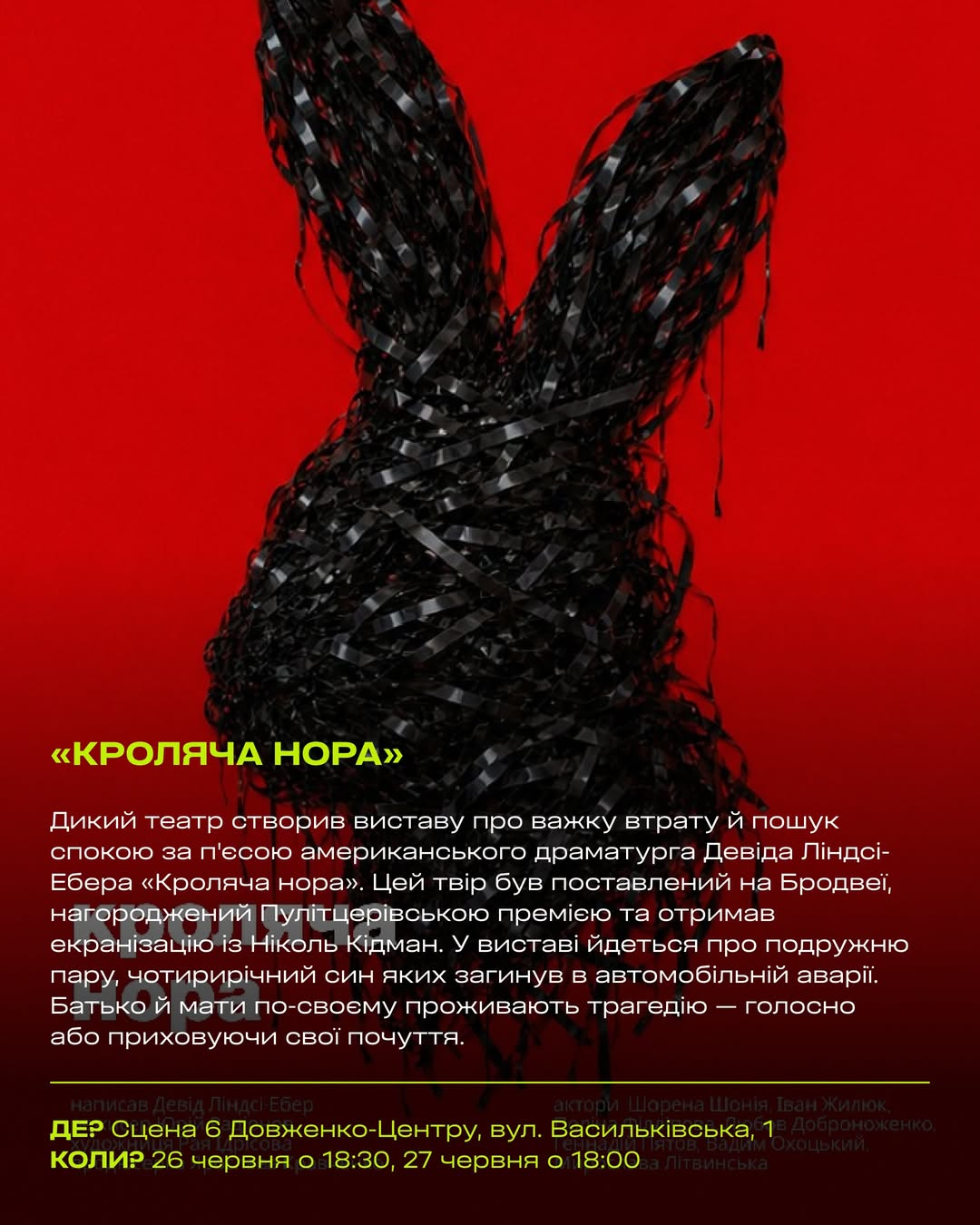
The Wild Theater presents a production based on the play “The Rabbit Hole” by American playwright David Lindsay-Abaire. It is a story about a difficult loss and the search for a way to cope with personal tragedy.
At the center of the plot is a married couple whose four-year-old son died in a car accident. The characters grieve the loss in different ways: some do so openly, while others keep their feelings hidden inside.
Where: Stage 6 of the Dovzhenko Center, 1 Vasylkivska St.
When: June 26 at 6:30 p.m., June 27 at 6:00 p.m.
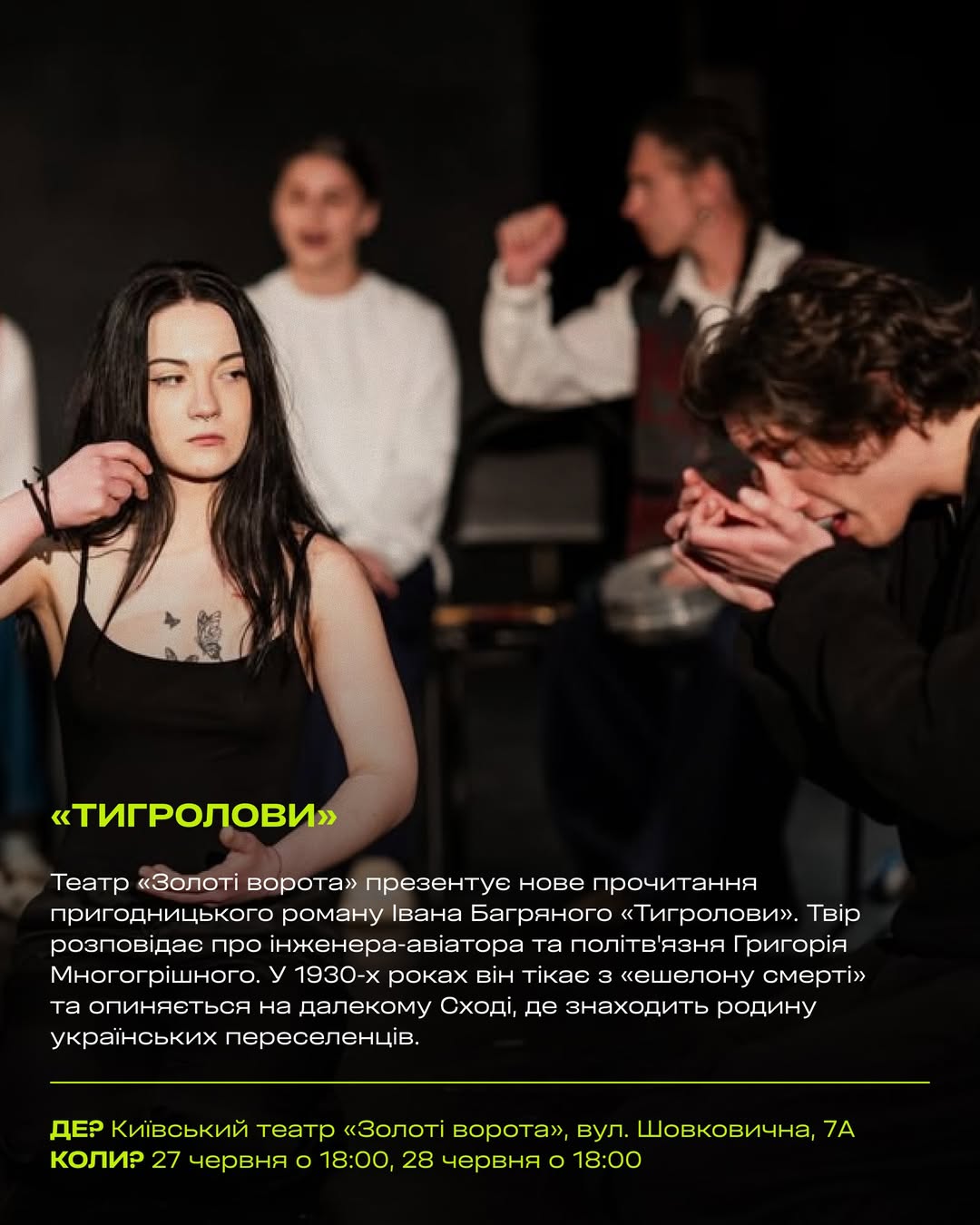
“Tiger Hunters”
Kyiv’s “Golden Gate” Theater presents a new adaptation of Ivan Bagryany’s adventure novel “Tiger Hunters.”
The story follows aviation engineer and political prisoner Hryhorii Mnohohrishnyi. In the 1930s, he escapes from a “death train” and ends up in the Far East, where he finds a family of Ukrainian settlers.
Where: Kyiv’s “Golden Gate” Theater, 7A Shovkovychna St.
When: June 27 at 6:00 PM, June 28 at 6:00 PM.
Premieres at the National Operetta of Ukraine
In June, the National Operetta of Ukraine will also present several notable productions as part of its 91st theater season.
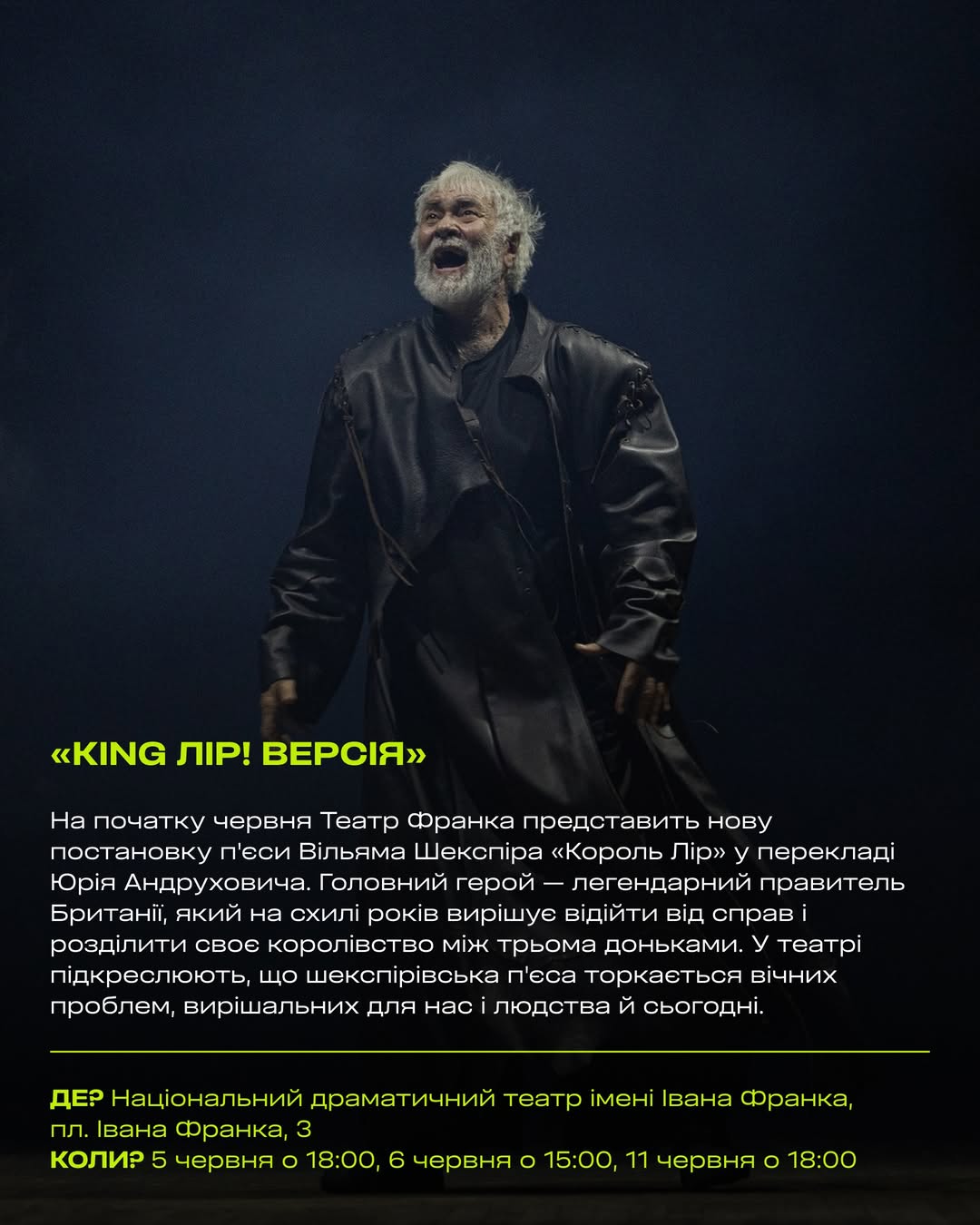
“KING LIR! VERSION”
In early June, the Frank Theatre will present a new stage adaptation of Shakespeare’s “King Lear,” translated by Yuri Andrukhovych.
This is the story of the legendary ruler of Britain, who at the end of his reign decides to relinquish power and divide the kingdom among his three daughters. But the king’s personal choice sets off a drama about power, family, responsibility, and the price of mistakes.
The theater emphasizes: “King Lear” is not only a Shakespearean classic but also a play about timeless questions that remain relevant for people and society today.
Where: Ivan Franko National Drama Theater,
3 Ivan Franko Square
When:
June 5 — 6:00 PM
June 6 — 3:00 PM
June 11 — 6:00 PM
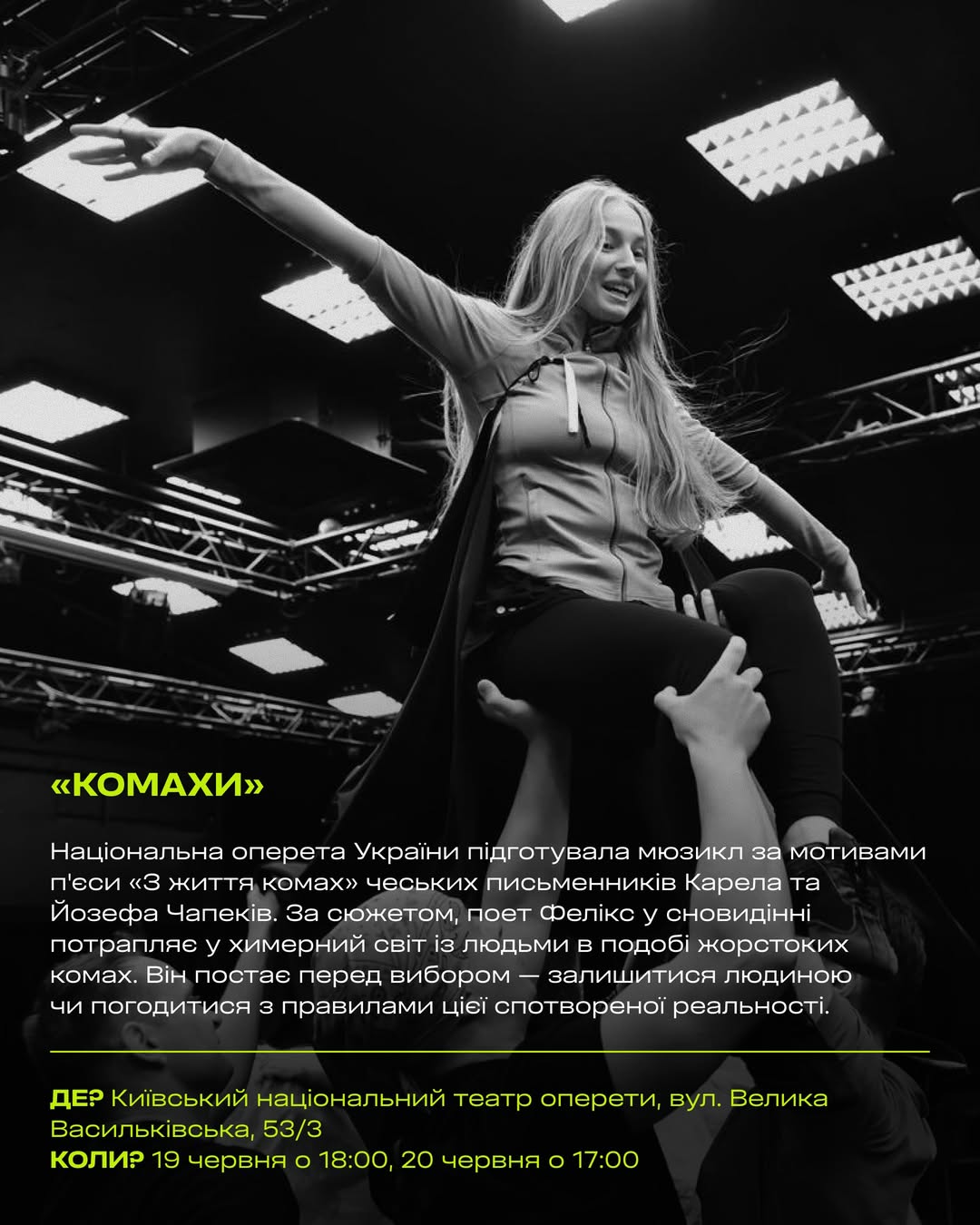
“Insects”
On June 19 and 20, the National Operetta of Ukraine will present the premiere of Igor Nebesny’s phantasmagorical musical “Insects.”
The production will take place on the theater’s main stage. The performance is intended for audiences aged 12 and older.
Where: National Operetta of Ukraine, 53/3 Velyka Vasylkivska St.
When: June 19 at 6:00 PM, June 20 at 5:00 PM.
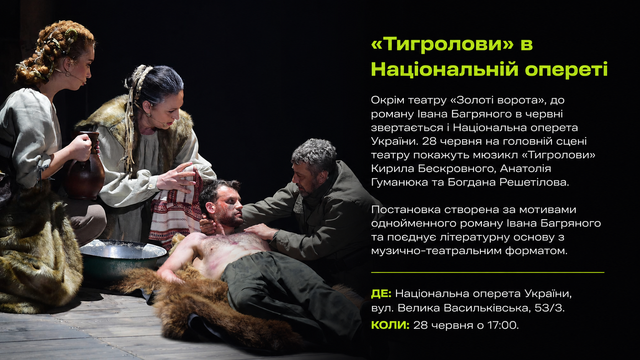
“Tiger Hunters” at the National Operetta
In addition to the “Golden Gate” Theater, the National Operetta of Ukraine will also adapt Ivan Bagryany’s novel in June. On June 28, the theater’s main stage will host the musical “Tiger Hunters” by Kirill Beskrovny, Anatoly Gumanuk, and Bogdan Reshetilov.
The production is based on Ivan Bagryany’s novel of the same name and combines the literary source material with a musical-theatrical format.
Where: National Operetta of Ukraine, 53/3 Velyka Vasylkivska St.
When: June 28 at 5:00 p.m.
Thus, Kyiv’s June theater program combines classics, contemporary drama, children’s theater, and musical productions. For audiences, this is an opportunity to see both new interpretations of well-known works and premieres on the capital’s major stages.
For more information about events in Kyiv, visit the “YouKyiv” Instagram page: https://www.instagram.com/p/DZKSi7Kjblv/?img_index=2
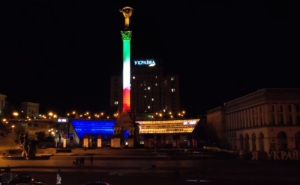
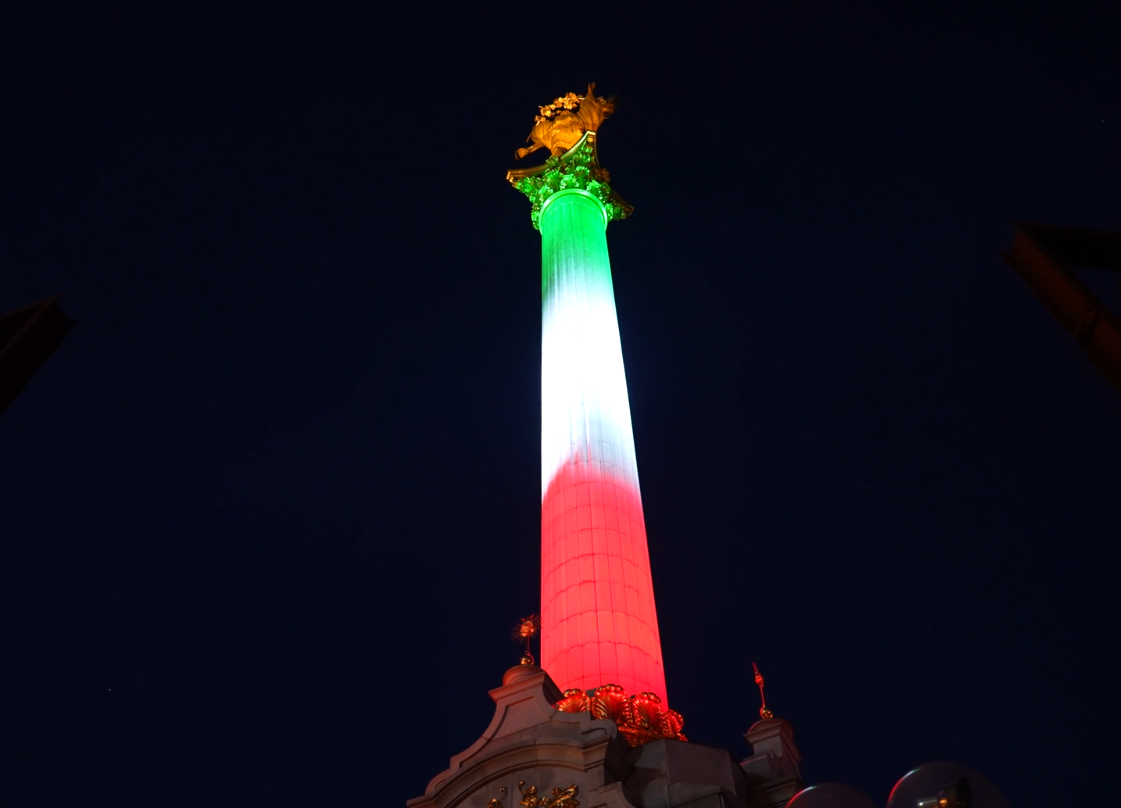
Kyiv hosted celebrations marking the 80th anniversary of the proclamation of the Italian Republic. On this occasion, the Independence Monument on Maidan was illuminated for the first time in history in honor of a foreign country—in the colors of the Italian tricolor, according to the Italian Embassy in Ukraine.
The events in Kyiv were hosted by Italian Ambassador to Ukraine Carlo Formosa. In his speech, he emphasized the connection between Italy’s historical experience after World War II and Ukraine’s current struggle for freedom and independence.
“Looking at today’s Ukraine and its resilience, memories come to mind of the sacrifices Italians made after the tragedy of fascism and the war to build a democratic state together. Just like our country eighty years ago, the courageous and unbreakable people of Ukraine are experiencing a moment when freedom ceases to be an abstract concept and becomes a daily, concrete, and precious choice,” the ambassador stated.
Formosa noted that Ukraine is defending not only itself but also principles vital to all of Europe: sovereignty, the right of a people to choose their own future, and the inadmissibility of using force as an argument in international relations.
“It is precisely thanks to its deep commitment to these values that Italy has stood unwaveringly by Ukraine’s side from the very first day of the Russian invasion. We continue to work together for a just and lasting peace,” the ambassador added.
The celebrations were attended by representatives of Ukraine’s state bodies, the Office of the President, the government, central and local authorities, as well as representatives of business, culture, science, the media, civil society, and the Italian community in Ukraine.
A separate part of the program was the exhibition “Renato Balestra. Codes of Haute Couture,” opened in Kyiv to mark the anniversary of the Italian Republic. The exhibition features eleven evening gowns from the fashion house, founded in Rome in 1959. The exhibition traces the over 60-year history of the Made in Italy brand, the legacy of its founder, and the fashion house’s contemporary development.
The Italian Embassy also provided photo and video materials showing the Independence Monument illuminated in the colors of the Italian flag. The materials are available for free use.
The Italian Republic was proclaimed following a referendum on June 2, 1946, as a result of which Italy abandoned the monarchy and became a republic. Republic Day is Italy’s main national holiday.
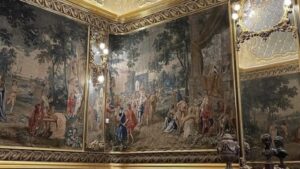
According to the Interfax-Ukraine Culture project, dozens of Kyiv museums will traditionally open their doors for free admission in June. Journalists from the culture department of the Interfax-Ukraine news agency have compiled a list of museums where you can explore the capital’s history, art, and cultural heritage without purchasing a ticket.
Museum June will begin on June 2 with an open house at the National Museum of Ukrainian Folk Decorative Art on the grounds of the Kyiv-Pechersk Lavra.
The very next day, June 3, free admission until 2:00 p.m. will be available at three popular art venues in the capital—the National Museum “Kyiv Art Gallery,” the Khanenko Museum, and the “Chocolate House” Art Center.
On June 19, you can visit the Museum of Outstanding Figures of Ukrainian Culture for free.
The largest number of museums offering free admission will open on June 24. On this day, the National Museum of Ukrainian History, the Museum of Ukrainian Literature, the Museum of the History of Kyiv, the Museum of the 1960s Movement, the Museum of the Ukrainian Diaspora, the Sholom Aleichem Museum, the Museum of the Occupation of Kyiv, the Museum of the Avant-Garde, the Kudriavka Estate, and the Museum of Books and Printing of Ukraine will welcome guests.
On June 25, the Taras Shevchenko National Museum, the Taras Shevchenko House-Museum “Hata na Priortsi,” the Mykhailo Hrushevsky Historical and Memorial Museum, and the Mykhailo Bulgakov Literary and Memorial Museum will hold open house events.
The following day, June 26, free admission will be available to the Hetmanate Museum, the Ivan Honchar Museum National Center for Folk Culture, and the Kyiv Fortress National Historical and Architectural Museum.
At the end of the month, the Maria Zankovetska House-Museum, the Kyiv Literary and Memorial Museum of Maksym Rylsky, and the Pavlo Tychyna Literary and Memorial Apartment Museum will join the campaign, and visitors will be able to visit them for free on June 28.
On June 29, the Viktor Kosenko Apartment Museum and the Museum of Theater, Music, and Cinema Arts of Ukraine will open their doors to visitors.
The National Museum of the History of Ukraine in World War II will conclude the June program of free visits on June 30.
In addition to these special days, the Boris Paton State Polytechnic Museum, the Museum of Modern Art of Ukraine, and the Apple Museum on Khreshchatyk offer free admission on a regular basis.
Meanwhile, the Forest Museum can be visited for free every Wednesday, and the Money Museum of the National Bank of Ukraine offers free tours upon prior online registration.
https://interfax.com.ua/news/culture/1173008.html

17% of residents of the Ukrainian capital surveyed in the “Kyiv Digital” app say they experience constant fatigue, while another 15% note that they often experience anxiety.
The results of the survey on emotional state conducted in the app show that 17% of Kyiv residents feel constant fatigue, 15% often experience anxiety, 13% each have sleep problems, experience irritability or outbursts of anger, and feel on the verge of exhaustion, 11% feel apathetic, 10% feel well considering the situation, and 7% feel lonely.
When asked whom they turn to for support in difficult times, 39% said that they usually go through difficult moments on their own, 41% turn to family and friends, 8% to a psychologist or psychotherapist, 4% to colleagues and neighbors, 3% to specialized online resources, and 2% to a family doctor.
Kyiv residents were also asked what usually helps them support their emotional state. Thus, 23% answered that conversations with friends and family help them, 16% said reading books, watching films and other cultural activities, 15% each said immersion in work and sports and physical activity, 9% said sedative medications, 6% social networks, 5% maintaining a balance between work and rest, 4% psychological self-help skills, 3% volunteering and support for the Armed Forces of Ukraine, and 2% psychological consultations.
A total of 40.4 thousand users of the “Kyiv Digital” app took part in the surveys.



