
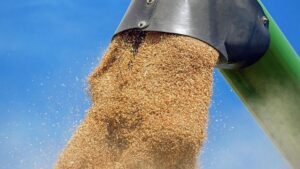
Net yields for wheat and sunflowers at Kernel’s farms rose by 9% and 18%, respectively, compared to the previous year, reaching 6.4 metric tons per hectare and 3.1 metric tons per hectare, according to a company filing on Friday.
“The total area of land managed by the Group increased by 48% compared to the previous year and reached 530,000 hectares, as a result of the expansion and optimization of the land bank during fiscal year 2026,” Kernel noted.
It specified that the area planted with wheat increased by 13%—to 106,000 hectares, and sunflower acreage by 90%, to 88,000 hectares, which suggests an increase in their harvests by 22.3%—to 678,400 metric tons—and 2.2 times—to 272,800 metric tons, respectively.
At the same time, the company noted that sunflower harvesting has yet to be completed on 4% of the areas allocated for this crop.
As for corn, 28% of the planted area has been harvested so far, and based on this, its net yield is expected to be 8.1 metric tons per hectare, which is 13% less than last year.
“This decline is primarily due to periods of abnormal summer heat and insufficient rainfall during key stages of plant development, which significantly affected corn yields in one of the Group’s production clusters,” Kernel explained.
However, given the 48% increase in corn acreage this year—to 254,000 hectares—the corn harvest is expected to be 28.6% higher, at 2,057,400 metric tons.
In addition, Kernel increased the area planted with rapeseed from 3,000 hectares to 43,000 hectares, and given the rise in yield from 2.4 metric tons per hectare to 3.5 metric tons per hectare, its rapeseed harvest jumped 20.9-fold to 150,500 metric tons.
Furthermore, 39,000 hectares were allocated to other crops, compared to 43,000 hectares last year.
Before the war, the Kernel agricultural holding ranked first in the world in sunflower oil production (about 7% of global production) and exports (about 12%). It is one of the largest producers and sellers of bottled oil in Ukraine. In addition, it is engaged in the cultivation and sale of agricultural products.
According to its 2026 financial results (July 2025–June 2026), Kernel increased its EBITDA by 20% to $558 million and its net profit by 35% to $322 million, with revenue growing by 7% to $4.404 billion.
AGRICULTURAL HOLDING, AGRICULTURAL PRODUCTION, crop yields, KERNEL, LAND BANK
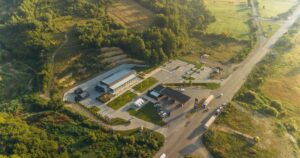
The agro-industrial holding Astarta is considering the sale of its agricultural enterprise, Chernihiv Eco Plus LLC, which cultivates approximately 4,000 hectares of land and has associated production infrastructure; the buyer is Ridne Group of Companies LLC, a company affiliated with the Ridne consortium “Ridne Group of Companies” LLC.
According to Astarta’s announcement on the Warsaw Stock Exchange, the decision to sell is in line with the company’s strategy to review its agricultural portfolio and is aimed at optimizing its land bank by focusing on regions with higher agronomic efficiency and yield potential.
On July 2, the potential buyer already received approval from the Antimonopoly Committee of Ukraine to acquire control over the asset.
At the same time, Astarta noted that obtaining such approval was a procedural step that allows the parties to continue assessing the feasibility of the deal. As of the end of last week, a final agreement on the sale of the asset had not been concluded.
“Astarta” is a vertically integrated agro-industrial holding company operating in seven regions of Ukraine and is the country’s largest sugar producer. The company’s portfolio includes five sugar refineries, agricultural enterprises with a land bank of 214,000 hectares (including 129,000 hectares in Poltava Oblast, 42,000 hectares in Khmelnytskyi Oblast, and 16,000 hectares in Vinnytsia Oblast), and dairy farms with 30,000 head of cattle. The holding company also operates a soybean processing plant and a bioenergy complex in the Poltava region, as well as a network of six grain elevators. Astarta’s shares are listed on the Warsaw Stock Exchange.
Astarta’s net profit for 2025 fell 4.2-fold to $19.94 million, while consolidated revenue decreased by 23% to $472 million.
The co-owners of “Ridne Group of Companies,” on an equal footing, are Oleksiy Khvorostiany and Serhiy Kovalchuk, the CEO and COO of the “Ridne” consortium, respectively.
According to information on its website, the “Ridne” consortium was established in 2022 following the start of the Russian invasion; it brings together 80 farms and 11 Ukrainian food producers: cereals, flour, canned meat, vegetables, and fish, pasta, sunflower oil, and dairy products, and also operates its own packaging center.
The consortium members listed include Ridne Food Factories LLC (Ivanki, Cherkasy Oblast), Grocery Products Factory LLC (TM “Zhmenka,” Skvyra, Kyiv Oblast), Central Fish LLC (Cherkasy), KLM Group LLC (Kyiv), Agroproduct LLC (Znam’yanka, Kirovohrad Oblast), “Conservatory” Canning Plant LLC (Kolomyia, Ivano-Frankivsk Oblast), the Bila Tserkva Agro-Industrial Group (Bila Tserkva, Poltava Oblast), “Fabrika Zdorovo” LLC (Chernihiv), “Azot Agro” JSC (Cherkasy), and “Nadiya” LLC (Zlatopil, Kharkiv Oblast).
AGRICULTURAL HOLDING, AMCU, asset, ASTARTA, Chernihiv Eco Plus, LAND BANK, Ridne
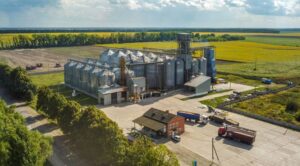
TAS Group is considering new acquisitions in the agricultural sector and would like to expand its land bank by another 20,000–25,000 hectares, said the group’s founder, Serhiy Tihipko.
“We are interested in agriculture. We would gladly acquire 20,000–25,000 hectares right now. We are strengthening our grain elevator operations,” he said at the Concorde Capital investment conference in Kyiv.
The agricultural sector remains one of the areas where the group sees potential for expansion. Earlier, Oleg Zapletnyuk, CEO of the TAS Agro agricultural holding, reported that the strategic plan calls for increasing the land bank from the current 80,000 hectares to 100,000 hectares by the end of 2026.
The next stage, he said, is to grow to 120,000 hectares by 2028.
Strengthening its grain storage infrastructure is important for the agricultural holding in terms of controlling logistics, storing the harvest, and ensuring sales flexibility. Given unstable export logistics and pressure on margins, having its own storage capacity is becoming one of the key factors in competitiveness.
The TAS Group is already active in the agricultural sector through TAS Agro. For the group, expanding its land bank and grain storage capacity could be a way to strengthen vertical integration and reduce dependence on external infrastructure.
agricultural sector, grain storage facility, LAND BANK, TIGIPKO, ТАСС
The Kernel agricultural holding, one of the largest in Ukraine, has increased the size of its land bank by 48% over the past year—to 530,000 hectares—following the acquisition of Enselco Holding Limited (approximately 190,000 hectares) and the sale of a portion of assets comprising leased land in the Kharkiv region (approximately 14,000 hectares) to Agroton Public Limited.
“As a result of the completion of both transactions, the total area of leased agricultural land under the Group’s management reached 530,000 hectares, which is 48% more than in the previous year, further strengthening the Group’s position as the largest agricultural producer in Ukraine,” – according to the consolidated financial report for the third quarter of fiscal year 2026 (FY, January–March 2026).
The document notes that “Kernel” has completed the 2026 planting campaign across the entire area of its expanded land bank.
“Unfavorable weather conditions in late winter and early spring forced the replanting of part of the acreage under winter crops. Following these adjustments, corn remains the primary crop, accounting for 48% of the planted area (255,000 ha compared to 172,000 ha last year), which has generally remained unchanged compared to the 2025 crop structure,” the report states.
The group also expanded the areas planted with sunflowers (to 88,000 ha from 46,000 ha) and rapeseed (to 43,000 ha from 3,000 ha), increasing their shares to 17% and 8%, respectively, compared to 13% and 1% in the previous planting season. The area under wheat in absolute terms increased from 94,000 ha to 106,000 ha, while its share in the crop mix decreased from 26% to 20%.
The area under soybeans decreased significantly—from 24,000 ha to 9,000 ha—and currently accounts for only 2% of the total planted area.
As reported, in April 2026, Kernel signed an agreement to acquire Enselco Holding Limited for $348 million. The company comprises an integrated agribusiness with a land bank of approximately 190,000 hectares, a network of grain storage facilities, agricultural machinery, and a rail fleet for grain transportation.
According to the report, an agreement to sell approximately 14,000 hectares of leased land in the Kharkiv region, along with agricultural machinery and a grain storage facility, was signed on May 22.
Kernel Agri-Holding is the world’s largest producer and exporter of sunflower oil, Ukraine’s largest grain exporter, an operator of an extensive network of logistics assets, and a leading producer of grain and oilseeds in Ukraine. It is one of the largest producers and sellers of bottled oil in Ukraine. It is engaged in the cultivation and sale of agricultural products.
According to the results for the first nine months of 2026, Kernel reduced its net profit by 5% to $208 million, while its revenue increased by 0.4% to $3.092 billion, and EBITDA by 1% to $403 million.

State-owned LLC “Land Bank” transferred UAH 369 million in dividends to the state budget based on its 2025 performance, representing 95% of the company’s net profit, the operator’s press service reported on its Telegram channel.
According to the report, this figure is one of the highest in terms of profit return to the state among enterprises under the management of the State Property Fund of Ukraine (SPFU).
“This is an example of how state assets can function as a fully-fledged economic instrument. The Land Bank proves that instead of passive holding, the state can achieve tangible financial results,” emphasized SPFU Chairman Dmytro Natalukha.
According to the CEO of State Land Bank LLC Yaroslav Yaroslavsky, based on last year’s results, the company made it onto the list of major taxpayers, ranking 12th among state-owned enterprises by revenue alongside giants such as “Naftogaz,” “Ukrenergo,” and “Ukrzaliznytsia.”
The “Land Bank” is a state-owned operator established to manage agricultural land through a long-term lease mechanism. 100% of the company’s shares are owned by the state, represented by the State Property Fund of Ukraine.
The project was officially launched in 2024 to consolidate state-owned land and sell it through online auctions on the “Prozorro.Sales” platform. The first auctions for land leases began in the fall of 2024, allowing the operator to achieve significant financial results in its very first full year of operation. According to the State Property Fund of Ukraine, the company currently manages over 100,000 hectares of land.

The Antimonopoly Committee of Ukraine (AMCU) has granted permission to Agroton Public Limited (Nicosia, Cyprus) to acquire control over the agricultural limited liability company (LLC) “Mriya.”
According to the AMCU’s announcement, control will be established through the direct acquisition of shares, ensuring a majority of more than 50% of the votes in the company’s highest governing body. The decision was made following the review of an application dated February 2, 2026 (No. 15-01/215-EKk).
Agroton Public Limited is the holding company of the “Agroton” group—a large, diversified, vertically integrated agricultural producer. The group’s primary beneficiary is Yuriy Zhuravlev.
As reported, in March 2026, the AMCU also granted Agroton Public Limited permission to acquire control over PAOP “Zorya” (Berestynsky District, Kharkiv Region), which previously belonged to American businessman George Ror through LLC “Charivny Svitanok (Agro).” The enterprise specializes in crop farming and dairy farming.
“Agroton” has been operating in the Ukrainian market since 1992 and, prior to the full-scale Russian military invasion, specialized in growing grain and oilseed crops, as well as the production and sale of livestock products. Before the war, Agrotone’s land bank consisted of approximately 110,000 hectares in the Luhansk and Kharkiv regions. The group also owned two poultry farms in the Luhansk region. However, according to the report for the first half of 2024, the area of land leased by the company from private individuals was zero.
In 2022, Agroton reported that representatives of the so-called “LPR” and JSC “Agrokompleks named after M.I. Tkachev” (Russian Federation) “seized” all assets of its parent company, Agroton Public Limited, in the Luhansk region on May 21, 2022. According to the Luhansk Regional Military Administration (RMA), Russian occupiers, with the participation of collaborators, stole 20,000 tons of grain from Agroton’s elevators, harvested 200,000 tons of the 2022 crop from its fields, and transported it to the Russian Federation. In addition, the invaders stole 40 vehicles and transported them to Russia.
Yuriy Zhuravlev, the majority owner and CEO of the Agroton agricultural group, who owned 85.4% of the shares in the parent company Agroton Public Limited (Cyprus) as of mid-2024, purchased an additional 2.09% (453,024 shares of the company) in November 2024, increasing his stake to 87.49%. As the company reported to the Warsaw Stock Exchange, the purchase took place on the over-the-counter market.



