
Life Cycle Assessment (LCA) of buildings is gradually evolving in Europe from a voluntary tool to a mandatory regulatory requirement, changing the approach to design, material selection, and calculating the true cost of a building over its entire service life.
This is discussed in an analytical report by the Ukrainian engineering and construction company Rauta, published on September 20, 2026.
According to data cited by the company from the United Nations Environment Programme’s Global Status Report for Buildings and Construction 2025–2026, the construction and operation of buildings account for nearly 50% of global material extraction and about 37% of global carbon dioxide emissions. This is drawing increased attention from investors and designers not only to the initial construction costs but also to a building’s environmental impact over decades of operation.
LCA assesses the environmental impact of a building or a specific material from the extraction of raw materials through production, transportation, construction, operation, repair, demolition, and final recycling or disposal.
The methodology involves analyzing global warming potential, energy and water consumption, emissions to air, water, and soil, as well as waste generation. In Ukraine, this approach is based, in particular, on the international standards ISO 14040 and ISO 14044 and the European standard EN 15978.
According to Rauta, applying LCA as early as the design stage allows architects and engineers to compare alternative solutions not only in terms of price or thermal insulation performance, but also in terms of their total carbon footprint.
This makes it possible to change materials or structural solutions even before construction begins, when making adjustments to the project is significantly less expensive. LCA can also improve a building’s rating during certification under international systems such as LEED, BREEAM, and DGNB.
Environmental Product Declarations (EPDs), which contain verified data on a specific material’s environmental impact, are a key component of such analysis. Integrating this information into a BIM model allows for the automatic recalculation of the environmental performance metrics for the entire project following design changes.
According to Rauta, LCA calculations utilize both universal software solutions such as SimaPro, Sphera LCA, and openLCA, as well as specialized construction systems like Athena Impact Estimator and Preoptima, along with Revit add-ins such as One Click LCA, Tally, and Beacon.
The application of this methodology also changes the criteria for selecting building materials. Preference is given to solutions with lower embodied carbon, a long service life, the ability to be repaired or replaced without interrupting the building’s operation, as well as the potential for reuse or recycling.
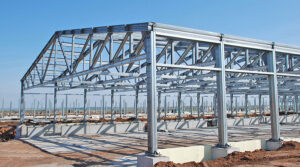
Rauta notes that, based on these criteria, steel load-bearing and enclosure structures can offer a number of advantages due to their lower weight, reduced costs for foundations and transportation, and the ability to recycle steel and reuse metal structures, profiled sheeting, sandwich panels, and facade elements.
Changes in European regulations are becoming a particularly important factor for the Ukrainian construction market.
The EU Directive on the Energy Performance of Buildings (EPBD) (EU) 2024/1275 provides for the gradual introduction of accounting for the total carbon footprint of new buildings throughout their entire life cycle. Starting in 2028, the Global Warming Potential (GWP) must be included in the energy performance certificates for large new buildings with an area exceeding 1,000 square meters, and starting in 2030—for all new buildings.
In Ukraine, there is currently no mandatory requirement to conduct LCA calculations, so the methodology is primarily used in projects involving international clients or funding.
At the same time, Order No. 168 of the Ministry of Community and Territorial Development, dated February 6, 2025, which establishes requirements for nearly zero-energy buildings, lays the groundwork for a gradual transition from assessing energy efficiency alone to a broader life-cycle assessment.
At Rauta, they believe that European integration and post-war reconstruction could serve as additional incentives for the widespread adoption of LCA in Ukraine, as international financial organizations and donors are increasingly focusing on projects that meet European standards for energy efficiency and sustainable construction.
Companies that begin using LCA even before mandatory regulatory requirements are introduced can gain advantages in the form of lower operating costs, better preparedness to attract international financing, and faster adaptation to future European regulations.
A separate tool is Life Cycle Costing (LCC), which assesses not the environmental impact but the total cost of owning a building over its life cycle. Combining LCA and LCC allows investors to simultaneously evaluate the environmental consequences and long-term financial costs of various design solutions.
Thus, the approach to building assessment is gradually shifting from minimizing initial construction costs to analyzing the total cost and environmental impact over decades of operation.
Original source: Rauta article “How Building Life Cycle Assessment Is Changing the Approach to Design and Material Selection,” published on September 20, 2026. Rauta – Building Life Cycle Assessment



