

Posting a hyperlink to another media outlet’s publication does not in itself imply dissemination of all information or automatic liability for disseminating false information, the Supreme Court notes.
“Material made public by placing a hyperlink to another media outlet’s publication and a brief summary thereof does not imply automatic liability for the entire content of the original source,” reads a statement on the Supreme Court’s website on Friday, citing the opinion of the panel of judges of the Cassation Commercial Court within the Supreme Court (CCC of the Supreme Court).
According to the Court, the proper defendants in cases concerning the protection of business reputation involving the dissemination of information on the Internet are the author of the material and the owner of the website on which the material is posted.
“It is the plaintiff who must determine the proper circle of defendants, taking into account the legal nature of the disputed legal relationship and the nature of the dissemination of information,” the statement notes.
The Court explains that a limited liability company (LLC) filed a lawsuit against another company regarding the protection of business reputation.
“The lawsuit was based on the fact that the defendant’s website featured a summary of a journalistic investigation and a hyperlink to a publication released by another media outlet, which, in the plaintiff’s opinion, led to the dissemination of false information,” the Court clarifies regarding the essence of the case considered by the Grand Chamber of the Supreme Court of Ukraine.
The Commercial Court, in a decision upheld by the ruling of the Commercial Court of Appeal, granted the claim.
“The courts concluded that the defendant had disseminated information belonging to the plaintiff, that the information was inaccurate, and that it had damaged the plaintiff’s business reputation. Disagreeing with these decisions, the defendant LLC filed a cassation appeal,” the Supreme Court notes.
In reviewing the case, the Grand Chamber of the Supreme Court noted that the mere fact of posting a hyperlink does not imply assuming responsibility for the full content of a third party’s publication.
“The Supreme Court noted that a hyperlink is a technical means of referring to another resource and is not equivalent to the independent dissemination of the entire content of such a resource. Liability is possible only to the extent that the information was directly reproduced or presented by the defendant as its own message,” the statement reads.
In addition, the Grand Chamber of the Supreme Court emphasized the need to distinguish between factual statements and evaluative judgments, as well as to determine whether the plaintiff has proven the inaccuracy of the specific information disseminated by the defendant.
The Supreme Court also emphasized the importance of determining the actual scope of information dissemination by a specific defendant and not holding them liable for the entire content of a third party’s material solely because of the presence of a hyperlink.
“The Grand Chamber of the Supreme Court of Ukraine noted that the proper defendants in cases involving the dissemination of information on the internet are the author of the material and the owner of the website on which it is posted. If the author is known, it is he who must be involved in the case,” the Court stated.
Based on the results of the cassation review, the Grand Chamber of the Supreme Court concluded that the findings of the lower courts regarding the defendant’s liability and the completeness of establishing the legal elements of the offense were premature.
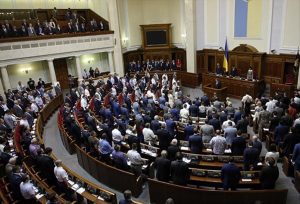
The Verkhovna Rada has reinstated criminal liability for declaring incomplete data and failure to submit a declaration, in particular, introducing a restriction of freedom for up to two years, if the declared information differs from the reliable one in the amount of more than 4,000 living wages for able-bodied persons.
The corresponding bill, No. 4460-d, was supported as a basis by 287 and 289 MPs in general at a plenary session on Friday.
The said bill proposes to amend Article 1726 of the Code of Administrative Offenses of Ukraine (CAO), which clarify the subjects of this offense.
Also, these changes allow to impose administrative penalties under this article in the event that the information in the declaration of the person authorized to perform the functions of the state or local government will differ from the reliable ones in the amount of 100 to 500 living wages for able-bodied persons, and not from 100 to 250 living wages for able-bodied persons, as indicated in the current version.
The amendments proposed in the Code of Administrative Offenses, as a result, make it possible to raise the threshold of criminal liability for declaring false information.
The authors of the draft law propose to exclude Article 366-1 (declaration of inaccurate information) from the Criminal Code of Ukraine, but to supplement the Code with a new Article 366-2 (declaration of inaccurate information).
This article establishes criminal liability in the event that the declared information differs from reliable information in the amount of 500 to 4,000 living wages for able-bodied persons in form of a fine from 2,500 to 3,000 non-taxable minimum incomes of citizens or public works from 150 to 240 hours with deprivation of the right to hold certain positions or engage in certain activities for up to three years under the first part of this article.
In the event that such information differs from reliable information in the amount of more than 4,000 living wages for able-bodied persons, liability is provided in form of a fine from 3,000 to 5,000 non-taxable minimum incomes of citizens or public works from 150 to 240 hours, or restriction of freedom for a period up to two years with the deprivation of the right to hold certain positions or engage in certain activities for up to three years under part two of this article.
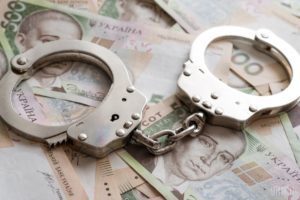
Ukrainian President-elect Volodymyr Zelensky has told Lithuanian Foreign Minister Linas Linkevicius that his team had prepared a bill reimposing liability for illegal enrichment.
At the meeting Linkevicius reminded that the West was watching especially closely anti-corruption efforts in Ukraine, Zelensky’s press service said. “The decriminalization of illegal enrichment runs counter to Ukraine’s obligations to the European Union,” Linkevicius said.
Zelensky also asked for help with setting up an international media organization to broadcast pro-Ukrainian position to the temporarily occupied Ukrainian areas.
He thanked Lithuania for consistently defending Ukraine’s interests in Europe.
Linkevicius in turn congratulated him on winning the election and offered help with implementing reforms in combating corruption and the law enforcement system.
European organizations in Brussels are very interested in the Ukrainian president-elect, Linkevicius said, offering Zelensky to visit EU-level international events at the first opportunity.



