
Coal Energy S.A. (Luxembourg), having lost all its coal assets in Ukraine due to Russian aggression and shifted its focus to operations in Poland, reported a net loss of $1.46 million for the first nine months of fiscal year 2026 (FY, July 2025 – March 2026), the company reported a net loss of $1.46 million, whereas for the same period of FY 2025, its net profit was $1.6 million.
According to the company’s report to the Warsaw Stock Exchange, where its shares are listed, revenue for this period decreased by 31.8% to $2.06 million, while the operating loss increased by 82.1% to $0.55 million.
Coal Energy specified that from January through March of this year, its net loss amounted to $0.11 million, compared to a net profit of $1.97 million in the same quarter last year; revenue increased by 2.5% to $0.88 million; and the operating loss decreased by 33.3% to $0.05 million.
A week earlier, Coal Energy announced the suspension of a deal with Global Tech Opportunities 31, a fund belonging to the ABO Securities group, which involved the issuance of interest-free convertible bonds worth up to 14.5 million zlotys.
In the first half of 2026F, bonds worth 2.5 million zlotys ($0.67 million at the exchange rate at the time) had already been converted into newly issued shares, and as of mid-year, bonds worth 2 million zlotys remained unconverted.
As previously reported, Coal Energy posted a consolidated net profit of $4.12 million in FY2025, compared to a net loss of $2.12 million in FY2024, primarily due to the sale of four assets to the group. The company’s consolidated revenue grew by 52.4% in FY 2025, reaching 3.76 million.
In September 2025, the board approved the company’s Updated Development Strategy for 2025–2027, which reflects the recently secured financing, current investment projects, and the ongoing war in Ukraine.
“The updated strategy is built on four pillars: 1. coal mining in Poland and Romania, 2. providing mineral extraction services in Poland and Romania, 3. developing the extraction of critical raw materials in Central and
Eastern Europe and Ukraine, and 4. global consulting services for the mineral resources sector,” the previous report stated, whereas the new report does not include a description of these activities.
Coal Energy’s shares have been listed on the Warsaw Stock Exchange since August 8, 2011. Its main line of business was coal mining at two underground mines and operations at coal dumps in the Donetsk region.
Vyshnevetsky currently controls 58.74% through Lycaste Holdings, while Global Tech Opportunities holds 2.34%. A total of 24.42% of the shares are traded on the Warsaw Stock Exchange.
The company’s market capitalization as of June 30 stood at PLN 92.18 million ($24.45 million at the current exchange rate) at a share price of 2.00 zlotys, which had fallen by 1.28% since the start of the trading day following the publication of the financial report.
bond, Coal Energy, LOSS, POLAND, REVENUE
JSC “Ukrzaliznytsia” expects to post a net loss of 21.9 billion hryvnia and a liquidity shortfall of 26.3 billion hryvnia for 2026, assuming no fare indexation, said the company’s CEO, Oleksandr Pertsovskyi, during a press conference on Tuesday, according to a correspondent for the “Interfax-Ukraine” news agency.
According to him, among the main reasons for the deterioration in financial performance are a 2.4-fold increase in the cost of electricity, which led to additional expenses of 15.4 billion hryvnia; the need to index wages—13.4 billion hryvnia; a decline in revenue from freight transportation—7 billion hryvnia—due to hostilities and the occupation of parts of the territory; an increase in exchange rate losses from the revaluation of liabilities amounting to 3.8 billion hryvnia; and a 28% rise in diesel fuel prices, which cost the company an additional 2.1 billion hryvnia.
According to the company’s estimates, due to the suspension of fare indexation, the shortfall in cash receipts for the period from 2023 through the first three months of 2026 amounts to 99.5 billion UAH.
To cover this financial shortfall, Ukrzaliznytsia is implementing additional optimization measures for 2026, which will allow it to raise 1 billion UAH from the sale of non-core and surplus assets and 2.3 billion UAH in loans from international financial institutions, provided that fare indexation takes place.
Other measures include optimizing CAPEX, through which the company plans to accumulate 6.9 billion UAH by addressing the underfunding of critical capital investment needs. At the same time, internal funds for financing CAPEX in 2026 will amount to approximately 16.1 billion UAH.
A government decision is also required to resume, effective July 1, 2026, the sale of electricity to Ukrzaliznytsia through specialized auctions, with the introduction of a corresponding discount from the weighted average market price of electricity.
Other factors include a plan to increase suburban rail fares by 100%, though this requires approval from regional military administrations.
Among the proposed measures to stabilize Ukrzaliznytsia’s financial situation, the company also proposes raising freight rates by 30% effective August 1, 2026. The first phase involves an immediate rate increase and the standardization of rates for empty railcars.
Pertsovskyi emphasized that June is a critical period for making a decision on revising tariffs, as the regulatory procedure takes about two months.
“This is the last chance to make a decision before August, and by August we’ll simply be heading straight into the red at this pace. We still have a guaranteed debt payment due in August,” added the chairman of the board.
According to Pertsovskyi, a second phase could involve a further tariff adjustment of up to 15% starting in January 2027, though no such decision has been made yet.
As noted in the draft order, the need to adjust tariffs stems from the deteriorating financial condition of JSC “Ukrzaliznytsia,” whose revenues are insufficient to cover current expenses. The ministry noted that the last tariff adjustment took place nearly four years ago, while between July 2022 and April 2026, the industrial producer price index rose by 252.1%.
According to the Ministry of Development, in 2025, freight volumes decreased by 12.5% compared to the previous year, and Ukrzaliznytsia’s net loss amounted to 7.6 billion UAH. In the first four months of 2026, the loss reached 9.3 billion UAH.
At that time, the ministry noted that without tariff indexation, the company’s projected net loss for 2026 would exceed 13 billion hryvnia, and the funding shortfall would reach over 26 billion hryvnia.
Among other things, in January of this year, Ukrzaliznytsia refused to make $45 million in coupon payments on its 2026 Eurobonds with an 8.25% coupon rate totaling $703.2 million and on its 2028 Eurobonds with a 7.875% coupon rate totaling $351.9 million, and announced its intention to begin a comprehensive restructuring of its bond obligations with the assistance of financial and legal advisors.
The company cited the ongoing decline in revenue from freight transportation amid a decrease in freight volumes, as well as an increase in attacks on the railway—the total number of which in 2025 (1,195) exceeded the combined total for 2023–2024—as the main reasons for suspending debt service on the Eurobonds.
FARE, FREIGHT TRANSPORTATION, liquidity, LOSS, UKRZALIZNYTSIA
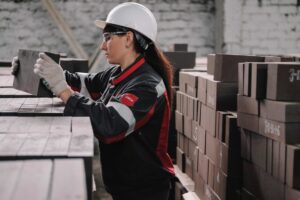
PJSC “Zaporizhogneupor”, Ukraine’s largest refractory products manufacturer and a member of the Metinvest Group, reported a 4.4-fold increase in net loss for January–March of this year compared to the same period last year—rising to UAH 29.990 million from UAH 6.982 million
According to the company’s interim report, which is available to the agency “Interfax-Ukraine,” revenue from ordinary activities for this period decreased to UAH 869.871 million from UAH 970.715 million in the first quarter of 2025.
Retained earnings as of the end of March amounted to 59.283 million UAH.
According to the annual report, the company reported a net profit of 52.291 million UAH in 2025, while in 2024 the profit was 156.801 million UAH, with revenue from ordinary activities amounting to UAH 4,287,569 million (in 2024 – UAH 3,524,855 million).
Throughout 2025, refractory products were sold throughout Ukraine, excluding the temporarily occupied territories (TOT), and exports were directed to the following destinations: the Republic of Moldova (77% of total exports); Bulgaria (13%); Latvia (4%); North Macedonia (4%); Estonia (2%). A total of 2,815 thousand tons of products worth UAH 40.8 million were sold for export in 2025. In 2025, there was a 10% increase in gross export shipments in physical terms compared to 2024 (+262 tons).
In total, the plant sold 62,595 thousand tons of refractory products in 2025 and 62,976 thousand tons in 2024.
The number of employees as of the end of 2025 was 1,431, which is 3.9% more compared to 2024 (an increase of 53 employees). This increase was due to a decrease in employee turnover, the fulfillment of the hiring plan, and the additional recruitment of employees to implement projects. In 2025, the employee turnover rate decreased by 17.2% compared to 2024. The payroll fund for the company’s full-time employees in 2025 increased by 81.469 million UAH (+16.5%) compared to 2024, totaling 575.179 million UAH. The average monthly income of full-time employees was UAH 34,542, an increase of UAH 5,757 compared to 2024.
The company’s key development priorities include reducing costs; improving product quality and competitiveness; optimizing processes for supplying the company with energy resources and raw materials; and exploring new technologies and current trends in refractory production. As part of the company’s technical development in 2026, ten types of refractory products are planned for production.
“Zaporizhvognetriv” is Ukraine’s largest manufacturer of high-quality refractory products and materials.
According to the National Securities and Stock Market Commission (NSSMC) data for the first quarter of 2026, Metinvest B.V. (Netherlands) owns 50.7899% of Zaporizhogneupor’s shares, while Zaporizhstal holds 49.2101%.
The company’s authorized capital is UAH 75.925 million, with a par value of UAH 13 per share.
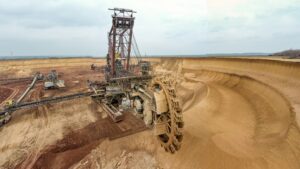
In January-March of this year, United Mining and Chemical Company (UMCC Titanium) doubled its net loss compared to the same period last year—to UAH 411.235 million from UAH 203.236 million
According to the company’s interim report, which is available to the agency “Interfax-Ukraine,” revenue from ordinary activities for this period rose to UAH 331.342 million from UAH 239.604 million in the first quarter of 2025.
The uncovered loss as of the end of March amounted to 3,181.364 million UAH.
According to the annual report, the company incurred a net loss of 2,118.156 million UAH in 2025, whereas in 2024 it reported a profit of 17.009 million UAH, with revenue from ordinary activities amounting to UAH 1,510,751 million (in 2024 – UAH 2,851,180 million).
The report notes that forced production stoppages at the beginning and end of last year led to increased expenses and an additional working capital deficit. In addition, market prices for electricity rose by 20–30% compared to 2024, which directly contributed to an increase in the cost of production. Repairs and maintenance of machinery and equipment, which had been postponed in 2024–2025 and were necessary to ensure sufficient volumes of stripping and beneficiation work, were carried out late due to a shortage of working capital.
In 2025, the Vilnohirsk Mining and Metallurgical Plant (VGMK) produced 4,456 thousand tons of zirconium concentrate, 8,477 thousand tons of rutile concentrate, and 22,836 thousand tons of ilmenite concentrate. At the IZG, ilmenite concentrate production amounted to 55,575 thousand tons.
Energy resources accounted for the largest share of the cost of goods produced by the VGMK branch in 2025—627.897 million UAH (56%), of which expenses for fuel and lubricants during the reporting period amounted to 53.961 million UAH. The branch’s total electricity consumption amounted to 81.349 million kWh. Labor costs with deductions accounted for a significant share—35%—and depreciation of fixed assets—6%. Other expenses—taxes to the state and local budgets and services provided by third-party organizations—accounted for 3% in the reporting period.
Actual expenses for the maintenance of fixed assets for 2025, taking into account the high degree of wear and tear on production equipment and the need to keep it in working order, amount to UAH 142.711 million, including UAH 14.121 million allocated for repairs, and UAH 107.863 million for the commissioning and maintenance of equipment at the plant’s divisions.
In 2025, the VGMK branch utilized capital investments totaling UAH 155.811 million from its own funds, of which UAH 1.121 million was allocated for the purchase of fixed assets.
During the reporting period, the Irshansk Mining and Processing Plant was supplied with energy resources in sufficient quantities; natural gas consumption amounted to 1,442.64 thousand cubic meters, and electricity consumption to 26,656.3 thousand kWh.
The Irshansk Mining and Processing Plant (IGZK) fulfilled 48% of its commercial production plan. Savings on production costs amount to UAH 533.089 million; other expenses account for the lion’s share of the production cost of the IGMK branch’s output—28%. The program of measures approved at the IMC branch provided for the utilization of UAH 296.050 million in capital investments in 2025, which exceeds the level of actual investment by UAH 299.341 million (actual investments amounted to UAH 3.291 million). In 2025, expenditures under the categories “capital construction” and “modernization, modification (reconstruction) of fixed assets” totaled UAH 3.698 million.
In 2025, the total number of employees at OGHK was 4,443, including 3,031 at VGMK and 1,194 at IGZK.
As reported, Cement Ukraine LLC, controlled by NEQSOL Holding, acquired OGHK at an auction on October 9, 2024, for UAH 3,938,351.58.
On November 19, 2024, the State Property Fund of Ukraine and Cement Ukraine LLC entered into Agreement No. 217 for the sale and purchase of a 100% stake in OGHK. On May 29, 2025, the Antimonopoly Committee of Ukraine granted approval for the concentration. On June 10, 2025, Cement Ukraine LLC became the owner of 100% of the company’s shares. Cement Ukraine LLC is part of the international NEQSOL group of companies, with the ultimate parent company NEQSOL Holding B.V. (Netherlands), owned by Azerbaijani citizen Nasib Hasanov.
OGHK has two subsidiaries—the Vilnohirsk Mining and Metallurgical Plant (VGMK, Dnipropetrovsk Oblast) and the Irshansk Mining and Processing Plant (IGZK, Zhytomyr Oblast). OGHK’s main activities include open-pit mining of titanium ores, as well as the production and wholesale trade of titanium ore concentrates (zircon, ilmenite, rutile, disten-sillimanite, staurolite, and quartz sand).
According to the National Securities and Stock Market Commission (NSSMC) data for the first quarter of 2026, LLC “Cemin Ukraine” owns 100% of OGHK’s shares.
The authorized capital of PJSC “OGHK” is UAH 1.994 billion, with a par value of UAH 1 per share.
Metinvest Sichstal LLC (MSS, Zaporizhzhia) increased its net loss by 9.4% in January–March of this year compared to the same period last year—to UAH 10.209 million from UAH 9.333 million.
According to the company’s interim report, available to the agency “Interfax-Ukraine,” revenue from ordinary activities for this period rose by 39.3%—to UAH 250.413 million from UAH 179.806 million.
The accumulated deficit as of the end of March stood at UAH 114.010 million.
Key projects and plans for 2026: The LLC will continue to implement Metinvest Group’s strategic projects; the company also plans to actively participate in the development of design and cost estimates for the Group’s projects, as well as in the development of measures for the physical protection of facilities and the enhancement of business resilience.
In 2025, the company quadrupled its net loss compared to 2024—to UAH 59.506 million from UAH 15.075 million—while revenue from ordinary activities for this period increased 2.4-fold, to UAH 1,585.117 million from UAH 653.099 million.
The LLC ended 2023 with a loss of UAH 7.764 million.
Metinvest Sichstal LLC is a company within the Metinvest Group established in 2019 to implement highly complex strategic investment projects. The number of full-time employees as of the end of 2025 was 270.
MSS is one of the largest design organizations in Ukraine, capable of implementing large-scale projects from the conceptual design phase through to the commissioning of the facility. The company’s goal is to implement key projects within the technological strategy of Metinvest Group enterprises. MSS provides an integrated process from investment concept, engineering, and design to procurement, construction, and commissioning.
Metinvest B.V. (Netherlands) is wholly owned by Metinvest Sichstal LLC
The LLC’s authorized capital is UAH 30.405 million.
Metinvest Sichstal LLC is part of the Metinvest Group, whose main shareholders are PJSC System Capital Management (SCM, Donetsk) (71.24%) and the Smart-Holding group of companies (23.76%). The management company of the Metinvest Group is Metinvest Holding LLC.
PJSC “Dniprovsky Metallurgical Plant” (DMZ), part of the DCH Steel division of businessman Oleksandr Yaroslavsky’s DCH Group, reduced its net loss by 78.3% in January-March of this year compared to the same period last year—to UAH 29.031 million from UAH 133.943 million.
According to the company’s interim report, available to the Interfax-Ukraine agency, revenue from ordinary activities during this period fell by nearly sevenfold—to UAH 131.165 million from UAH 886.267 million.
The uncovered loss as of the end of March 2026 amounted to UAH 778.384 million.
In Q1 2026, the company produced 279 tons of metal products; the company’s products were not sold for export. Taking into account the current situation in Ukraine, the industry, and existing restrictions, in accordance with the work plan adopted for 2026, the following operational activities are planned: production of rolled steel from customer-supplied billets (40,000 tons), and production of spare parts in the repair and mechanical workshop (RMW). The production plan for 2026 was drawn up based on the assumption that hostilities will continue and therefore production capacities will be affected.
The average number of full-time employees is 484, and the payroll fund amounts to UAH 37.842 million.
The main achievement of last year was the completion of the project (which began in 2023) to transition PC-2 production to continuously cast billets, which helped reduce production costs. Currently, all standard sizes of channel sections sold by the company in accordance with Ukrainian and European standards have been transitioned to standard cast billets.
To improve energy efficiency, work continues on the construction of a new above-ground water pipeline from Shoreline Pumping Station No. 1 to supply process water to the wastewater treatment plant serving PC-2, which will enable energy savings and reduce transmission losses. To optimize electricity costs, the number of operational power transformers was maintained at the minimum operational level. As of March 31, 2026, 109 transformers were decommissioned, and an additional 2 units that were not involved in production processes were dismantled.
The report notes that for the period until the end of the military aggression, the company’s primary goal is to continue and maintain production at current levels and achieve a minimal but positive financial result. Following the end of the war, in the context of post-war reconstruction and deepening economic integration with the EU, the company is developing a comprehensive modernization strategy incorporating “green” production technologies to achieve competitiveness in the European market and minimize environmental risks in Ukraine.
In this context, the company’s leading specialists are exploring the construction of an electric steelmaking complex (ESCC) with a capacity of 450,000 tons per year. The ESFC will supply billets to the rolling mills of PJSC “DMZ” and reduce harmful emissions to a level that will allow for the export of products to the EU under the Common Market Access (CMA) tariff regime. Purchased scrap metal will be used as raw material. The cost of rolled products manufactured from the company’s own square billets will allow for a higher margin on sales and ensure that the production capacity of Mill 550 is utilized to its maximum annual level—190,000 tons.
In the second phase, to expand the product range, it is proposed to modernize Mill 550 by installing additional universal rolling stands for the production of I-beam rolled steel with a capacity of 30,000 tons per year. This type of rolled steel is currently 100% imported into Ukraine; if produced at PJSC “DMZ,” it will generate additional margin revenue compared to cast billets. It is planned to expand the product range and increase sales margins by constructing a light-gauge mill with a capacity of 120,000 tons per year during the third phase.
According to the 2025 annual report, DMZ increased its loss by 5.5 times last year compared to 2024—to UAH 1,225.795 million—while revenue from ordinary activities fell by 3.2 times—to UAH 1,664.980 million.
As reported, DMZ posted a net loss of 222.117 million UAH for 2024, compared to a net profit of 504.591 million UAH in 2023. The plant reported a net profit of 4.225 million UAH for 2022, while in 2021 it stood at 1.725157 billion UAH.
DMZ reported a net profit of UAH 1.725157 billion in 2021, whereas it ended 2020 with a net loss of UAH 394.091 million.
DMZ specializes in the production of steel, cast iron, rolled products, and products made from them. The plant has a full metallurgical production cycle: a blast furnace shop, an oxygen converter shop, coke and chemical production, and rolling production, which consists of two section rolling mills (Mill 800 and Mill 550). However, due to the shutdown of the blast furnace in 2022, sales of long steel products in the first quarter of 2026 from the plant’s own inventory consisted only of isolated orders from remaining stock. Due to the shutdown of coke production in May 2025, sales of remaining coke products were made from inventory.
On March 1, 2018, the DCH Group signed an agreement to purchase the Dnipro Metallurgical Plant from Evraz.
According to the National Securities and Stock Market Commission (NSSMC) data for the first quarter of 2026, Drampisco Limited (Cyprus) owns 97.7346% of DMZ’s shares.
According to the 2025 report, the ultimate beneficial owner (controller) of PJSC “Dniprovsky Metallurgical Plant” is Oleksandr Yaroslavskyi, a citizen of Ukraine and the United Kingdom. Type of beneficial ownership: indirect controlling influence, percentage of share capital (indirect influence): 87.96%.
The share capital of the private joint-stock company is UAH 574.994 million, and the par value of a share is UAH 0.25.



