
Oschadbank and the Lviv City Council signed a five-year loan agreement for 582.6 million UAH to finance projects aimed at modernizing the city’s critical infrastructure, the financial institution announced on Friday.
“The new 582.6 million hryvnia loan will enable Lviv to continue upgrading its housing, utilities, and road infrastructure, modernizing its heat supply system, and strengthening energy security,” said Serhiy Chernikov, deputy chairman of Oschadbank’s board of directors responsible for corporate business.
It is noted that the funds will be directed toward nine critical infrastructure projects in the city.
Taking this new agreement into account, the total amount of loans provided to Lviv by Oschadbank over the past three years has reached 2.09 billion UAH: in 2024, the bank provided the city with 840.0 million UAH, and in 2025—668.0 million UAH.
Since the start of the full-scale invasion, Oschadbank has entered into loan agreements with Ukrainian municipalities totaling 7.8 billion UAH. As of August 1, 2026, the bank accounted for over 64% of municipal lending.
According to the National Bank, as of July 1, 2026, Oschadbank, with total assets of 518.87 billion UAH, ranked second among Ukraine’s 59 banks. The bank’s total loan portfolio grew by 6.7% in the first half of the year, reaching 136.83 billion UAH.
The sole shareholder of Public Joint-Stock Company “Khlibprom Concern” has approved a decision to convert the company into a limited liability company, according to information cited from the National Securities and Stock Market Commission’s (NSSMC) disclosure system.
The decision to reorganize one of Ukraine’s largest bread producers was adopted on July 23, 2026. The newly formed LLC “Khlibprom Concern” will become the full legal successor to the assets, contracts, rights, and obligations of the private joint-stock company.
The shares of the private joint-stock company will be converted into a stake in the LLC’s authorized capital at a ratio of 1:1. The authorized capital of the successor entity will amount to approximately 163.55 million UAH.
The company explained the reorganization as a necessity to simplify corporate governance. The conversion to an LLC does not involve the sale of the company or a change in its ultimate owner.
The organizational and legal form of a limited liability company involves fewer regulatory procedures; in particular, the company will not be required to maintain a share register or comply with certain requirements applicable to joint-stock companies.
In 2025, Khlibprom Concern’s revenue increased by 9.5% compared to the previous year, reaching 2,228.92 million UAH. The company’s net loss decreased by a factor of 13.5, to 5 million UAH, compared to 67.57 million UAH in 2024.
The company’s assets as of the end of 2025 totaled 1 billion 190.76 million UAH, while its liabilities decreased by 10.1% to 509.95 million UAH.
“Khlibprom Concern” is one of the largest producers of bread, baked goods, and confectionery products in Ukraine. The company produces up to 160 metric tons of products daily, including frozen semi-finished dough products.
The company’s structure includes five processing facilities in the Lviv and Vinnytsia regions. The company’s brand portfolio includes Agrola, Bandinelli, 2go, “Lyublyanna,” and “Vinnitsakhleb.” The ultimate beneficial owner of the company is Natalia Antonova.
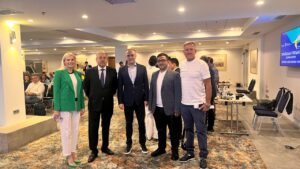
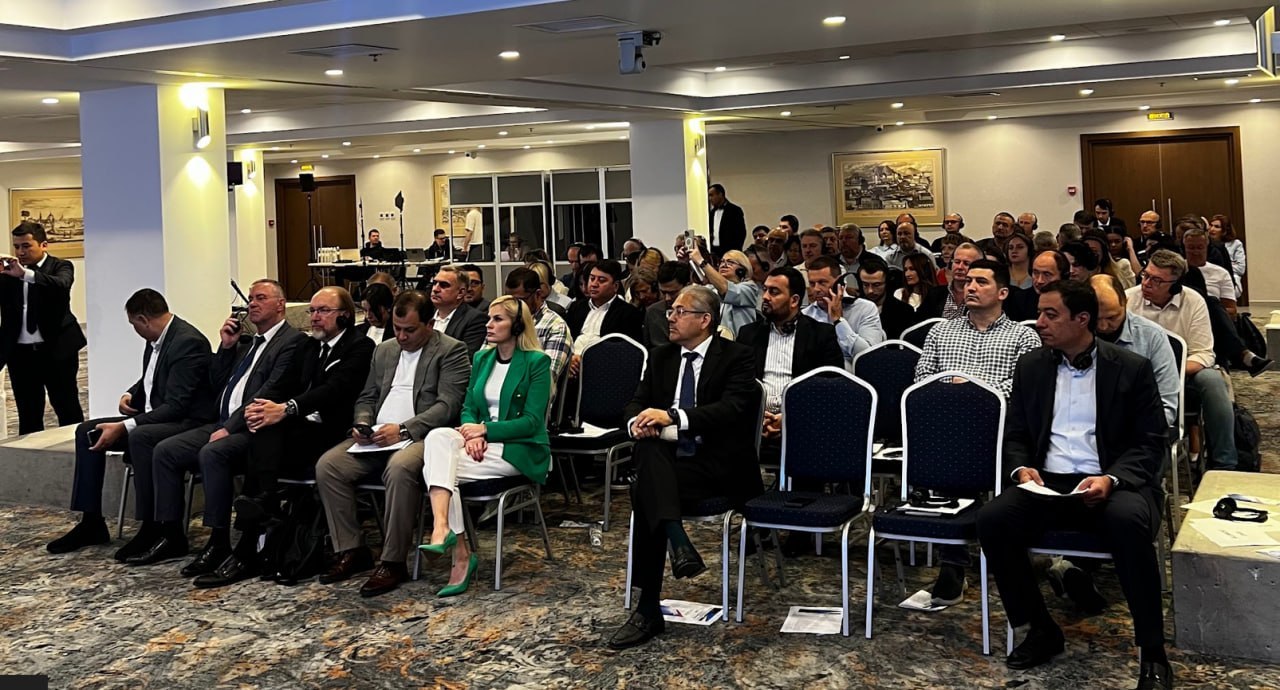
Ukrainian and Uzbek companies intend to expand cooperation in mechanical engineering, energy, IT, the food industry, and the textile industry. Participants at the Ukrainian-Uzbek Business Forum, which took place on July 13, 2026, in Lviv, discussed prospects for implementing joint projects.
According to the Ukrainian Chamber of Commerce and Industry, the forum was opened by Gennady Chizhikov, President of the Ukrainian Chamber of Commerce and Industry, and Davron Vakhobov, Chairman of the Uzbek Chamber of Commerce and Industry. The event was attended by approximately 90 representatives from the business community, government agencies, industry associations, and chambers of commerce and industry from both countries.
Alisher Kurmanov, Ambassador Extraordinary and Plenipotentiary of the Republic of Uzbekistan to Ukraine, also took part in the forum. The participation of the head of the Uzbek diplomatic mission underscored the intergovernmental level of the meeting and Tashkent’s interest in developing direct contacts with Ukrainian businesses. Kurmanov has headed the Uzbek Embassy in Ukraine since 2020.
The forum participants were addressed by Khristina Kalish, head of the Department of Economic Policy of the Lviv Regional Military Administration; Natalia Karpenchuk-Konopatskaya, vice president of the Lviv Chamber of Commerce and Industry; Mirziyod Yunusov, chairman of the “Uzeltexsanoat” Association; Mirziyod Yunusov, Oleg Revchuk, head of the Ukrainian side of the Ukrainian-Uzbek Business Council, and Erkindjon Malikov, chairman of the Association of Exporters of Uzbekistan.
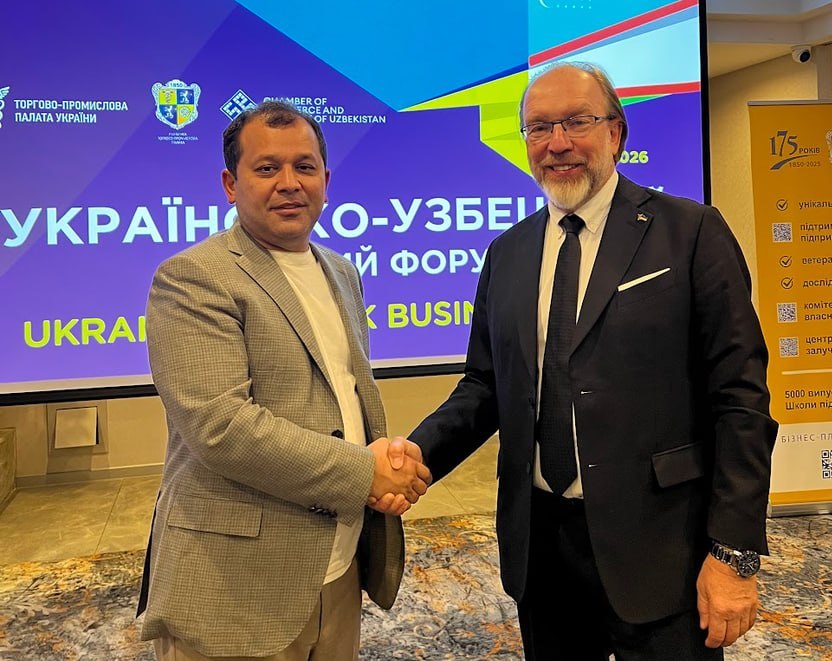
According to Chizhikov, the interest of Uzbek partners extends beyond traditional supplies of food and pharmaceutical products.
“We are ready to offer high-value-added niches—machinery manufacturing, energy equipment, and IT solutions for ‘smart’ cities. This is the level of cooperation that matches the ambitions of both our countries,” stated the president of the Ukrainian Chamber of Commerce and Industry.
Participants identified the development of new logistics routes between Ukraine and Central Asia as one of the main areas of cooperation. The Ukrainian side views Uzbekistan as a regional transportation and trade hub that can provide access to the markets of neighboring countries.
The Ukrainian Chamber of Commerce and Industry proposed that Uzbek logistics operators and customs services work together to create “green corridors.” Such routes could speed up the delivery of Ukrainian agricultural and food products to Uzbekistan, as well as the transport of Uzbek textiles through Ukraine to European countries.
Forum participants held direct B2B negotiations. Promising areas of cooperation identified included pharmaceuticals, machinery and industrial equipment manufacturing, energy, agricultural processing, food products, textiles, chemical products, and digital solutions for municipal services.
Industrial cooperation holds additional potential. Ukrainian companies can supply Uzbekistan with energy and technological equipment, components, pharmaceutical products, and value-added agricultural products. Uzbek enterprises, in turn, are interested in expanding exports of textiles, raw cotton, polymer materials, fertilizers, and other chemical products.
The legal framework for investment cooperation is provided by a bilateral agreement on the promotion and mutual protection of investments, signed in 1993. A preferential trade regime is also in effect between the countries, and imports of goods from Ukraine to Uzbekistan are exempt from customs duties under existing free trade agreements.
According to data from the Ukrainian Chamber of Commerce and Industry, trade turnover between Ukraine and Uzbekistan reached $315 million in 2025, an increase of 14% compared to 2024. Ukrainian exports totaled $186.5 million. Based on these figures, imports of Uzbek goods into Ukraine can be estimated at approximately $128.5 million, and Ukraine’s trade surplus at approximately $58 million.
Thus, the latest complete annual data indicate a trade volume of about $315 million. This figure remains significantly below the potential of the two markets; however, the 14% growth indicates a gradual recovery of economic ties.
Ukrainian exports to Uzbekistan consist primarily of pharmaceutical products, machinery and equipment, meat and meat products, confectionery, and other food products. Ukraine imports mainly textiles, cotton and textile raw materials, polymer materials, fertilizers, and chemical products from Uzbekistan.
In the medium term, growth in trade volume will depend on shipping costs and transit times, the restoration of reliable transport corridors, the availability of cargo insurance, and companies’ ability to organize regular shipments. Uzbekistan could become one of the main gateways for Ukrainian manufacturers to Central Asian markets, while Ukraine is of interest to Uzbek businesses as a potential route to the EU market.
The Ukrainian Chamber of Commerce and Industry is a non-governmental, self-governing organization representing the interests of Ukrainian businesses. The Chamber promotes exports, organizes business missions, and provides services related to product certification, force majeure certification, international arbitration, and the search for foreign partners.
The Chamber of Commerce and Industry of Uzbekistan represents the interests of the republic’s entrepreneurs, participates in the development of exports, the attraction of investments, the organization of business missions, and the establishment of contacts between Uzbek and foreign companies.
The “Uzeltexsanoat” Association brings together enterprises in Uzbekistan’s textile, apparel, and knitwear industries. It participates in the modernization of enterprises, the development of value-added cotton processing, and the promotion of finished textile products to foreign markets.
The Uzbekistan Exporters Association provides companies with support in entering foreign markets, finding buyers, and organizing export shipments.
BUSINESS FORUM, LVIV, UKRAINE, UZBEKISTAN, Vakhobov, ЧИЖИКОВ
The Antimonopoly Committee of Ukraine (AMCU) has authorized Credit Agricole Bank to acquire control over Bank “Lviv.”
The committee adopted the decision at a meeting on Thursday following its review of the bank’s application dated May 13, 2026.
The AMCU also authorized Credit Agricole Bank and six shareholders of Bank Lviv—who collectively own 99.972126% of its shares—to fulfill the non-solicitation, non-hiring, and non-competition provisions set forth in the purchase and sale agreement.
As previously reported, in March 2026, Credit Agricole Bank signed an agreement to acquire up to 100% of the share capital of Bank Lviv. The transaction amount was not disclosed. Its completion also depends on obtaining approval from the National Bank of Ukraine.
Credit Agricole Bank plans to leverage Bank Lviv’s regional expertise to develop the small and medium-sized business segment, with a focus on the agricultural sector throughout Ukraine.
Combining their assets would enable Credit Agricole to enter the top ten banks in Ukraine, displacing OTP Bank from that ranking.
Credit Agricole Bank was founded in 1993. Its sole shareholder is Credit Agricole S.A. (France).
According to the National Bank, as of May 1, 2026, the bank ranked 11th (UAH 135.98 billion) in terms of total assets among Ukraine’s 58 solvent banks.
As of January 1 of this year, according to information on the National Bank’s website, the largest shareholder of Bank Lviv was responsAbility Participations—41.151580%—in which, notably, KfW Bankengruppe (Germany) holds 19.23%, Raiffeisen Schweiz Genossenschaft—14.4%, PKE-CPE Vorsorgestiftung Energie – 14.81%, Pensionskasse der F. Hoffmann-La Roche AG – 10.31%, Previs Vorsorge – 7.20%, and Providentia AG – 5.76% (all five based in Switzerland).
In addition, through a series of entities, Icelandic citizen Margheir Petursson was a major shareholder—holding 27.937421%—as was the Dutch state investment fund DGGF, which invested EUR 4.5 million in the bank’s capital in the summer of 2024—holding 20.492129%, and another 10.390996% was held by NEFCO (Nordic Environment Finance Corporation).
As of May 1, 2026, Bank Lviv ranked 24th in terms of total assets—18.89 billion UAH.

Viking Park LLC (Lviv) raised UAH 3.6 million from the placement of its debut bonds, the company reported in its issuance results report.
According to information published in the disclosure system of the National Securities and Stock Market Commission, the bond offering via a public offering took place from April 16 to April 30, 2026. The face value of the bonds is UAH 1,000, with a total value of UAH 100 million.
The total number of bonds actually placed was 3,627.
According to the company’s website, Viking Park LLC conducts development activities under the Viking Development brand. Its portfolio includes over 30,000 square meters of completed residential space in Lviv. Among its projects are the Viking Park, Viking Hills, Viking Gardens, and Helga residential complexes. According to information on the “LUN” real estate portal, since 2019 the developer has commissioned 13 buildings comprising two complexes, while another nine buildings in three residential complexes are currently under construction.
According to data from the YouControl analytical system, the owners of Viking Park LLC are listed as Teplokom LLC (88%) and ZNVKIF “Mira-Capital” JSC (12%). The ultimate beneficiary is Ernest Ishchuk.
As of the end of 2025, the company increased its net profit by 4.4% to UAH 4.8 million, while net revenue decreased by 18.4% to UAH 168.7 million. Assets nearly doubled to UAH 1.8 billion.

A series of industry events titled “METRONOM” is launching in Ukraine, bringing together developers, architects, and urban planners to discuss the future of Ukrainian cities.
According to the organizers, the theme of the season is “Strategies for Urban Environment Development: Me, You, Society.”
A series of events is planned across various cities in Ukraine as part of the season. The first event will take place on April 23 in Kyiv at the “Osvitoria” venue.
The next event is scheduled for May 20 in Lviv; the venue is currently being finalized. Additionally, the BUDArena Expo—an exhibition and forum—will take place in Lviv on May 21–22.
Subsequent events in the series will be held on June 11 in Dnipro and July 1 in Odesa. Venues for these events will be announced at a later date.
The organizers also announced an expansion of the project’s geographic scope. Specifically, “METRONOM” events are planned for Uzhhorod and Rivne in the near future; dates and venues are currently being finalized.
The “METRONOM” event series is positioned as a professional platform for dialogue between participants in the development market, the architectural community, and urbanists regarding approaches to the development of the urban environment in Ukraine.
“Open4business” is the information partner for the events.



