
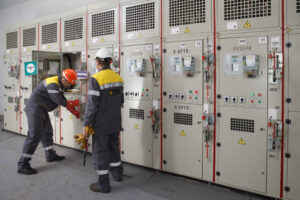
Distribution system operators (DSOs) at DTEK Networks reconstructed seven transformer stations and 17 substations between January and June 2026, and built 13 new transformer stations in Kyiv, Kyiv, Dnipropetrovsk, and Odesa regions.
“This is 1.5 times more than during the same period last year,” the operating holding company reported on Thursday.
Energy companies continue to upgrade infrastructure and prepare the grids for peak loads, particularly during the fall and winter months.
DTEK Networks noted that the scope of the investment program is approved annually by the state regulator, the NEURC, for all operators. At the same time, the holding’s distribution system operators repaired nearly 2,000 km of overhead lines and 4,600 km of underground cables in the first half of 2026, and restored nearly 3,000 power facilities.
In addition, to reduce the risk of accidents and ensure a reliable power supply for households, specialists cleared 5,000 km of overhead line corridors of trees and shrubs.
“In total, we plan to invest over 6.7 billion UAH in network upgrades in 2026. This will allow us to build a safety margin for the upcoming heating season,” said Alina Bondarenko, CEO of DTEK Networks.
The company added that the development and modernization of infrastructure also create the necessary technical capabilities for connecting new customers.
“DTEK Networks” operates in the electricity distribution and power grid operation sectors in Kyiv, Kyiv, Dnipropetrovsk, Donetsk, and Odesa regions. The DTEK Group’s distribution system operators serve 5.1 million households and 150,000 businesses.
“Ukrtelecom,” the country’s largest fixed-line operator, increased its total revenue by 12.6% in the first half of 2026 compared to the same period last year—to 2.78 billion UAH, while EBITDA rose by 50% to exceed 810 million UAH, according to a company press release on Friday.
“As it has throughout the full-scale war, Ukrtelecom continues to implement its strategic approach: not merely to restore damaged networks, but to replace outdated infrastructure with modern telecom and IT equipment to implement a new optical telecom architecture and a modern IT landscape for the company,” emphasized Yuriy Kurmaz, CEO of Ukrtelecom, in the press release.
According to him, as of today, the company has over 95,000 km of fiber-optic network and is continuing a large-scale modernization of its infrastructure across the country.
It is noted that the EBITDA margin has risen to more than 29%.
The number of new connections in the residential segment increased by 81% compared to the same period last year, while the figure for small and medium-sized businesses rose by 17%.
Ukrtelecom specified that, as of the end of the first half of 2026, 1,400 medical facilities and 2,000 educational institutions were connected to the fiber-optic network. Meanwhile, revenue from fiber-optic internet services in the first half of 2026 increased by 12.5% compared to the same period last year.
Among other things, the fixed-line operator reported that revenue from commercial leases for the first six months of 2026 exceeded 320 million UAH, representing growth of more than 20% compared to the same period in 2025.
The company added that, according to survey results, the net promoter score (NPS) for new fiber-optic subscribers of the fixed-line operator in the first half of 2026 was more than 70%.
Separately, the CEO of Ukrtelecom noted that the company is simultaneously building fiber-optic networks while restoring and modernizing infrastructure damaged by hostilities in frontline regions of the Kharkiv, Sumy, Kherson, Mykolaiv, and Dnipropetrovsk regions, as well as other regions of Ukraine.
It is noted that in the first half of 2026, the company paid nearly 800 million UAH in taxes and fees to budgets at all levels.
The fixed-line operator is expected to continue investing in the development of telecommunications infrastructure.
In January–March 2026, Ukrtelecom reported a consolidated net profit of 15.46 million UAH, compared to a net loss of 652.95 million UAH for the same period in 2025.
As previously reported, in 2025, Ukrtelecom increased its consolidated net loss by 24.6% compared to 2025—to 294.87 million UAH—while its net revenue grew by 3.2%—to 4.27 billion UAH.
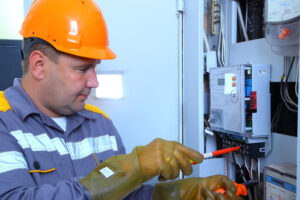
According to the results of the first half of 2026, the distribution system operators (DSOs) of DTEK Networks continue to expand the automated commercial electricity metering system (ACEMS), which allows for real-time monitoring of electricity consumption.
“During the first half of 2026, specialists installed nearly 136,000 smart meters in Kyiv, Kyiv, Odesa, and Dnipropetrovsk regions, which is 37% more than during the same period last year,” the operating holding reported on Wednesday.
The pace of smart meter installation continues to grow, and currently, one in three customers in Kyiv, Kyiv, Odesa, and Dnipropetrovsk regions is already using them.
It is noted that smart meters are part of the ASKOE system. They automatically transmit readings to the distribution system operator (DSO), which simplifies the process of accounting for electricity consumption and allows utility companies to more quickly obtain information about the state of the grid and analyze consumption.
As explained by DTEK Networks, for customers, the installation of these meters means less hassle with regularly submitting meter readings and more accurate tracking of electricity consumption.
The implementation of the ASKOE system is taking place as part of an investment program approved annually by the energy regulator, the NEURC.
“You can find out if a meter replacement is scheduled for your home this year on your distribution system operator’s website,” the company explained to consumers.
The installation of smart meters is part of the “Network of the Future” project aimed at modernizing energy infrastructure and implementing Smart Grid technologies.
“DTEK Networks” operates in the business of electricity distribution and power grid operation in Kyiv, as well as in the Kyiv, Dnipropetrovsk, Donetsk, and Odesa regions. The company’s distribution system operators serve 5.1 million households and 150,000 businesses.

The Kyivstar mobile network operator is preparing the network to offset possible risks in operation, including geopolitical ones.
“We are taking certain steps to prepare, despite the fact that it is very difficult to predict which scenarios will develop. Therefore, we have two priorities – our people, business continuity and the provision of communication services. We are looking at critical infrastructure, on how they are located, and we are taking certain steps to achieve geographic diversification across critical nodes. We are even investing money in this – and quite a lot – in order to achieve a radical increase in network resilience depending on scenarios in the horizon of several weeks,” Kyivstar President Alexander Komarov told Interfax-Ukraine.
He also said that the operator is implementing a number of steps aimed at increasing the flexibility of managing its network, depending on possible threats. This is the organization of stocks of fuel and lubricants for generators, with which the operator plans to maintain the operation of critical network nodes in the event of a power outage, the implementation of the ability to turn off certain areas in the absence of control over the network in some geographical areas.
As reported, Ukrainian Foreign Minister Dmytro Kuleba thanked his British counterpart Liz Truss for the decision to impose large-scale sanctions against the Russian Federation.
The U.K. continues to show leadership in global efforts to deter Russia from further aggression, he said.
The users of modern smartphones are 18 million subscribers of the network of the mobile operator Kyivstar.
According to the press service of the company, the data are for the third quarter of 2021.
According to Kyivstar analytics, the number of network users who already have smartphones increased by 8% compared to the same period last year. Among them, about 16.6 million devices support 4G.
“For several years now, smartphones from Xiaomi (32%) and Samsung (27%) have been leading in popularity among Kyivstar customers. The next most common smartphones are Apple (13%), Huawei (9%) and Meizu (2%). Other phones make up 17%,” the report says.
At the same time, the company notes that only 1.4 million subscribers have smartphones that do not support 4G technology. Compared to 2020, there are half the number of such phones.

Fozzy Group announces the creation of a network of sports clubs Apollo Next Sport-Space, the opening of the first of them is planned in September this year.
According to the company’s report, the clubs will develop in the “high value – low price” segment, that is, the clubs will be affordable, but of high quality and technology.
“When creating Apollo Next, we were inspired by the NASA space flight program. It was this program that helped carry out the first manned landing on the moon and declare to the whole world that nothing is impossible for humans. Actually, we think so too. Therefore, we are launching the following “missions to the stars” in each new club. This will even be reflected in the names of the locations: Apollo 019, Apollo 020, Apollo 123 and so on,” the company describes the concept of the clubs.
According to a press release, three such sports spaces will open in early September in Kyiv: Apollo NEXT 019 with an area of 1,300 sq m in the Dream Town 1 shopping center (1b Obolonsky Avenue), Apollo Next 020 with an area of 1,200 sq m in KharOK shopping and entertainment center (9e Dekabrystiv Street) and Apollo Next 021 with an area of 1,200 sq m in the Arena City shopping center (2a Baseina Street).
It is noted that each sports space has a group training area, a functional area for small groups, a cardio area, a stretching area, as well as a place for working with free weights and sports equipment. On the territory there is a club management center, a social space with a cafe-bar, a kiosk with a branded line of Decathlon sports equipment, accessories and sports nutrition, as well as changing rooms and showers.
Apollo Next is the first fully digitalized network of sports clubs, all interaction takes place through the website, application, facial recognition system, Apollo Next bracelet and NFC devices.
Subscription allows you to train daily for four weeks. Subscription pre-sale started on July 20, 2021.



