
JSC “NAEK ”Energoatom” is implementing agreements with Westinghouse Electric Sweden AB regarding the localization of production of components used in fuel assemblies.
“Atomenergomash (AEM) has received the necessary materials to manufacture the first batch of fuel assembly tails for the VVER-1000. The production time for the batch is four months,” Energoatom reported on Wednesday.
The components manufactured at Ukrainian facilities will be used in the production of fuel for Ukrainian nuclear power plants.
“The launch of our own production of fuel assembly components is an important step in achieving Ukraine’s strategic goal of strengthening energy security and establishing energy independence. In addition, the qualification process is underway for another fuel assembly component—fuel cassette heads“, noted Pavlo Kovtonyuk, head of ”Energoatom.”
The company noted that Westinghouse Electric Sweden AB has recognized Energoatom’s subsidiary, VP “Atomenergomash,” as a qualified and approved supplier of nuclear fuel components (fuel assemblies) for VVER reactors. Atomenergomash’s quality system complies with Westinghouse standards.

According to Serbian Economist, Serbia plans to start construction of its first nuclear power plant by 2035 and is cooperating with French energy company EDF as part of its preparations, Minister of Mining and Energy Dubravka Jedovic Handanovic said in an interview with RTS.
The minister stressed that EDF can help Serbia with its experience and knowledge in preparing the project. At the same time, she said, no decision has yet been made on the specific technology for the future nuclear power plant.
The preparatory process for the construction of the nuclear power plant is estimated to take approximately four years: by mid-2027, the authorities intend to complete the first phase, which involves analyzing the regulatory framework and requirements, after which the second phase, including preparation for construction, will begin. The ministry noted that the first additional studies are planned to be carried out jointly with EDF with the support of the French Development Agency (AFD) on the basis of an intergovernmental agreement between Serbia and France.
Against the backdrop of the launch of the nuclear agenda, Serbia is simultaneously in contact with other potential partners and technology suppliers.
Potential partners and companies involved in the preparation and negotiations:
France – EDF (as well as Egis Industries as part of the preliminary technical study contractors).
Serbia also signed a memorandum with Korea Hydro & Nuclear Power (KHNP, South Korea) on cooperation in the field of nuclear energy and personnel training.
Serbia considered Rosatom (Russia) as a possible partner for the exchange of experience.
Separately, it was reported that Emirates Nuclear Energy Company (ENEC, UAE) was ready to share its roadmap for the development of a nuclear program.
The United States (agreements/information exchange between regulators and willingness to support program preparation) and China (memorandum with the China Institute of Atomic Energy) were also mentioned in the context of contacts.
https://t.me/relocationrs/2404
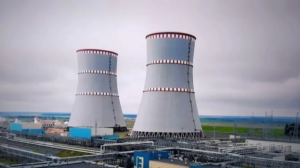
The first nuclear power plant (NPP) in Kazakhstan will be named “Balkhash”, the press service of the republic’s atomic energy agency reported.
“According to the results of the final meeting of the Competition Commission, the name ”Balkash” nuclear power plant was recognized as the winner, which received the largest number of proposals from citizens. The chosen name also corresponds to the international practice of naming nuclear power plants by geographical feature,” the report on the results of the nationwide contest for the best name of the nuclear power plant reads.
The contest committee also determined the name in Russian and English: “Balkhash Nuclear Power Plant” and Balkhash Nuclear Power Plant.
The first NPP, which will be located near Lake Balkhash, will be built by Rosatom. The Russian company has signed a roadmap with Kazakhstan for the construction of two VVER-1200 nuclear power units. The construction of the plant will take approximately 11 years and may be completed in 2035-2036. The issue of attracting state export financing at the expense of the Russian Federation is being studied for the construction of the plant.
Research work near the village of Ulken on Balkhash started on August 8. Here, as part of preliminary surveys, Rosatom’s specialists will explore at least three sites in Zhambyl district, for which they will drill 50 wells with depths ranging from 30 to 120 meters. Based on the hydrogeological features of the site, seismic stability parameters and others, a decision will be made on the exact location of the NPP.
The government said that the second and third nuclear power plants in Kazakhstan could be built by China National Nuclear Corporation (CNNC).
This year, Energoatom plans to continue the practice of reducing the timeframe for the repair campaign at Ukrainian NPPs, which was achieved in 2023-24, the company’s CEO Petro Kotin said.
“We manage to do this at an accelerated pace and, which is very good, without reducing the quality of repairs (…) We reduced the repair time last year. This year, we also plan to reduce the timeframe wherever possible,” he said on the Energo LIVE program.
As explained by the CEO, the main measure during scheduled outages at nuclear power units is nuclear fuel reloading.
“Nuclear fuel reloading is what a nuclear power unit needs to ensure that it operates continuously for one year afterwards,” he said.
Along with the transshipment, the company is carrying out repair work to restore the equipment and bring it to the highest standards.
As reported, in 2024, Energoatom continued the practice of reducing the total duration of scheduled repairs of power units, reducing them by another 59 days. The repair campaign was planned so that all nine power units located in the territory controlled by Ukraine could operate during the cold season.
Currently, Energoatom operates nine power units at South Ukrainian, Rivne and Khmelnytsky NPPs with a total capacity of 7880 MW. All of them are located in the territory controlled by Ukraine.
Zaporizhzhia NPP with six VVER-1000 power units with a total capacity of 6,000 MW has not been generating electricity since September 11 of the same year after its occupation on March 3-4, 2022.
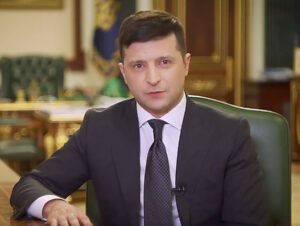
Ukraine has introduced additional security measures at nuclear power plants (NPP) in order to avoid interference in their work with the aim of destabilizing, head of state Volodymyr Zelensky has said.”To date, Energoatom is operating as it never did. Some 13 blocks out of 15 are working. God grant that everything is good. We are additionally protecting them. Frankly speaking, we know that today everyone wants to do so that there is energy destabilization in Ukraine,” Zelenskiy said during a press conference in Kyiv on Friday.”The main thing for us is that there are no blackouts,” the head of state said.
Head of National Nuclear Generating Company Energoatom Petro Kotin and Senior Vice President for Commercial Operations at Westinghouse Electric Company Elias Gedeon have discussed cooperation in the construction of new NPP units in Ukraine using AP1000 reactors.
According to the press service of Energoatom, in particular, during the negotiations held in Kyiv on June 29, the parties agreed to create a joint working group.
Energoatom said that the use of the American AP1000 technology – a next Generation III+ double loop reactor with a capacity of about 1100 MW, the design of which has fewer components, and standardization and licensing of which help to reduce the construction time and cost – in the long term will enable the company to provide a high level of safety and reliable operation of nuclear generation and respect for the environment.
As reported, Energoatom and Westinghouse have been cooperating since 2000 in the supply of nuclear fuel.



