
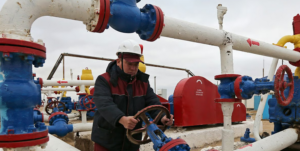
According to Serbian Economist, the Hungarian government has designated the “Hungary–Serbia” oil pipeline and related infrastructure as a priority investment project, which is expected to speed up administrative procedures and construction work. Budapest views the project as part of a broader strategy to better coordinate the energy and fuel markets of Hungary, Serbia, and Slovakia. The Hungarian side believes this will enhance the resilience of regional energy supplies and reduce dependence on external risks.
Hungarian media reports state that the government’s goal is to bring the system into full operation in 2027 or 2028. The new route is intended to create an additional foundation for oil supplies to the region amid the continued vulnerability of existing supply lines.
The issue is particularly sensitive for the region following supply problems with the Druzhba pipeline, a section of which on Ukrainian territory was damaged in January. Against this backdrop, Budapest has in recent weeks linked energy security issues to broader regional policy.
For Serbia, accelerating the project is important both in terms of diversifying supply routes and in the context of ongoing uncertainty surrounding NIS and oil imports. The new pipeline could become one of the country’s key energy infrastructure projects.
https://t.me/relocationrs/2509
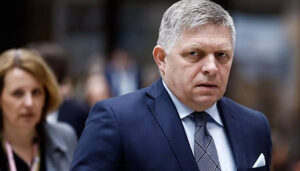
Slovak Prime Minister Robert Fico has announced his intention to stop emergency electricity supplies to Ukraine if Ukraine does not resume oil supplies on Monday, February 23, which were interrupted after an accident on the Druzhba oil pipeline near the Ukrainian city of Brody in the Lviv region in January.
“If the Ukrainian president does not resume oil supplies to Slovakia on Monday, then on the same day I will ask the relevant Slovak companies to stop emergency electricity supplies to Ukraine,” Fico wrote on Twitter.
He also accused Ukrainian President Volodymyr Zelensky of allegedly “refusing to understand our peacemaking approach” and therefore, according to Fico, “behaving maliciously towards Slovakia,” which he believes treats Slovakia “as an enemy country.”
“First, he stopped gas supplies to Slovakia, causing us losses of €500 million a year. Now he has stopped oil supplies, causing us further losses and logistical difficulties. If the West does not object to the Nord Stream gas pipeline being blown up, Slovakia cannot view Slovak-Ukrainian relations as a one-way ticket that is only beneficial to Ukraine,” the Slovak prime minister wrote.
Fico added that he is a “proud and sovereign Slovak” and intends to ask the state-owned joint-stock company SEPS to stop emergency electricity supplies to Ukraine. “In January 2026 alone, these emergency supplies, necessary to stabilize the Ukrainian power grid, were twice as much as in the whole of 2025,” he said.
The head of the Slovak government also stressed that Slovakia has been helping Ukraine since the beginning of the war. “About 180,000 Ukrainians are currently on our territory, we are providing humanitarian aid and organizing joint government meetings. We are doing much more for Ukraine than some other countries,” Fico wrote.
As reported, on February 18, the export of diesel fuel from Hungary to Ukraine was suspended until the resumption of Russian crude oil transit through the Druzhba pipeline, said Hungarian State Secretary for Public Diplomacy and Public Relations Zoltán Kovács. In his opinion, Ukraine “unilaterally stopped supplies on January 27 for purely political reasons, although technically their resumption is possible.” Statements about the suspension of diesel exports to Ukraine also came from the Slovak side.
Earlier, Hungary and Slovakia asked Croatia to allow Russian oil to be supplied to Hungary and Slovakia via the Adria pipeline. Meanwhile, Slovakia has declared a state of emergency in the oil industry due to the lack of oil supplies.
Croatian Economy Minister Ante Šušnjar, in turn, said that the Adria pipeline is ready for operation, but that there are no technical justifications for any EU country to remain tied to Russian crude oil. “A barrel bought from Russia may seem cheaper for some countries, but it helps finance the war and attacks on the Ukrainian people,” he said.
The transport of Russian crude oil through Ukraine via the Druzhba pipeline has been halted since the end of last month due to large-scale Russian attacks on Ukrainian energy infrastructure.
According to Serbian Economist, Serbian oil and gas company NIS has announced the signing of a contract to import the first batches of oil via the Adriatic oil pipeline (JANAF) for the refinery in Pančevo and preparations to resume processing after a shutdown in early December 2025 due to a shortage of raw materials amid sanctions restrictions.
According to Reuters, the first shipment includes about 85,000 tonnes of Iraqi Kirkuk oil, followed by a smaller batch of Libyan Es Sider. These volumes will keep the plant running for at least a few days, and Serbian President Aleksandar Vučić has predicted that the refinery will be able to resume operations on 17-18 January, with the production of petroleum products likely to begin on 25-26 January.
The resumption of imports became possible after the US Treasury’s Office of Foreign Assets Control (OFAC) issued a temporary licence allowing NIS to continue operating until 23 January 2026. Reuters also reported that a separate licence had been issued to the operator JANAF to transport oil for NIS for the same period.
The situation surrounding NIS remains linked to negotiations on changes to its ownership structure. The US is awaiting negotiations on the withdrawal of the Russian share, with the deadline for the negotiation process extended to 24 March 2026, and Hungarian company MOL is named as one of the participants in the discussions.
NIS is a key player in the Serbian fuel market: the company owns the country’s only oil refinery (Pančevo) and the largest network of petrol stations, so any disruption in the supply of raw materials directly affects the balance of the petroleum products market and Serbia’s import needs.
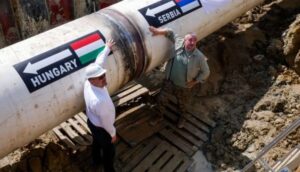
Hungarian Foreign Minister Peter Szijjarto and Serbian Energy Minister Dubravka Jedovic-Handanovic agreed on Wednesday to intensify investment policy in the energy security sector and speed up the construction of the first oil pipeline between the two countries, the Hungarian foreign minister said.
“We have agreed to expand joint investments in energy and energy security, including the construction of the first interconnecting oil pipeline,” Szijjarto wrote on Facebook (Meta Platforms Inc.).
In addition, Sijarto and Jedovic-Handanovic agreed to step up funding for “a new power line connecting the networks of the two countries.”
“For our country, Serbia is a strategic partner, without Serbia there will be no energy security for Hungary, and vice versa,” the Hungarian Foreign Minister added.
As reported, the construction of the oil pipeline between Hungary and Serbia is expected to be completed by 2026. The new branch will be connected to the Druzhba pipeline and will allow Serbia to diversify its oil supplies and not depend on Croatia.

Detained MP Viktor Medvedchuk said that he was dealing with the withdrawal from the state ownership of the Samara-Western direction oil pipeline at the request of then-President Petro Poroshenko, coal supplies from LPR / DPR. Of Ukraine.
A statement issued by the SBU on Monday in the agency’s Telegram Channel notes that Medvedchuk, who is suspected of treason and aiding terrorism, told about the scheme of withdrawal from state ownership of the Samara-West direction main oil pipeline for further pumping. him diesel fuel.
“Describing the essence of the scheme, Medvedchuk detailed the role of former President Petro Poroshenko in it. Namely, that he not only asked Medvedchuk to contact the Russian leadership, but also ensured the necessary decisions in all Ukrainian instances,” the statement said.
Referring to Medvedchuk’s words, the Ukrainian secret service reports: “For this pipeline to become private property, and in fact – the property of Poroshenko himself, it was necessary to perform a number of actions… Courts, prosecutors, Antimonopoly Committee, State Property Fund – all of them made decisions personal interests of President Poroshenko “.
Thus, as noted in the SBU, Medvedchuk claims that he dealt with the pipeline at the request of Poroshenko.
“Finally, during the year of operation, the pipeline earned twice as much money for its owners as was invested in its purchase – up to $ 42 million. in the message.
In addition, according to the SBU, Medvedchuk told the details of the agreement in 2014-2015. mechanism for purchasing coal for the needs of Ukraine’s energy sector in the temporarily occupied territories of the so-called “L / DNR”. “In fact, the entire top of the state apparatus was involved, starting with the president and ending with ministers, law enforcement officers and those who directly implemented this scheme,” the SBU said, citing Medvedchuk.
The report states that the suspect named specific names of high-ranking officials involved in harming the interests of the state – former officials, former leadership of the National Bank, MPs and law enforcement officials.
“The security service continues investigative actions with the detainee to establish all the facts, circumstances, organizers and participants in the crimes committed,” the statement said.
The SBU reminds that the Ukrainian special services detained Medvedchuk in April after escaping from house arrest at the beginning of a full-scale Russian invasion on February 24.
In 2021, the SBU raised several suspicions against Medvedchuk. He is suspected of treason, aiding a terrorist organization and attempting to plunder national resources in the temporarily occupied territory of Crimea.
One of the cases concerns the organization of illegal coal supply schemes from the temporarily occupied territories. Fuel was purchased for cash, and thus pro-Russian terrorists financed a total of more than UAH 200 million.
Another criminal case concerns the illegal seizure of Prykarpatzapadtrans LLC by a section of the state oil pipeline worth over UAH 200 million. In February 2021, the National Security and Defense Council returned the pipeline to state ownership.
OIL PIPELINE, POROSHENKO, PURCHASING COAL, SBU, ЛНР/ДНР, МЕДВЕДЧУК



