
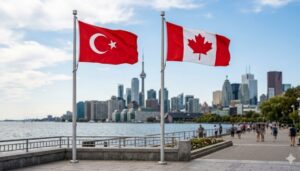
Canadian Prime Minister Mark Carney and Turkish President Recep Tayyip Erdoğan announced the launch of a bilateral strategic partnership aimed at developing cooperation in the energy, defense, and economic sectors.
“Today, President Erdoğan and I launched the new Canada-Turkey Strategic Partnership to create significant new opportunities for our peoples,” Carney wrote on social media platform X on Thursday.
According to him, the cooperation will cover the energy sector, the extractive industries, climate initiatives, as well as security and defense issues. “We are deepening our ties to counter common threats and open new markets for our workers and businesses. This is an ambitious partnership for a safer and more prosperous future,” the Canadian prime minister emphasized.
Ukraine has close trade and economic ties with both countries: the Canada-Ukraine Free Trade Agreement (CUFTA) has been in effect since 2017 (with subsequent updates), while the free trade agreement with Turkey officially entered into force in 2026, significantly expanding access for Ukrainian goods to the markets of both strategic partners.
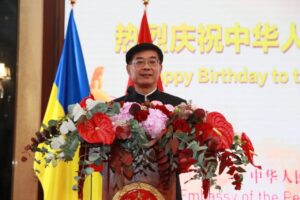
China is ready to remain a reliable partner of Ukraine and to expand mutually beneficial cooperation between the two countries, said Ma Shenkun, Ambassador of the People’s Republic of China to Ukraine.
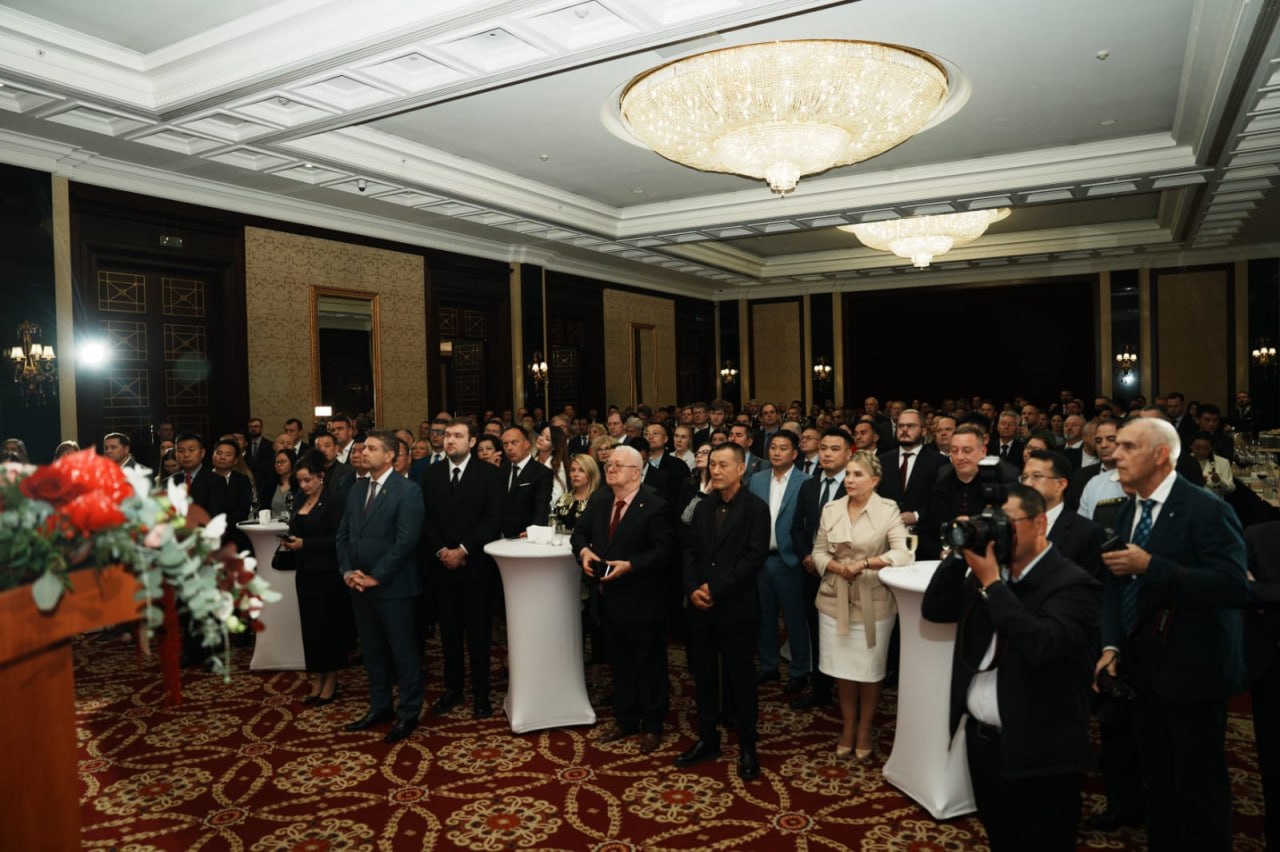
“The economies of China and Ukraine are highly complementary, so cooperation between the two countries has broad prospects. China is ready to be a reliable partner of Ukraine. We are committed to further expanding mutually beneficial cooperation, bringing greater benefits to the peoples of both countries, and jointly opening up new prospects for the development of China-Ukraine relations,” the ambassador said during a reception in Kyiv marking the 77th anniversary of the founding of the People’s Republic of China.
The event was attended by Ukraine’s Deputy Minister of Foreign Affairs Yevhen Perebyinis, as well as representatives of the diplomatic corps, Ukrainian government and civil society organizations, the business community, and the Chinese community.
Ma Shengkun noted that 2026 will mark the 15th anniversary of the establishment of the China-Ukraine strategic partnership, and in 2027, the two countries will celebrate the 35th anniversary of the establishment of diplomatic relations.
According to him, China has remained Ukraine’s largest trading partner for many years and is one of the main sources of Ukrainian imports.
The ambassador highlighted the development of bilateral trade in agricultural products. Specifically, in 2025, Ukraine and China signed protocols opening opportunities for the export of Ukrainian peas and wild-caught aquatic biological resources, and in 2026, they signed a protocol regarding the export of Ukrainian wheat flour to China.
“This creates a solid foundation for the further expansion of Ukrainian agricultural exports,” noted Ma Shenkun.
Speaking about the state of the Chinese economy, the diplomat reported that China’s GDP in the first half of 2026 reached 69.6 trillion yuan, an increase of 4.7% compared to the same period last year.
According to him, China intends to continue developing high-tech manufacturing, new energy, artificial intelligence, robotics, and innovative pharmaceuticals, while simultaneously opening its economy further to the outside world.
Ma Shengkun also addressed Beijing’s position on the war in Ukraine. He stated that China advocates for a political settlement and the continuation of diplomatic efforts.
“China will continue to stand firmly on the side of peace and support all efforts that promote peace. In turn, China will continue to play a constructive role in facilitating the swiftest possible ceasefire and cessation of hostilities and, ultimately, the achievement of a peace agreement,” the ambassador stated.
He noted that nearly two years of work in Ukraine have convinced him that the Ukrainian economy has significant potential for further development and cooperation with China.
A significant portion of the ambassador’s speech was devoted to the achievements of the PRC’s 77-year development. Ma Shengkun noted that China has become the world’s second-largest economy, a global leader in the volume of merchandise trade, and one of the main trading partners of more than 160 countries and regions.
The diplomat also stated Beijing’s intention to continue international cooperation within the framework of the “Belt and Road” initiative, which, he said, has been joined by over 150 countries and more than 30 international organizations, with the number of infrastructure and industrial projects currently underway exceeding 4,000.
According to a study by the Experts Club think tank, China ranked first among Ukraine’s largest trading partners in the first half of 2026. Trade between the countries totaled approximately $14.68 billion, including imports of Chinese goods to Ukraine of about $13.9 billion and Ukrainian exports to China of about $778 million. China accounted for about 21.9% of Ukraine’s total trade with its 50 largest trading partners and 29.4% of imports from this group of countries. At the same time, Ukraine’s trade deficit with China amounted to approximately $13.12 billion. Experts Club study on Ukraine’s largest trading partners in the first half of 2026
According to data from the State Customs Service, this trend continued in January–August 2026: China remained the largest supplier of goods to Ukraine, with imports totaling over $19.6 billion.
The People’s Republic of China recognized Ukraine’s independence on December 27, 1991, and diplomatic relations between the two countries were established on January 4, 1992. The Embassy of the People’s Republic of China in Kyiv began operations in 1992. That same year, the Embassy of Ukraine in Beijing began operations. In 2011, Ukraine and China established a strategic partnership.
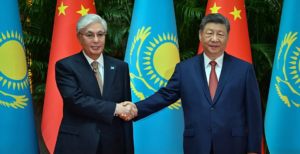
Astana and Beijing signed 50 commercial agreements totaling $8.2 billion during the “Kazakhstan–China” investment forum in Almaty, according to the press service of the President of Kazakhstan.
In particular, an agreement was signed on the construction of an electrolytic aluminum plant and an accompanying wind power plant in the Abai region (Eastern Kazakhstan), as well as on the construction of a particleboard plant in Semey (Semipalatinsk). The document was signed by the regional governor and a consortium of companies comprising Xinjiang Sanbao Industrial Group Co., Ltd. and Inner Mongolia Wanjiang Investment Co., Ltd.
An agreement on joint project development was signed between Samruk-Energo JSC, China Energy Overseas Investment Co., Ltd., and SANY Renewable Energy Co., Ltd.
In addition, a document outlining the basic terms for establishing a specialized investment fund—focused on financing promising projects in Kazakhstan—at the Astana International Financial Center was signed between JSC “NC ‘Kazakh Invest’” and Silk Road Finance Corporation.
An agreement on cooperation in the construction of wind power plants with a total capacity of 450 MW in the Akmola Region was concluded between the regional administration and Sungrow Renewable Development Co., Ltd.
A memorandum of understanding regarding the implementation of the project “Creation of a High-Tech Automobile Manufacturing Complex for the Production of Passenger and Special-Purpose Vehicles” was signed between the administration of the East Kazakhstan Region and the Kazakh-Chinese joint venture East Motors Corporation.
In addition, cooperation agreements were signed between the Turkestan Region and Turan Chemical Company LLC regarding the construction of a urea fertilizer plant.
An agreement on cooperation in organizing and supporting the issuance of dim sum bonds on the Hong Kong Stock Exchange (HKEX) was signed between the Mayor of Almaty and Guotai Junan Securities (Hong Kong) Limited.
An agreement was signed for the construction of a multifunctional complex featuring an international-brand hotel and a business center between the mayor of Almaty, Everest Development, and SunnyWorld Group.
An agreement was concluded on the preliminary terms for financing investment projects in priority economic sectors between the Development Bank of Kazakhstan and the Astana Branch of China Construction Bank Corporation.
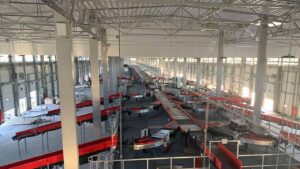
Nova Poshta, the leader in express delivery in Ukraine and part of the Nova Group, plans to expand its network of sorting centers and is seeking entrepreneurs, owners of logistics centers, and warehouse properties with an area of at least 500 square meters for long-term cooperation.
According to a post by “Nova Poshta” on its Telegram channel on Tuesday, the company is looking for partners who are ready to receive, sort by destination, and ship cargo and packages.
In turn, Nova Poshta will provide the cargo flow, business model, standards, and technological solutions, as well as the ability to scale operations, and may also offer risk insurance.
“Terms are negotiated on a case-by-case basis,” the company emphasized, adding that it is interested in proposals from Kyiv, the Kyiv region, and the eastern regions of Ukraine.
The need for space, employees, and equipment depends on the projected cargo volume for a specific location, the company noted.
As previously reported, in January–June 2026, “Nova Poshta” increased its consolidated net profit by 24.3% compared to the same period in 2025—to 2.195 billion UAH—and its revenue by 31.8%, to 39.127 billion UAH.
As of July 13, 2026, the company’s network comprised 54,700 service points: 16,800 branches and 37,900 parcel lockers throughout Ukraine.
In 2025, Nova Poshta increased its revenue by 21.6% compared to 2024—to 54.2 billion UAH—and its net profit rose by 4.4%—to 2.6 billion UAH. The number of packages and shipments delivered increased by 7.4%—from 486 million to 522 million—with international shipments rising by 52.6%, from 19 million to 29 million.
Nova Poshta’s core business remains the express delivery of documents, packages, and palletized bulky cargo. The company is the leader in express delivery in Ukraine. Its ultimate beneficial owners are Volodymyr Poperešniuk and Vyacheslav Klimov.
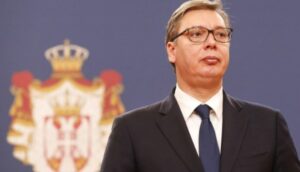
According to Serbian Economist, Serbian President Aleksandar Vučić published an op-ed for the American television network Fox News, in which he presented Serbia as a country ready for a closer partnership with the US, and stated that Donald Trump’s policies are viewed in Belgrade not as a threat, but as an opportunity for stability and economic development.
In the column, Vučić contrasted the attitude of some European elites toward Trump with the mood in Serbia. He wrote that “contempt” for the America First philosophy has spread from Brussels to Berlin, whereas Serbia sees it as an opportunity for a more pragmatic policy focused on results, security, and economic growth.
Vucic emphasized that Serbia, despite the painful memory of the 1999 NATO bombings, has in recent years become one of the few corners of Europe where sympathy for the U.S. has grown. According to him, reflexive anti-Americanism—which he believes has spread throughout much of Europe—is rarely found in the country today.
Separately, the Serbian president described his experience interacting with Trump and his team during his first presidential term. According to Vučić, his meetings at the White House following difficult negotiations left him with the impression that Serbia’s position was listened to without prejudice or arrogance. He also wrote that the image of Trump as an “aggressive bully” did not match his personal experience of interacting with him.
The column’s key political thesis is that Serbia’s European path should not mean distancing itself from the U.S. Vucic stated that for Belgrade, the path to Brussels “does not require distancing from Washington,” and that Serbia’s special relationship with the U.S. could be an asset for the stability and growth of the entire European continent.
The economic section of the text was built around the idea of Serbia as a modern and strategically important partner for the West. Vučić noted that Serbia is one of Europe’s most dynamic economies, with GDP growth exceeding that of the Eurozone, and is becoming a hub for future technologies—from data centers to supply chains for electric vehicles.
He gave special attention to the lithium agenda. According to the president, Serbia has the second-largest lithium reserves in Europe, and this resource is key to Western industrial independence. Vucic also emphasized that Serbia is not seeking aid, but rather “deals” that secure supply chains, accelerate energy independence, and create jobs.
This is an important signal for the Serbian economy. Belgrade is attempting to position the country not only as an EU candidate and a regional player in the Western Balkans, but also as a potential component of American and European industrial strategy. In this context, lithium, energy, infrastructure, IT, data centers, and manufacturing for the electric vehicle industry are not separate projects but part of Serbia’s broader geo-economic agenda.
Vucic also effectively urged Washington to reconsider its view of the region. He stated that it is time for the U.S. to stop viewing the Balkans through the lens of the 1990s and to pay attention to Serbia as the largest economy in the Western Balkans, an “anchor of stability,” and a country that remembers its friends.
The most striking part of the column was the invitation to Trump to visit Belgrade. Vucic noted that no American president has visited the Serbian capital in over half a century since Richard Nixon’s visit in 1970, and stated that if Trump were to come to Belgrade, he would receive “a welcome the likes of which Europe hasn’t seen since Nixon.”

Ukraine is interested not only in developing partnerships with countries in Europe, North America, and the Persian Gulf, but also with other regions of the world, particularly Africa, Asia, and Latin America, stated Ukrainian Foreign Minister Andriy Sibiga.
According to him, Ukraine’s unique defense capabilities and experience in protecting lives are of great interest to many countries around the world. “Countries around the world are watching developments in the Middle East and seeing just how cost-effective and technologically advanced Ukraine’s capabilities are,” Sibiga noted in a post published on social media platform X.
The minister emphasized that years of brutal Russian war have brought immense suffering and destruction to the Ukrainian people, but at the same time have forced Ukraine to develop its own unprecedented strength. Modern Ukraine is a guarantor of security and a reliable partner for those who share its values and seek to protect life from any threats.
“From this new perspective, it is also difficult to understand why any decision-maker in any NATO member country would prefer to have Ukrainian strength outside the Alliance rather than integrated into it,” the minister added.



