
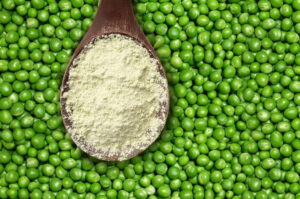
Agroenergy Group plans to implement a project in the Kyiv region to build a deep-processing plant for yellow peas with a total cost of $24.2 million, of which $20.6 million is expected to be raised through financing.
According to the Ukraine Investment Guide 2026, presented at the Ukraine Recovery Conference 2026 (URC2026) in Gdańsk, the plant will have a design capacity of 35,000 metric tons of yellow peas per year.
Once operational, the plant will produce approximately 8,800 metric tons of protein concentrate, 22,000 metric tons of pea starch, as well as pea flour, fiber, and other processed products. The primary target markets are Ukraine, European Union countries, the United States, and Canada.
The catalog states that the project is based on “dry” fractionation technology and involves the creation of a vertically integrated complex that will cover the full cycle of raw material processing and the production of five types of value-added products.
A preliminary feasibility study has already been completed, and the project is ready for implementation. The payback period is 6.5 years at an IRR of 18.3%. The estimated project implementation period is two years.
Agro Energy Group is a diversified Ukrainian agro-industrial group operating in crop production, livestock farming, seed production, agricultural processing, and bioenergy. The group’s land bank totals approximately 10,000 hectares, with its main production facilities located in the Cherkasy, Vinnytsia, and Zhytomyr regions.
The group owns a farm with a herd of 900 head of cattle, including nearly 350 dairy cows.
The group consists of the following companies: Urozhay LLC, Nasinnya LLC, Iskra LLC, Veremiyivka LLC, and Enerhiya LLC.

The production of bio-glue from peas, which is necessary for the manufacture of eco-friendly wood panels for the construction and furniture industries, has started in the Korosten Industrial Park (Zhytomyr region), invested in by the Korosten MDF Plant owned by businessman Leonid Yurushev and his family.
“A unique production facility has started operating in the Korosten Industrial Park in Zhytomyr region. It has launched the production of bio-glue from peas. The total investment in this project is EUR 40 million,” wrote Dmytro Kysilevsky, deputy chairman of the Verkhovna Rada Committee on Economic Development, on Facebook.
He stressed that the launch of such production is sensational news for the Ukrainian agricultural sector, since the demand for new production is 1 million tons of peas per year, which is more than twice the gross harvest of this crop in 2024. Therefore, until Ukrainian farmers increase the area under this crop, part of the production needs will be covered by imports from Hungary and Poland.
According to him, the investor of the Korosten MDF Plant project is currently consulting with farmers in the Zhytomyr, Kyiv, Cherkasy, Kirovohrad, and Dnipropetrovsk regions on expanding the acreage and long-term contracts for the supply of peas.
“The climate in these regions allows for two pea harvests per year,” Kysilevsky added.
The new plant’s design capacity is 3,000 tons of bio-glue per month, with planned production volumes of eco-boards at 20,000 cubic meters per month.
To implement the project, the investor took advantage of the opportunity to import equipment without paying VAT, which is provided for by law for participants in industrial parks.
The MP recalled that last fall, IP Korosten, as part of a state project to develop the infrastructure of industrial parks on a 50/50 co-financing basis, attracted UAH 83.5 million from the state for the construction of an access road.
“At the same time, a similar enterprise, Korosten MDF Plant, is building in the BF Terminal industrial park (Zakarpattia region). 90% of eco-boards are planned to be exported. These products comply with EU regulations, which, from August 6, 2026, will tighten the requirements for formaldehyde content in adhesive mixtures for MDF and HDF board manufacturers,” Kysilevsky said.
He recalled that IP Korosten covers an area of 42.2 hectares and brings together a cluster of woodworking companies, including Ukrainian Holding Sawmill Company, Rezalt Eco, Korosten MDF Plant, BF Engineering, and BF Project.
According to YouControl, Korosten MDF Plant ended 2024 with a loss of UAH 9.8 million, while in 2023 it received a net profit of UAH 237 million, and its net income decreased by a quarter to UAH 1.89 billion. In January-September this year, its loss amounted to UAH 18.4 million, and its revenue was UAH 1.46 billion.
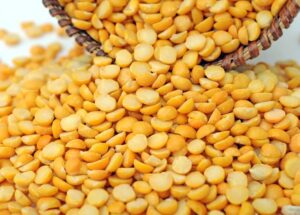
The domestic market for peas is seeing a decline in prices—before the start of the new season, quotations are falling by several percent, but more and more traders are showing interest in this crop for the first time, which could lead to an increase in demand and prices, according to the analytical cooperative Pusk, created within the framework of the All-Ukrainian Agrarian Council (VAR).
“We are currently seeing a slight decline in the price of peas before the start of the season. Theoretically, prices could fall further to 13,500–14,000 UAH/ton. But at the same time, many traders who previously did not work with peas at all are starting to actively engage in purchases. Niche crops usually offer good margins, especially for export. This motivates the market,” analysts say.
They emphasize that in 2025, the area under peas increased: last year, farmers sowed 212,000 hectares, while this year — over 250,000 hectares. However, even these volumes remain relatively small compared to other crops.
At the same time, the opening of the Chinese market is an important factor: demand from China could quickly absorb all the additional production.
“We have seen some growth in acreage, but not millions of hectares. China has opened its market, and a significant portion of the peas will likely go there. That means that an additional 40,000 hectares of pea acreage is not such a large resource. In this situation, a deficit is quite possible — demand will exceed supply,” analysts predict.
After a short-term decline, pea prices may stabilize and rise in mid-July-August. A similar situation already occurred last year, when prices began to rise instead of falling as expected.
“The pea market may again see levels of 15,000–16,000 UAH/ton. Everything will depend on logistics, weather conditions, and the pace of Chinese imports,” concluded Pusk.
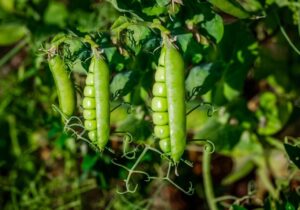
India has officially extended the import permit for peas until May 31, 2025, which is a positive signal for Ukrainian farmers on the eve of the spring sowing campaign, the Ukrainian Pulses and Soybeans Association reported.
The industry association reminded that despite the traditional protectionist policy and restrictions on imports of agricultural products, India periodically opens temporary “import windows”, which are actively used by Ukrainian exporters of pulses.
“Almost all of 2024, a window of opportunity remained open for Ukrainian pea producers, as India, one of the world’s largest consumers of this crop, allowed duty-free imports. Such opportunities encourage farmers to increase their acreage, especially small and medium-sized businesses that are quick to respond to changes in market conditions,” said Antonina Skliarenko, President of the Ukrainian Bean and Soybean Association.
According to her, in 2025, the area under peas in Ukraine may increase by 15%, and in 2026, we can expect an even greater increase in production of this crop.
An additional factor that increases interest in growing peas is the finalization of the opening of the Chinese market for Ukrainian products and the signing of the relevant protocol on March 6, 2025.
“This is a historic event for the Ukrainian pea production, which opens up great export prospects. Given that China introduced a 100% duty on Canadian peas on March 7, Ukrainian producers are gaining a serious competitive advantage,” the head of the business association emphasized.
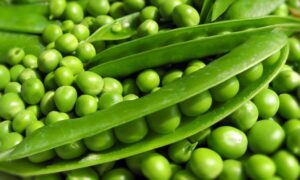
Ukraine and the People’s Republic of China have signed an agreement on the terms of export of Ukrainian aquatic products and peas to China, the press service of the Ministry of Agrarian Policy and Food reports.
“The Ministry of Agrarian Policy continues to work on opening new markets and scaling up existing ones. Today we have signed an important agreement with the People’s Republic of China,” Minister of Agrarian Policy and Food Vitaliy Koval said on Telegram.
According to the report, the agreement will allow Ukrainian farmers to gain access to one of the world’s largest markets, expand their presence in China, and support producers, especially in the fisheries and grain sectors. Ukraine will be able to increase exports and foreign exchange earnings, diversify its markets and integrate into global trade chains.
These agreements are the result of a dialogue between our countries and a series of high-level meetings. It was also the result of active cooperation between the Ministry of Agrarian Policy and Food of Ukraine, the State Service of Ukraine for Food Safety and Consumer Protection, associations, the General Administration of Customs of the People’s Republic of China, and the Chinese Ambassador to Ukraine, Ma Shengkun. I am confident that we have laid a solid foundation for expanding cooperation, as the last time such a contract was signed with China was more than 5 years ago,” the Minister summarized.
Ukraine and China are working to open the Chinese market for Ukrainian peas, poultry, corn, and fish products, the press service of the State Service for Food Safety and Consumer Protection reports.
“China is an important market for national exporters of agricultural products, so on behalf of the head of the State Service of Ukraine for Food Safety and Consumer Protection, Serhiy Tkachuk, the service and the competent authority of China continue to interact on a regular basis. Our goal is to open seven new markets. This is a long process of coordination, but step by step we are succeeding,” said Oleh Osiyan, First Deputy Head of the State Consumer Service, at a meeting with representatives of the General Administration of Customs of the People’s Republic of China (GACC).
The parties discussed draft bilateral international agreements on the export of peas, wheat flour, pet food, beef, corn, poultry, and wild-caught aquatic products from Ukraine to China. Each of these documents is at a different stage of development and approval.
“Currently, the protocol on peas is at the stage of finalizing domestic approval in Ukraine, and the texts have been sent to the competent authority of China for consideration. This is one of the markets that is at the final stage of opening. After the signing of the bilateral protocol, new opportunities for pea exports will open up for Ukrainian agricultural businesses,” said Vadym Chaikovskyi, Deputy Head of the State Service of Ukraine for Food Safety and Consumer Protection and Chief State Phytosanitary Inspector of Ukraine.
It should be reminded that the last Ukrainian product to be granted access to the Chinese market was honey. The form of the health certificate for its export was agreed upon earlier this year.
The requirements of the countries of destination for the export of food products of animal and plant origin are published on the official web portal of the State Service of Ukraine on Food Safety and Consumer Protection.
“Currently, our Chinese colleagues are considering draft protocols on the export of poultry and fish. The State Service of Ukraine on Food Safety and Consumer Protection sent its proposals on the text of the protocol in the fall. The protocol on wild-caught aquatic products has already passed domestic approval and is at the stage of final approval by the Chinese side. The texts of the protocols on beef and pet food are also undergoing the stage of internal approval,” said Volodymyr Kusturov, Deputy Head of the State Service of Ukraine for Food Safety and Consumer Protection and Chief State Veterinary Inspector of Ukraine.
Representatives of the State Food and Consumer Service and the GACC discussed in detail the steps for further cooperation, draft bilateral agreements, and agreed to continue active cooperation on the development of international trade between Ukraine and China.



