
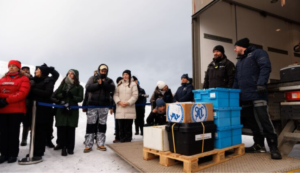
Ukraine has transferred 773 seed samples of ten agricultural crops from its national collection to the Global Seed Vault on the Svalbard archipelago in Norway.
The samples transferred to the Arctic seed vault include triticale, barley, buckwheat, millet, peas, white lupine, vetch, Sarepta mustard, alfalfa, and clover. These samples represent valuable genetic resources from Ukrainian plant breeding, which are essential for developing new varieties, adapting agriculture to climate change, and ensuring food security.
According to the National Academy of Agrarian Sciences of Ukraine (NAAS), the seeds were prepared by the V.Y. Yuryev Institute of Plant Growing and the Ustymiv Experimental Station of Plant Growing. Scientists selected the most valuable samples and ensured their testing, packaging, and documentation under wartime conditions.
“Preserving the national plant gene pool is a matter of our national security and ensuring food stability for future generations,” emphasized Taras Vysotsky, Minister of Agrarian Policy and Food of Ukraine, as quoted by SEEDS.
According to him, transferring the duplicate collection to an international repository will protect the unique achievements of Ukrainian plant breeders from risks associated with the war.
This transfer marks the second such event in Ukraine’s history. The previous deposit of Ukrainian seeds on Svalbard took place in 2012.
According to the Delegation of the European Union to Ukraine, these two transfers have ensured the backup storage of genetic material representing approximately 10% of the national seed collection.
Ukraine’s National Plant Genetic Bank contains over 154,300 samples of 2,002 plant species. Of these, approximately 56,900 samples are of Ukrainian origin. The collection includes genetic material from cereals, legumes, oilseeds, forage crops, and other agricultural crops.
Preserving this collection is of strategic importance for agricultural science. Genetic diversity enables breeders to develop new varieties that are resistant to drought, diseases, temperature fluctuations, and other adverse growing conditions.
Following the outbreak of full-scale war, Ukraine’s system for conserving genetic resources came under threat due to hostilities, damage to scientific infrastructure, and the risk of losing unique collections.
To protect the seeds, the Food and Agriculture Organization of the United Nations (FAO), with financial support from the European Union, implemented a program to establish backup storage facilities in collaboration with the National Academy of Agrarian Sciences of Ukraine (NAAS) and international partners.
As part of this initiative, 51,000 seed samples were evacuated to the western regions of Ukraine, and in November 2025, a permanent backup center was opened, equipped with modern laboratories and specialized infrastructure for the long-term storage of genetic material.
Storing part of the collection on Svalbard provided an additional layer of protection. In the event of damage to or loss of Ukraine’s primary collections, the backup samples can be used to restore genetic resources.
At the same time, the transferred seeds remain the property of Ukraine. The international repository ensures their storage without transferring ownership rights to the genetic material.
Ukraine has also acceded to the International Treaty on Plant Genetic Resources for Food and Agriculture, which entered into force for the country on August 12, 2026. This creates additional opportunities for international scientific cooperation and the protection of agricultural biodiversity.
The Svalbard Global Seed Vault is located on the Norwegian archipelago of Svalbard, above the Arctic Circle, and has been in operation since 2008. It was established for the long-term backup storage of genetic resources of agricultural plants from around the world.
According to the vault’s administration, as of 2026, it holds more than 1.4 million seed samples provided by gene banks and scientific institutions from various countries.
During the October 2026 ceremony, 21 research institutions from various regions of the world donated samples. In total, the repository received more than 16,000 new samples.
The project is supported by the Norwegian government, the Nordic Genetic Resource Center (NordGen), and the international organization Crop Trust. Its primary goal is to ensure the restoration of crop varieties in the event of wars, natural disasters, man-made disasters, or other threats to plant genetic diversity.
Sources: SEEDS, publication dated October 16, 2026; V. Ya. Yuryev Institute of Plant Growing, National Academy of Agrarian Sciences of Ukraine; Svalbard Global Seed Vault, announcement dated October 14, 2026.
agricultural sector, FOOD SECURITY, plant breeding, SEEDS, UKRAINE



