
According to the Serbian business media outlet Parametar, Croatia is claiming property worth over $2.7 billion located in Montenegro that remained there following the breakup of Yugoslavia. And this is by no means limited to the well-known training sailing ship “Jadran.”
This was stated by Croatian Minister of Foreign and European Affairs Gordan Grlić Radman during a visit to Montenegro. Zagreb has documentation regarding property that ended up on Montenegrin territory and was sold or transferred to other owners after the breakup of Yugoslavia.
Among these, the minister specifically mentioned military ships, submarines, and a military hospital.
The “Jadran” has become the most well-known part of the dispute. The training sailing ship was built in the 1930s and was used by the Yugoslav Navy. The vessel is currently in Montenegro, while Croatia insists on its return.
But the property dispute is only part of a much broader list of Zagreb’s demands on Podgorica.
The Croatian Ministry of Foreign Affairs lists the following among the unresolved issues:
– the return of the “Jadran” and the settlement of other property claims;
– compensation for former Croatian prisoners of the Morin camp;
– the search for 14 people who are still considered missing in action following the war of the 1990s;
– the investigation and prosecution of war crimes;
– the return of property belonging to Croatian families in Montenegro and the conclusion of protracted court proceedings;
– the preservation of a memorial plaque at the site of the former Morin camp;
– renaming the swimming pool in Kotor named after Zoran Hopčević;
– resolving the maritime border between the two countries.
These issues take on particular significance in light of Montenegro’s EU accession negotiations.
Croatia is already using its status as an EU member state to block the closure of certain negotiation chapters. In September, a planned intergovernmental conference had to be postponed after Zagreb refused to agree to the closure of several chapters.
Currently, Croatia is blocking the closure of chapters related to transport policy, foreign policy and security, the judicial system and fundamental rights, as well as justice, freedom, and security.
Podgorica hopes to conclude negotiations and become the 28th member of the European Union in 2028. However, this date is not guaranteed: the consent of EU member states is required for progress and final accession.
At the same time, Croatia is currently the main source of bilateral demands on Montenegro, which directly affect the negotiation process. There is currently no comparable official set of claims from other EU member states.
This creates a rather interesting situation: the closer Montenegro gets to the EU, the greater the significance of long-standing disputes dating back to the breakup of Yugoslavia.
And Croatia’s property claims, totaling more than $2.7 billion, are now becoming not only a matter of relations between Zagreb and Podgorica but also a potential factor capable of influencing the timing of Montenegro’s accession to the European Union.

According to Experts.news, amid an overall decline in the number of criminal proceedings related to corporate raiding, the proportion of cases involving the unlawful seizure of corporate assets has risen sharply in Ukraine: From January through July 2026, 17 such cases were already registered, exceeding the total for all of 2025, according to data from the Prosecutor General’s Office of Ukraine published by Opendatabot and analyzed by the Experts Club think tank.
In total, 103 criminal cases classified by Opendatabot as involving corporate raiding were registered in the first seven months of this year. Their total number decreased by 36% compared to the same period last year.
However, the nature of these crimes has changed significantly.
Cases under Article 206-2 of the Criminal Code of Ukraine—unlawful seizure of property belonging to an enterprise, institution, or organization—accounted for 17 proceedings, or about 16.5% of all raider attacks cases.
By comparison, in 2025, this category accounted for about 7%.
Thus, over the course of the year, the proportion of cases most directly related to the seizure of enterprise property more than doubled—from approximately 7% to 17%.
Another 12 cases were opened in January–July under Article 206 of the Criminal Code of Ukraine, which pertains to obstructing lawful economic activity.
At the same time, the majority of registered cases, as before, are related not to the direct seizure of assets but to documents. Under Article 205-1 of the Criminal Code of Ukraine, concerning the forgery of documents submitted for state registration of legal entities and individual entrepreneurs, 74 proceedings were initiated—nearly 72% of the total.
Despite the increase in the number of cases involving the unlawful seizure of property, none of the 17 such cases from January through July 2026 were referred to court. A similar situation arose with cases involving obstruction of lawful economic activity.
All 11 raiding cases referred to court since the beginning of the year involved document forgery.
Thus, official statistics reveal two opposing trends: the total number of registered raiding cases in Ukraine is declining, yet the proportion of proceedings directly related to the unlawful seizure of corporate assets is rising significantly.
BUSINESS, ENTERPRISE, EXPERTS CLUB, PROPERTY, RAIDING, UKRAINE
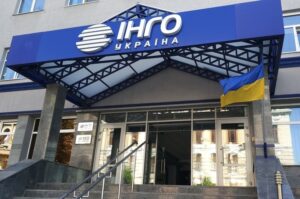
INGO Insurance Company (Kyiv) collected 2.934 billion UAH in gross insurance premiums for the January–June 2026 period, which is 22.9% higher than the result for the same period in 2025.
According to the company’s website, growth in the insurance business was driven by several lines of business. Gross premiums from health insurance increased by 35.3% to 664.1 million UAH, and from comprehensive auto insurance (CASCO) by 33.2% to 589.7 million UAH. In accident insurance, premiums rose by 32.2% to 102.1 million UAH. The company recorded the highest growth rates in traditional property insurance: gross premiums increased 2.4-fold to 537.3 million UAH.
The company reports that in the first half of 2026, it actually paid out 2.510 billion UAH in insurance claims to clients, which is 46.4% more than in the same period last year.
The largest volumes of accrued insurance payouts were in health and auto insurance. Under its health insurance programs, “INGO” accrued payouts totaling 386.5 million UAH for the organization and payment of medical services, examinations, and medications. Accrued payments under compulsory motor third-party liability insurance (OSCPV) totaled 328.4 million UAH, under comprehensive auto insurance (CASCO) – 272.3 million UAH, and under property insurance – 151.7 million UAH.
“We view the results of the first half of the year positively, although the volume of insurance claims grew faster than premiums. This trend is explained by several factors: portfolio expansion, an increase in the number of claims, and rising costs of medical services, auto repairs, and property restoration. It is essential for us that the company maintains its ability to service a larger portfolio and fully meet its obligations. At the same time, the business structure remains sufficiently diversified, without excessive dependence on any single type of insurance,” said Andriy Semchenko, Chairman of the Board of ING Insurance.
INGO Insurance Company was founded in 1994; the company ranks among the top three insurers in the country in terms of assets and premiums and holds licenses to provide insurance in 18 classes.
The company has the status of a significant insurer, is a member of Ukrainian and international professional associations, and operates through a network of 25 branches, five offices, and nine service centers in various regions of Ukraine.

The State Enterprise “SETAM” (Ministry of Justice of Ukraine) has sold property worth over UAH 22 billion at the OpenMarket electronic auction. Since 2014, more than 83 thousand successful auctions have been held.
Due to competition at the auctions, sellers received an additional UAH 2.3 billion. The average price increase for sold lots is 11.8%.
The auction user base is the largest in Ukraine. Today it includes more than 101 thousand participants, and new ones are added every day. Most lots (68.5% of the total) were sold at online auctions by the State Enforcement Service and private executors.
Among the categories of property sold, most of them were real estate, vehicles and other property.
“Step by step, we are improving the auction and seeing the results of cooperation with both public and private enforcement officers and partners in the area of voluntary sale. Since the beginning of this year alone, we have already managed to sell rights of claim under the agreements of individual borrowers for UAH 13.1 million, premises in Kyiv for UAH 25.2 million, a complex of buildings and premises in Lviv region for UAH 22.6 million, and many other expensive properties. We would like to thank our buyers for their trust in our electronic auction. We will continue to work,” said Oleksandr Mamro, CEO of SE SETAM.
We remind you that SE “SETAM” works in the following areas:
– Sale of seized property by public and private executors, as well as property confiscated by court decisions;
– Sale of bank assets and claims;
– Holding auctions for the sale of property at the request of individuals and legal entities (voluntary sale);
– Holding auctions for lease of property;
– Sale of rights to enter into financial leasing agreements.
The most expensive lots sold for all time:
Building No. 4 and land plot in Kyiv.
Sale price: UAH 563,710,000.
Seller: JSB “UKRGASBANK”.
Link to the auction: setam.net.ua/auction/332803
The building of a hotel, office and retail and office complex in Kyiv.
Sale price: UAH 334,925,314.
Seller: JSC Ukreximbank.
Link to the bidding process: setam.net.ua/auction/484723
Two land plots in Kyiv region.
Sale price: UAH 308,523,316.
The seller: Oschadbank JSC.
Link to the auction: setam.net.ua/auction/466893
The OpenMarket auction (SE SETAM of the Ministry of Justice of Ukraine) is a simple and effective means of selling and purchasing property via the Internet. The online auction has been operating throughout Ukraine since 2014. The total amount of sales since its launch is UAH 22 billion.

The court has arrested the property of Oksana Marchenko, the wife of Viktor Medvedchuk, suspected of funding Russian occupation groups, the Security Service of Ukraine (SBU) said.
“According to the materials of the Security Service, the court arrested the property of Oksana Marchenko, suspected of financing Russian occupation groups. The total value of the seized assets is more than 5.6 billion hryvnias,” the SBU Telegram channel reported Thursday.
According to the report, the court’s decision concerns stakes of 14% each in two oblenergos and more than 4% in a third, which Marchenko owns through five offshore companies.
In addition, two land plots, four residential houses in Kiev and Crimea, as well as 10 cars belonging to the figure, the SBU informs.
“In addition, the assets of Marchenko in 18 investment, agro-industrial, telecommunications and other companies were arrested. Among them – Kiev companies “Terra-Invest”, “Ukrkapital” and “Sport-Tour”, which the wife of Medvedchuk used to conduct subversive activities against Ukraine,” informs the SBU, specifying that “they (these companies – IF-U) founded a firm under Russian law, through which Marchenko transferred millions of dollars to accounts of the Russian Federal Guard Service and the Russian Interior Ministry in occupied Crimea, and also paid ‘taxes’ to the Russian budget.”
Earlier it was reported that SBU investigators notified Marchenko and the head of the affiliated Crimean firm of suspicion under Part 3 Article 110-2 of the Criminal Code of Ukraine (financing actions committed for the purpose of violent change or overthrow of the constitutional order or seizure of state power, changing the borders of the territory or state border of Ukraine).
Under the same article, the top manager of Ukrkapital and Sport-Tura was reported as suspected. The perpetrator was detained and a preventive measure in the form of detention was chosen.
As noted in the report of the SBU, the crime suspected Marchenko and the managers of the companies involved, provides for punishment in the form of imprisonment with confiscation of property. Seizure of assets will ensure the possibility of confiscation by a court decision and protect the property from re-registration to other persons.
The investigation continues.
Investigative and operational activities were carried out by employees of the Security Service of Ukraine in Ivano-Frankivsk region under the procedural guidance of the regional prosecutor’s office.

The Verkhovna Rada intends to allow the forced seizure of property during the war.
The relevant bill No. 7605 “On Amendments to Certain Laws Regarding the Optimization of Certain Issues of Forcible Expropriation and Seizure of Property under the Legal Regime of Martial Law” was supported by the people’s deputies in the first reading (256 votes in favor) at the plenary session on Friday, MP Yaroslav Zheleznyak said (fraction “Voice”) in Telegram.
The bill proposes to allow the forcible seizure of equipment that can be used for the purposes of the military-industrial complex. Such actions are carried out on the basis of a decision of the National Security and Defense Council of Ukraine on a proposal agreed with the regional military administration.
The document provides that compensation for the alienated property is carried out at the expense of the state budget (within 5 subsequent budget periods).
According to the bill, movable and immovable property can be transferred to the management of the National Agency for the Detection, Search and Management of Assets Obtained from Corruption and Other Crimes (ARMA).



