
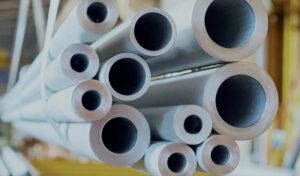
PJSC “Centravis Production Ukraine” (Centravis Production Ukraine, Nikopol, Dnipropetrovsk Oblast), a subsidiary of Centravis Ltd., reported a 6.6% increase in production for January–June of this year—from 6,770 metric tons to 7,220 metric tons;
According to a press release on Monday, exports in monetary terms increased by nearly 15%—from 2.56 billion UAH to 2.94 billion UAH; the amount of taxes paid rose by nearly 11% to 361.5 million UAH.
“The first half of the year was another challenging period for us, one that put the entire team to the test. First and foremost, this was due to the security situation in Nikopol, where our main production facilities are located. The situation remains consistently difficult, and so far there is no reason to expect a significant improvement in the near future,” said the company’s CEO, Yuriy Atanasov.
According to him, in June, the EU—one of the company’s key markets—decided to significantly restrict opportunities for exporting Ukrainian steel products. Specifically, the EU set a quota of 6,524 metric tons for Ukrainian seamless stainless steel pipes, even though Ukraine exported 11,306 metric tons last year. “In effect, a single regulatory decision has closed off nearly half of the European market for us. The consequences of this decision could be extremely painful for both the company and the Ukrainian economy,” the CEO stated.
He added that the new trade restrictions could significantly impact Centravis’s production figures in the second half of the year. The market for seamless stainless steel pipes is quite conservative, and finding and attracting new customers in other regions takes time. One consequence of the new trade restrictions was the company’s decision to mothball its production facility in Uzhhorod—which is largely geared toward EU customers—starting September 1.
At the same time, the company plans to continue diversifying its supply geography by stepping up its efforts in the U.S., Latin American, and Middle Eastern markets, where Centravis has sales offices.
As previously reported, Centravis increased its pipe production by 6% in Q1 2026—from 3,210 metric tons in the first quarter of 2025 to 3,400 metric tons in the first quarter of 2026. Export volumes grew even more—by 10%, from 1.24 billion UAH to 1.37 billion UAH. The company also increased its tax payments to budgets at various levels.
In the first three months of 2026, “Centravis” paid 170.6 million UAH in taxes, which is 19% more than during the same period last year.
In 2025, the company produced 13.77 thousand metric tons of products. Almost the entire volume is exported to foreign markets. The company’s main markets remain Europe, the United States, and the Middle East.
Centravis’s production facilities are located in Nikopol and Uzhhorod. The company also has sales offices in the United States, Germany, Italy, Switzerland, Poland, and the United Arab Emirates.
Centravis was founded in 2000 and ranks among the top ten largest manufacturers of seamless stainless steel pipes in the world. Its main production facilities are located in Nikopol (Dnipropetrovsk Oblast). In 2023, the company opened a branch in Uzhhorod.
The Centravis Ltd. holding company was established on the basis of CJSC “Nikopol Stainless Steel Pipe Plant” and the service and trading companies of LLC “Production and Commercial Enterprise ‘YUVIS’.” Its shareholders are members of the Atanasov family. Centravis Ltd. owns 100% of the shares in Centravis Production Ukraine PJSC.

Leading OPEC+ nations have agreed to a minor, symbolic increase in their production quotas for June, thereby demonstrating that the group is operating as usual following the UAE’s unexpected withdrawal, Bloomberg reports.
Seven countries led by Saudi Arabia and Russia will add 188,000 barrels per day next month under an agreement reached during a video conference on Sunday, OPEC said in a statement.
Delegates had expected a small increase even before the UAE’s withdrawal. The actual restoration of these volumes will depend on the reopening of the Strait of Hormuz and the resumption of production that had been suspended. This occurred following the UAE’s withdrawal from the largest alliance of oil-producing nations.
The country’s flagship oil company, Adnoc, announced that it plans to accelerate its growth plan by allocating 200 billion dirhams ($55 billion) to projects covering operations in both production and refining and marketing.
The UAE’s withdrawal, which came as a surprise to other members of the Organization of the Petroleum Exporting Countries and its partners, will further undermine the group’s ability to influence oil prices, which were already weakening due to years of increased production by competitors, particularly U.S. shale companies.
The UAE is not mentioned in the new OPEC+ report.
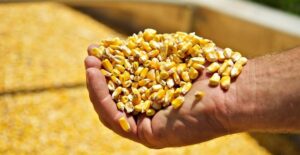
Turkey’s decision to open an import quota for 3 million tons of corn with a reduced tariff rate of 5% has significantly altered market conditions, according to the information and analytical agency “UkrAgroConsult.”
“This move is expected to stabilize domestic prices in Turkey and meet high demand. The country’s domestic balance dictates the need for active imports: domestic production amounts to about 8 million tons, while consumption exceeds 10 million tons,” analysts noted.
According to the agency, Ankara’s customs policy remains strict: a 130% tariff applies outside the quota. However, the market is adapting thanks to temporary preferential regimes. Under these conditions, Ukraine is strengthening its presence and already accounts for 85–87% of Turkish imports due to significant supply and favorable logistics.
“Currently, the key competitive factor is the speed of shipments and traders’ willingness to assemble flexible shipments. Market dynamics are driven by raw material shortages within the importing country and the efficiency of logistics chains,” emphasized UkrAgroConsult.
Among the main trends, experts highlighted the transformation of demand due to quotas and the dominance of regional suppliers amid shortages. The agency forecasts that Ukraine will maintain its status as Turkey’s key partner precisely due to the speed of deliveries, despite protective tariffs on non-quota volumes.
As of August 1, 2025, Ukraine has exhausted its ability to export dry milk to the European Union, with butter and milk fats next in line, whose quotas will be exhausted in the third decade of August, according to Ekonomichna Pravda, citing information from the Ukrainian Dairy Industry Association (SMU).
“As of August 1, there is no possibility of exporting dry milk originating in Ukraine to the EU within the quotas. According to the European Commission, as of July 30, the quota (including volumes expected to be allocated) was more than 91% filled, with only about 0.28 thousand tons remaining out of a quota of 2.92 thousand tons,” the publication said.
According to the industry association, the volumes of dry milk already awaiting clearance at the EU border exceed the available quota. From August 1, it no longer makes economic sense to send consignments of dry milk to the EU – they will have to be returned.
Quotas for imports of butter and milk fats to the EU will last a little longer. Currently, they are already more than two-thirds full. If butter exports to the EU remain at the same level in the coming weeks, the quota could be filled by the beginning of the third decade of August.
“The changes have already affected milk prices in Ukraine: in the second half of July, they rose by more than 5%. The reason for this is an attempt by processors to make a profit before the quotas are exhausted. This market trend may change if Brussels does not take new decisions on quotas,” the SMU emphasized.
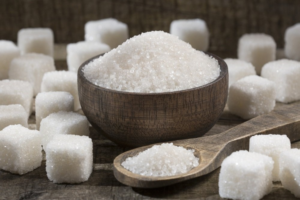
The Czech Chamber of Food Industry has expressed concern over the European Union’s plans to significantly expand duty-free import quotas for Ukrainian agricultural products. A press release published on July 15 states that this threatens the Czech sugar industry. According to the Chamber, the quota for duty-free sugar imports from Ukraine to the EU could be increased from the current 20,070 tons to 100,000 tons — five times more. As a result, Czech producers fear a decline in self-sufficiency and a repeat of the situation with the closure of the plant in Hrušovany nad Evšovkou, which was linked to the influx of cheap imported sugar.
The Chamber’s president, Dana Večeržová, said: “If quotas continue to rise, we risk seeing the closure of new enterprises and ineffective investments not only in the sugar industry, but also in other strategic sectors.”
The decline in the Czech Republic’s self-sufficiency in sugar creates dependence on imports and devalues investments. Producers are calling on the government to abandon the quota increase and demand the introduction of restrictive mechanisms (automatic protective measures, price thresholds, and individual quotas) in negotiations with the European Commission.
Poland, Slovakia, Hungary, Bulgaria, and Romania have expressed their support for the Czech position. They signed a joint declaration calling on the European Commission to introduce protective measures for the most vulnerable sectors of the EU — sugar, grain, and meat.
In 2024, the Czech Republic imported 27.9 million kg of sugar from Ukraine (out of a total of 81.1 million kg) worth CZK 461 million. This is several times higher than the 2021 level of 3.7 million kg.
A fivefold increase in quotas for Ukrainian imports to 100,000 tons could seriously weaken the Czech sugar industry, threatening jobs and infrastructure.
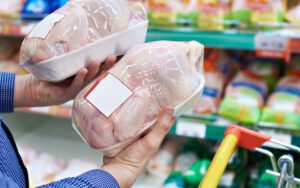
The Ukrainian government has introduced a quota for exports of poultry and poultry by-products to the EU in the amount of about 137,000 tons starting July 1.
According to Cabinet of Ministers Resolution No. 612 of May 30, published on the government portal, the quota for the supply of poultry meat and edible offal to the EU, including chickens, geese, ducks, guinea fowl (UKTZED code 0207), is set at 133.28 thousand tons, and turkey meat and edible offal (UKTZED code 0207 24-27) at 3.76 thousand tons.
The Ministry of Economy will consider applications for licenses to export these goods to the EU within 10 days. Permits will be issued on the basis of applications and approvals provided by the Ministry of Agrarian Policy.
For the period of martial law, applicants shall prepare and submit documents electronically through the relevant information and communication systems (the Ministry of Economy’s electronic services portal, the Unified State Web Portal of Electronic Services).
The licensing regime for the export of quota goods to the EU is also mandatory if the non-resident counterparty is registered in the EU under a foreign economic agreement (contract).
At the same time, the volume of quotas approved for the commodity item “Meat and edible offal of poultry: poultry chickens, ducks, geese, guinea fowl”, excluding the reserve quota of 1400 tons for new exporters, and for the commodity “Turkey meat and edible offal of turkeys” is distributed by the Ministry of Agrarian Policy among exporters in proportion to the actual volume of their exports to the EU in the first quarter of 2024. Information on the actual export volumes of these products for the first quarter of 2024 must be provided by exporters to the Ministry of Agrarian Policy with supporting documents by June 25, 2024.
The reserve quota of 1400 tons will be distributed among exporters who did not export these products in the first quarter of 2024.
If there is an unused balance of the quota as of November 1, 2024, it is distributed among exporters in proportion to the actual exports of these products to the Member States of the European Union for the three quarters of 2024.
As reported, on May 13, the EU Council finally approved the extension of the autonomous trade measures for another 12 months – until June 5, 2025. At the same time, restrictions have been imposed on the duty-free supply of a number of agricultural products – poultry, eggs, sugar, oats, cereals, corn and honey – in the amount of the average export volume for the period from the second half of 2021 to the end of 2023.



