

Spain remains one of the most popular countries in Europe for foreigners to buy property. However, as in other EU countries, ownership entails obligations, primarily tax obligations. Below is a brief and clear guide to property taxes in Spain for private individuals.
Main taxes on purchase
1. Property transfer tax (ITP)
– applies to the purchase of second-hand property
– the rate depends on the region: from 6% to 11% of the cadastral or market value (whichever is higher)
2. VAT (IVA) and stamp duty (AJD)
– when buying new property from a developer:
VAT – 10% (for ordinary housing) or 21% (for commercial property)
AJD – 0.5–1.5% depending on the region
Annual taxes for owners
1. IBI (Impuesto sobre Bienes Inmuebles) – property tax
– mandatory for all owners
– calculated based on the cadastral value (valor catastral)
– the rate is set by municipalities and ranges from 0.4% to 1.3%
– for example, with a cadastral value of €100,000, the tax can range from €400 to €1,300 per year
2. Tax on waste collection (Basura / Residuos Sólidos)
– essentially a garbage collection tax
– set by local authorities
– from €50 to €200 per year, depending on the size of the property and the region
3. Real estate income tax (IRNR)
– for non-residents who do not rent out their property
– taxes the estimated income from owning real estate (usually 1.1–2% of the cadastral value × 19% for the EU/EEA or 24% for other countries)
4. Tax on rental income
– if you rent out real estate, the income is taxed at the following rates:
19% – EU and EEA citizens (expenses can be deducted)
24% – other foreigners (expenses are not taken into account)
Other possible fees
Municipal improvement taxes (Contribuciones Especiales) — for the construction of roads, water supply, etc. near your property
Capital gains tax (Plusvalía Municipal) — when selling real estate, calculated as the increase in the cadastral value of the plot
The IBI tax is paid annually, the deadline depends on the specific municipality (usually from May to October). If you do not receive a notice by mail, this does not exempt you from paying the tax. It is recommended to activate your electronic taxpayer account or use a bank auto-debit. In case of late payment, a penalty may be charged, which can be significant.
Buying in Spain: the region matters
Each autonomous region of Spain has its own fiscal policy. For example:
in Andalusia, ITP can be 7%
in Catalonia — 10%
in Madrid and Valencia — benefits for young and large families
In recent years, Spain has been discussing reforms in the field of property taxation — in particular, a review of the cadastral value, as well as restrictions on renting accommodation to tourists in large cities. This may affect the amount of taxes in the future.
Spain offers an attractive real estate market, but every owner must take into account local tax obligations. Rates and rules depend on the status of the owner, the type of property, and the region. Before buying or renting a property, it is advisable to consult with a local lawyer or tax advisor.
Source: http://relocation.com.ua/property-taxes-in-spain-an-overview-from-relocation/

Italy is one of the most attractive countries in Europe for buying real estate. Its favorable climate, rich history, developed infrastructure, and high standard of living attract both investors and those looking for a second home on the coast or in a picturesque village. But before buying, it is important to understand the tax system: in Italy, property taxes depend on many factors, from the location of the property to the status of the owner.
Main property taxes in Italy
The Italian tax system for real estate includes both one-time taxes on purchase and annual taxes on ownership.
IMU (Imposta Municipale Unica) — municipal property tax
The IMU rate is set by local authorities and ranges from 0.46% to 1.06% of the cadastral value of the property.
The basis for calculation is the cadastral value (rendita catastale) multiplied by an adjustment coefficient (usually 160 or 168), after which the rate is applied.
When buying from a private individual:
2% of the cadastral value — if it is the primary residence for a resident buyer.
9% — if it is a secondary or investment property.
When buying from a developer:
10% VAT, plus fixed registration fees (€200 each).
Cadastral and mortgage fees are also payable — €50 each.
Special features for non-residents
Foreigners are free to buy real estate in Italy. However, there are several important nuances:
If you are not registered as a resident, IMU tax is levied even on a single property.
Property status is determined not by citizenship, but by registration with the municipality (residenza anagrafica).
If the property is rented out, the rental income is subject to mandatory declaration and taxation:
under the simplified cedolare secca scheme — 21%,
or at a progressive income tax rate: from 23% to 43%.
Calculation examples
An apartment in Rome purchased by a German citizen for vacation purposes:
Cadastral value: €80,000
IMU at a rate of 1%: approximately €1,280 per year
House in Tuscany, rented out:
IMU + TARI: from €1,500 to €2,000 per year
Plus tax on rental income: 21% or according to the scale.
Conclusion
The Italian tax system for real estate requires attention and calculations. The main annual expenses are IMU and TARI, and when purchasing, there are significant one-time fees. In the case of rental or resale, there are additional taxes on income. Therefore, before signing a contract, it is recommended to consult with an Italian lawyer or accountant to avoid surprises and fines.
Source: http://relocation.com.ua/property-taxes-in-italy-analysis-by-relocation/

The State of Serbia has signed an agreement with the European Bank for Reconstruction and Development (EBRD) to receive a loan of €50 million. The funds will be used to modernize centralized heating systems and improve their energy efficiency in various cities across the country.
The project aims to reduce energy consumption and harmful emissions, as well as operating costs for heat supply companies. The authorities emphasize that both institutions and ordinary consumers will feel the benefits.
As noted by Finance Minister Sinisa Mali, the signed agreement confirms Serbia’s strong commitment to the “green transition.” According to him, the project involves the reconstruction of heating substations, replacement of pipelines, installation of automation systems, and in some cases, the transition to environmentally friendly energy sources such as biomass or solar collectors.
Minister of Mining and Energy Dubravka Djedovic Handanovic added that the implementation of the project will ensure stable and high-quality heat supply in winter and will also help reduce dependence on imported energy sources.
The project will be part of a broader program to modernize municipal utilities, which the EBRD has already supported in the past. According to preliminary estimates, the modernization will reduce energy consumption by 25-30% in the upgraded systems.
EBRD representatives said they consider Serbia a key partner in the Balkans and will continue to finance sustainable projects in the energy, transport, and infrastructure sectors.
Source: https://t.me/

Serbian President Aleksandar Vučić arrived in Odessa to participate in the Ukraine-Southeast Europe Summit. This is his first visit to Ukraine in 12 years in office.
The event, organized by Ukrainian President Volodymyr Zelensky, was attended by leaders from 12 countries in the region. After the official talks, Vucic and Zelensky held a private meeting.
During the discussion, they discussed assistance in rebuilding Ukraine after the destruction caused by Russian missile and drone strikes. Vucic also expressed Serbia’s readiness to contribute to the restoration of infrastructure, stressing the importance of restoring regional balance and stability.
Source: https://t.me/relocationrs/1065
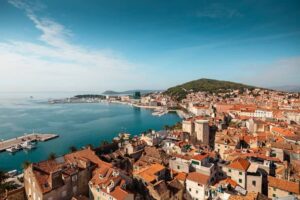
The mortgage market in Croatia is showing stable activity thanks to government programs, favorable conditions offered by banks, and steady demand from both citizens and foreigners.
Since 2017, the SSK (Subvencioniranje stambenih kredita) mortgage subsidy has been in effect, whereby the state compensates up to 50% of the monthly annuity for the first five years on loans of up to €100,000 issued to first-time residents. Pilot assessments show that these measures have led to an increase in housing prices, especially in large cities.
Terms and conditions of mortgage programs at banks
HPB (Hrvatska poštanska banka):
Fixed rate from 2.89%, APR (effective) — 3.00%, term up to 30 years. No property appraisal costs.
OTP banka:
Rate 4.69%, APR 4.93%, term up to 20 years, amount up to €200,000.
Agram Banka:
For new customers, the APR is 5.49% for a 20-year loan (example — €50,000).
Podravska banka:
Fixed rate of 5.90%, APR — 6.15%, no issuance fee.
Conditions for foreigners
Citizens of the EU, Switzerland, Iceland, Norway, and Liechtenstein can obtain a mortgage on the same terms as Croatians. For non-residents, LTV is 50–70%, with state control over the project; a residence permit or long-term stay may be required.
History of rates: from 2017 to 2025
2017–2019: rates were fixed below 3%, especially in HPB, thanks to subsidies and other benefits.
2020–2022: rates rose gradually in line with Eurobonds and monetary easing, reaching 4–5%.
2023–2025: current rates are fixed at 2.9–5.9%, ECA — 3–6%, reflecting tight credit conditions.
The Croatian mortgage market combines state support (SSK), a wide range of offers from banks, and accessibility for foreign buyers, especially from the EU. As a result, potential borrowers can expect rates ranging from 2.9% to 6%, fixed for the entire term of the loan, which is 20 to 30 years.
Source: http://relocation.com.ua/mortgages-in-croatia-overview-of-conditions-and-trends/

A sharp drop in the Euribor interbank rate by 0.25 percentage points in June 2024 and subsequent easing reduced the cost of mortgage lending. This brought buyers back to the market, especially large families and investors.
After the winter slump, an unexpected surge in transactions was observed in January: the number of available properties fell by more than a third, and some market segments experienced shortages. This signaled a recovery in demand.
New changes in legislation have eased refinancing conditions, with a number of fees abolished and commission thresholds reduced. This has encouraged homeowners who are willing to change their loan terms.
Renting a home to avoid extreme risks is becoming a lifestyle choice—renting is no longer just a temporary measure, but a full-fledged alternative to buying. Cafes, coworking spaces, and city services have moved renting into a new category.
Latvians continue to invest in housing abroad, especially in Southern Europe, and foreign investors are attracted by the growing rental market – but government regulation has already restricted short-term rentals in some countries.
There is active construction of rental housing (ALTUM projects) in the regions. However, housing shortages in cities such as Ventspils, Cesis, and Jurmala remain a problem.
According to estimates, average housing price growth rates in Latvia are expected to be in the range of 3-7% by the end of the year. For example, a 60 m² apartment in Riga for €150,000 could rise in price to €154,500-160,500.
Breakdown by property type:
Property type Growth forecast
Studio (30 m², €75,000) to €77,250-80,250
Apartment (75 m², €200,000) to €206,000-214,000
Penthouse (100 m², €500,000) up to €515,000-535,000
Where the highest price growth is expected



