

Italy’s economy in 2025 is showing moderate growth amid structural problems and external economic challenges. Despite positive trends at the beginning of the year, the outlook for the rest of the year remains uncertain.
Key macroeconomic indicators for 2025
GDP growth: According to the European Commission’s forecast, GDP is expected to increase by 1.0% in 2025.
Inflation: Inflation is expected to rise moderately to 2.3%.
Unemployment rate: Unemployment is expected to fall to 7.7%.
Budget deficit: The deficit is projected to narrow to 3.3% of GDP.
Public debt: Public debt is expected to rise to 137.8% of GDP by 2026.
Economic dynamics in January-April 2025
Industrial production: In March 2025, industrial production increased by 0.1% compared to February, which is below the expected growth of 0.5%. In annual terms, production fell by 1.8%, continuing the downward trend for 26 months.
GDP growth in Q1: Italy’s economy grew by 0.3% in the first quarter of 2025, slightly exceeding analysts’ expectations. Factors supporting the economy
Domestic demand: Private consumption is expected to strengthen, becoming the main driver of economic growth in 2025.
Fiscal policy: The Italian government has approved a budget for 2025 that includes tax breaks for families and deficit reduction, which should stimulate economic activity.
Risks and challenges
External factors: Potential trade tensions, particularly with the US, could negatively affect exports and overall economic growth.
Structural problems: High public debt and the need for structural reforms remain key challenges for the Italian economy.
Forecast for the end of 2025
GDP growth: Growth of around 1.0% is expected, with domestic demand remaining the main driver.
Inflation: Inflation is expected to remain at 2.3%, in line with the European Central Bank’s target.
Unemployment: The unemployment rate is projected to decline to 7.7%, reflecting a gradual improvement in the labor market.
Thus, despite the existing challenges, Italy’s economy is showing signs of stabilization in 2025, supported by domestic demand and government support measures. However, further structural reforms and the effective use of available resources are necessary to ensure sustainable growth.
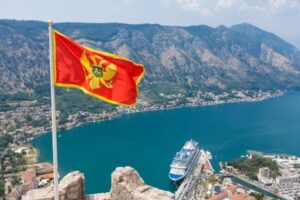
Montenegro’s Prime Minister Milo Đukanović has initiated a review of the practice of granting honorary citizenships, stressing that they should be awarded exclusively for specific services to the country, such as job creation, economic development, and the promotion of Montenegrin interests. He warned that if it turns out that passports were handed out as “personal favors” or without clear criteria, it would discredit state institutions and encourage corruption.
Spajic took this step amid the procedure to strip Kosovar businessman Naser Ramaj of his citizenship. This case has become a prime example of the review of the practice of granting honorary citizenship, especially against the backdrop of Montenegro’s active movement towards European Union membership.
Ramaj, who received a Montenegrin passport in October 2023 as an investor in the €80 million Porto Budva project, is now involved in a criminal case involving the embezzlement of €2.2 million. He is accused of systematic tax evasion in the implementation of this residential complex. It is noteworthy that citizenship was granted under the previous government of Dritan Abazovic, which calls into question the transparency of such decisions in the past.
Spajic emphasizes that such cases damage the country’s international image at a critical moment when Montenegro is seeking to complete EU accession negotiations by the end of 2025. European partners have long expressed concern about the corruption risks associated with economic citizenship programs. The government’s current actions are aimed at demonstrating its determination to bring all procedures into line with European standards.
This precedent could be a turning point in Montenegro’s citizenship policy. The authorities are not only reviewing the specific decision, but also conducting a systematic review of previously granted honorary citizenships in an effort to restore the trust of both their own citizens and the international community. The success of this initiative will be crucial for the country’s further European integration, scheduled for 2028.
Source: https://t.me/relocationrs/930
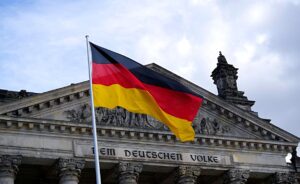
In 2025, Germany’s economy continues to face serious challenges. After two consecutive years of GDP decline (0.3% in 2023 and 0.2% in 2024), the current year is characterized by stagnation, with GDP growth forecast at 0.0%. This makes Germany the only G7 country that has not shown economic growth in the last three years.
The new government led by Chancellor Friedrich Merz, who is due to take office on May 6, is expected to present a package of measures to stimulate the economy. These include
Economists predict a moderate recovery of the German economy in 2026 with GDP growth of around 1.0%. However, the successful implementation of these forecasts will depend on the new government’s ability to effectively address internal and external challenges.
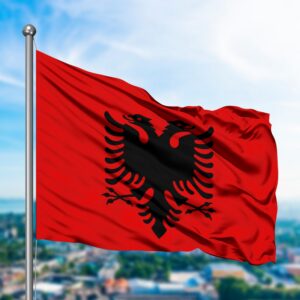
On April 24, 2025, the Government of Albania officially suspended the agreement on mutual visa waiver with the Republic of Belarus signed in February 2020. This decision cancels the partial suspension introduced in May 2024, which applied only to diplomatic passports. Now Belarusian citizens are required to obtain a visa to enter Albania.
Earlier, in May 2024, Albania partially suspended the agreement, limiting visa-free entry for holders of diplomatic and service passports. The current measure completely abolishes the visa-free regime for all categories of Belarusian citizens.
The decision takes effect immediately and is published in the official gazette of Albania.
Source: https://t.me/relocationrs/881

The Greek residential real estate market 2025 continues to show steady growth despite global economic challenges. Demand for housing remains high among both local residents and foreign investors, which contributes to higher prices and the development of new projects.
The Index of Economic Expectations of Investors and Analysts in Germany for the next six months, calculated by the ZEW Research Institute, fell to the lowest since July 2023 of minus 14 points in April from the highest since February 2022 of 51.6 points a month earlier. This is the most significant drop since March 2022. Analysts on average expected it to decline to 9.5 points in April, according to Trading Economics.
“Global uncertainty has increased dramatically, not only because of the possible effects of the [US] mirror duties on world trade, but also because of the dynamic nature of their changes,” said ZEW President Achim Wambach. ”This is especially affecting export-intensive industries such as the automotive and chemical industries, as well as the production of metals, machinery and steel, which have recently seen significant improvements.
Meanwhile, the indicator of attitudes toward the current situation in Germany increased to minus 81.2 points this month from minus 87.6 points in March.
In the eurozone, the index of economic expectations in April fell to the lowest since December 2022, minus 18.5 points from 39.8 points a month earlier. The experts’ forecast for this indicator was 14.2 points.
The indicator for assessing the current economic situation in the currency bloc decreased by 5.7 percentage points to minus 50.9 points.
Source: http://relocation.com.ua/index-ekonomichnyh-ochikuvan-investoriv/



