

Serbian Finance Minister Sinisa Mali has stated that Serbia is interested in obtaining a concession to manage two international passenger airports in Montenegro — in Podgorica and Tivat.
According to him, despite repeated appeals to the Montenegrin authorities, Serbia has not been included in the process of considering concession proposals.
Mali stressed that Serbia is ready to invest in the development of these airports in excess of the current offers and has the necessary experience and resources to modernize aviation infrastructure, citing the successful development of Belgrade’s Nikola Tesla Airport.
The Montenegrin government is currently considering proposals from three companies interested in the airport concession, including a consortium from France and Turkey, as well as companies from Luxembourg and South Korea. The decision on the transfer of the airports to concession will be made after analyzing the proposals received.
However, there is active debate within Montenegro about the advisability of transferring the airports to concession. Some experts and trade union representatives have expressed concerns that such a move could lead to a loss of control over strategically important assets and negatively affect the country’s economy, especially given the significant role of tourism in Montenegro’s GDP.
Thus, despite the interest of Serbia and other foreign investors, the future of Montenegro’s airports remains uncertain, and the final decision will depend on the balance between economic interests and national development strategy.
Source: https://t.me/relocationrs/1041

In recent years, the real estate market in Serbia has shown a unique trend: the vast majority of transactions are made in cash. According to data from the
Republic Geodetic Administration (RGZ), in the fourth quarter of 2024, 89% of all real estate transactions were paid in cash, including 76% of apartment purchases. In Belgrade, this figure was 70.4%, and in Novi Sad, 71.8%.
Experts identify several factors contributing to the high level of cash payments in the real estate market:
Limited access to mortgage lending: High interest rates and strict bank requirements make mortgages less accessible to many citizens.
Savings and investments: Citizens with savings prefer to invest in real estate, considering it a reliable way to preserve capital.
Financial support from relatives: Buyers often receive funds from family members or from the sale of inherited property.
Some analysts are concerned that the high level of cash payments may indicate attempts to legalize income of dubious origin. However, according to experts such as Alexander Radivojevic, most real estate transactions in Serbia are legal, and it is incorrect to link them to money laundering without sufficient grounds.
Impact on the real estate market
The prevalence of cash payments has a significant impact on the real estate market:
Rising housing prices: High demand from cash buyers contributes to rising real estate prices.
Reduced housing affordability: For citizens who do not have significant savings, purchasing a home becomes less affordable.
Declining role of mortgage lending: Banks are facing a decline in demand for mortgage loans, which may affect their lending policies.
To ensure transparency and stability in the real estate market in Serbia, the following is recommended:
Improving access to mortgage lending: Developing programs with more favorable terms for borrowers.
Strengthening control over financial flows: Improving the effectiveness of monitoring large cash transactions.
Improving financial literacy among the population: Informing citizens about the advantages and risks of different methods of financing home purchases.
Source: https://t.me/relocationrs/1032

In the period from January to May 2025, inflation in the Netherlands showed moderate growth, remaining above the eurozone average. According to data from Statistics Netherlands (CBS), consumer prices rose by 3.3% in January compared to the same month last year, down from 4.1% in December 2024.
According to the Indeflatie website, the average inflation rate in the Netherlands for 2025 is 3.7%, which is higher than the 3.35% recorded in 2024.
The main factors contributing to inflation are rising prices for housing, water, and energy, as well as an increase in the cost of services due to rising wages.
However, despite moderate inflation, there are external economic risks that could affect the country’s economic situation.
In particular, a possible escalation of trade relations between the US and the European Union could lead to an increase in inflation in the Netherlands by 0.5 percentage points in 2025 and 2026.
Thus, in the first half of 2025, inflation in the Netherlands will remain moderate, but external economic factors could have a significant impact on further price dynamics.
Source: http://relocation.com.ua/inflation-in-the-netherlands/

At the beginning of 2025, the German labor market is showing resilience despite economic challenges, including slowing GDP growth and structural changes in industry. However, problems such as a shortage of skilled workers, demographic changes, and difficulties with integrating migrants remain.
Key indicators at the beginning of 2025
Total employment: According to the Federal Statistical Office of Germany, the number of people in employment in March 2025 was around 45.8 million, 0.1% less than in March 2024.
Unemployment rate: In March 2025, the unemployment rate was 3.7%, up 0.2 percentage points compared to the same month of the previous year.
Average working week: Despite high employment, the average number of hours worked per employee fell to a record low (excluding the pandemic year of 2020), raising concerns about labor productivity.
Professions in demand
In 2025, there will continue to be high demand in Germany for specialists in the following fields:
Medicine: doctors, nurses, pharmacists.
Information technology: software developers, cybersecurity specialists, data analysts.
Construction: engineers, architects, skilled workers.
Education: teachers, especially in primary schools and technical subjects.
Care sector: social workers, caregivers, especially in the context of an aging population.
The shortage of personnel in these sectors is due to both demographic changes and an insufficient influx of qualified specialists.
Migration plays a key role in maintaining Germany’s labor force:
Number of foreign workers: As of 2024, the number of foreign workers in Germany stood at 6.3 million, almost twice as many as ten years ago.
Main migrant groups:
Ukraine: Since the start of the conflict in 2022, Germany has taken in a significant number of Ukrainian refugees, many of whom are integrating into the labor market.
Syria, Turkey, Afghanistan: These migrant groups are actively participating in the economy, especially in sectors with labor shortages.
Integration challenges: Despite integration efforts, migrants face challenges including recognition of qualifications, language barriers, and limited access to educational programs.
Average wage
Average wage: In 2025, the average gross wage in Germany is around €4,200 per month.
Minimum wage: From 2025, the minimum hourly rate has been increased to €12.82.
Sectoral differences:
IT and technology: high wages reflecting a shortage of skilled workers.
Medicine: salaries vary depending on specialization and region.
Construction and care: salaries remain competitive, especially given the shortage of labor.
Forecasts and challenges
Germany faces a number of structural challenges in the labor market:
An aging population: According to forecasts, around 4.8 million baby boomers will retire by 2035, exacerbating the labor shortage.
Reduction in working hours: The average number of hours worked per employee is declining, which could have a negative impact on overall productivity.
Integration of migrants: Additional measures are needed to effectively integrate migrants into the labor market, including recognition of qualifications and language support.
In response to these challenges, the German government is implementing programs to attract skilled workers from abroad, improve working conditions, and promote employment among women and older workers.
Source: http://relocation.com.ua/analysis-of-the-german-labor-market-at-the-beginning-of-2025-by-relocation/
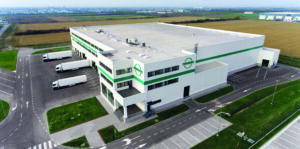
According to SERBIAN ECONOMIST, German pharmaceutical company Phoenix Pharma has announced plans to invest around €14 million in the construction of a modern distribution center in Leskovac, Serbia. The project involves the creation of a 1.5-hectare facility as part of the development of the Leskovac Green Zone, which is positioned as a key logistics and business hub for the region.
Strategic importance of the project
The new center will serve not only the local market but also the entire territory of Serbia, ensuring the efficient distribution of pharmaceutical products, including medicines, food supplements, cosmetics, and medical devices. It is expected to create around 120 jobs, which will be a significant contribution to the development of the region’s economy.
The mayor of Leskovac, Goran Cvetanovic, emphasized the importance of this investment project for the local economy, noting that it contributes to the creation of new jobs and strengthens the position of the “Green Zone” as a key business area.
Phoenix Pharma is a subsidiary of Phoenix Pharmahandel AG & Co KG, one of the largest pharmaceutical distributors in Europe. The company is headquartered in Mannheim, Germany. Phoenix Pharmahandel operates in more than 27 European countries, providing distribution services for pharmaceuticals, medical devices, and related products.
In the 2023 financial year, the group’s turnover exceeded €25 billion, and it employed more than 39,000 people. The company is actively investing in the expansion of its logistics network, including the construction of new distribution centers and the introduction of modern technologies to optimize supply chains.
Phoenix Pharmahandel has an extensive geographical presence, including countries such as Germany, France, Italy, Spain, the United Kingdom, the Netherlands, Belgium, Austria, Switzerland, Poland, the Czech Republic, Slovakia, Hungary, Romania, Bulgaria, Serbia, and others. The company serves more than 150,000 customers, including pharmacies, hospitals, and other medical institutions, ensuring the timely and reliable delivery of pharmaceutical products.
Source: https://t.me/relocationrs/963
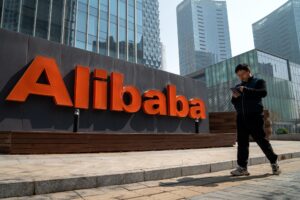
The mayor of Niš, Dragoslav Pavlović, has announced the prospects of Chinese e-commerce giant Alibaba coming to southern Serbia. This became possible after the signing of a memorandum of cooperation with the Chinese city of Hangzhou, the birthplace of Alibaba. The document confirms the partnership within the framework of the Digital Silk Road initiative and provides for the intensification of Chinese investment in the region.
According to Pavlovic, the possibility of building an Alibaba logistics center in Nis is being discussed, as well as the implementation of projects in the fields of science and education. However, at this point, there has been no official confirmation from Alibaba or Chinese authorities regarding these plans.
Earlier it was reported that AliExpress, a subsidiary of Alibaba, is considering the possibility of setting up warehouses in Serbia to speed up the delivery of goods to countries in Southeast Europe. According to Serbia Business, such plans were discussed after the Chinese president’s visit to Serbia in 2024.
In addition, as part of the expansion of transport infrastructure in Niš, the Chinese company Shandong Hi-Speed Group has signed a contract to modernize the Constantine the Great Airport. The project, worth more than $153 million, includes the reconstruction of the runway, the expansion of the apron, and the construction of new taxiways.
Thus, Niš is becoming an important center for Chinese-Serbian cooperation, bringing together initiatives in logistics, infrastructure, and digital trade.
Source: https://t.me/relocationrs/949



