
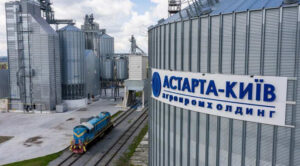
Astarta, an agro-industrial holding and Ukraine’s largest sugar producer, increased its product sales by 34.3% in April–June 2026 compared to the same period in 2025, reaching 266,640 metric tons, according to data published by the holding on the Warsaw Stock Exchange.
According to the data, due to lower prices for sugar and milk, revenue growth was more modest—at 16.9%: in total, the company sold 4.58 billion UAH worth of its main products in the second quarter of this year, compared to 3.91 billion UAH in the second quarter of 2025.
In particular, sugar sales increased by 28% in volume terms in the second quarter of this year—to 92,600 metric tons—while the average selling price fell by 14.3%—to 20,770 UAH per metric ton.
Astarta’s sales volumes of wheat and corn during the reporting period amounted to 62.03 thousand metric tons and 3.18 thousand metric tons, respectively, at average prices of 9.90 thousand UAH per metric ton and 27.45 thousand UAH per metric ton, respectively, whereas the company did not sell these products in the second quarter of last year.
Corn sales, on the other hand, fell by 19.1% to 32.39 thousand metric tons, while the price rose by only 3.9% to 10.02 thousand UAH per metric ton.
Sales of soybean oil in the second quarter of 2026 fell by 27.8% compared to the same period in 2025—to 8.48 thousand metric tons—as the price of this product rose by 13.9%—to 52.28 thousand UAH per metric ton. Sales of soybean meal also fell by 15.8%—to 37.11 thousand metric tons—as the price rose by 23.1%—to 18.76 thousand UAH per metric ton.
The agricultural holding’s milk sales in April–June 2026 increased by 2.6% to 30.84 thousand metric tons, but the price of this product fell by 14.8% to 15.79 thousand UAH per metric ton.
Taking these figures into account, Astarta increased its total sales volume of core products for the first half of the year by 32.3% compared to the same period in 2025, reaching 656.28 thousand metric tons. Due to lower prices for sugar and milk, revenue growth was also lower—by 20.2%: in total, the company generated 10.95 billion UAH in revenue from its core products, compared to 9.11 billion UAH in the first half of 2025.
In the first half of 2026, Nestlé in Ukraine increased its sales in the country by 19.3% in value (in hryvnia) and by 10% in volume, to 56,000 metric tons, while the entire Ukrainian FMCG market in the categories where the company operates grew by 15% in value and 6% in volume during this period, according to Roman Yanovich, CEO of Nestlé in Ukraine and Moldova.
“This is a signal to invest,” he said, commenting on these results at a briefing in Kyiv on Thursday, and explained that overall, the Nestlé Group increased its global sales by 3.6% in the first half of this year, meaning that Ukraine is a growth driver for the company.
According to him, in the first half of 2026, the company invested 5 billion UAH in its operations in Ukraine, of which 200 million UAH went toward developing factories in Ukraine and 4.8 billion UAH toward developing product categories.
“Having invested 5 billion hryvnia in the first half of the year, we plan to invest an amount comparable to last year’s—10 billion hryvnia—by the end of 2026 to ramp up production and maintain the growth momentum we’ve achieved,” said the CEO.
He clarified that investments in factory development are expected to total 1 billion hryvnia based on this year’s results.
According to the CEO, in the confectionery category, sales growth for all players in the Ukrainian market in January–June of this year was 18% in hryvnia and 6% in volume; for prepared foods, 12% and 2%, respectively; for instant coffee, 16% and 4%; infant formula—20% and 7%, other children’s foods—20% and 10%, and animal feed—20% and 10%.
According to him, the market for coffee capsules is growing particularly rapidly—by 30% in value and 16% in volume. This market is small but has the potential to double or triple in size, Yanovich noted.
The CEO noted that Nestlé currently holds approximately half of the Ukrainian ketchup market under the “Torchin” brand and the cocoa market under the Nesquik brand, as well as one-third of the sauce market under the “Torchin” brand.
He added that as part of global campaigns, products under the Felix and ProPlan brands in the pet food category and KitKat in the confectionery category are currently being actively promoted in Ukraine, while local campaigns focus on the “Svitloch,” “Torchin,” and “Mivina” brands, as well as Dolce Gusto coffee capsules and Nesquik.
In addition, during the briefing, company representatives announced plans to expand this year’s culinary product line—which already includes more than 100 items—by approximately 20%. The “Asian line” is growing at the fastest rate—20–25%—while the category of instant noodles in cups is seeing triple-digit growth.
According to Yanovich, there is potential for improvement in the “Svitloch” brand and the coffee business, where the company aims to move up from second place to first, a position currently held by Jacobs.
The CEO stated that due to the increase in enemy shelling of warehouses, logistics is currently the top priority; therefore, the company has developed a plan to deliver goods directly to the supermarket chain without involving its distribution centers in the event of a critical situation.
He cited a labor shortage as another problem, which forced one of the company’s facilities to raise salaries by 30%. At the same time, Yanovych noted that although the company had considered options for hiring foreign workers, it is still trying to recruit staff specifically from among Ukrainians.
Yanovich also reported that in the first half of 2026, charitable donations totaled over 120 million hryvnia, and since the start of the full-scale war, the company has provided charitable aid totaling over 2 billion hryvnia.
Nestlé began operations in Ukraine in 1994 with the opening of a representative office. In 1998, it acquired a controlling stake in CJSC “Lviv Confectionery Factory ‘Svitloch,’” and since 2018, it has owned 100% of the company’s shares. In May 2003, Nestlé Ukraine LLC was founded in Kyiv, and by the end of that year, Nestlé had acquired 100% of the shares in Volyn Holding.
In 2010, Nestlé SA acquired Technocom LLC in Kharkiv, a manufacturer of instant foods under the “Mivina” brand. In 2012, Nestlé Business Service (NBS Europe) was established in Lviv; it is one of Nestlé’s seven service centers worldwide and provides support services to Nestlé divisions in more than 40 countries.
During the war, Nestlé invested EUR43 million in the construction of its fourth factory in Ukraine—in Smolygiv, Volyn Oblast—for the production of pasta, which opened in April 2025, and plans to increase its investment in the facility to EUR70 million by the end of 2027.
Nestlé’s business in Ukraine encompasses the following segments: coffee and beverages, confectionery, prepared foods (cold sauces, seasonings, soups, instant foods), infant and specialized nutrition, ready-to-eat breakfasts, and pet food.
FMCG, INVESTMENT, NESTLE, SALES, UKRAINE

Residents of Ukraine’s capital purchased 11,484 thousand new passenger cars from January through June of this year, and this regional market for new passenger cars remains by far the largest, according to a report by “Ukravtoprom” on its Telegram channel.
As previously reported, according to the association’s data, nearly 33,000 passenger cars were sold in Ukraine during the first half of the year, meaning Kyiv’s share accounts for 35% of total sales.
The Kyiv region ranked second in sales volume with 3,276 units, followed by the Dnipropetrovsk region with 2,273 units, the Kharkiv region with 1,852 units, and the Lviv region with 1,810 units.
In total, these regional markets accounted for 63% of new passenger car sales in Ukraine.
The best-selling model in these markets during the first half of the year was the Renault Duster compact crossover.
As reported, according to data from “Ukravtoprom,” sales of new passenger cars in January–June of this year rose by 0.5% compared to the same period in 2025, with vehicles equipped with traditional engines (gasoline and diesel) accounting for nearly 62% compared to 56.5% last year, while the share of electric vehicles fell to 8.3% from 18.9%.
According to the results for 2025, the top five regions by sales were Kyiv, Kyiv Oblast, Dnipropetrovsk Oblast, Odesa Oblast, and Lviv Oblast, followed by Kharkiv Oblast.
At the same time, Lviv Oblast recorded the highest number of registrations of used passenger cars imported from abroad last year.
Swedish retailer H&M Hennes & Mauritz AB maintained its operating profit in the second quarter of fiscal year 2026 at nearly the same level as last year, despite a decline in sales in Swedish kronor, an improvement in gross margin, and a reduction in inventory.
According to the company’s report, H&M’s net sales for March–May totaled SEK54.828 billion, compared to SEK56.714 billion for the same period last year. In local currencies, sales were nearly at last year’s level, while in Swedish kronor, the figure was negatively impacted by the krona’s appreciation.
Gross profit in the second quarter was SEK31.045 billion, compared to SEK31.425 billion a year earlier, and the gross margin rose to 56.6% from 55.4%. The company attributed the margin improvement primarily to efforts to improve supply chain efficiency.
Operating profit, excluding one-time expenses, rose by 11% to SEK6.592 billion, and the corresponding operating margin increased to 12% from 10.4%. At the same time, operating profit including expenses amounted to SEK5.913 billion compared to SEK5.914 billion a year earlier, with an operating margin of 10.8% compared to 10.4%.
One-time restructuring costs for the quarter totaled SEK679 million and were related to organizational changes in the company’s sales markets and central commercial structures.
H&M’s net profit in the second quarter was SEK3.963 billion, compared to SEK3.962 billion a year earlier, with earnings per share of SEK2.49, compared to SEK2.48.
For the first half of fiscal year 2026, the group’s net sales declined to SEK104.435 billion from SEK112.047 billion; in local currencies, the decline was 1%. Operating profit for the first half of the year rose to SEK7.425 billion from SEK7.117 billion, while the operating margin increased to 7.1% from 6.4%. Net profit rose to SEK4.667 billion from SEK4.541 billion.
Cash flow from operating activities rose 24% in the second quarter to SEK10.591 billion and 15% for the first half of the year to SEK14.616 billion.
Inventory as of the end of May decreased by 10% to SEK34.942 billion from SEK38.817 billion a year earlier. In currency-adjusted terms, inventory decreased by 2%. The inventory-to-sales ratio for the past 12 months fell to 15.8% from 16.6%.
“Our long-term efforts have strengthened profitability and give us good opportunities to create even more value for our customers,” said H&M CEO Daniel Erver.
According to him, sales for the quarter were slightly below target, but profitability and the inventory situation developed positively. The company continues to streamline its organization, bring decision-making closer to the customer, and will begin upgrading its digital infrastructure in the second half of the year.
As of May 31, 2026, the H&M Group had 4,038 stores, compared to 4,166 a year earlier. In the first half of the year, the company opened 41 stores and closed 104. Online sales account for more than 30%.
In 2026, H&M plans to open about 90 new stores and close about 170. The company continues its expansion in Latin America: its first store in Rio de Janeiro opened in April; in the second half of 2026, H&M plans to enter the Paraguayan market, and in 2027, the Argentine market through a franchise.
H&M Group’s sales in local currencies in June 2026 are expected to be on par with the same month last year.
H&M Group is one of the world’s largest fashion retailers. The group includes the brands H&M, COS, Weekday, & Other Stories, ARKET, H&M HOME, and Sellpy.
The full version of the report is available at this link.
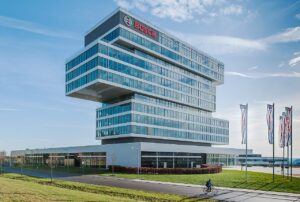
Bosch, a leading global supplier of technology and services, ended the 2025 fiscal year in Ukraine with consolidated sales to third parties of nearly EUR162 million (UAH 7.6 billion), a 3.5% increase compared to the previous year, according to Serhiy Baranovsky, CEO of Bosch in Ukraine.
“Despite challenging macroeconomic and security conditions, the company maintained positive momentum thanks to stable demand, the expansion of its partner network, and active participation in Ukraine’s recovery projects. For us, it is important not only to grow our business but also to be a reliable partner that helps rebuild infrastructure and provides high-quality solutions for people and communities,” Baranovsky said at a press conference on Thursday.
In 2025, all of Bosch’s business sectors in Ukraine demonstrated growth, although growth rates varied across individual segments.
Growth in the Mobility segment, represented by the Mobility Aftermarket division (automotive parts and equipment), was driven by the development of service infrastructure, expanded distribution, and stable demand for automotive services. Four new “Bosch Auto Service” stations were opened in 2025; the network now comprises over 100 stations. According to Baranovsky, an additional driver of growth in 2025 was the rising demand for servicing used cars, as well as electric vehicles and hybrids.
In the Energy and Building Technology business sector, which includes the Bosch Home Comfort and Building Technologies divisions, Bosch demonstrated positive growth in 2025 thanks to rising demand for energy-efficient, autonomous, and infrastructure solutions. Bosch Home Comfort implemented over 70 projects in the commercial and industrial sectors during the year.
The highest demand was observed for gas equipment, air conditioning systems, industrial boilers, and hot water supply solutions, particularly in the context of infrastructure reconstruction and modernization. The company also expanded its portfolio by introducing a new generation of electric and gas water heaters and modern split-system air conditioners, while strengthening its commercial segment with Buderus solutions. In addition, the integration of climate solutions from Johnson Controls and Hitachi further expanded Bosch’s capabilities in the market.
The Building Technologies division continued to grow its business in the field of modern fire safety systems and security solutions. Growth was driven by the modernization and expansion of existing Bosch systems, particularly in healthcare facilities.
Growth in Power Tools, part of the Consumer Goods business sector, was driven by participation in infrastructure reconstruction and industrial projects, despite a decline in consumer spending. Throughout the year, the company strengthened its product portfolio by launching new professional power tools on the 18V platform, expanding its range of cordless garden equipment, and introducing a specialized line of measuring instruments for electricians and installers.
In the Industrial Technology business sector, the Bosch Rexroth division responded to the growing demand for production modernization following the relocation of enterprises.
Given the scale of Ukraine’s reconstruction needs, Bosch is focusing on solutions for energy independence and infrastructure modernization. Since 2022, the company has implemented over 50 reconstruction projects in the municipal and private sectors. Bosch supports the modernization of heating systems, supplies equipment for industrial enterprises, and implements projects aimed at improving energy efficiency. Among the key initiatives is a partnership with GIZ, which continues through 2026 and involves the installation of 13 modular boiler plants in frontline communities. The company also remains a key supplier of industrial steam boilers for new production facilities.
Over the past year, the workforce has grown by 3%, to approximately 370 employees.
In the current fiscal year, Bosch is focusing on strengthening its market positions, developing innovative solutions, and supporting key sectors of Ukraine’s economy, particularly regarding infrastructure reconstruction, energy efficiency, industrial modernization, mobility, and municipal services. At the same time, the company continues to explore the potential of new technologies in the local market, such as solutions based on artificial intelligence and energy-efficient technologies, and to develop its partner network and educational initiatives.
“We see growing demand for modern technological solutions and are actively responding to these changes by expanding our presence in new market segments. For us, 2026 will be a year of growth with a special focus on energy efficiency and modernization,” added Serhiy Baranovsky.
The Bosch Group has been operating in Ukraine since 1993 and is the largest supplier of solutions for the automotive industry and the aftermarket, as well as for industrial and household appliances.
The Bosch Group includes Robert Bosch GmbH, founded in 1886, and nearly 500 subsidiaries and regional companies in over 60 countries worldwide. Together with its sales and service partners, Bosch’s global manufacturing, engineering, and sales network covers nearly every country in the world.
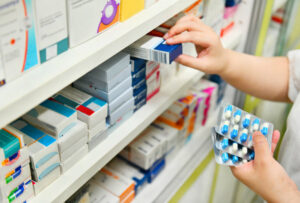
Pharmacy sales in Ukraine for the January–March 2025 period rose by 11.13% in monetary terms compared to the same period in 2025—to more than 60.245 billion UAH, while in volume terms they decreased by 4.8%—to nearly 270,958 thousand packages, the company “Business Credit” reported to the agency “Interfax-Ukraine,” citing data from a study.
According to the data, the weighted average price of the pharmacy basket of goods for January–March 2026 was 222.34 UAH per package, which is 16.78% higher than during the same period a year earlier.
At the same time, pharmacy sales of medicines during this period increased by 13.9% in monetary terms—to more than 48.426 billion UAH—and by 4.85% in volume terms compared to the same period in 2025, reaching nearly 211.947 million packages.
The weighted average retail price of medicines for the first two months of 2026 was 228.49 UAH per package, which is 8.63% higher than in January–March 2025.
At the same time, pharmacy sales of dietary supplements in the first three months of 2026 increased by 14.5% in monetary terms—to nearly 7.03 billion UAH—while sales in volume terms decreased by 14.97%, to 22.378 million packages. The weighted average price in this segment rose by 34.7%—to 314.13 UAH per unit.
As reported, pharmacy sales in Ukraine for 2025 increased by 14.23% in monetary terms compared to 2024—to more than UAH 220.287 billion, while in volume terms they decreased by 2.25%—to nearly 1.135 million packages. The weighted average price of items in the pharmacy basket at the end of 2025 was 194.68 UAH per package, which is 16.86% higher than a year earlier.
At the same time, pharmacy sales of medicines during this period increased by 12.79% in monetary terms—to nearly UAH 170.318 billion—while in volume terms, they decreased by 0.2% compared to 2024, to 808.546 million packages.
The weighted average retail price of medicines at the end of 2025 was 210.65 UAH per package, which is 13% higher than at the end of 2024.
The pharmaceutical company “Farmak” remains the leader in retail sales in 2025 among domestic companies, with sales of nearly 10.978 billion UAH. The top 5 also included the pharmaceutical company “Darnitsa” (7.473 billion UAH), “Kyiv Vitamin Plant” (KVZ, nearly 6.842 billion UAH), ‘Arterium’ (5.975 billion UAH), and “Pharma Star/Acino” (2.9 billion UAH).



