
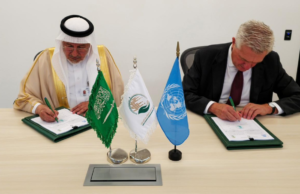
The King Salman Humanitarian Aid and Relief Centre (KSrelief) and the United Nations Development Programme (UNDP) have launched a 15-month programme worth $5 million to strengthen Ukraine’s civilian healthcare system, according to the UNDP website.
The programme provides for strengthening the capacity of four medical institutions in Kyiv, Odesa and Dnipropetrovsk regions, with a focus on priority needs identified jointly with health authorities. It concerns two institutions in Kyiv region and one each in Odesa and Dnipropetrovsk regions.
The support will cover maternal and newborn healthcare, intensive care for children, surgical and trauma care, diagnostics and emergency stabilization of patients. Assistance will include the procurement of medical equipment, its installation and commissioning, user training, warranty servicing and support for safe and long-term operation.
“KSrelief is pleased to sign this important Joint Executive Programme with our valued partner – UNDP – to strengthen the provision of civilian healthcare services in Ukraine. By working together, we can save and improve people’s lives by providing urgent support for the recovery and development of the civilian healthcare system in several regions of the country,” said Adviser at the Royal Court and Supervisor General of KSrelief Dr. Abdullah Al Rabeeah.
The programme will be implemented in consultation with national and regional partners and beneficiary medical institutions, while the scope of equipment and related support will be determined in accordance with confirmed needs, including its installation, staff training, maintenance and long-term operation.
It is expected that up to 900,000 people will be able to benefit indirectly from the programme.
The agreement was signed during the 81st session of the United Nations General Assembly within the framework of the cooperation agreement between KSrelief and UNDP.
HEALTHCARE, HOSPITALS, HUMANITARIAN AID, KSRELIEF, MEDICAL AID, SAUDI ARABIA, UKRAINE, UNDP, UNITED NATIONS

Saudi Arabia has suspended large-scale work on the construction of The Line—a key component of the futuristic city of NEOM—until at least 2030.
The Line was conceived as one of the most ambitious urban development projects in the world: a linear city 170 km long and up to 500 m high, free of cars and traditional streets, designed to accommodate millions of residents. The project was intended to become a symbol of the Saudi Vision 2030 program and Saudi Arabia’s economic transition from oil dependence to technology, tourism, logistics, and innovative infrastructure.
According to Semafor, NEOM has postponed further major work on The Line until after 2030. Investments in a number of other project areas have also been postponed or frozen, including some tourist facilities on the Red Sea coast and the Trojena mountain resort, which was previously planned as a venue for the 2029 Winter Asian Games.
The reasons for the revision include rising costs, the need to reallocate resources, and a more pragmatic approach to implementing Saudi Vision 2030 projects. Instead of the most complex and expensive futuristic facilities, the priority may shift toward ports, logistics, industrial infrastructure, data centers, and facilities that yield economic benefits more quickly.
The Line and the entire NEOM project have been controversial from the start due to their scale, cost, technical complexity, and environmental risks. It was initially stated that the city would be able to accommodate up to 9 million residents, but the plans were later revised several times. In 2024, The Guardian reported that by 2030, only a small section is actually planned to be built instead of the originally announced 170 km.
The suspension of The Line is part of a broader review of Saudi megaprojects. Reuters previously reported on the suspension of work on Mukaab—a giant cubic skyscraper in Riyadh costing about $50 billion, which is also part of the Vision 2030 portfolio.
For the real estate and construction market, the decision regarding The Line is an important signal: even the largest state-backed projects in the Gulf countries are facing funding constraints, a shortage of investors, rising construction costs, and the need to demonstrate economic viability.
At the same time, Saudi Arabia is not abandoning NEOM entirely. The project will likely develop in a more realistic format, with a focus on individual functional zones, industry, logistics, maritime infrastructure, digital services, and energy projects.
NEOM is a megaproject in northwestern Saudi Arabia, announced in 2017.
It includes The Line, the Oxagon industrial cluster, the Trojena mountain resort, the Sindalah island tourism project, and other zones. The project is funded with the participation of Saudi Arabia’s sovereign wealth fund, the Public Investment Fund, and is part of the Saudi Vision 2030 strategy.
The results of a public opinion poll conducted in March 2026 by the research company Active Group in collaboration with the Experts Club information and analytical center show that Ukrainians’ attitudes toward Saudi Arabia remain largely neutral, though with a slight decline in positive assessments and a gradual increase in negative sentiment. This forms a perception profile characteristic of some Middle Eastern countries—low polarization with a high degree of uncertainty.
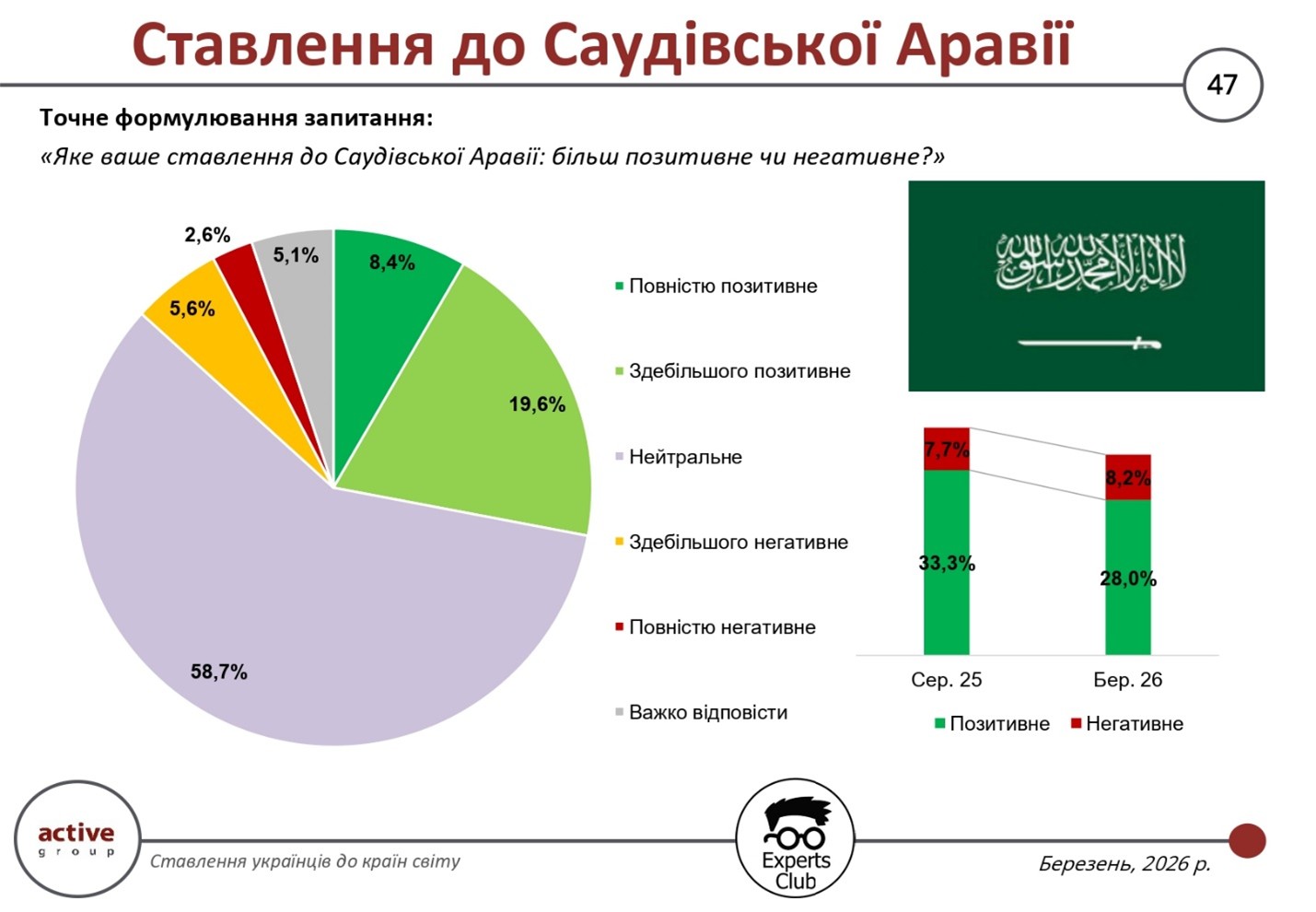
The overall level of positive attitudes toward Saudi Arabia stands at 28.0%. Of these, 8.4% of respondents view the country “entirely positively,” while another 19.6% view it “mostly positively.” At the same time, negative assessments reach 8.2% (5.6% — “mostly negative,” 2.6% — “completely negative”). As in previous waves of the survey, the largest share is held by neutral attitudes — 58.7%, while another 5.1% of respondents were unable to determine their position.
Compared to August 2025, positive attitudes decreased from 33.3% to 28.0%, while negative assessments rose slightly—from 7.7% to 8.2%. This trend indicates a gradual shift in the balance of assessments toward a more critical perception, although the changes remain moderate and do not go beyond the general neutral pattern.
The high proportion of neutral responses indicates that Saudi Arabia does not occupy a clearly defined place in the consciousness of Ukrainian society. Perceptions of the country are formed in a fragmented manner, without a systematic information presence or intensive contacts that could shift the balance toward more defined assessments. Under such conditions, even minor informational or political signals can influence the dynamics of public opinion.
“When we see that a country remains predominantly in the zone of neutral perception, it means that it effectively lacks sufficient ‘weight’ in the everyday information landscape of Ukrainians. In such a situation, even small changes in the information landscape can shift the balance of assessments in one direction or another. That is why, for such countries, it is crucial not only to increase their presence but also to shape a clear and positive image,” noted Maksym Urakin, founder of the Experts Club information and analytical center.
Thus, Saudi Arabia remains in the group of countries with a predominantly neutral image in Ukraine, where the level of positive perception is gradually declining, while the negative segment is slowly growing. The further evolution of this balance will depend on the intensity of economic, political, and informational contacts between the countries, as well as on how actively Saudi Arabia can shape its own image in the perception of Ukrainian society.
According to a study conducted by the Experts Club information and analytical center based on data from the State Customs Service, Saudi Arabia ranks 34th in total trade volume with Ukraine, amounting to $530.8 million. At the same time, Ukraine has a trade surplus with this country, as exports exceed imports by more than 1.6 times.
The study was presented at the Interfax-Ukraine press center; the video can be viewed on the agency’s YouTube channel. The full version of the study can be found at this link on the Experts Club analytical center’s website.
ACTIVE GROUP, EXPERTS CLUB, Pozniy, SAUDI ARABIA, SOCIOLOGY, SURVEY, UKRAINE, URAKIN
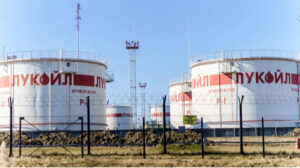
According to Serbian Economist, Saudi company Midad Energy is considered one of the main contenders for the purchase of foreign assets of Russian oil company LUKOIL, which include retail assets in Serbia, Reuters reports, citing sources.
According to the agency, this involves LUKOIL’s international asset portfolio, with an estimated value of around $22 billion, which includes oil and gas fields, oil refineries, and a network of gas stations in approximately 20 countries. The sale is linked to tough US and UK sanctions against the company, imposed in October 2025.
Reuters notes that Midad Energy CEO Abdulelah Al-Aiban is the brother of Saudi Arabia’s national security adviser Musaed Al-Aiban. According to sources, the company is preparing a cash offer with funds placed in an escrow account until the sanctions against LUKOIL are lifted.
In addition to Midad Energy, ExxonMobil, Chevron, private investment fund Carlyle Group, Emirati conglomerate International Holding Company (IHC), Hungarian MOL, trader Gunvor, Xtellus Partners bank (together with a group of investors led by Todd Boehly and the Emirati Allied Investment Partners), Abu Dhabi state-owned company ADNOC, and Austrian entrepreneur Bernd Bergmeier.
Source: https://t.me/relocationrs/1949
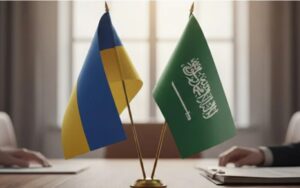
Ukraine and Saudi Arabia have resumed the Joint Business Cooperation Council after a 10-year hiatus, with Ukraine presenting a portfolio of investment projects worth more than $1 billion, according to the press service of the international food and agrotechnology company MHP.
The agricultural holding company noted that the decision to resume the activities of the Joint Council was supported by Ukrainian President Volodymyr Zelensky and Crown Prince Mohammed bin Salman during a meeting in March 2025 in Riyadh. The restoration of this mechanism is an important step towards forming a new architecture of strategic partnership between the countries.
Agroholding MHP, which headed the Ukrainian delegation at the meeting, noted that among the investment projects presented are initiatives in the fields of agro-industry, medicine, engineering, critical materials, logistics, retail, and the creation of industrial parks — areas that correspond to the goals of the Kingdom’s Vision 2030 program. Kingdom.
MHP Director of International Cooperation and Secretary General of the Business Council Mikhail Bno-Ayriyan emphasized that the return of the Ukrainian delegation to Riyadh after more than a decade symbolizes a new stage in the development of economic relations between the countries.
“Ukraine is going through a difficult period in its history, but we have not stopped – we have adapted. The economy continues to function, and the financial system remains stable. We are convinced that the potential for cooperation between our countries significantly exceeds current indicators. That is why the Joint Business Council should become a mechanism that will open up access to this potential,” said Yuriy Melnyk, Chairman of the Ukrainian part of the Council and Deputy Chief Executive Officer for Sustainable Development at MHP.
The Ukrainian delegation took part in negotiations with the leadership of the Saudi Food and Drug Authority (SFDA), discussed the resumption of Ukrainian chicken exports to the KSA market after the end of epizootic restrictions, the accreditation of Ukrainian pharmaceutical manufacturers, and the coordination of online audit procedures to confirm the compliance of production facilities.
The Ukrainian component of the business council brings together committees on agribusiness, medicine, engineering, critical materials, IT, logistics, energy, and industrial parks. The delegation included executives from companies that generate more than 4% of Ukraine’s GDP, in particular, MHP, BGV, Epicenter, Dobrobut, Interchem, Darnitsa, Kernel, SoftServe, and Orion.Group.
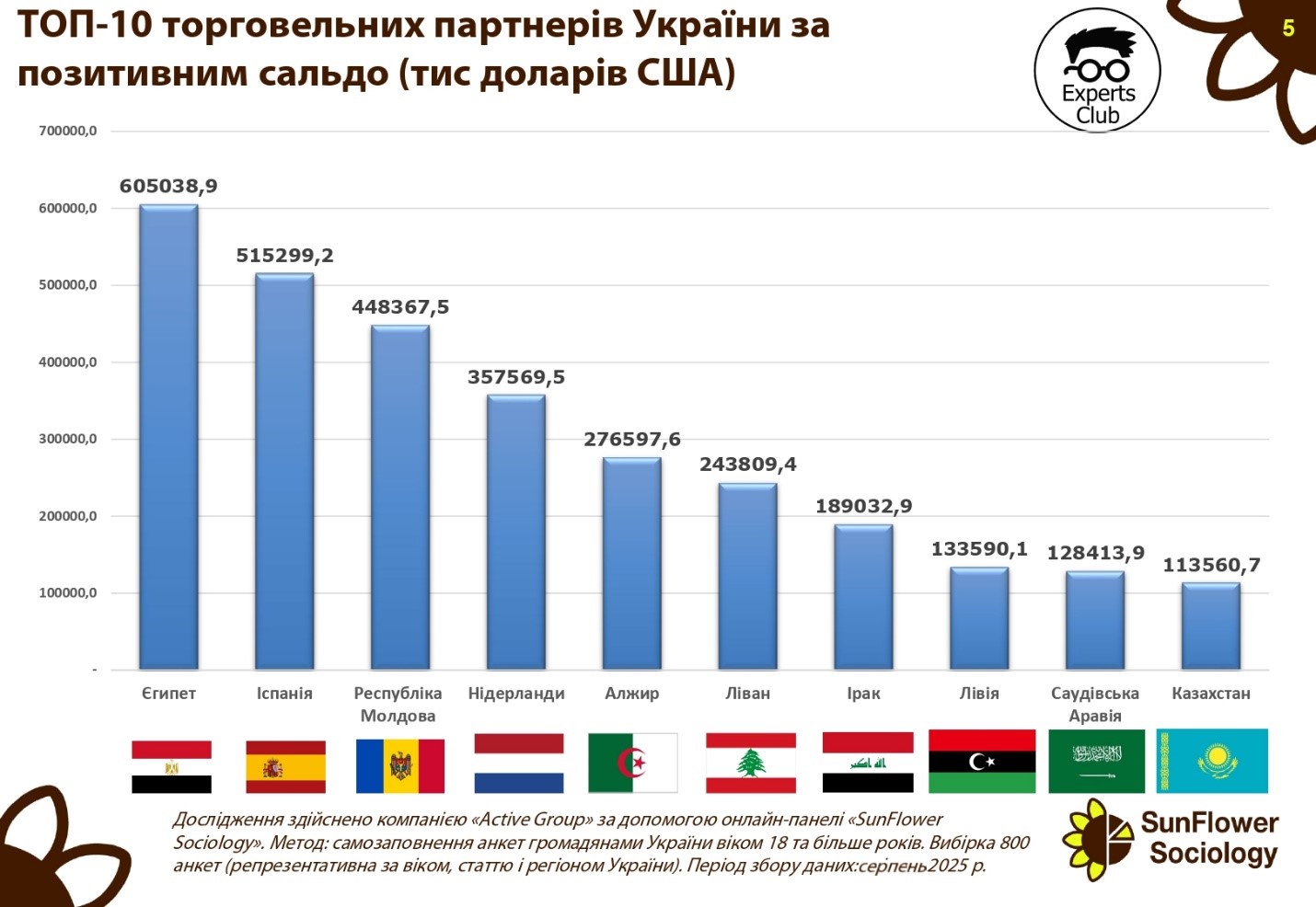
Ukraine maintains a significant positive trade balance with a number of key partners, which partially offsets the deficit in relations with China and EU countries.
The largest surplus in the first half of 2025 was recorded in trade with Egypt — $605.0 million. Spain ranks second with a balance of $515.3 million, followed by the Republic of Moldova — $448.4 million. Positive dynamics are also observed in relations with the Netherlands ($357.6 million), Algeria ($276.6 million), and Lebanon ($243.8 million).
Ukraine also has a high trade surplus with Iraq ($189.0 million), Libya ($133.6 million), Saudi Arabia ($128.4 million), and Kazakhstan ($113.6 million).
“The positive trade balance indicates that Ukraine is capable of competing effectively in international markets, especially in the agricultural sector and metallurgy. At the same time, it should be borne in mind that these markets are vulnerable to changes in the global economic situation, price fluctuations, and political factors,” emphasized Maksim Urakin, founder of Experts Club and economist.
According to him, maintaining a positive balance in relations with the countries of the Middle East and North Africa is a key element of Ukraine’s foreign trade strategy.
“Egypt, Spain, and the countries of the Arab world are stable importers of Ukrainian agricultural products. This is a strategic direction that needs to be developed further, as it creates a safety cushion for the economy against the backdrop of significant import costs,” Urakyn emphasized.
Analysts note that consolidating positions in the African and Middle Eastern markets could become a long-term factor in strengthening Ukraine’s foreign economic balance.
Agricultural exports, ALGERIA, ECONOMY, EGYPT, EXPERTS CLUB, FOREIGN TRADE, IRAQ, KAZAKHSTAN, LEBANON, LIBYA, MOLDOVA, NETHERLANDS, positive balance, SAUDI ARABIA, SPAIN, UKRAINE, МАКСИМ УРАКИН



