
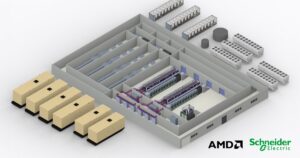
Schneider Electric, a global leader in energy technology, and AMD today announced a jointly developed and validated reference design for the AMD Helios rack solution, which offers a scalable architecture for faster deployment of high-density AI environments with fewer risks and less complexity. This reference design marks the first outcome of the collaboration between Schneider Electric and AMD and underscores the companies’ shared commitment to simplifying the deployment of AI Factories.
The new reference design is the first of its kind, developed to support high-density AI workloads on the Helios rack-mounted solution. The platform is powered by AMD Instinct™ MI455X GPUs, 6th-generation AMD EPYC™ processors, AMD Pensando™ Vulcano NICs, and the open ROCm™ software ecosystem. AMD Helios is designed to deliver breakthrough AI performance through advanced computing capabilities, high interconnect bandwidth, increased memory capacity, and system-level integration. This enables customers to run larger and more complex AI workloads faster, while optimizing power consumption and efficiency.
Since AI workloads place unprecedented demands on data center infrastructure, reference designs provide data center architects and operators with tested and scalable solutions capable of handling new levels of power density, cooling requirements, and operational complexity. By simulating the operation of physical data center infrastructure, these pre-validated architectural solutions shorten the design phase by determining the optimal configuration of power, cooling, and IT infrastructure to create a reliable, scalable, and AI-ready data center. The AMD Helios reference design covers four technical areas: facility power, facility cooling, IT space, and lifecycle management software.
“Today, organizations need comprehensive, AI-ready reference designs that enable them to move more quickly from the planning stage to deployment with fewer risks,” said Manish Kumar, Executive Vice President of Schneider Electric’s Secure Power & Data Centers division. “In collaboration with AMD, we have created an engineering-validated reference design that combines cutting-edge AI computing platforms, power technologies, and practical data center solutions, helping customers deploy scalable, high-density AI environments with greater confidence, efficiency, and speed.”
“AI infrastructure is rapidly evolving into full-fledged AI Factories, which requires that computing, networking, power, and cooling be designed as a single system from the very beginning,” said Forrest Norrod, executive vice president and general manager of AMD’s Data Center Solutions business group. “AMD Helios is an open rack-based architecture designed to deliver the performance, efficiency, and flexibility required for next-generation AI workloads. Together with Schneider Electric, we’ve developed a validated reference design that provides customers with a practical foundation to accelerate the deployment of high-density AI infrastructure, reduce integration risks, and scale more confidently and efficiently.”
Reference Design Accelerates AMD Helios Deployment
This new collaboration combines AMD’s AI platform innovations with Schneider Electric’s expertise in power, cooling, and digital infrastructure, creating a more integrated approach to deploying both new AI Factories and high-density retrofit infrastructures. The reference design supports:
The reference design has already been validated in accordance with ANSI standards for deployment in the United States. Future plans include expanding this architecture to support IEC standards for projects worldwide.
About Schneider Electric
Schneider Electric is a global leader in energy technologies that improves efficiency and promotes sustainable development through the electrification, automation, and digitalization of industry, business, and residential spaces. The company’s technologies enable buildings, data centers, factories, infrastructure, and power grids to function as open, interconnected ecosystems, enhancing productivity, resilience, and environmental sustainability.
The company’s portfolio includes smart devices, software-defined architectures, artificial intelligence-based systems, digital services, and professional consulting services. With 160,000 employees and 1 million partners in over 100 countries, Schneider Electric consistently ranks among the world’s most sustainable companies. Learn more at https://www.se.com/ua/uk/
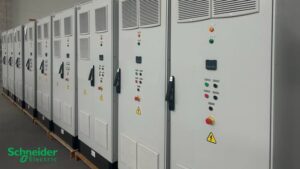
Schneider Electric has implemented a large-scale infrastructure project: 26 Ukrainian cities have received state-of-the-art equipment to improve the energy efficiency and operational reliability of their district heating systems.
Completing the project before the start of the 2025/2026 heating season allowed heating utilities to better prepare for peak loads. Thanks to the equipment provided, the cities were able to navigate the heating season more smoothly, reducing the risk of unscheduled outages and improving the overall efficiency of their systems.
As part of the project, Schneider Electric supplied control cabinets for pumps and blower mechanisms, equipped with state-of-the-art variable-frequency drives, to 26 cities in Ukraine across the Chernihiv, Cherkasy, Lviv, Ivano-Frankivsk, Ternopil, Rivne, Vinnytsia, Khmelnytskyi, Zhytomyr, Odesa, Kirovohrad, Kherson, Sumy, Poltava, and Kyiv regions.
A key element of the project was the implementation of variable-frequency drives to regulate the operation of pumping equipment at heat supply companies, which significantly improved the energy efficiency of the systems, reduced electricity consumption, optimized operating costs, and extended the service life of the equipment.
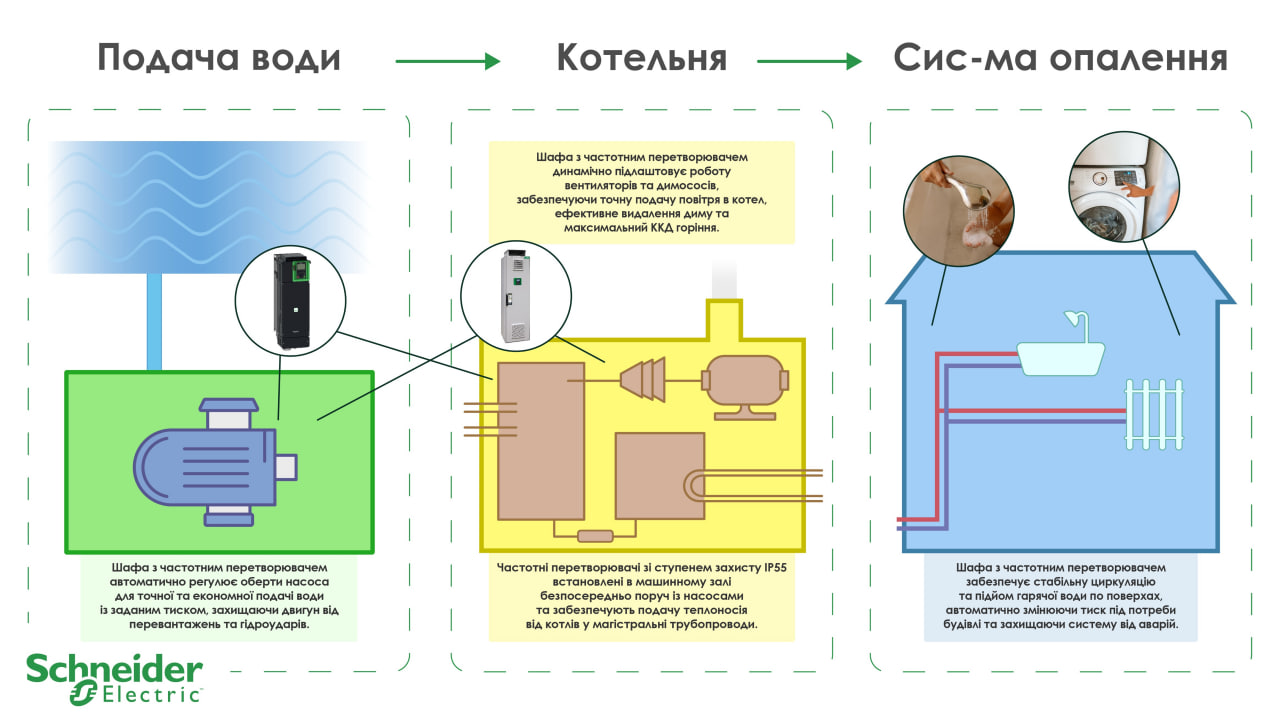
The solutions, based on Schneider Electric technologies, include fully equipped control cabinets for pumping equipment. The cabinets are protected against moisture and dust, allowing them to be installed directly in machine rooms, thereby reducing costs and simplifying installation.
The companies have gained tools for more flexible equipment management, reducing the load on the power grid, and improving the quality of heat supply services for consumers.
“This is not just about supplying equipment, but about a long-term investment in energy efficiency and the stability of heat supply in Ukraine. Already today, we are seeing how the implemented solutions are helping enterprises optimize energy consumption, improve system reliability, and lay the foundation for further modernization of the industry,” said Mykhailo Bubnov, CEO of Schneider Electric Ukraine.
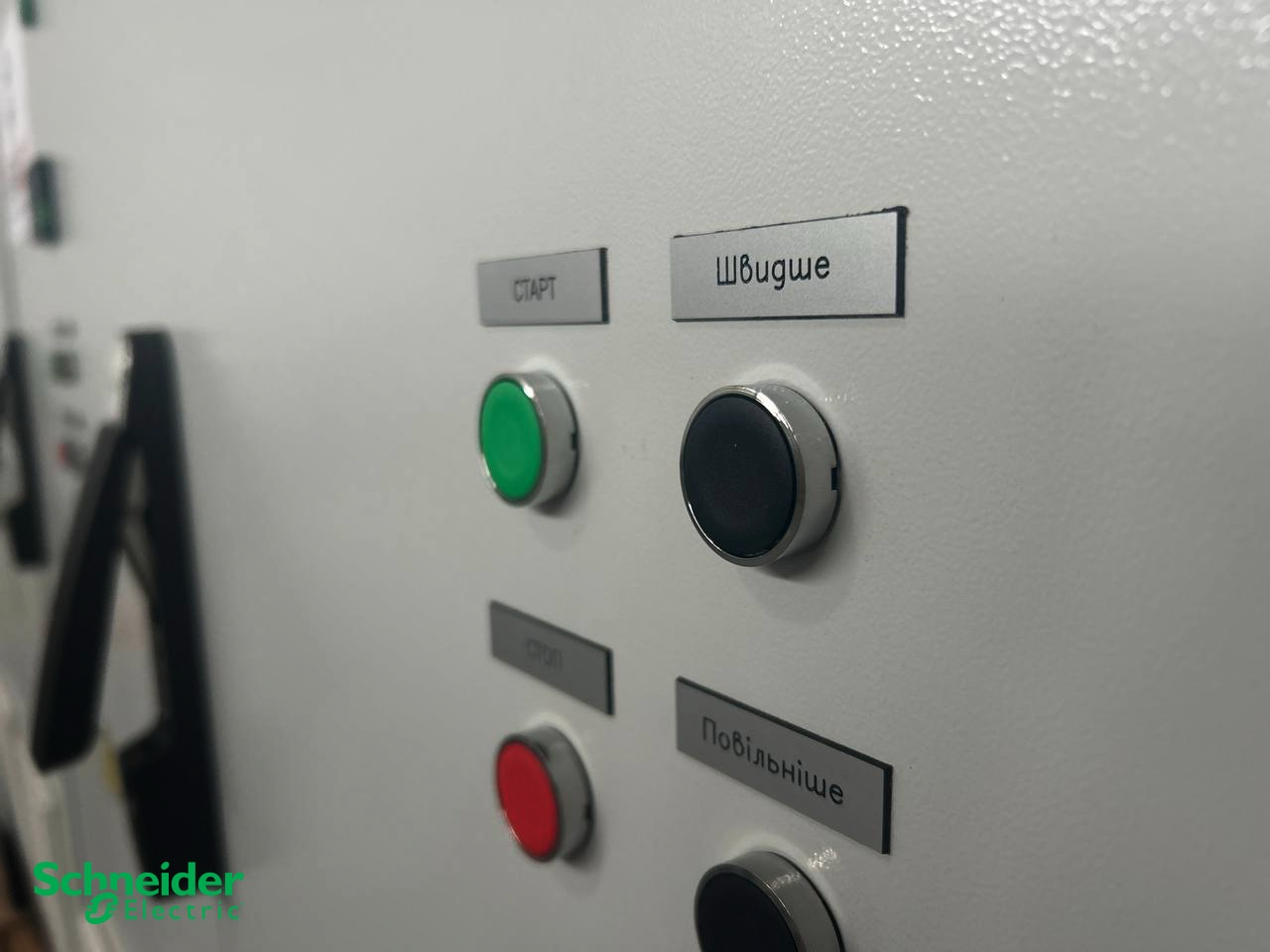
The completed project serves as an example of collaboration aimed at implementing modern energy-efficient technologies and improving the operational efficiency of Ukraine’s utility companies.
Schneider Electric is a global leader in energy technologies that enhances efficiency and promotes sustainable development through the electrification, automation, and digitalization of industry, business, and residential spaces. The company’s technologies enable buildings, data centers, factories, infrastructure, and power grids to function as open, interconnected ecosystems, increasing productivity, resilience, and environmental sustainability. The company’s portfolio includes smart devices, software-defined architectures, artificial intelligence-based systems, digital services, and professional consulting services. With 160,000 employees and 1 million partners in over 100 countries, Schneider Electric consistently ranks among the world’s most sustainable companies.
ENERGY EFFICIENCY, EQUIPMENT, HEATING, MODERNIZATION, Schneider Electric

Schneider Electric, a global leader in energy technologies, has been named the world’s most sustainable company for the third consecutive year by TIME magazine and Statista. The award is based on a ranking of the world’s 5,000 largest and most influential companies and reflects Schneider Electric’s long-standing commitment to integrating sustainability principles into its business strategy, corporate governance, and operations.
In pursuing its vision of advancing energy technologies to drive progress for all, Schneider Electric leverages its leadership in electrification, energy efficiency, and digitalization to create a positive impact on a global scale.
“We are honored to receive this recognition from TIME and Statista for the third consecutive year,” said Olivier Blum, CEO of Schneider Electric. “As energy becomes an increasingly important driver of economic growth, competitiveness, and social development, the need for smarter energy use continues to grow. We are convinced that intelligent energy management is a key driver of efficiency and decarbonization, helping our customers create long-term value while reducing emissions. It is this conviction that has guided Schneider Electric’s development for many years and continues to underpin our innovations, operations, and the advancement of energy technologies.”
This year’s recognition is particularly significant, as Schneider Electric recently unveiled its new sustainability program, Impact 2030. It is built around four strategic pillars: electrifying the world, transforming industry, unlocking human potential, and empowering local communities. The company assesses progress quarterly using measurable metrics, ensuring transparency and accountability at all levels.
In the first quarter of 2026, Schneider Electric reported an 82.5% reduction in Scope 1 and Scope 2 CO₂ emissions compared to the 2017 baseline, confirming the increased sustainability and efficiency of the company’s own operations.
Schneider Electric also reported the following results:
As part of the Impact 2030 program, Schneider Electric is also strengthening collaboration with its partner ecosystem, as the company is convinced that large-scale change can only be achieved through joint efforts. This applies first and foremost to collaboration with suppliers:
in the first quarter, more than 1,100 suppliers joined the Zero Carbon Pathway initiative, aimed at reducing the carbon footprint and strengthening climate responsibility at all stages of the value chain.
Amid growing global uncertainty and fragmentation, Schneider Electric also believes that long-term sustainable development is only possible with a strong local foundation. It is communities and people who are the driving force behind sustainable change, helping to translate global goals into tangible results at the local level. In the first quarter of 2026:
“As we embark on a new phase of implementing our sustainability strategy, we are combining ambition with responsibility. This third consecutive recognition confirms that we are moving in the right direction, and at the same time commits us to achieving even more,” said Esther Finidori, Director of Sustainability at Schneider Electric. “Impact 2030 lays the foundation for scaling our positive impact, and we are committed to accelerating this progress quarter after quarter.”
In addition to being named the world’s most sustainable company by TIME and Statista for the third consecutive year, Schneider Electric is also the only company to have ranked first on the Corporate Knights Global 100 list twice—in 2021 and 2025. Furthermore, Schneider Electric has been included on the Climate A List of the international environmental organization CDP for 15 consecutive years, confirming its consistent leadership in the fight against climate change.
DECARBONIZATION, Schneider Electric, Statista, SUSTAINABLE DEVELOPMENT, TIME
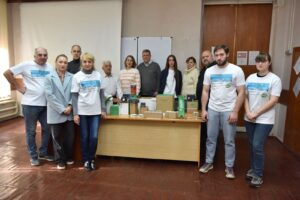
With the support of the international electrical engineering company Schneider Electric, Ukrainian universities have gained access to state-of-the-art ETAP software for designing and analyzing electrical networks. The company also conducted training for faculty members: more than 200 representatives from 30 universities learned how to use the professional tool SEE Electrical Expert. Thanks to this initiative, students will be able to learn how to design electrical schematics using modern digital solutions, preparing them for real-world professional challenges in the energy sector.
SEE Electrical Expert is software for creating electrical schematics, technical documentation, and 3D visualizations. The program allows users to develop schematic diagrams, work with component libraries, and automatically generate specifications and documentation, which significantly reduces project development time and helps minimize the risk of errors. It also enables the creation of a 3D model of an electrical panel, helping to avoid mistakes during assembly.

In addition to the software, in 2025 Schneider Electric donated equipment worth 2,000,000 UAH to universities for their educational laboratories, enabling students to apply modern concepts of automation and electrical engineering in practice and promoting the integration of innovative engineering solutions into the educational process.
Specifically, state-of-the-art electrical engineering equipment was donated to the National Technical University “Kharkiv Polytechnic Institute,” Lviv Polytechnic National University, Odesa National Technological University, National University of Food Technologies, National University of Life and Environmental Sciences of Ukraine, Kryvyi Rih National University, and other higher education institutions.
In 2025, more than 600 ETAP licenses were transferred to Ukrainian universities in several stages:
Training sessions on using SEE Electrical Expert took place from September 2025 through May 2026, with over 200 faculty members from 30 Ukrainian universities participating in total.
“Today’s students are the engineers who will be developing Ukraine’s energy sector tomorrow. That is why it is important for them to learn using the technologies employed in the real world. By investing in education, we not only help young professionals adapt more quickly to their careers, but we also contribute to the country’s reconstruction and create opportunities for young people to realize their potential in Ukraine,” said Mykhailo Bubnov, CEO of Schneider Electric.

“In the near future, we have an ambitious plan to create a modern project laboratory, the ‘Schneider Electric Academy-KAI,’ which will not only ensure the use of software in the educational process but also enable students to participate in creating digital twins of the power supply systems for critical infrastructure in the aviation industry. “Therefore, the effectiveness of our collaboration with Schneider Electric allows us to look to the future with confidence. The energy labor market will be supplied with specialists possessing the necessary professional skills and competencies,” commented Serhiy Ilienko, Associate Professor in the Department of Electrical Engineering and Power Machinery at the National University “Kyiv Aviation Institute.”
Schneider Electric also announced a teaching materials competition aimed at encouraging the academic community to actively use SEE Electrical Expert in the educational process. Competition participants have the opportunity to present their own approaches to solving applied electrical design problems.
EDUCATION, electrical design, ETAP, Schneider Electric, UNIVERSITY

Schneider Electric, a global leader in energy technologies, is urging the EU to urgently accelerate the development of energy efficiency and electrification in Europe as a unified, scalable, domestic, and sustainable response to the prolonged volatility of energy prices.
Global energy prices are expected to rise by 24% this year—the largest jump since 2022. Europe is particularly vulnerable to such changes, as energy costs here are typically two to four times higher than in other major regions of the world. Against this backdrop, Schneider Electric is calling on policymakers to stop viewing energy efficiency and electrification as an “add-on” to climate policy and to recognize them as Europe’s only scalable and domestic energy resources. Their accelerated implementation has the potential to generate at least €250 billion annually by 2040, reduce energy demand, decrease dependence on fossil fuels, and boost competitiveness.
Europe remains structurally vulnerable: the EU still relies on imports for nearly 60% of its energy resources, which cost €336.7 billion in 2025. This makes households, industry, and public services vulnerable to instability in global fossil fuel markets and geopolitical upheavals. Schneider Electric emphasizes that measures to improve energy efficiency and electrify end-use consumption can be implemented quickly and with a short payback period, delivering immediate benefits while accelerating the transition to a stronger and more energy-independent system.
Schneider Electric calls on the European Commission and EU member states to focus on five key policy steps:
Calls for support and incentives to help businesses scale proven, fast-return energy efficiency solutions that reduce demand within months.
Industry: Targeted support, particularly for small and medium-sized enterprises, to scale up energy management systems and implement low- or no-cost measures that can deliver savings of up to 30% over time and lay the groundwork for digitalized production.
2) Rapidly and consistently implement existing EU legislation on energy efficiency and buildings
Fully implement the Energy Efficiency Directive (EED) and the Energy Performance of Buildings Directive (EPBD) to ensure a rapid anti-crisis effect. Specifically:
• Rapidly deploy building automation and control systems (BACS) under the EPBD, which can deliver annual savings of 450 TWh in final energy consumption, reduce CO₂ emissions by 64 million tons, and lower energy bills by €36 billion.
• Strengthen energy audit requirements under the EED by making the implementation of their recommendations mandatory—starting with small and medium-sized businesses—using leasing mechanisms and the “energy-as-a-service” financing model.
3) Accelerate electrification through targeted incentives
Despite the growth in electricity production from renewable sources, a significant portion of energy consumption—that is, the demand side—has not yet switched to electricity. As long as people drive gasoline-powered cars and heat their homes with gas, Europe will remain dependent on imported energy sources and price fluctuations.
Faster electrification will enable more effective integration of renewable energy and reduce dependence on price fluctuations for fossil fuels. It also has the potential to break a decade-long period of stagnation in Europe, which currently stands at 21% (10% behind China), where rapid electrification is taking place. Schneider Electric calls for:
• A significant scaling up of heat pump adoption (which are 3–5 times more efficient than gas boilers) with the goal of reaching one million installations annually by 2030. This requires supportive mechanisms that lower initial barriers for consumers, including tools such as social leasing.
• Faster electrification of transportation through targeted measures, including incentives to accelerate the electrification of corporate fleets, which will also foster the development of the used electric vehicle market.
4) Use taxation and funding to shift demand from fossil fuels to clean electricity
Schneider Electric calls on policymakers to make electrification economically attractive by:
• Reducing electricity taxes (including lowering VAT and excise taxes where possible) to narrow the gap between retail prices for electricity and gas.
• Redirecting and simplifying access to public funding to scale up energy efficiency and electrification—specifically funds from the Recovery and Resilience Facility and revenues from the Emissions Trading System (ETS).
• Keep any temporary mechanisms for capping or subsidizing gas prices to a minimum and short-term, as this discourages investment in clean energy resources.
5) Unleash self-generation, flexibility, and smart grids to lower bills
Remove barriers and create incentives for the development of flexibility, energy storage systems, and digitalization, which help reduce peak loads and system costs. Priorities include:
• Ensuring flexibility in buildings and industry through rooftop solar power plants (PV), energy storage systems, and digital control systems, as well as supporting demand response mechanisms.
• Faster and higher-quality deployment of “smart” meters with a focus on functionality, real-time data access, and system interoperability—primarily for large commercial buildings, industry, and EV charging infrastructure.
• More digitized power grids and smarter grid infrastructure planning, including support for grid efficiency technologies, results-oriented KPIs, and tariff models that incentivize peak load reduction and grid-friendly energy consumption.
Laurent Bataille, Executive Vice President of Operations for Europe at Schneider Electric, stated:
“The call for policymakers to prioritize energy efficiency and electrification is just as relevant today as it was four years ago. The solutions haven’t changed. However, during this time, Europe has weathered one energy crisis after another—without making the progress needed to protect itself from price shocks and sky-high costs that leave businesses, households, and industry so vulnerable.
“Complacency is Europe’s greatest energy risk. Plans to subsidize energy costs are merely a temporary solution that does not work in the long term. Europe needs structural changes—ones that will incentivize the adoption of clean technologies so that businesses and households permanently change their approach to energy consumption. We need policies that will foster the creation of an energy system built in Europe and for Europe—one that reduces dependence on volatility, ensures a clean and reliable energy supply, and allows Europe to remain competitive.”
About Schneider Electric
Schneider Electric is a global leader in energy technologies, driving efficiency and sustainability through the electrification, automation, and digitalization of industry, business, and residential spaces. The company’s technologies enable buildings, data centers, factories, infrastructure, and power grids to function as open, interconnected ecosystems, enhancing productivity, resilience, and sustainability.
The company’s portfolio includes smart devices, software-defined architectures, AI-based systems, digital services, and professional consulting services. With 160,000 employees and 1 million partners in over 100 countries, Schneider Electric consistently ranks among the world’s most sustainable companies. Learn more at https://www.se.com/ua/uk/

Schneider Electric, a global leader in energy technologies, is deepening its collaboration with the World Economic Forum as part of a coalition of manufacturers, consultants, and technology partners working to accelerate the digital transformation of industry worldwide. Together, they are advancing the Lighthouse Operating System (Lighthouse OS), a framework built on proven and replicable methodologies designed to help manufacturers modernize their operations at scale.
Most manufacturers have already invested in digital transformation. However, only a few have managed to scale these changes. Pilot projects demonstrate success but eventually stall. The results achieved remain localized. The gap between the world’s most advanced factories and the rest of the industry continues to grow. The new framework presented today aims to bridge that gap.
Lighthouse Operating System (Lighthouse OS) is an open, practical model that transforms the proven practices of the world’s most efficient industrial sites into a structured path that any manufacturer can follow. Drawing on eight years of experience from the Global Lighthouse Network, Lighthouse OS was developed by the World Economic Forum’s Center for Advanced Manufacturing and Supply Chains in collaboration with leading OEMs, end-users, and consulting firms. It provides companies with a clear roadmap for self-driven transformation—from their current state to true operational excellence—without the need to start from scratch or engage large teams of specialists.
A model based on real-world practical experience
Lighthouse OS is built around six key operational principles: adaptive and resilient processes, connected and transparent flows, end-to-end synchronization, integrated sustainability, a learning organization, and accelerated development of digital and data competencies. These principles are structured across five levels of operational maturity. Companies can assess their current level, identify priority areas for development, and scale changes at their own pace.
Unlike individual digital tools, this system is designed as a comprehensive approach that integrates digital innovation, sustainability, workforce development, and operational excellence into a single, cohesive model that delivers measurable and repeatable results.
Schneider Electric: Experience Integrated into the System, Not Added Later
Schneider Electric brings its own practical transformation experience to this initiative. For over two decades, the company has been refining an operating system that today underpins its position in the Gartner #Supply Chain rankings and nine WEF Lighthouse factories awards. It is this foundation—built on cutting-edge digital systems, AI-driven automation, and sustainability-by-design practices—that forms the basis of the Lighthouse OS framework.
Federico Torti, Head of Technology and Innovation at the World Economic Forum, noted:
“Many manufacturers have ambitions for transformation but lack a holistic path for its consistent and large-scale implementation. Lighthouse OS directly addresses this challenge: the system transforms the knowledge gained by the world’s top factories through years of operational experience into a practical model that any manufacturer can apply. The goal is to make Lighthouse’s level of efficiency a realistic target for the entire industry, not just its most advanced players.”
Cécile Vercellino, Senior Vice President of Services for the Industrial Automation division at Schneider Electric, commented: “Schneider Electric has undergone this transformation firsthand—in over 120 ‘smart’ factories and distribution centers. We know what works, where companies face challenges, and what it takes to move from isolated pilot projects to true systemic changes across the entire enterprise. It is this practical experience that is embedded in Lighthouse OS. Our organization is already applying these principles across our broader ecosystem and seeing measurable results.”
An open initiative built for growth
Lighthouse OS is designed with future evolution in mind. As global pilot projects are implemented and community feedback is incorporated into future versions, the initiative actively invites manufacturers, technology providers, and public sector partners to join the collaboration.
To learn more or join the initiative, visit: https://initiatives.weforum.org/lighthouse-operating-system/home.
Additional information:
About Schneider Electric
Schneider Electric is a global leader in energy technologies, driving efficiency and promoting sustainable development through the electrification, automation, and digitalization of industry, business, and residential spaces. The company’s technologies enable buildings, data centers, factories, infrastructure, and power grids to function as open, interconnected ecosystems, enhancing productivity, resilience, and sustainability.
The company’s portfolio includes smart devices, software-defined architectures, AI-based systems, digital services, and professional consulting services. With 160,000 employees and 1 million partners in over 100 countries, Schneider Electric consistently ranks among the world’s most sustainable companies. Learn more at https://www.se.com/ua/uk/
About the Lighthouse Operating System
The Lighthouse Operating System is a World Economic Forum initiative, in alignment with the Global Lighthouse Network, that defines a next-generation operating system for industry by codifying proven best practices from leading lighthouse enterprises and value chains. Its goal is to ensure operational excellence and scalable impact in the areas of productivity, supply chain resilience, customer focus, sustainability, and talent development.
The initiative aims to create a responsible operational model for industry, jointly developed by industry leaders and based on the principles of lean manufacturing, digitalization, and sustainable development. At the same time, it forms a capability-building framework that will help governments accelerate the adoption of industrial technologies, enable scaling for small and medium-sized enterprises, and strengthen national competitiveness.
At its core, the Lighthouse Operating System serves as a transformation engine built on a systematic approach to capability development. It integrates strategy, operations, and people into a cohesive, scalable model, transforming the best practices of lighthouse enterprises into practical framework solutions that can be implemented across various manufacturing sites and value chains.
The initiative is being developed by leading co-creators from industry, consulting, and the public sector, who are working together to shape the future of global manufacturing and operations.



