

According to The Guardian, the United Kingdom will gain access to Ukrainian battlefield data to train artificial intelligence systems that are planned to be used to protect military facilities and critical infrastructure from sabotage, drones, and other threats.
Ukraine and the UK signed a partnership agreement on artificial intelligence on August 24, 2026. The UK will become the first foreign partner to gain access to the Ukrainian platform Avengers AI Labs, the British government reported.
Avengers AI Labs aggregates a vast amount of real-world data collected by thousands of daytime cameras and infrared sensors on the battlefield. The system contains data on millions of objects, including tanks, artillery, air defense systems, personnel, and aerial targets—such as Shahed strike drones and reconnaissance drones. This data is used to train artificial intelligence models.
According to The Guardian, one of the first British pilot projects will be a system to protect a military facility using underground fiber-optic cables, which, with the help of AI, will be able to recognize characteristic movements of people and vehicles. In the future, such technologies could be applied at airports, railways, energy facilities, and prisons.
Three British technology companies—Sintela, Mind Foundry, and Skyral—have already been involved in the pilot projects. In particular, Sintela specializes in using fiber-optic networks as distributed sensors.
Another area of cooperation will be the development of a new generation of energy-efficient AI chips for drones, robotics, and autonomous systems. It is expected that such solutions will allow these systems to operate autonomously for longer periods and respond more quickly in challenging conditions.
The agreement calls for collaboration among governments, businesses, universities, and research centers in both countries. Ukraine provides unique data and experience in applying technologies under real combat conditions, while the United Kingdom contributes its research infrastructure, universities, and technology companies.
British Prime Minister Andy Burnham stated that combining Ukraine’s combat experience with British expertise in AI will accelerate the development of technologies for both Ukraine’s defense and the protection of critical British infrastructure.
The partnership is part of a 100-year agreement between Ukraine and the United Kingdom. The joint declaration calls for the development of AI models, secure data-sharing mechanisms, autonomous systems, cybersecurity technologies, and solutions for the defense industry.
artificial intelligence, DEFENSE, INFRASTRUCTURE, UKRAINE, UNITED KINGDOM
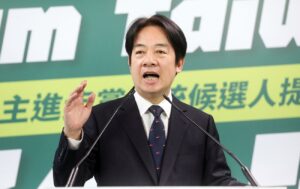
According to Experts Club, the Taiwanese administration plans to include 235.7 billion New Taiwan dollars, or about $7.4 billion, in the 2027 budget for one-time payments to the population. Each recipient is set to receive 10,000 New Taiwan dollars, or approximately $314, according to the island’s chief executive, Lai Ching-te.
Lai described these payments as an opportunity to share the “dividends of artificial intelligence” with the public. However, this does not refer to dividends from companies or a special tax on AI, but rather to a budgetary payment that the government attributes to the sharp acceleration of the economy driven by demand for semiconductors, computing equipment, and other AI-related products.
It is important to note that this is currently a proposal in the draft central budget for 2027, not a payment that has been finally approved by parliament. Lai announced this on August 17 following the executive branch’s review of the budget draft. The plan calls for an increase in spending of NT$235.7 billion while maintaining a balanced budget and, according to the head of the administration, with virtually no new net borrowing.
Taiwan’s strong financial performance allows the government to take this step. The revenue forecast for the 2027 central budget has been raised to NT$3.9266 trillion.
The main reason for the increase in budgetary capacity is the technology boom. According to data from Taiwan’s Directorate General of Budget, Accounting, and Statistics (DGBAS) published on August 14, 2026, the island’s GDP grew by 15.43% year-over-year in the first quarter and by 12.93% in the second quarter. In the first half of the year, the economy grew by approximately 14.15%.
The agency raised its forecast for Taiwan’s GDP growth for the entire year of 2026 from 9.64% to 11.05%. If the forecast holds true, this will be the highest annual growth rate since 1987, when the economy grew by 12.75%. For 2027, the DGBAS expects growth to slow to 6.04%.
Global demand for artificial intelligence infrastructure remains the main driver of the economy. The DGBAS expects Taiwan’s real exports of goods and services to increase by 21.28% in 2026, and private investment in fixed capital to rise by 11.58%.
Manufacturing output in the second quarter rose by 18.27%, driven primarily by semiconductors, computers, electronics, and optical products.
Taiwan plays a key role in the global supply chain for state-of-the-art semiconductors. High demand for artificial intelligence equipment and investments by the world’s largest technology companies have led to a sharp increase in production and exports in Taiwan’s electronics industry.
Authorities expect that direct payments will allow the benefits of the technology boom to extend to households and sectors not directly related to semiconductor and AI production. Recipients will be able to use the money as they see fit—for everyday expenses, education, caring for elderly relatives, or other purposes.
Taiwan de facto has its own administration, armed forces, and currency, and independently conducts domestic and economic policy; however, its status under international law remains disputed.
The People’s Republic of China does not recognize Taiwan as a separate state and considers the island part of China’s territory. Beijing adheres to the “One China” principle and requires countries that establish diplomatic relations with the PRC to refrain from having official diplomatic relations with the Taiwan authorities. According to the PRC Ministry of Foreign Affairs, 183 countries have established diplomatic relations with Beijing.
Therefore, most countries in the world do not have official diplomatic relations with Taiwan, although many maintain close unofficial economic, trade, cultural, and political ties with it through representative offices.
As of August 2026, Taiwan maintains official diplomatic relations with only 12 countries and the Holy See, including: Belize, Guatemala, Haiti, Paraguay, Saint Kitts and Nevis, Saint Lucia, Saint Vincent and the Grenadines, the Marshall Islands, Palau, Tuvalu, Eswatini, and the Holy See. This list is provided by the Ministry of Foreign Affairs of Taiwan.
At the same time, the lack of official diplomatic recognition does not prevent Taiwan from remaining one of the world’s most important technology economies and a key player in the global semiconductor industry.
artificial intelligence, CHINA, ECONOMY, semiconductors, TAIWAN

Ukraine’s national team is participating for the first time in the International Olympiad in Artificial Intelligence (IOAI), whose third final is being held in Astana from August 2 to 8, 2026. More than 500 school students from 108 countries have arrived for the competition.
Ukraine did not participate in the first two IOAI competitions, held in 2024 in Burgas, Bulgaria, and in 2025 in Beijing.
The Ukrainian team includes four participants from Kyiv and Irpin. One of the finalists represents the A+ Architectural and Engineering Collegium.
More than 2,200 school students from across Ukraine took part in the selection process for the national team. The program included testing basic digital skills and media literacy, assessing knowledge of artificial intelligence, machine learning and data processing, a technical English-language examination and a practical round.
After the main stages, the 50 best participants underwent three weeks of training with artificial intelligence instructors. The final composition of the national team was determined based on the results of the training, tests, practical assignments and interviews.
The official national coordinator of the IOAI in Ukraine is the A+ educational holding company, which received accreditation from the international olympiad in November 2025. Oleksandr Shapovalov is the project’s national coordinator, Oleksandra Hryshko is the international coordinator, Vitalii Sandul is the academic director, and Vasyl Orishchuk is the head of the scientific committee.
Developer KAN Development became the general partner of the Ukrainian national team, while the ITVDN educational IT platform became the olympiad’s partner in Ukraine.
The olympiad includes individual and team competitions. Participants work on practical tasks involving artificial intelligence and machine learning, analyze data, create models and evaluate their quality. Each country may send up to two teams, each consisting of no more than four school students and a team leader.
The first team round took place on August 3 following the official opening ceremony. The final stage of the team competition and the awards ceremony will take place on August 7.
During the individual rounds, participants work for six hours. Based on the results of the first stage of the team competition, the organizers select the ten best national teams, which earn the right to continue competing in the final.
A total of 103 countries and territories and more than 120 teams initially registered to participate in IOAI 2026. Following the opening, the organizers reported delegations from 108 countries and territories. The difference is related to the final composition of the participants who arrived in Astana.
The International Olympiad in Artificial Intelligence was established in 2024. The first tournament in Bulgaria brought together 41 teams from 32 countries, while the second in China attracted about 300 school students from more than 50 countries. The fourth IOAI is scheduled to take place in Singapore in 2027.
Ukraine’s debut at the IOAI comes amid the development of a national system of artificial intelligence competitions. The Ukrainian selection process was open to school and college students between the ages of 14 and 20, and participation in all its stages was free of charge.
AI olympiad competitions differ from traditional computer science contests. Writing a program is not enough: participants must prepare and analyze data, select a machine-learning method, train a model, verify its accuracy and justify the result obtained.
Participation in the IOAI enables Ukraine to compare the level of preparation of its school students with teams from leading technological countries and begin developing its own system for training young artificial intelligence specialists.

Schneider Electric, a global leader in energy technology, and AMD today announced a jointly developed and validated reference design for the AMD Helios rack solution, which offers a scalable architecture for faster deployment of high-density AI environments with fewer risks and less complexity. This reference design marks the first outcome of the collaboration between Schneider Electric and AMD and underscores the companies’ shared commitment to simplifying the deployment of AI Factories.
The new reference design is the first of its kind, developed to support high-density AI workloads on the Helios rack-mounted solution. The platform is powered by AMD Instinct™ MI455X GPUs, 6th-generation AMD EPYC™ processors, AMD Pensando™ Vulcano NICs, and the open ROCm™ software ecosystem. AMD Helios is designed to deliver breakthrough AI performance through advanced computing capabilities, high interconnect bandwidth, increased memory capacity, and system-level integration. This enables customers to run larger and more complex AI workloads faster, while optimizing power consumption and efficiency.
Since AI workloads place unprecedented demands on data center infrastructure, reference designs provide data center architects and operators with tested and scalable solutions capable of handling new levels of power density, cooling requirements, and operational complexity. By simulating the operation of physical data center infrastructure, these pre-validated architectural solutions shorten the design phase by determining the optimal configuration of power, cooling, and IT infrastructure to create a reliable, scalable, and AI-ready data center. The AMD Helios reference design covers four technical areas: facility power, facility cooling, IT space, and lifecycle management software.
“Today, organizations need comprehensive, AI-ready reference designs that enable them to move more quickly from the planning stage to deployment with fewer risks,” said Manish Kumar, Executive Vice President of Schneider Electric’s Secure Power & Data Centers division. “In collaboration with AMD, we have created an engineering-validated reference design that combines cutting-edge AI computing platforms, power technologies, and practical data center solutions, helping customers deploy scalable, high-density AI environments with greater confidence, efficiency, and speed.”
“AI infrastructure is rapidly evolving into full-fledged AI Factories, which requires that computing, networking, power, and cooling be designed as a single system from the very beginning,” said Forrest Norrod, executive vice president and general manager of AMD’s Data Center Solutions business group. “AMD Helios is an open rack-based architecture designed to deliver the performance, efficiency, and flexibility required for next-generation AI workloads. Together with Schneider Electric, we’ve developed a validated reference design that provides customers with a practical foundation to accelerate the deployment of high-density AI infrastructure, reduce integration risks, and scale more confidently and efficiently.”
Reference Design Accelerates AMD Helios Deployment
This new collaboration combines AMD’s AI platform innovations with Schneider Electric’s expertise in power, cooling, and digital infrastructure, creating a more integrated approach to deploying both new AI Factories and high-density retrofit infrastructures. The reference design supports:
The reference design has already been validated in accordance with ANSI standards for deployment in the United States. Future plans include expanding this architecture to support IEC standards for projects worldwide.
About Schneider Electric
Schneider Electric is a global leader in energy technologies that improves efficiency and promotes sustainable development through the electrification, automation, and digitalization of industry, business, and residential spaces. The company’s technologies enable buildings, data centers, factories, infrastructure, and power grids to function as open, interconnected ecosystems, enhancing productivity, resilience, and environmental sustainability.
The company’s portfolio includes smart devices, software-defined architectures, artificial intelligence-based systems, digital services, and professional consulting services. With 160,000 employees and 1 million partners in over 100 countries, Schneider Electric consistently ranks among the world’s most sustainable companies. Learn more at https://www.se.com/ua/uk/

The Noms app—a visual food diary with artificial intelligence features—is gaining popularity on social media. Unlike traditional food trackers, it displays meals not as a table but as a “virtual table” or visual food diary: users take photos of their meals, and the app turns them into stickers and estimates calories, protein, fat, and carbs.
Judging by the pages on the App Store and Google Play, Noms was developed by Vietnamese developer Dat Pham / Phạm Tiến Đạt. On Google Play, the developer’s profile lists Vietnam, and on the App Store page, Dat Pham is also listed as the provider.
The main feature of Noms isn’t so much the calorie-counting function itself as it is the design. The app turns meals into a visual diary: food is displayed as a set of “stickers,” and users can view a meal calendar, save their history, create video summaries, and share cards on social media.
The AI feature works via photos: the user takes a picture of a dish, and the model estimates the calories, carbohydrates, proteins, and fats. The app description specifically notes that Noms can automatically calculate nutritional values and save the history in the calendar.
However, the app cannot be considered a completely free service with no restrictions. It can be downloaded for free, but the App Store lists in-app purchases, and the description mentions a PRO subscription and ads for free users regarding social features. Google Play also lists in-app purchases.
For the consumer AI app market, Noms is interesting because it transforms food tracking from a “boring diary” format into a game and visual content experience. This reflects a broader trend: AI services are trying not just to process data, but to make everyday habits more understandable, engaging, and social.

A decree by the President of Kyrgyzstan titled “On Measures to Improve the Tax System and Tax Administration” will provide a range of tax incentives for entities in the IT sector, as well as those engaged in creative and artistic activities, the country’s tax service announced on Friday.
Specifically, IT workers, artificial intelligence and app developers, bloggers, remote workers for foreign companies, and startup founders will be exempt from taxes for a period of 5 years.
In addition, this category will be subject to a preferential income tax rate of 5% and social security contributions of 12%.
This measure will enable Kyrgyzstan to become a regional hub for the development of IT, artificial intelligence, and creative industries, attracting talented professionals, innovative companies, and investments from around the world, the statement emphasizes.
The preferential tax regime will help entrepreneurs allocate more funds to business development, the implementation of new technologies, and the enhancement of domestic companies’ competitiveness.



