

According to Fixygen, Strategy remains the world’s largest corporate holder of bitcoin. As of August 23, the company held 840,447 BTC, or about 4% of the maximum possible supply of the first cryptocurrency.
At a BTC price of $77,004, its Bitcoin reserves were valued at $64.72 billion, while Strategy’s market capitalization stood at approximately $49.6 billion.
At first glance, it appears that investors value the entire company at less than the value of the Bitcoin it holds.
However, this comparison is incomplete. In addition to BTC, Strategy held $6.69 billion in dollar-denominated assets, but at the same time had approximately $6.75 billion in debt and $14.97 billion in preferred stock, which ranks higher than common shareholders in the capital structure.
After accounting for these liabilities, Strategy itself estimated the net value of its reserves at approximately $49.68 billion—nearly the same as its market capitalization.
This is precisely why the company’s mNAV ratio as of August 23 stood at around 1.01x. In other words, the huge premium that investors previously paid for the opportunity to gain indirect exposure to bitcoin through MSTR has virtually disappeared.
This is a fundamental shift in Sailor’s model: Strategy remains the world’s largest Bitcoin treasury, but its stock is increasingly valued as a financial entity with BTC, debt, and expensive preferred equity, rather than as “Bitcoin at a premium.”
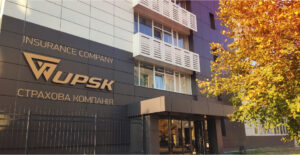
Shareholders of PJSC “Ukrainian Fire and Insurance Company” (Kyiv) approved at an extraordinary meeting on July 21, 2026, the amount of annual dividends for common registered shares, based on the results of operations in 2025, totaling 40 million UAH, or 2.50 UAH per share.
As reported by the company in the disclosure system of the National Securities and Stock Market Commission (NSSMC), the decision to pay dividends was adopted by the annual remote general meeting of shareholders (minutes dated May 8, 2026).
The dividends are planned to be paid in several installments (proportionally to all shareholders within a total 6-month period from the date of the decision). The first installment, in the amount of 16 million UAH, is due by August 5, 2026; the second installment, in the amount of 16 million UAH, is due by October 13, 2026; and the third installment, in the amount of 8 million UAH, is due by November 6, 2026.
PJSC “UPSK” was registered in 1993. It specializes, in particular, in motor vehicle insurance, financial risk insurance, travel insurance, property insurance, cargo insurance, and baggage insurance.
According to the company, Oleksandr Mikhailov owns 99.999% of its shares.
According to data from the National Bank of Ukraine (NBU), the company ranks 16th among Ukraine’s non-life insurers in terms of premiums collected in 2025.

PJSC “Slavuta Brewery” (Slavuta, Khmelnytskyi Oblast) will begin paying dividends for the 2025 fiscal year on July 15.
As the company reported on Tuesday via the disclosure system of the National Securities and Stock Market Commission (NSSMC), the supervisory board adopted the relevant resolution on June 30, also setting July 15 as the record date for shareholders.
Dividends will be paid directly to shareholders by November 4, 2026.
As previously reported, the annual general meeting of shareholders on April 23 approved the allocation of 1.75 million UAH from the 2025 net profit for dividend payments. The dividend amount is 2 UAH per ordinary registered share, representing an annual yield of 117.6%.
According to data from the Opendatabot service, at the end of 2025, PrJSC “Slavutsk Brewery” reported UAH 16.97 million in net profit, which is 27.1% higher than the 2024 figure. At the same time, the company’s net revenue increased by 28.2% to 120.07 million UAH.
The number of employees at the plant rose from 95 to 105 over the course of the year. The company’s authorized capital currently stands at 1.49 million UAH.
PJSC “Slavuta Brewery” (Slavuta, Khmelnytskyi Oblast) was founded on January 31, 2008. The company specializes in the production of beer and malt, and also manufactures plastic containers.
According to the company’s website, the plant has its own malt house and three production workshops: the brewhouse, the fermentation and lagar workshop, and the bottling workshop. Its production capacity allows it to produce more than 10 varieties of unpasteurized beer, which are sold under the brand names “Slavutskoye,” “Prince Sangushko,” “Princess Sangushko,” and “Zhigulivskoye.” The company operates its own retail chain of draft beer stores, as well as a network of distributors in the western and central regions of Ukraine.
The main shareholders of the private joint-stock company are Tetiana Kmytiuk (17.89%), Stanislav Pavlovskyi (14.65%), Larysa Lavreniuk-Ulyanich (6.72%), and “Greenesis Plus” LLC (5.7%).

Ferrexpo plc, a mining and ore company with its main assets in Ukraine, continues to focus on managing its costs and optimizing its sales structure to maximize its working capital.
According to a company statement released ahead of its annual general meeting on Monday, the group continues to operate under severely constrained conditions due to the war in Ukraine and related operational and financial difficulties.
At the same time, the statement notes that despite significant disruptions in the operating environment in Ukraine, the group continues to operate one of its four pellet production lines and export its products to customers in Europe and the Middle East.
As previously announced, the group decided to sell its own transshipment vessel, the Iron Destiny, for which it received a net profit of $7.7 million. Based on current production rates, current and projected energy prices for the next quarter, and taking into account an optimized sales mix, the group now forecasts that it will have sufficient net available cash—excluding funds frozen at Mbaer Bank—beyond the previously stated end of August 2026.
“This assessment remains subject to the volatility of iron ore prices and operating expenses (including energy costs) and assumes that there will be no significant changes in the Group’s operating conditions—including electricity supply—and that no restrictive measures will be taken by the insolvency administrator at Poltava Mining and Processing Plant (PGZK), and that there will be no final, non-appealable negative outcomes in the various judicial and administrative proceedings currently pending against the group,” the statement said.
In addition, it is noted that the group continues to actively pursue initiatives to enable it to begin raising equity capital in the amount of at least $100 million. As noted in the company’s previous announcements, the group remains confident that raising equity capital is the most viable solution within the required timeframe.
“At this stage, there is no certainty that the group will successfully complete such financing options. If the issues regarding the withholding of VAT refunds and financing are not resolved in a timely manner, this could lead to significant negative consequences for the group. The planned capital raise, if implemented, will be the subject of a further announcement, including the full terms of the planned capital raise,” the press release states.
The company plans to release its production report for the second quarter of 2026 on July 15 of this year.
As previously reported, Ferrexpo plc announced that it will hold its annual shareholders’ meeting on June 29 of this year. The total number of shares whose holders are entitled to vote at the meeting is 598,137,142 ordinary shares. Only one class of shares is outstanding, and each share carries one vote; therefore, the total number of voting rights that can be exercised at the meeting is 598,137,142.
Lucio Genovese, the company’s interim acting chairman, explained that voting on all resolutions will be conducted by poll, and the voting results will be announced through the Regulatory Information Service and published on the group’s website as soon as possible after the general meeting.
Genovese reiterated that the company aims to raise at least $100 million, which is needed to finance Ferrexpo Group’s operations over the next 18 months. The Group’s operations have been significantly impacted since the start of Russia’s full-scale invasion of Ukraine in 2022, leading to a reduction in operational activities and periods of complete suspension of operations. This has had a material impact on the Group’s revenue.
In addition, the decision by Ukraine’s tax authorities to suspend VAT refunds effective March 2025, amounting to approximately $90 million, has further significantly impacted the group’s liquidity. The company intends to complete the equity offering as soon as possible and is actively working toward this goal. However, it is not yet in a position to officially launch the equity offering.
“Until the equity offering is ready to launch, the company cannot publish its audited financial results for the year ended December 31, 2025, on a going-concern basis, as the company and its auditors require sufficient assurance regarding the commencement and successful completion of the equity offering before signing off on the financial statements. Due to the delay in the equity offering and given the dependence on the commencement of the equity offering for the publication of the audited financial statements for the year ended December 31, 2025, on a going-concern basis, the company is unable to finalize the audited annual report and financial statements for the year ended December 31, 2025, but is committed to doing so as soon as possible,” the acting CEO stated in his address.
According to him, this annual shareholders’ meeting is being held solely to address routine matters, namely the reelection of directors and the renewal of authorizations granted to conduct market purchases of the company’s own shares and to convene annual shareholders’ meetings. All directors will step down at the 2026 general meeting of shareholders and will seek re-election by the shareholders, with the exception of Mr. Vitaliy Lisovenko, who, as previously announced, will resign from the company’s board of directors upon the conclusion of the general meeting.
According to the information, the meeting will propose, among other things, the re-election of Stuart Brown, Mykola Kladiev, Lucio Genovese, and Fiona Macaulay as members of the board of directors.
As previously reported, Ferrexpo has delayed the publication of its audited report for 2025.
It was also reported that the London Stock Exchange (LSE) suspended trading in Ferrexpo shares, while the company twice warned shareholders in the second half of April about the suspension of its listing and trading due to its inability to publish its annual financial statements on time. Most recently, on April 28, Ferrexpo noted that it had received indicative, non-binding expressions of interest from institutional investors regarding a potential capital raise of more than $100 million—on which the publication of the report also depends—but that it would not be able to complete this by the end of April.
Ferrexpo owns a 100% stake in Yeristivsky GZK LLC, a 99.9% stake in Bilanivsky GZK LLC, and 100% of the shares in Poltava GZK PJSC.
PZU SA Group has signed a preliminary agreement to acquire 100% of the shares in MetLife Ukraine—the leader of the Ukrainian life insurance market—according to a statement from PZU Ukraine Insurance Company.
It is emphasized that the deal strengthens the PZU Group’s position in Central and Eastern Europe, expands its operations in the life insurance segment, and aligns with its strategy to become a regional leader.
“The acquisition of MetLife Ukraine is an important step in the implementation of our long-term strategy to build a strong international insurance and financial group in Central and Eastern Europe. We are investing in a market leader with an experienced team and a sustainable business model, which strengthens our presence in Ukraine and significantly expands the scale of our operations in the life insurance segment. This decision combines strategic ambitions with solid business fundamentals,” noted PZU CEO Bohdan Benchak.
Furthermore, this aligns with the Group’s strategy of expansion in Central and Eastern Europe, particularly in markets where it already has an established presence. The Ukrainian life insurance market remains relatively underdeveloped compared to other countries in the region, creating significant opportunities for further growth.
From a financial perspective, this transaction is also attractive for the PZU Group. MetLife Ukraine has a strong capital position, high profitability (approximately 20% ROE), and liquidity, which creates potential for dividend payments.
“For PZU Ukraine, the acquisition means a significant increase in scale, access to a sales network that complements PZU Ukraine’s existing network, expanded product capabilities, and an experienced team with a broad customer base,” the statement reads.
According to the information, the PZU Group has responsibly and proactively assessed the risks associated with investing in a country currently in a state of armed conflict. The investment is insured by KUKE (PFR Group), which provides protection against the negative consequences of a potential deterioration in the military or political situation.
“The PZU transaction is yet another foreign investment by a Polish entity in Ukraine that was guaranteed by KUKE this year. The absence of political and force majeure risks, particularly those related to military actions, creates potential for the safe development of our companies,” noted Janusz Władczak, President of KUKE.
Macroeconomic data indicate a high level of resilience in the Ukrainian economy, a gradual stabilization of inflation, and prospects for moderate GDP growth in the medium term, the statement emphasizes.
As previously reported, MetLife Ukraine is part of the leading global corporation MetLife. It has been operating in Ukraine since 2002 and is the leader in the Ukrainian life insurance market.

The prolonged cold spell in Europe is pushing gas prices up. The spot price for “day ahead” delivery on the benchmark European TTF hub closed at $486 per 1,000 cubic meters on Wednesday, adding 11% in just one trading day. This is the highest level since June 2025.
On Thursday, trading opened at $491. At the moment, the price has adjusted to $477.
Air temperatures in Europe in January this year are falling to their lowest levels in the last decade and a half. Overall, January (which is already the coldest winter month) is expected to be three degrees colder than the climatic norm and four degrees colder than last year.
Clear weather is accompanied by low wind speeds, or even calm conditions. This increases the load on the power system, as it reduces the output of wind farms. The reliability of the power system is maintained primarily by underground gas storage facilities, which are the most flexible source and closest to the points of consumption.
The average level of gas reserves in underground storage facilities in Europe fell to 48.4% at the end of the gas day on January 20, according to data from Gas Infrastructure Europe. This is 15 percentage points lower than the average for the last five years. At the moment, European underground gas storage facilities are ahead of the usual rate of consumption by four weeks. Moreover, the GIE observation base knows of examples when such a level (or even much higher – 59%) of reserves was reached only by the end of the withdrawal season and the start of injection.
By the end of 2025, countries in the region had purchased 109 million tons of LNG (142 billion cubic meters in regasified volume), which is 28% more than in 2024. In January 2026, liquefied gas imports could reach 10 million tons, which is 24% higher than a year earlier. And this could be a new record for the European gas industry. Despite high demand, there remains a large unused capacity reserve – on January 20, terminals were operating at 51% of their capacity. There is also a noticeable trend of declining LNG stocks at terminals.



