
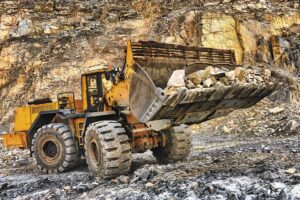
Zelenskyy has rebuffed US’s initial attempt to take control of minerals as downpayment for its aid in war with Russia
Ukraine’s president, Volodymyr Zelenskyy, has rebuffed an initial attempt by the US to corner his country’s critical minerals as a downpayment for continued military and economic aid for its war with Russia.
Three sources told the Reuters news agency that the US had proposed taking ownership of 50% of Ukraine’s critical minerals. Zelenskyy did not dismiss the offer out of hand, but said it did not yet contain the security provisions Kyiv needed.
Critical minerals are the metals and other raw materials needed for the production of hi-tech products, particularly those associated with the green energy transition, but also consumer electronics, artificial intelligence infrastructure and weapons.
The rush to tackle climate breakdown and move away from fossil fuels has triggered a rush for energy transition minerals such as cobalt, copper, lithium and nickel, which are useful for electrification of transport and the construction of wind turbines. The same minerals and others are also used for the manufacture of mobile phones, AI datacentres and arms such as F-35 fighter aircraft, placing them in high demand.
As the world’s economy and technology transforms, the value of critical minerals has soared and geopolitical competition for access to them is rising. In 2023, the International Energy Agency (IEA) estimated that the market for energy transition minerals had reached £320bn in 2022, double its value five years earlier. And if countries fully implement their clean energy and climate pledges, demand is expected to more than double by 2030 and triple by 2040, the agency says.
The term critical minerals is not a scientific term so much as a political term, and different countries have different lists of critical minerals depending on their domestic and geopolitical objectives.
In 2022, the US Geological Survey (USGS) published a list of 50 minerals, from aluminium to zirconium, that it regarded as “play[ing] a significant role in our national security, economy, renewable energy development and infrastructure”. Notable inclusions were arsenic, for semiconductors; beryllium, used as an alloying agent in aerospace and defence industries; cobalt, lithium and graphite, crucial for manufacturing batteries; indium, which makes screens respond to a finger touch; and tellurium, which is used for solar power generation.
The US’s Energy Act stipulates that the list must be updated every three years, which means this year it will be up for review, and it will be interesting to see which minerals appear or disappear given the new political environment in the country.
Rare earth elements (REEs) are a subset of 17 critical minerals that are variously indispensable for mobile phones, electric vehicles, missile guidance systems and other electronics, industrial and energy applications.
Despite their name, most of the rare earth elements are not particularly rare, but their extraction and refining is fiendishly difficult – and environmentally highly destructive – meaning production is concentrated in very few places, mainly China.
REEs include europium, used in nuclear power station control rods; dysprosium, gandolinium and praseodymium, used in the magnets in your mobile phone; and gadolinium, holmium and ytterbium, used in lasers among other things.
A 2022 article by the chair of Ukraine’s Association of Geologists, Hanna Liventseva, claimed her country contained about 5% of the world’s mineral resources, despite covering only 0.4% of the globe’s surface, thanks to a complex geology that takes in all three of the main components of the earth’s crust.
According to Ukraine’s own data, cited by Reuters, the country has deposits of 22 of the 34 minerals identified as critical by the EU, including rare earths such as lanthanum, cerium, neodymium, erbium and yttrium.
Before the outbreak of war with Russia, Ukraine was a key supplier of titanium, producing about 7% of global output in 2019, according to European Commission research. It also claimed 500,000 tons of lithium reserves, and one-fifth of the world’s graphite, a crucial component of nuclear power stations.
However, with Russia controlling about one-fifth of Ukraine’s territory, much of these reserves have been lost. According to estimates by Ukrainian thinktanks cited by Reuters, up to 40% of Ukraine’s metal resources are under occupation. Russian troops also occupy at least two of Ukraine’s lithium deposits, one in Donetsk and another in Zaporizhzhia.
There is one big reason Trump is so keen to get his hands on Ukraine’s critical minerals: China. More than ever, the Asian superpower is the world’s factory and that means, wherever in the world critical minerals are torn from the ground, it remains a crucial staging point on the supply chain.
Most of the world’s processing capacity for critical minerals is in China. According to the IEA, China’s share of refining is about 35% for nickel, 50-70% for lithium and cobalt, and nearly 90% for REEs. Its dominance in the latter, especially, is overwhelming. According to USGS data, in 2024 China accounted for almost half the world’s REE reserves.
With Trump effectively instigating a trade war with China with his imposition of steep tariffs on Chinese goods, US access to critical minerals is potentially under threat. As mentioned earlier, the world is being gripped by an unseemly scramble for mineral wealth. They are the building blocks of the economy of the future, and if the US doesn’t get its hands on them, someone else will.
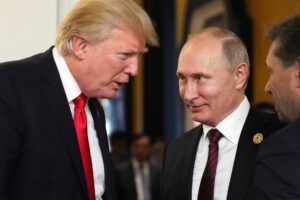
Saudi Arabia has supported the idea of holding a meeting between US President Donald Trump and Vladimir Putin on its territory and reaffirmed its ongoing efforts to achieve a lasting peace between Russia and Ukraine, the press service of the Saudi Foreign Ministry reported.
“The Kingdom of Saudi Arabia highly appreciates the telephone conversation held between US President Donald Trump and Russian President Vladimir Putin on February 12, as well as the announcement of the possibility of holding a summit between their esteemed two presidents in the Kingdom of Saudi Arabia,” the statement said.
The ministry added that the Kingdom welcomes the summit in Saudi Arabia and reaffirms its ongoing efforts to achieve a lasting peace between Russia and Ukraine.
It is noted that on March 3, 2022, Crown Prince and Prime Minister of the KSA Mohammed bin Salman bin Abdulaziz, during telephone conversations with Putin and Zelensky, “expressed the Kingdom’s readiness to provide its mediation services to achieve a political settlement of the crisis.”
“Over the past three years, the Kingdom has continued these efforts, in particular by organizing numerous meetings on this issue,” the Foreign Ministry added.
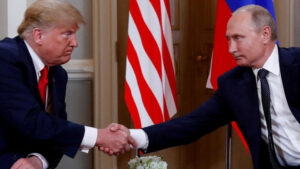
U.S. President Donald Trump and Vladimir Putin are likely to meet for the first time in Saudi Arabia, Trump said on Wednesday in the Oval Office in front of the media.
“Trump and Putin will meet, probably meet for the first time in Saudi Arabia, he told us in the Oval Office,” a CBS News correspondent at the White House said on social media site X.
Earlier it was reported that Trump had a conversation with Putin on Wednesday and almost immediately afterwards Trump called Ukrainian President Volodymyr Zelenskyy.
Source: https://x.com/JenniferJJacobs/status/1889779512574964057
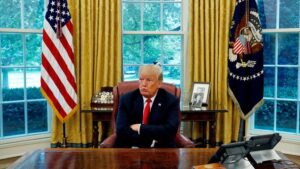
US President Donald Trump has confirmed that Treasury Secretary Scott Bessent will arrive in Ukraine.
“I am sending Treasury Secretary Scott Bessent to Ukraine to meet with President Zelensky. This war must and will end soon – too much death and destruction,” he wrote on Truth Social.
Earlier, Bloomberg reported that U.S. Treasury Secretary Scott Bessent intends to visit Ukraine this week as part of initial talks to secure U.S. access to critical minerals. Bessent may become the first member of US President Donald Trump’s team to visit Ukraine.
Earlier, the president said that his administration wants to conclude an agreement with Ukraine on access to resources in exchange for help in its defense against Russian invasion.
Ukraine’s President Volodymyr Zelenskiy told reporters in Kyiv earlier on Monday that he plans to meet with people from the Trump administration in Ukraine before the Munich Security Conference.
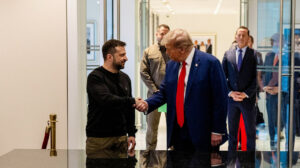
U.S. President Donald Trump said in an interview aboard Air Force One that he wants to strike a $500 million deal with Ukrainian President Volodymyr Zelensky on access to rare earth minerals and natural gas in Ukraine in exchange for security guarantees in any potential peace settlement, The New York Post reported Saturday.
According to the publication, also present on the plane was national security adviser Mike Waltz, addressing whom Trump said: “Let’s keep these meetings going. They want to meet. People are being killed every day. Young beautiful soldiers are being killed. Young men like my sons. On both sides. All over the battlefield.”
It is noted that Vice President Vance will meet with Ukrainian President Volodymyr Zelensky at the Munich Security Conference next week.
Trump said he spoke on the phone with Vladimir Putin in an attempt to negotiate an end to the war in Ukraine.
“I’d rather not talk,” Trump said when asked how many times the two leaders had spoken. But he believes Putin “cares” about killing on the battlefield.

Having a baby in the United States has always attracted future parents from all over the world. In addition to the high level of medical services, this gives the child a unique opportunity to automatically become a US citizen, regardless of the status of their parents. But will the rules for granting citizenship change due to Donald Trump’s new executive order?
Donald Trump’s executive order to abolish birthright citizenship has sparked heated debate not only in America but around the world. This practice, known as jus soli (“right to the land”), has become the subject of litigation and political confrontation. How will this affect maternity tourism in the United States and the future of those who plan to give birth in America?
According to the decree, US government agencies must stop issuing citizenship to children born in the United States to parents who do not have legal status. However, this decree is unlikely to become law in the coming years. The granting of citizenship remains strictly regulated by the 14th Amendment to the US Constitution, which guarantees the right to citizenship to every person born in the country.

The order has been subject to widespread legal challenges. The attorneys general of 22 states have filed lawsuits challenging the unconstitutionality of the decision. And the Federal Court in Seattle has already blocked the order by imposing a temporary moratorium. The lawsuits argue that citizenship is a right guaranteed by the constitution, and even the president cannot cancel it with a single decree.
Even if the moratorium is in effect or the decree is blocked by the courts, the issuance of citizenship to children continues as usual. For many parents, the right to citizenship is the main reason for choosing to give birth in the United States. A US citizen child receives privileges in education, employment, and social security, and also opens up the possibility for parents to obtain the right to reside in the US in the future through family reunification.
Giving birth in the United States is attractive not only because of citizenship. The high level of medicine, modern equipment, and qualified doctors ensure comfort and safety for mother and child. Many people also appreciate the tropical climate and relaxed atmosphere, which contributes to easy recovery after childbirth.
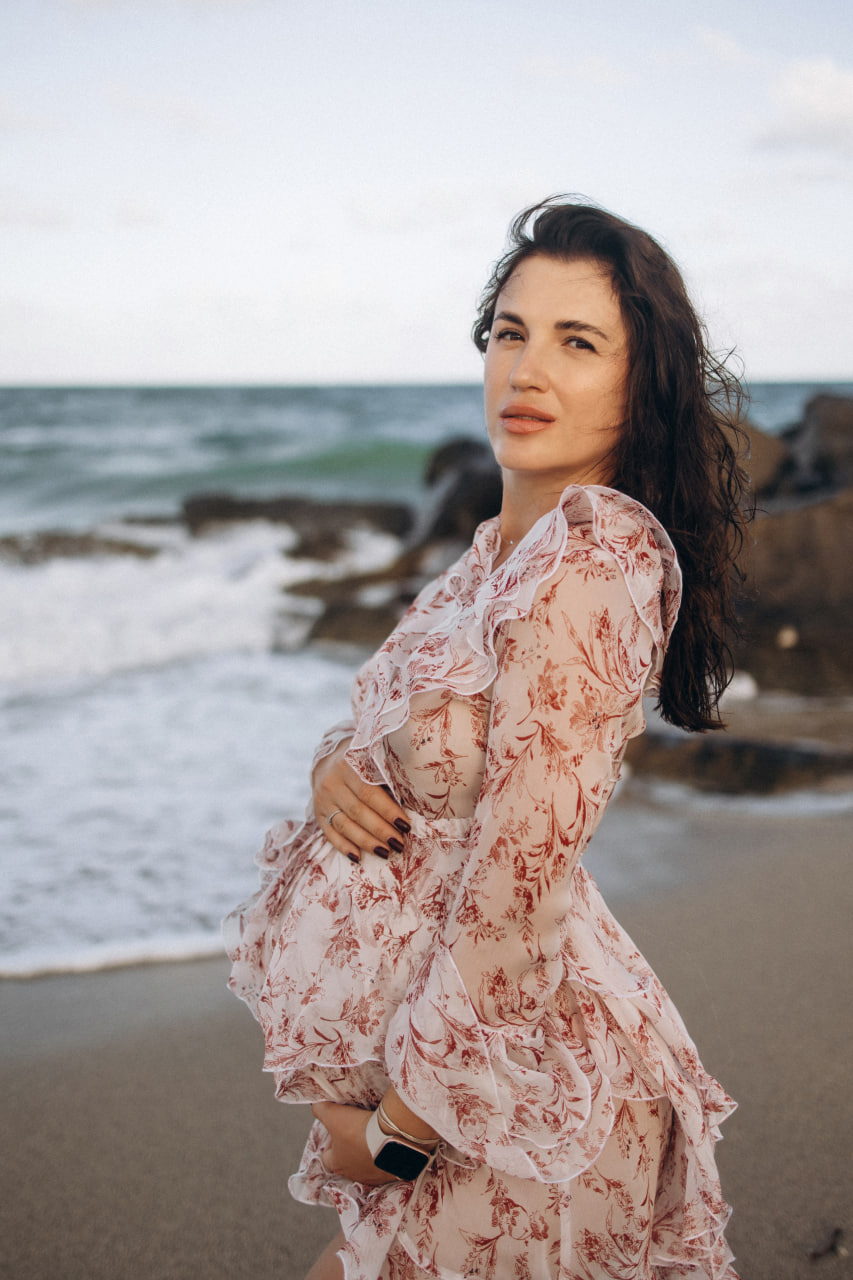
Service packages include:
– Assistance in choosing a clinic and a doctor.
– Arranging accommodation and transfers.
– Legal support for the preparation of documents for the child.
– Childbirth and medical support during pregnancy.
The company’s clients note the high level of service and care. For example, one of the mothers notes: “The whole process, from the organization to the delivery itself, was as comfortable as possible. We felt safe, and the doctors are true professionals. Many thanks to the AIST team!”
Despite attempts to change the citizenship policy, the likelihood of Trump’s decree being implemented is low due to strong opposition from the judiciary and the public. Court proceedings will drag on for years, and children born in the United States will continue to receive citizenship under the 14th Amendment.
Thus, there is no cause for concern for those planning to give birth in the United States. American citizenship remains a profitable investment in the child’s future, and the services of professionals such as AIST will help make this process as comfortable as possible
AIST, birth tourism, LABOR, TRUMP, USA



