
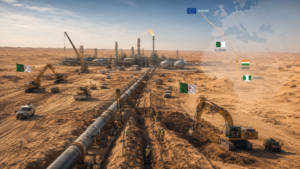
Algeria has officially begun construction of the Algerian section of the Trans-Saharan Gas Pipeline (TSGP), which is intended to connect Nigeria, Niger, and Algeria and provide a new route for natural gas supplies to Europe and other international markets.
According to the Algerian news agency APS, the start of work on the Algerian section marks the project’s transition into the practical implementation phase. The Nigeria–Niger–Algeria gas pipeline is expected to stretch over 4,000 km and is considered one of Africa’s largest energy infrastructure projects.
As noted by the Experts Club information and analytical center, the fifth meeting of the project’s ministerial steering committee took place in Algeria on the eve of the construction launch. Following the meeting, the parties approved the final report of the updated feasibility study, prepared by the international consulting firm Penspen, and agreed to move on to the next stages of the project’s implementation.
The project involves transporting natural gas from Nigeria through Niger to Algeria. From there, the gas can be fed into Algeria’s existing gas transmission system and exported to European and other international markets.
According to Anadolu, citing project documents, the new Algerian section under construction is expected to be approximately 1,210 km long—from the border with Niger to Aoulef, where it will connect to the network leading to the Hassi Rmel gas hub. From there, the gas can be routed to export terminals on the Algerian coast.
The total length of the Trans-Saharan Gas Pipeline is estimated at approximately 4,327 km. Of this, about 1,185 km are to run through Nigeria, 720 km through Niger, and the Algerian section, including both new and existing segments, totals about 2,424 km.
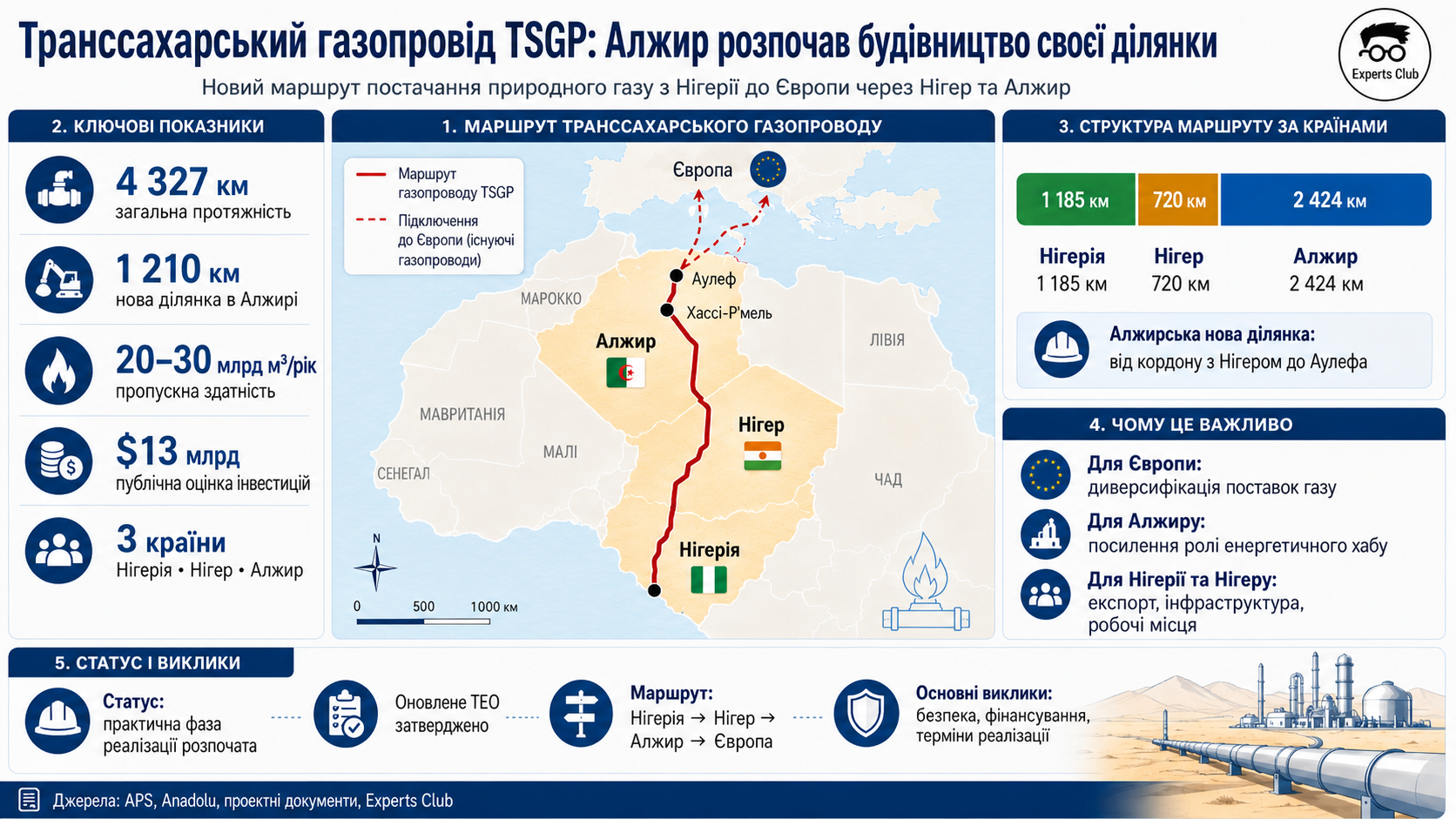
Various estimates put the project’s capacity at over 20 billion cubic meters of gas per year, though earlier figures cited a capacity of up to 30 billion cubic meters. Public estimates previously valued investment in the project at approximately $13 billion; however, updated financing parameters may be refined following the approval of the feasibility study and the transition to practical implementation.
For Europe, the Trans-Saharan gas pipeline could become another potential source of gas supply diversification. Following the onset of the energy crisis and efforts to reduce dependence on Russian gas, the EU has intensified its interest in alternative routes from North Africa, the Eastern Mediterranean, the U.S., and other regions.
For Algeria, the project strengthens the country’s role as one of Europe’s key gas suppliers. Algeria already exports gas to Europe via pipelines to Spain and Italy, as well as through LNG infrastructure. Connecting Nigerian gas to the Algerian system could enhance the country’s significance as an energy hub between Africa and Europe.
For Nigeria and Niger, the project has not only export but also economic significance. The gas pipeline is expected to create new opportunities for monetizing Nigerian gas resources, developing infrastructure, creating jobs, and strengthening Africa’s energy integration.
At the same time, the project remains challenging in terms of security, financing, and implementation timelines. The route spans vast distances and territories with high infrastructure and political risks. Therefore, the actual completion timeline will depend on financing, route security, and coordination among the three countries.
The Trans-Saharan Gas Pipeline has been discussed since the early 2000s as one of Africa’s key energy corridors. The project aims to connect Nigeria’s gas resources with Algeria’s export infrastructure and the European market via Niger.



