

In the first half of 2026, foreign citizens purchased 51,627 residential properties in Spain, which is approximately 4% more than during the same period last year and marks the highest figure in the history of relevant statistics from Spanish registries.
The second quarter proved to be the most active: foreigners concluded over 26,800 transactions, and their share of all registered residential property purchases reached 15.98%—a historic high, according to data from the Colegio de Registradores de España.
At the same time, the overall Spanish housing market, on the contrary, cooled slightly in the second quarter. The number of transactions fell by 5.7% compared to the previous quarter—to 167,934 thousand, with sales of new-construction properties dropping by 11.5% to 34,919 thousand. Thus, foreign demand strengthened against the backdrop of declining overall buyer activity.
British citizens remained the largest group of foreign buyers in the first half of the year. They purchased 3,567 properties, though the number of transactions fell by approximately 10% year-over-year.
Dutch citizens were close behind, with 3,489 purchases—a 12% increase compared to the first half of 2025. The gap between the two largest groups was just 78 transactions. In the second quarter alone, British buyers concluded 1,843 transactions, while Dutch buyers concluded 1,830.
Official statistics for the second quarter show that British buyers accounted for 6.99% of all foreign transactions, while Dutch citizens accounted for 6.94%. Germans came in third with a share of 6.11%.
Germany retained its third place among the largest foreign markets, although demand from German buyers declined slightly over the first half of the year—by approximately 2%. At the same time, the number of purchases by Italian citizens rose by 11%, by Polish citizens—also by 11%, by French citizens—by 3%, and by Irish citizens—by 6%. Belgian demand, on the other hand, fell by approximately 16%.
Thus, the structure of foreign demand in Spain is becoming increasingly diversified. Ten years ago, British buyers were significantly ahead of other nationalities, whereas now the gap between the United Kingdom, the Netherlands, Germany, and the next group of European buyers has narrowed considerably. In the first quarter of 2026, for example, British and Dutch buyers accounted for 6.82% and 6.56% of foreign purchases, respectively.
The most detailed official report from the Colegio de Registradores for the first quarter of 2026 shows that Ukrainians ranked 10th among foreign buyers, accounting for 3.08% of all foreign real estate transactions; Ukrainian citizens accounted for approximately 765 purchases over the three-month period.
In terms of the number of transactions at the start of the year, Ukrainians trailed behind the British, Dutch, Moroccans, Germans, Italians, French, Romanians, Poles, and Belgians, but outpaced citizens of China, Sweden, Ireland, the United States, and Russia.
By comparison, Chinese nationals accounted for 2.69% of foreign purchases, while Russians accounted for only 1.44%. Thus, the share of Ukrainians was more than twice that of Russians.
The full official report for the first half of the year, broken down by nationality, has not yet been presented in the registrars’ brief press release; therefore, the exact number of purchases made by Ukrainians over the six-month period should be interpreted with caution. If the share remains at around 3%, this could amount to approximately 1,500 transactions for January–June; however, this is an estimated figure, not a separately published official statistic.
The opposite trend is observed among Russian citizens. In the first half of the year, Russians purchased fewer than 1,000 properties, and the number of transactions fell by more than 20% year-over-year.
In the second quarter, the share of foreign buyers reached 32.27% in the Balearic Islands and 31.03% in the Valencian Community. At the same time, the share of foreign buyers increased in all of the country’s autonomous communities.
In the first quarter, a high concentration of foreign demand was also observed in the Canary Islands—22.78% of transactions—and in the Murcia region—21.73%. In the province of Alicante, foreigners accounted for about 44.7% of home sales, and in Málaga—more than a third.
Overall, over the past 12 months, foreign citizens have purchased approximately 99,400 residential properties in Spain, meaning the market has come very close to the 100,000-mark for foreign transactions per year.
The growth in international demand is occurring alongside a rapid rise in real estate prices. The average registered housing price in the second quarter reached a new all-time high of 2,487 euros per square meter, increasing by 2.4% quarter-over-quarter and 9.2% year-over-year. The resale index showed even more significant year-over-year growth—16.7%.
Thus, despite a decline in the total number of transactions in Spain, foreign demand continues to strengthen. At the same time, the market is becoming less dependent on traditional British and German buyers: the role of the Netherlands, Poland, and a number of other European countries is growing, while Ukrainians remain among the most prominent nationalities in the Spanish real estate market.

Home sales to foreigners in Turkey in March 2026 fell by 20% year-over-year to 1,353 units, with Ukrainian citizens failing to make the top three list of foreign buyers. This is according to March statistics from the Turkish Statistical Institute (TÜİK).
According to March data, Russian citizens took first place among foreign buyers, purchasing 229 properties. Iranian citizens came in second with 130 transactions, and Iraqi citizens came in third with 84 purchases.
Previously, Ukrainian citizens had consistently been among the largest foreign buyers of housing in Turkey. As previously reported by the Open4Business portal, in January 2026, Ukrainians ranked third among foreign buyers, purchasing 77 properties, trailing only Russian citizens with 219 purchases and Iranian citizens with 118. For the full year 2025, Ukraine also ranked third: Ukrainian citizens purchased 1,541 residential properties in Turkey, while Russians bought 3,649 properties and Iranians 1,878.
Overall, the Turkish housing market showed mixed trends in March. The total number of housing sales in the country decreased by 2.1% compared to March 2025, to 113,367 units. At the same time, mortgage sales rose by 35.9%, to 25,978, and new home sales increased by 1.3%, to 35,725.
Istanbul, Ankara, and Izmir remained the largest markets by number of transactions in March. Istanbul accounted for 21,665 sales, Ankara for 10,236, and Izmir for 7,278.
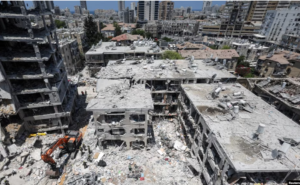
According to preliminary information from the Ukrainian Embassy in Israel, on June 14, as a result of a massive missile attack by Iran against Israel and a missile hitting a residential building in Bat Yam, five Ukrainian citizens were killed, including three minors, the Ukrainian Foreign Ministry reported.
According to the ministry, the identities of the victims are currently being established.
Ukrainian diplomats and consuls are in close contact with the Israeli police and other services to identify and organize the repatriation of the bodies of the victims.

Almost half of Ukrainians (44%) note that when buying food they more often try to buy the cheapest products, less because of their quality, according to the results of a sociological survey conducted by the sociological service of the Razumkov Center on September 20-26 and presented at a press conference at the Interfax-Ukraine agency on Wednesday.
At the same time, the same number of those who more often allow themselves to buy better quality products, even if they are more expensive (45%). The remaining 11% of respondents found it difficult to answer.
“After the beginning of full-scale aggression compared to June 2021, both the share of citizens answering that they make ends meet, there is not enough money even for necessary products (from 9% to 12% in September 2024. ), as well as the share of those who answered that they live well, but are not yet able to make some purchases (apartment, car) (from 6% to 9%), while the share of those who answered that their family in general has enough to live on, but the purchase of durable goods, such as furniture, refrigerator, TV, is already causing difficulties (from 44% to 41%)”, – noted in the results of the study.
Compared to 2005, from 38% to 54% increased the share of citizens who receive the main part of their livelihood from wages, and from 38% to 29% decreased the share of those who live mainly from pensions, scholarships, financial aid or alimony. From 7% to 2.5%, the share of those living from stocks or income from subsidiary farms, land plots, from 5% to 3% – from side jobs, from 3% to 2% – from income from entrepreneurship decreased.
The face-to-face survey was conducted in all territories controlled by the Government of Ukraine and where no hostilities are taking place, among 2016 respondents aged 18 years and older. The sample structure reproduces the demographic structure of the adult population of the territories where the survey was conducted as of the beginning of 2022 (by age, gender, type of settlement). The theoretical sampling error does not exceed 2.3%. Additional systematic sample deviations may be due to the consequences of Russian Federation aggression.

The U.S. Department of Homeland Security announced an 18-month extension of Temporary Protected Status for citizens of Ukraine until April 19, 2025, due to Russia’s ongoing full-scale invasion.
“Today, the Department of Homeland Security (DHS) announced an 18-month extension of Ukraine’s Temporary Protected Status (TPS), from October 20, 2023, to April 19, 2025, due to the ongoing armed conflict and extraordinary and temporary conditions in Ukraine that prevent safe return,” the Department of Homeland Security said in a statement on its website Friday.
The program will also be expanded to allow Ukrainians who were living in the U.S. as of Aug. 16, 2023, to apply for temporary protection.
In addition, students from Ukraine who study in the U.S. and are in the country on an F-1 visa will be able to apply for work authorization and workload reduction without losing their visa for the duration of temporary protection.
Reportedly, approximately 26,000 Ukrainians now enjoy temporary protection in the U.S., and another 166,700 may be eligible. “Current beneficiaries who wish to extend their temporary protected status must re-register in a timely manner during the 60-day re-registration period from August 21, 2023 to October 20, 2023,” the report said.
“Russia’s ongoing military incursion into Ukraine and the resulting humanitarian crisis require the United States to continue to provide security and protection to Ukrainians who may not be able to return to their country,” said U.S. Secretary of Homeland Security Alejandro Mayorkas, who is quoted in the report.

More than 244,000 people applied for asylum in Germany last year, with citizens of Syria topping the list, the Associated Press reported Wednesday.
The agency notes that according to German statistics, citizens of Afghanistan, Turkey and Iraq followed the Syrians in the list.
In addition, more than a million citizens of Ukraine arrived in the country, but they do not have to apply for asylum, because they immediately receive a temporary residence permit.
Berlin notes that in 2022 the number of refugees increased by 27.9% compared to 2021, especially in the last three months of 2022.
German Interior Minister Nancy Feser said the government is trying to integrate refugees as quickly as possible in the life of the new place, for this purpose, German language lessons are held, and many other measures are taken. At the same time, she noted that German authorities are trying to do everything possible to deport from the country as soon as possible those who have been denied asylum.



