

Initial registrations of new and used buses (including minibuses) in Ukraine in September 2026 rose by 39% compared to the same month in 2025—to 324 units, according to a report by Ukravtoprom on its Telegram channel.
Compared to August of this year, the bus market grew by 21.8% (58 units).
According to the association, new vehicles accounted for 64% of registrations in September, compared to 58% last year.
Last month, among new buses, the most frequently registered were domestic models: Ataman—38 units (nearly three times more than in August 2026), ZAZ—37 units (12% fewer), and Etalon—20 units (38% fewer).
Among used buses, the top three were Mercedes-Benz—59 units, Volkswagen—15 units, and Iveco—7 units.
In total, from January through September 2026, Ukraine’s bus fleet grew by 1,716 buses (+4% compared to the same period in 2025), including 731 new buses (-9%) and 985 used buses (+15%).
Meanwhile, the information and analytical group Auto-Consulting also reported a record number of new buses delivered to customers in September—the highest in the last 10 years.
“Another point is that most of these buses are school models purchased by local communities using partial funding from the state budget. This made it possible to deliver nearly 200 new buses in September alone, which is 64% more than last year,” according to a statement on the group’s website.
Over the first nine months, the new bus market grew by 2.6%.
Experts believe that this year’s anomaly in bus deliveries in September is linked to the financing of these purchases, which is why the bulk of deliveries occurred not at the start of the school year, but specifically during the first month of classes.
In fact, government purchases of school buses from four Ukrainian manufacturers accounted for 80% of the market.
As previously reported, the state budget allocated a subsidy of 2 billion UAH this year for the implementation of the “School Bus” program.
According to “Ukravtoprom,” Ukraine’s bus fleet grew by 2,040 buses in 2025 (+8% compared to the same period in 2025). Of these: 939 were new (+0.4%); 1,101 were used (+16%).

In September 2026, Ukrainians purchased 21,500 used passenger cars imported from abroad, which is 8% less than in the same month of 2025, according to a report by Ukravtoprom on its Telegram channel.
Compared to August of this year, demand for such cars rose by 4.4%.
Gasoline-powered cars accounted for the largest share of this segment of the auto market in September, increasing their share by 7 percentage points compared to September 2025—to 52%.
Next came electric vehicles, whose share fell to 18% from 29% last year, while the share of diesel cars decreased by 2 percentage points to 16%. They outpaced hybrids, which accounted for 11% (5%). The share of cars with LPG systems remained unchanged at 3%.
The average age of imported used cars was 8.7 years.
The Volkswagen Golf confidently tops the list of the ten most popular imported used models with 954 units. Next are the VW Tiguan with 807 units, the Audi Q5 with 658 units, the Skoda Octavia with 655 units, the Nissan Rogue—626 units, the Renault Megane—559 units, the Tesla Model Y—512 units, the Nissan Leaf—484 units, the Tesla Model 3—468 units, and the Volkswagen Passat—409 units.
As reported with reference to “Ukravtoprom,” in 2025, Ukrainians purchased 274,300 used passenger cars imported from abroad, which is 24% more than in 2024. Following the Volkswagen Golf, the top three most popular models included two Tesla electric vehicles—the Model Y and the Model 3.

Residents of Ukraine’s capital purchased 11,484 thousand new passenger cars from January through June of this year, and this regional market for new passenger cars remains by far the largest, according to a report by “Ukravtoprom” on its Telegram channel.
As previously reported, according to the association’s data, nearly 33,000 passenger cars were sold in Ukraine during the first half of the year, meaning Kyiv’s share accounts for 35% of total sales.
The Kyiv region ranked second in sales volume with 3,276 units, followed by the Dnipropetrovsk region with 2,273 units, the Kharkiv region with 1,852 units, and the Lviv region with 1,810 units.
In total, these regional markets accounted for 63% of new passenger car sales in Ukraine.
The best-selling model in these markets during the first half of the year was the Renault Duster compact crossover.
As reported, according to data from “Ukravtoprom,” sales of new passenger cars in January–June of this year rose by 0.5% compared to the same period in 2025, with vehicles equipped with traditional engines (gasoline and diesel) accounting for nearly 62% compared to 56.5% last year, while the share of electric vehicles fell to 8.3% from 18.9%.
According to the results for 2025, the top five regions by sales were Kyiv, Kyiv Oblast, Dnipropetrovsk Oblast, Odesa Oblast, and Lviv Oblast, followed by Kharkiv Oblast.
At the same time, Lviv Oblast recorded the highest number of registrations of used passenger cars imported from abroad last year.
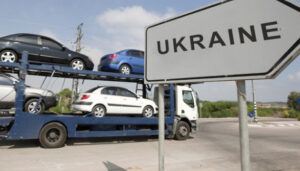
In the first half of 2026, Ukrainians purchased 111,500 used passenger cars imported from abroad, which is 2% less than in the same period of 2025, according to a report by “Ukravtoprom” on its Telegram channel.
Gasoline-powered cars accounted for the largest share of this segment of the auto market, increasing their share by 11 percentage points compared to January–June 2025, to 58%.
Next came diesel cars at 20% (22%), while the share of electric vehicles fell to 11% from 22%, though they still outpaced hybrids, which accounted for 8% (5%). The share of cars with LPG systems was 3% (4%).
The average age of imported used cars was 9.7 years.
The Volkswagen Golf confidently tops the list of the ten most popular imported used models with 5,143 units. Next are the VW Tiguan with 4,549 units, the Audi Q5 with 3,962 units, the Nissan Rogue—3,896 units, the Skoda Octavia—3,688 units, the Renault Megane—3,435 units, the Volkswagen Passat—2,477 units, the Ford Escape—2,446 units, the Nissan Qashqai—2,166 units, and the Audi A4—2,144 units.
As reported by “Ukravtoprom,” in 2025, Ukrainians purchased 274,300 used passenger cars imported from abroad, which is 24% more than in 2024; the top three most popular models after the Volkswagen Golf included two Tesla electric vehicles—the Model Y and Model 3.
This year, the market showed a 22% increase in January compared to January 2025, but began to decline starting in February.

Initial registrations of new and imported used buses (including minibuses) in Ukraine in June 2026 rose by 19% compared to the same month in 2025—to 183 units, according to a report by Ukravtoprom on its Telegram channel.
At the same time, compared to May of this year, demand for buses fell by 16%.
According to Ukravtoprom, the share of new vehicles in total bus sales in June continued to decline, reaching only 28%, compared to 48% last year and 31% in May of this year.
Last month, the most frequently registered new buses were Ataman models from the Cherkasy Bus plant (12 units), Ford (12 units), and ZAZ (11 units).
Among used buses, the top three were Mercedes-Benz (66 units), Volkswagen (12 units), and Van Hool (11 units).
In total, during the first half of 2026, Ukraine’s bus fleet was expanded by 1,230 buses (+4% compared to the same period in 2025). Of these: new buses – 500 units (-6%); used buses – 730 units (+12%).
As reported, citing data from “Ukravtoprom,” Ukraine’s bus fleet was expanded by 2,700 buses in 2025—21% more than in 2024—including 1,343 new buses (+4%) and 1,364 imported used buses (+44%).
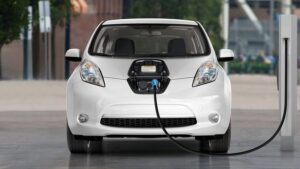
In the first half of this year, 15,221 thousand electric vehicles (new and used) were added to Ukraine’s vehicle fleet, which is half the number registered during the same period last year, according to a report by “Ukravtoprom” on its Telegram channel.
As usual, passenger cars accounted for the majority of registered electric vehicles—14,404 thousand—but their registrations fell by 53%, while demand for commercial electric vehicles dropped by 17% to 817 units.
New vehicles accounted for 19% of BEV registrations, compared to 18% last year.
The most popular new electric vehicles in January–June were the BYD Leopard 3 (421 units), the BYD Sea Lion 06 (359 units), the Zeekr 7X (229 units), the Volkswagen ID.Unyx (203 units), and the Zeekr 7X (172 units).
Among used vehicles, the most frequently registered for the first time were the Nissan Leaf (1,592 units), the Tesla Model Y (1,468 units), the Tesla Model 3 (1,355 units), the Chevrolet Bolt (613 units), and the Renault Zoe (553 units).
As previously reported, Ukraine’s vehicle fleet grew by 110,200 electric vehicles in 2025—twice as many as the previous year. New vehicles accounted for 20% of the total, compared to 24% in 2024.
In particular, in December—the last month during which electric vehicles could be cleared through customs without VAT—demand for them increased 8.6-fold compared to December 2024, reaching 32,800 units.
BEV, Electric vehicle, REGISTRATION, UKRAVTOPROM, vehicle fleet



