
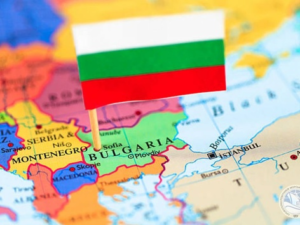
According to the Serbian Economist, Bulgaria has started accepting applications for a long-term stay permit on the basis of “digital nomad” – the relevant changes to the by-laws came into force on December 20, 2025.
As Bulgarian Telegraphic Agency reported, the introduction of the procedure for issuing such a permit is intended to create a clear procedure for foreigners who want to live in the country and work remotely without a relationship with a local employer, as well as to bring economic benefits by attracting specialists in innovation, high technology and creative industries.
Upon initial application or renewal of the permit, the applicant must, inter alia, prove an average annual income of at least 50 minimum monthly salaries for the previous calendar year and provide documents proving remote employment – an employment contract with the employer or contract(s) for remote services and recommendations from the customer(s), and the work or services must not be provided to persons and companies in Bulgaria.
Bulgarian legislation defines three categories of “digital nomads”: employees of an employer outside the EU/EEA/Switzerland; owners/shareholders (with a share of more than 25%) or management of companies registered outside the EU/EEA/Switzerland; and persons who have provided remote services for at least one year prior to the application, provided there is no employment on the Bulgarian market. The permit is valid for one year, renewable for another year; the procedure usually involves obtaining a D visa and subsequent regularization in Bulgaria.
https://t.me/relocationrs/1988

According to the Serbian Economist, Montenegro will soon tighten the visa regime for Russian citizens, bringing it in line with the rules of the European Union. This was announced by the Prime Minister of the country Milojko Spajic.
According to the head of the government, Podgorica intends to fully harmonize visa policy with the EU, which means the abolition of the current order allowing Russians to stay in Montenegro up to 30 days without a visa. Spajic emphasized that the measures will be introduced “very soon” and are part of the course to accelerate European integration and achieve EU membership by 2028.
Russian citizens can now freely enter the country for short periods of time without a visa, which has led to a significant increase in the number of tourists and re-locations from Russia in recent years. Once the regime is tightened, entry will require a visa at consular offices, similar to Schengen rules.
How many Russians now reside in Montenegro
According to official data from the Ministry of Internal Affairs of Montenegro, at the beginning of 2024-2025 in the country officially registered about 20 thousand citizens of Russia with a temporary or permanent residence permit. This makes Russians one of the most numerous foreign communities in the small 600-thousand-strong state.
In addition, according to the calculations of tourism and migration services, several thousand more Russians are in the country without long-term statuses – on tourist stay, on business grounds or in the process of registration of residence permits.
Prime Minister also recalled that Montenegro had previously tightened visa rules for citizens of Armenia, Uzbekistan, Kuwait and Egypt within the framework of adapting visa policy to EU standards. Podgorica fully follows the general foreign and defense policy of the European Union, including sanctions and visa restrictions against Russia.
Observers attribute the upcoming changes to pressure from Brussels following the tightening of the EU visa regime for Russians, as well as Montenegro’s desire to reaffirm its commitment to the European course against the backdrop of membership negotiations.
https://t.me/relocationrs/1792

The Spanish government intends to cancel the program that provides foreigners with “golden visas” in exchange for real estate investments, the Financial Times reports, citing a statement by Spanish Prime Minister Pedro Sanchez.
Currently, citizens of non-EU countries can obtain a Spanish residence permit for a period of three years by investing at least EUR 500 thousand in real estate in the country.
The abolition of the program will improve the situation with the availability of housing in Spain, Sanchez said.
“Currently, 94 out of 100 of these visas are issued for real estate investments in large cities that are already facing a very difficult market. Those who already live there, work and pay taxes, can hardly find decent housing,” the prime minister said.

The Antimonopoly Committee of Ukraine has granted permission to MasterCard Europe S.A. and Visa International Service Association to reduce the amount of domestic interchange fees (interchange rate) paid by an acquirer to an issuer in Ukraine from 0.9% to 0.7% for the period of war.
“The planned changes in concerted actions are aimed at establishing an effective and balanced ceiling on interchange rates, taking into account the interests of all market participants under martial law,” the AMC commented on its decision of 5 October.
The Committee expects that these changes will allow retail chains to maintain the current price level for consumers, as well as contribute to the development of small and medium-sized entrepreneurs and the overall economic development of Ukraine.
The agency clarified that the 0.7% rate will be effective “not earlier than the next business day after 14 calendar days after the date of receipt of the Committee’s authorization until the next business day after 30 calendar days from the date of termination or cancellation of martial law.”
It is noted that after this period, MasterCard and Visa will return to the 0.9% rate agreed with the AMCU before the war.
“The introduction of a further reduction in the interbank commission is an attempt by government agencies and other industry representatives to respond to a request for assistance to retailers who have suffered significant economic losses caused by the war,” the AMCU said.
As reported, a memorandum signed in May 2021 between MasterCard, Visa and the NBU provided for the interchange rate to be set at 1.2% from July 1, 2021, and its gradual reduction, in particular from July 1, 2023, from 1% to 0.9%.
However, during the war, the rate was first reset to zero and then gradually increased to 0.7%. The decision of Visa and MasterCard to return it to 0.9% on July 1 this year was sharply criticized by retailers. The largest banks in the market – PrivatBank, Oschadbank and Raiffeisen Bank – for their part, kept acquiring rates for their clients unchanged (approximately 1.3-1.5%), but called on MasterCard and Visa to support this initiative and cancel the interchange rate increase from July 1, 2023 to 0.9%.
However, Oschadbank noted that “if payment systems do not reduce the interchange rate within one to two months, the bank will reconsider its decision.”
According to the NBU, the share of payment terminals of PrivatBank, Oschadbank and Raiffeisen Bank at the beginning of the year was 60.4%, 19.6% and 7.6%, respectively.

Payment system operators Visa Inc. and Mastercard Inc. plan to increase the fees charged to retailers when their customers pay for purchases with bank cards, Bloomberg reports, citing documents in its possession.
Visa’s fee hike for online transactions will start in October and will affect credit, debit and prepaid cards in April. In the case of Mastercard, the increase will also start in October.
Industry consulting firm CMSPI estimates that the annual amount of fees paid by retailers could increase by more than $500 million as a result.
Although the fees are set by Visa and Mastercard, the bulk of the fees are collected by the banks that issue the cards. While the fees are small, retailers’ costs to pay them have risen in recent years as more shoppers use credit cards, which carry higher fees than debit cards.
Retailers shift at least some of these costs to consumers by raising prices. Small businesses often offer discounts to customers who pay with debit cards or cash.

China resumes issuing tourist visas to foreign nationals from March 15, the consular service of China’s Ministry of Foreign Affairs said.
“Chinese consulates abroad will resume issuing all categories of visas to foreigners starting Wednesday, March 15. The decision was made to further facilitate border crossings,” said a message posted Tuesday on WeChat.
In addition to resuming new visas, entry will be allowed for visas issued before March 28, 2020, that have not expired.
“The new visa policy will also allow the resumption of visa-free travel for tourists to Hainan Island, passengers arriving on cruise ships to Shanghai, and tourist groups from Hong Kong, Macau and ASEAN (Association of Southeast Asian Nations) countries to the country’s southern regions,” the statement said.
On the sites of Chinese embassies of some countries, including the U.S. and France, there were reports on the resumption of visas for foreign nationals.
China lifted entry and exit restrictions imposed because of the coronavirus pandemic as of Feb. 6.
China welcomed 65.7 million foreign tourists in 2019.



