
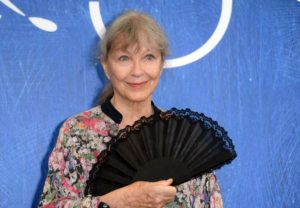
French actress, singer, and writer Marina Vlady died on September 24, 2026, at the age of 88. Her family informed AFP of her death. According to the actress’s children, she died at her home surrounded by her loved ones.
Marina Vlady, whose real name was Katerina Marina Vladimirovna Polyakova-Baidarova, was born on May 10, 1938, in Clichy, near Paris, to a family of immigrants from the Russian Empire. Her father, Vladimir Polyakov-Baidarov, was an opera singer, and her mother, Militsa Enwald, was a ballerina. All four daughters of the family pursued careers in the arts. The actress chose the stage name “Vlady” in honor of her father, Vladimir.
Vlady began acting in films as a child. One of her first notable roles was in André Cayatta’s film *Avant le déluge* (1954), after which the 16-year-old actress received the French Suzanne Bianchetti Award as a promising young performer.
During the same period, she starred alongside Marcello Mastroianni in Giuseppe De Santis’s film *Days of Love* (*Giorni d’amore*, 1954). Her leading role in the Franco-Swedish film *The Witch* (*La Sorcière*, 1956) brought her widespread popularity in Europe.
One of Vlada’s most famous works was the film adaptation of Madame de La Fayette’s novel *The Princess of Clèves* (*La Princesse de Clèves*, 1961), directed by Jean Delannoy. It was her portrayal of the Princess of Clèves that became one of the actress’s most recognizable roles in French cinema.
International professional recognition came in 1963. For her role in Marco Ferreri’s film *L’ape regina* (*Le Lit conjugal*), Marina Vladi received the Cannes Film Festival award for Best Actress.
In the 1960s and 1970s, the actress worked with a number of leading European directors. She appeared in Orson Welles’ *Chimes at Midnight* (1965), Jean-Luc Godard’s *Two or Three Things I Know About Her* (1967), Bertrand Tavernier’s *Que la fête commence* (1975), and Jacques Ruffio’s drama *Sept morts sur ordonnance* (1975). According to various estimates, Vlady appeared in more than 80 feature films during her career, and when television work is included, her on-screen legacy was even greater.
A special place in Marina Vlady’s biography is occupied by her relationship with the poet, actor, and singer-songwriter Vladimir Vysotsky. They met in Moscow in 1967 and married in 1970. Their marriage lasted until Vysotsky’s death in July 1980.
Because Vladi lived primarily in France and Vysotsky in the USSR, they spent a significant portion of their married life apart. The actress regularly visited him in the Soviet Union.
After Vysotsky’s death, Vladi did a great deal to preserve his memory. In 1987, she published an autobiographical book titled *Vladimir, or The Interrupted Flight*, dedicated to their relationship, their life together, and the poet’s final years. The book was later adapted for the stage.
Vladi was involved in more than just film. She acted in theater, performed as a singer—including recording songs with her sisters—and was also actively engaged in literary pursuits. In total, she wrote 13 books—novels, memoirs, and autobiographical works. In 2005, her memoir *24 Images Second* was published.
Marina Vlady remains one of the most prominent figures in French and European cinema of the second half of the 20th century, having combined popular cinema, art-house films, theater, music, and literature throughout her career.



