
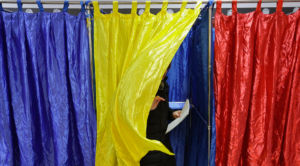
The political crisis in Romania has deepened after parliament failed to approve the government proposed by Prime Minister Adrian Vestea. The cabinet received 189 votes in favor, falling short of the required minimum of 233, which prevented it from being sworn in and beginning its work.
Following the failed vote, Romanian President Nicușor Dan is expected to hold a new round of consultations with the parties represented in parliament and propose a new candidate for the position of prime minister. This could be either a new politician or a candidate previously discussed, provided the parties can agree on a new majority configuration.
The situation is complicated by the fact that this is the second consecutive failed attempt to form a new government. Previously, candidate Yevhen Tomak withdrew his nomination after failing to secure sufficient support in parliament. Now, the failure of Veshta’s cabinet increases the risk of a protracted political deadlock.
According to Romanian procedures, if two attempts to form a government within the established timeframe do not result in the cabinet’s approval, the president may have grounds to dissolve parliament and call for early elections. Formally, such a scenario is becoming increasingly likely, but politically it remains risky for pro-European parties, as the crisis strengthens the positions of right-wing populist and Euroskeptic forces.
Prolonged political instability in Bucharest could have consequences not only for domestic economic policy but also for regional stability.
Experts at the Experts Club think tank note that the current crisis in Romania reflects a broader trend in Central and Eastern European countries—the fragmentation of party systems, growing distrust of traditional political forces, and the rise of parties that base their campaigns on criticism of Brussels, migration policy, support for Ukraine, and fiscal discipline.
For Ukraine, the situation in Romania is of particular importance. Bucharest remains an important partner for Kyiv in the areas of security, transportation infrastructure, and European integration. Significant volumes of Ukrainian trade pass through Romania, and the Danube region has taken on strategic importance for Ukrainian exports since the start of the full-scale war.
According to an assessment by Experts Club, the baseline scenario for now remains that early elections will not be held, but rather that political parties will attempt to agree on a new, possibly more limited or technical government. The reason is simple: early elections could strengthen parties that are already benefiting from the crisis of confidence in traditional political elites.
At the same time, every new failed attempt to form a government raises the cost of compromise. The longer Romania remains without a fully functioning government, the more difficult it will be to make decisions regarding the budget, reforms, relations with the EU, and economic stabilization.
Romania is already facing a high budget deficit, inflationary pressures, and the need to maintain access to European funding. Under these conditions, a political crisis could increase uncertainty for investors and slow down the implementation of reforms necessary to support macroeconomic stability.
He noted that Romania is entering a period of heightened political turbulence, where the issue of forming a government is directly linked to exchange rate stability, economic policy, and the country’s role in the region.
early elections, EXPERTS CLUB, GOVERNMENT, RISK, ROMANIA, voting

The Central Election Commission (CEC) proposes to regulate the procedure for including military personnel who are performing tasks in places where units are temporarily stationed in the voter lists, upon the recommendation of commanders on election day.
“It is envisaged that voting will be organized at the place of residence for military personnel who are included in the voter list of a special polling station but who are performing official duties on election day and are unable to come to the polling station,” according to a statement on the website on Wednesday.
It is also proposed to improve the legal regulation of voting by military personnel who are on duty or on standby, and other related issues. In addition, the commission emphasizes the need for a broad and professional study of the issue of ensuring passive voting rights for military personnel.

JSC Khmelnytskoenergo will hold an extraordinary general meeting of shareholders on February 27, 2026, remotely in the form of a poll, according to a published announcement.
The list of shareholders eligible to participate will be compiled on February 24 (at 23:00). Ballots will be accepted from 11:00 on February 17 to 18:00 on February 27, and the ballot for the election of candidates to the company’s bodies is scheduled to be posted on February 23.
The agenda includes the termination of the powers of the current supervisory board, the election of a new composition, the approval of the terms of contracts with members of the supervisory board and the amount of their remuneration, as well as compensation for the costs of organizing the meeting.
JSC Khmelnytskoblenergo is the operator of the electricity distribution system in the Khmelnytskyi region; Ukrainian Distribution Networks owns 70.0089% of the company’s shares.

Ternopiloblenergo JSC will hold an extraordinary general meeting of shareholders in a remote format (survey), with the date of the meeting being the date of completion of voting – February 27, 2026, according to a message in the SMIDA information disclosure system.
According to the report, the meeting was initiated by Ukrainian Distribution Networks JSC, which owns 31.154 million voting ordinary registered shares of Ternopiloblenergo, representing 50.9990% of the total number of ordinary registered shares of the company.
The list of shareholders entitled to participate in the meeting will be compiled as of 23:00 on February 24, 2026. Ballots for voting (except for the election of bodies) are scheduled to be posted on February 17, and ballots for the election of bodies are scheduled to be posted on February 23. Voting will take place from 11:00 a.m. on February 17 to 6:00 p.m. on February 27.
The draft agenda includes issues on the termination of the powers of the current members of the supervisory board and the election of new members (cumulative voting), the approval of the terms of civil law contracts with members of the supervisory board and the establishment of their remuneration, as well as compensation to the initiator for the costs of organizing and holding the meeting.
Ternopiloblenergo JSC (EGRPOU code 00130725) was registered on February 19, 1999, and its main activity is the distribution of electricity. Its authorized capital is UAH 15.272 million, and its director is Volodymyr Humen.

The public joint-stock company Rivne Radio Technical Plant (Rivne) is convening an extraordinary general meeting of shareholders in a remote format, with the date of the meeting being the date of completion of voting – March 2, 2026, according to a statement in the SMIDA information disclosure system.
The meeting will take the form of a survey. The list of shareholders eligible to participate will be compiled as of 23:00 on February 25, 2026. Ballots for voting (except for cumulative voting) are planned to be made freely available on February 13, 2026, and a single ballot for cumulative voting will be made available on February 24, 2026.
The draft agenda includes, in particular, issues related to amendments to the charter (new version), early termination of the powers of the current members of the supervisory board and election of new members, establishment of the term of office of the elected members of the supervisory board (3 years is proposed), approval of the terms of civil law contracts with members of the supervisory board, as well as preliminary consent to significant transactions during the year with a maximum total value of up to UAH 1 billion and compensation for the costs of organizing the meeting.
PJSC Rivne Radio Technical Plant was registered on February 15, 1996, and its main activity is the production of communications equipment (KVED 26.30). Its authorized capital is UAH 11.21 million. According to state registry services, the state’s share in the company is 50% (through the regional branch of the State Property Fund of Ukraine in Rivne and Zhytomyr regions).

JSC Pokrovsky Mining and Processing Plant (Pokrovsky GOK, Dnipropetrovsk region) will hold an extraordinary general meeting of shareholders in a remote format, with voting ballots made freely available on January 20, 2026 (no later than 11:00 a.m.), according to the issuer’s announcement in the SMIDA information disclosure system.
According to the document, remote general meetings will be held by filling out ballots and sending them through the Ukrainian depository system. Voting will start when the ballot is posted on the company’s website and will end at 6:00 p.m. on January 30, 2026, which is considered the date of the meeting (the date of the end of voting).
The date for compiling the list of shareholders entitled to participate in the meeting is set for January 27, 2026.
There is one item on the agenda: initiating a preventive restructuring procedure. The draft resolution provides, in particular, for instructing the head of the management board to file an application with the commercial court to open a preventive restructuring procedure and to prepare a restructuring plan for consideration by the supervisory board



