
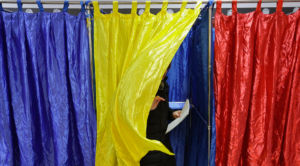
The political crisis in Romania has deepened after parliament failed to approve the government proposed by Prime Minister Adrian Vestea. The cabinet received 189 votes in favor, falling short of the required minimum of 233, which prevented it from being sworn in and beginning its work.
Following the failed vote, Romanian President Nicușor Dan is expected to hold a new round of consultations with the parties represented in parliament and propose a new candidate for the position of prime minister. This could be either a new politician or a candidate previously discussed, provided the parties can agree on a new majority configuration.
The situation is complicated by the fact that this is the second consecutive failed attempt to form a new government. Previously, candidate Yevhen Tomak withdrew his nomination after failing to secure sufficient support in parliament. Now, the failure of Veshta’s cabinet increases the risk of a protracted political deadlock.
According to Romanian procedures, if two attempts to form a government within the established timeframe do not result in the cabinet’s approval, the president may have grounds to dissolve parliament and call for early elections. Formally, such a scenario is becoming increasingly likely, but politically it remains risky for pro-European parties, as the crisis strengthens the positions of right-wing populist and Euroskeptic forces.
Prolonged political instability in Bucharest could have consequences not only for domestic economic policy but also for regional stability.
Experts at the Experts Club think tank note that the current crisis in Romania reflects a broader trend in Central and Eastern European countries—the fragmentation of party systems, growing distrust of traditional political forces, and the rise of parties that base their campaigns on criticism of Brussels, migration policy, support for Ukraine, and fiscal discipline.
For Ukraine, the situation in Romania is of particular importance. Bucharest remains an important partner for Kyiv in the areas of security, transportation infrastructure, and European integration. Significant volumes of Ukrainian trade pass through Romania, and the Danube region has taken on strategic importance for Ukrainian exports since the start of the full-scale war.
According to an assessment by Experts Club, the baseline scenario for now remains that early elections will not be held, but rather that political parties will attempt to agree on a new, possibly more limited or technical government. The reason is simple: early elections could strengthen parties that are already benefiting from the crisis of confidence in traditional political elites.
At the same time, every new failed attempt to form a government raises the cost of compromise. The longer Romania remains without a fully functioning government, the more difficult it will be to make decisions regarding the budget, reforms, relations with the EU, and economic stabilization.
Romania is already facing a high budget deficit, inflationary pressures, and the need to maintain access to European funding. Under these conditions, a political crisis could increase uncertainty for investors and slow down the implementation of reforms necessary to support macroeconomic stability.
He noted that Romania is entering a period of heightened political turbulence, where the issue of forming a government is directly linked to exchange rate stability, economic policy, and the country’s role in the region.
early elections, EXPERTS CLUB, GOVERNMENT, RISK, ROMANIA, voting

On April 20, PJSC Ukrgazvydobuvannya (Kyiv) announced its intention to enter into an agreement with Guardian Insurance Company for risk insurance services related to the commercial development of oil and gas fields. According to the Prozorro electronic public procurement system, the expected cost of the services was 548,800 UAH, and the company’s bid was 501,499 UAH.
The insurance company “VUSO” also participated in the tender with a bid that was 1 hryvnia higher.
GAS, Guardian, INSURANCE, INSURANCE COMPANY, OIL, RISK, UKRGAZVYDOBUVANNYA

Low and moderate alcohol consumption may correlate differently with mortality risk depending on the type of beverage: in a large observational study, moderate wine consumption was associated with a lower risk of death from cardiovascular disease, whereas even low consumption of beer, cider, or spirits was associated with a higher risk. These findings will be presented at the American College of Cardiology (ACC) Annual Scientific Session in New Orleans on March 28.
The study included 340,924 adult participants in the UK Biobank from 2006 to 2022. The authors analyzed alcohol consumption habits and subsequent mortality rates, dividing participants into groups based on their intake of pure alcohol. As a reference, the researchers noted that a standard 12-ounce can of beer, a 5-ounce glass of wine, and a 1.5-ounce serving of spirits contain approximately 14 grams of pure alcohol.
According to the results, compared to those who never drank or drank only occasionally, people with high alcohol consumption had a 24% higher risk of death from any cause, a 36% higher risk of death from cancer, and a 14% higher risk of death from heart disease. Among light and moderate drinkers, differences by beverage type were more pronounced: consumption of spirits, beer, or cider was associated with a statistically significant higher risk of death, whereas a similar level of wine consumption was associated with a lower risk.
Specifically regarding cardiovascular mortality, the researchers found that among moderate wine drinkers, the risk of death from cardiovascular disease was 21% lower than among those who did not drink or drank only occasionally. At the same time, even low consumption of spirits, beer, or cider was associated with a 9% increase in the risk of death from cardiovascular causes compared to the group of never or occasional drinkers.
The authors believe that the differences may be related not only to the beverage itself but also to the manner of consumption. Wine is more often consumed with meals and by people with a higher-quality diet and generally healthier lifestyles, whereas beer, cider, and spirits are more often consumed outside of meals and are associated with a lower-quality diet and other risk factors. The researchers also mention the possible role of polyphenols and antioxidants found, in particular, in red wine.
At the same time, the authors emphasize that this is an observational study and therefore shows correlations rather than proving a causal relationship. Alcohol consumption was assessed based on participants’ self-reports at the start of the study and did not reflect possible changes in habits over time. Additionally, UK Biobank participants are, on average, healthier than the general population, which may limit the generalizability of the findings to the entire population.
Thus, the presented data support the general conclusion of recent years that lower alcohol consumption is generally better for health, but within the low-to-moderate drinking group, risks may vary depending on the type of beverage and accompanying lifestyle. The authors believe that high-quality randomized trials will be needed in the future to better understand the differences between beverages.

Armed conflicts, extreme weather and disinformation campaigns will be the top global risks in 2025, according to a survey conducted annually by the World Economic Forum (WEF).
Almost a quarter (23%) of respondents to the WEF survey named armed conflicts as the main reason for concern this year. Disinformation was included in the list of top global risks for the second year in a row, and environmental issues, including climate change, biodiversity loss and ecosystem destruction, were named the key risk over the next 10 years.
“Rising geopolitical tensions, eroding global trust and the climate crisis are putting unprecedented pressure on the global system,” said WEF Managing Director Mirek Dusek. – “As divisions deepen and risks increase, world leaders face a choice: promote cooperation and resilience, or face increased instability. The stakes are higher than ever.”
The WEF survey, conducted in September and October 2024, involved more than 900 risk management experts, policymakers, and senior executives. The World Economic Forum will be held in Davos on January 20-24.
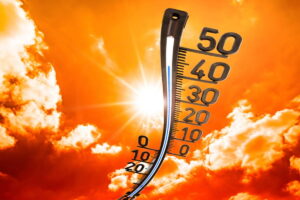
More than 100 million Americans are facing an abnormal heat wave, with temperatures exceeding 40 degrees Celsius during the day in some states, the Associated Press reported Friday.
The National Weather Service (NWS) said more than 115 million people are at risk from the high temperatures. Many cities are experiencing temperatures above 38 degrees Celsius. The heat wave is severe in the states of Nevada, Oklahoma, Texas and California.
The NWS warns that temperatures will climb even higher this weekend. Americans living in central and southern California could face the hottest weather of the year. In desert areas, temperatures could rise to 48.8 degrees during the day and stay at 26.6 degrees at night.
In some cities across the state, authorities are equipping public spaces with air conditioning, water and places to rest.
Also because of the heat wave, organizers of the California State Fair, which begins Friday in Sacramento, had to cancel a horse race because of concerns about animal welfare.
Temperatures in Las Vegas, Nevada, are forecast to rise to 47 degrees on Saturday, which would be a record for the city.
In Phoenix, Arizona’s capital, the heat has held at least 43 degrees for 14 days in a row. If the weather in the city does not change, it will break the record of 1974, when the temperature exceeded this mark for 18 days. The city has about 200 equipped public spaces with cooling systems, but most of them close around 4 p.m. to 7 p.m., while even at night temperatures can rise to 35 degrees. Authorities said their opening hours may be extended from next week.

Vaccination against the coronavirus (COVID-19) disease reduces the risk of hospitalization and severe disease by 15 times, according to the website of the Ministry of Health.
According to a report citing preliminary data from the analysis of COVID-19 cases in Ukraine over the past three months, only 0.7% of people diagnosed with COVID-19 were fully vaccinated, and 0.4% of those hospitalized were fully vaccinated.
The risk of getting sick among unvaccinated people is almost 8.5 times higher, and the risk of being hospitalized is almost 15 times.
The Ministry of Health notes that these are preliminary data, and they do not take into account asymptomatic diseases, as well as those cases in which patients did not do tests and did not seek medical help. However, statistics shows that all vaccines used by Ukraine effectively prevent severe disease.



