According to Serbian Economist, a number of Balkan media outlets reported that Turkey has become the largest foreign investor in Montenegro since 2020, with total investments estimated at over €417 million.
At the same time, official statistics show a more “volatile” picture over the years, with Serbia appearing as one of the key sources of capital. Thus, in an analytical review by the Parliamentary Budget Office of Montenegro, based on data on foreign direct investment (FDI) inflows for 2024, Serbia is named as the largest source with €118.2 million, followed by Russia with €109.7 million and Germany with €88.7 million. Turkey was in fourth place in 2024 with €39.5 million (the US with €37.2 million).
In 2025 (January-August), the ranking changed: Turkey took first place with €92.2 million, Serbia took second place with €91.8 million; followed by Russia (€45.3 million), Germany (€41.7 million), and the UAE (€34.7 million).
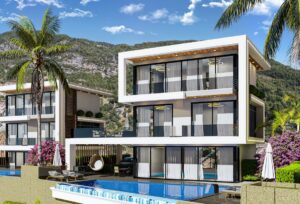
The key reason for these “swings” is the structure of investments. In 2024, the total gross inflow of SDI amounted to about €891.1 million, of which the largest part was accounted for by real estate transactions (purchase of properties) – €455.3 million, followed by intercompany debt (€292.1 million) and investments in companies and banks (€113.9 million). In other words, the ranking of investor countries largely depends on cycles in the real estate market and large one-off deals.
It is worth distinguishing between the “cumulative total since 2020” and the “leaders of a particular year.” Publications about Turkey’s leadership are based on the aggregation of several years and emphasize the acceleration of Turkey’s presence in the last 1-2 years. In particular, reports citing the Turkish-Montenegrin Chamber of Commerce estimate that investments from Turkey in 2024 amounted to approximately €100.9 million, and in 2025 (for 10 months) – approximately €110.8 million.
Serbia, in turn, remains a “structural” investor for Montenegro: in SDI statistics, it regularly ranks among the leaders, and in 2024 it took first place. In practical terms, this reflects the close connection between the two economies — from business and banking and service cooperation to active demand for real estate and tourism, which is why the Serbian share reacts significantly to the housing market situation and seasonality.
Overall, Montenegro’s SDI profile for 2020-2025 remains “real estate-tourism,” which means that the composition of leaders by country may change more rapidly than in economies dominated by long-term industrial projects.