

Authorities in several major European cities, including Brussels, Munich, Dublin, and Genoa, have proposed a ban on the sale of filter cigarettes throughout the European Union. The reason is widespread environmental pollution from plastic cigarette butts and the significant costs municipalities incur to clean the streets, according to a November 12, 2026, article by Politico.
The cities have joined the international “No (Plastic) Filter” campaign, which is supported by the Dutch government, the municipality of The Hague, environmental organizations, and water management agencies. The initiative’s participants aim to secure a complete ban on cigarette filters or, at the very least, on the use of plastic in their production.
According to Politico, cigarette butts are one of the biggest sources of urban pollution. In Brussels, they account for about 30% of street litter, and The Hague’s authorities spend approximately 2 million euros annually on cleaning up discarded cigarette filters.
Most filters are made of cellulose acetate—a type of plastic that decomposes extremely slowly. When discarded into the environment, cigarette butts become a source of microplastics and toxic substances that pollute soil and water bodies.
Representatives of environmental organizations also note that cigarette filters do not provide a proven reduction in the harm caused by smoking, although they may give consumers the opposite impression. The World Health Organization (WHO) shares this position and supports restrictions on the use of plastic filters.
According to WHO estimates, the annual global costs associated with cleaning up and managing tobacco waste amount to $26 billion. The proponents of the ban hope to achieve changes during the revision of two European legislative acts. The first is the Tobacco Products Directive, amendments to which could potentially allow for a complete ban on cigarette filters regardless of the material used in their manufacture. The second is the Single-Use Plastics Directive, which could provide a basis for restricting the use of cellulose acetate.
At the same time, current EU legislation already requires manufacturers of tobacco products with plastic filters to contribute to the funding of cleanup efforts for such waste. These requirements are contained in EU Directive 2019/904, adopted in June 2019. Participants in the new campaign believe that the existing extended producer responsibility system has not resulted in a sufficient reduction in pollution.
Tobacco companies oppose a complete ban on filters. Industry representatives argue that filters can reduce the levels of certain components in tobacco smoke and are necessary to meet technical product requirements.
Nathan Jones, a representative of British American Tobacco, told Politico that manufacturers currently have no effective alternative to existing filters suitable for mass industrial production.
For their part, authorities in The Hague are insisting on a complete ban on filters regardless of the material from which they are made. In their view, replacing cellulose acetate with other materials will not solve the problem of environmental pollution.
A final decision on banning filtered cigarettes in the European Union has not yet been made. Introducing such restrictions will require drafting legislative changes and coordinating them at the EU institutional level.
Currently, European legislation requires mandatory labeling of tobacco products with plastic filters, informing consumers about the environmental harm caused by cigarette butts, and requiring manufacturers to contribute to the costs of waste cleanup. A possible expansion of these requirements—up to a complete ban on filters—could significantly impact the European tobacco market and require changes in cigarette manufacturing technologies.
Sources: European Commission, regulation of single-use plastics; EU Directive 2019/904.
BAN, CIGARETTE, ENVIRONMENT, EUROPEAN UNION, PLASTIC, TOBACCO

The spring-summer ban on fishing in rivers and inland waters, which had been in effect since April 1, has ended, the press service of the State Agency for Fisheries (Derzhrybagentstvo) reported on Wednesday.
It is noted that fishing is now permitted in rivers and inland waters, but only with handlines or spinning rods using natural or artificial bait, with a total of no more than seven hooks per angler.
The State Fisheries Agency reminded that the daily catch limit is 3 kg of fish plus one specimen exceeding the minimum size allowed for catch. For example, in inland waters, catfish must be at least 80 cm long, pike—50 cm, and walleye—42 cm; for chub and sabre-tooth, 24 cm; for blue bream, 22 cm; and for tench and roach, 20 cm.
At the same time, weight and quantity restrictions do not apply at all to the catch of species such as sand smelt, silver bream, dwarf American catfish, roundhead, sunfish, tulka, and Amur gudgeon.
It is emphasized that fishing for fish listed in the Red Book of Ukraine remains strictly prohibited. These include: European grayling; Danube and Black Sea salmon; Black Sea vimba; Dnieper roach; ide; podust; golden crucian carp; sterlet; beluga; sturgeon; sevruga; and several other species.
In reservoirs, particularly those of the Dnipro Cascade, as well as in ponds and estuaries, the spawning ban remains in effect. In these areas, fishing is permitted exclusively from the shore and outside of spawning grounds. At the same time, only spinning rods with a single artificial lure or hook-and-line tackle with no more than two hooks per person may be used, the agency added.

As a result of the introduction of a zero quota on the export of ferrous metal scrap effective January 1 of this year, the scrap collection industry is losing its potential, reducing raw material procurement, and being forced to lay off employees, stated the head of the Ukrainian Association of Secondary Metals (UAVtormet) Volodymyr Bubley said this at a press conference held at the Interfax-Ukraine press center on Tuesday, titled “Ban on scrap exports: economic consequences for the market and the state.”
According to him, the ban on scrap metal exports—without balancing consumption and procurement of this raw material—has essentially had a negative impact on the operations of scrap metal procurement companies. At the same time, steel production in Ukraine has fallen: in January-February 2026, compared to the same period in 2025, steel production decreased by 13.3%—from 1.183 million tons to 1.026 million tons.
At the same time, the purchase of ferrous metal scrap by metallurgical enterprises decreased significantly—by 31.7%, from 257,800 tons to 176,000 tons. Meanwhile, procurement fell by 41.1%—from 313,600 tons to 184,800 tons.
“Previously, scrap exports accounted for 20–25%. We felt more comfortable operating in the domestic market. We are still operating there now, and we want to continue working in Ukraine,” said Bubley, emphasizing that the price of scrap in the EU is more attractive and has reached 300–330 euros per ton.
“The state loses 12 million euros every month due to the export ban. It loses 200 million hryvnias in taxes. Meanwhile, steelmakers are 112% supplied with scrap,” the head of UAVtormet cited his data.
According to his estimates, Ukraine will produce 7.4 million tons of steel in 2026, which will require 1.5 million tons of scrap—the industry can supply up to 2 million tons of scrap.
Serhiy Vovk, CEO of Ukrmet-Invest LLC, noted that the scrap metal collected by companies is not being purchased by steel mills; his company’s scrap metal stockpile has currently reached 13,000 tons. “Export is the only way for the industry to survive,” the CEO believes.
Vladislav Kleshchynskyi, CEO of the Ukrmet Group of Companies, added that the ban was imposed due to an alleged scrap metal shortage.
“But there is no shortage. Steel mills purchase 30–50% at most. So it’s impossible to call this a shortage. Right now, the scrap market in Ukraine is a market of metallurgical enterprises that dictate prices. We have already cut our staff by 50%, 35 divisions are operating at 20% of their capacity, and we have shut down our entire export infrastructure,” the CEO stated.
Mykola Klimovich, Director of Mirten LLC, clarified that in 2022–2026, the scrap market will be in surplus, and scrap exports were an opportunity to sell it.
According to experts, following the government’s ban on scrap exports, the procurement sector is in a “severe recession” with a trend toward further reductions in procurement.
Earlier, Bubley stated that the export ban automatically affected not only procurement volumes but also domestic prices, as reduced competition allowed steelmakers to act as monopolists in the domestic market. Thus, the cost of one ton of scrap at procurement sites has halved: from 8,000 UAH/t to 4,000 UAH/t.
Under these conditions, companies engaged in scrap procurement are forced to reduce their workforce. In January–February 2026, compared to the same period last year, the number of employees in the industry decreased significantly. In just the first two months, companies in our industry were forced to lay off about 2,000 employees, reported the head of UAVtormet.
“The trend is grim: almost every day we receive reports from companies about a complete shutdown of operations or significant staff reductions. According to our forecasts, 4,000 workers will be laid off in the industry by May,” Bubley predicted earlier.
According to UAVtormet’s research, due to the export ban, the state is losing approximately 200–250 million UAH in taxes each month. A separate category of losses is foreign exchange revenue: approximately 25 million euros have already been lost.
As reported, Ukrainian companies reduced exports of ferrous metal scrap by 77.3% in January–February of this year compared to the same period last year—to 9,309 thousand tons from 40,980 thousand tons. According to statistics from the State Customs Service (SCS), there were no exports in February; 9,309 thousand tons were exported in January, and a record 68,520 thousand tons of scrap were exported in December 2025.
In 2025, Ukraine’s scrap metal processing enterprises increased exports of ferrous metal scrap by 45.3% compared to the previous year—to 448,685 thousand tons from 293,190 thousand tons.
Due to the sharp increase in exports of strategic raw materials from Ukraine, the Ministry of Economy initiated the introduction of a licensing and quota system for scrap exports, setting a zero quota. The government temporarily imposed a zero export quota for 2026 on the export of ferrous metal scrap.
Scrap collection companies in Ukraine increased exports of ferrous metal scrap by 60.7% in 2024 compared to 2023—to 293,190 thousand tons from 182,465 thousand tons. In monetary terms, scrap exports for the year rose by 73.2%—to $91.311 million from $52.723 million.
Sources: https://interfax.com.ua/news/press-announcement/1153229.html; https://uavtormet.com/en/na-mezhi-katastrofy-zagotivlya-bruhtu-chornyh-metaliv-vpala-na-40/
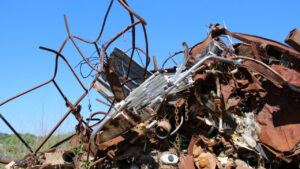
The Cabinet of Ministers has introduced a zero export quota for 2026 on the export of ferrous scrap (scrap metal), a strategic raw material for the metallurgical industry.
The relevant changes are set out in its Resolution No. 1795 “On the approval of lists of goods subject to licensing for export and import, and quotas for 2026” dated December 31, 2025.
According to the document, the quotas for goods whose export is subject to licensing are listed in Appendix 1. In particular, a zero quota has been set for ferrous metal waste and scrap; ferrous metal ingots for remelting (charge ingots) under code 7204 (according to the Ukrainian Classification of Goods for Foreign Economic Activity). Zero quotas are also set for copper waste and scrap under code 7404 00 and for electrical and electronic waste and scrap used primarily for the extraction of precious metals under codes 8549 21 00 00 and 8549 29 00 00.
Dmytro Kysilevsky, deputy chairman of the Verkhovna Rada Committee on Economic Development, welcomed the government’s decision in a comment on his Facebook page, noting that strategically important raw materials should be processed in Ukraine, rather than being exported abroad without control, and should create jobs, added value, and tax revenues here.
According to the expert, this principle is one of the fundamentals of economic success, as proven by dozens of developed countries. Ukraine also has successful experience in implementing it: duties on sunflower seeds and a moratorium on roundwood once created entirely new industries and attracted billions in investments. And the recently introduced duties on soybeans and rapeseed have already significantly increased the volume of domestic processing, the deputy head of the parliamentary committee emphasized.
“The government’s decision to set zero export quotas for industrial timber and scrap from Ukraine for 2026 is an important example of the implementation of this principle. I would like to thank Prime Minister Yulia Svyrydenko and Minister of Economy Oleksiy Sobolev for their position and understanding of national economic interests,” wrote the MP.
Kysilevsky explained that it is profitable for the state to keep all scrap metal within the country, since 1 ton of scrap metal processed in Ukraine into finished products generates approximately UAH 15,000 in taxes. On the other hand, 1 ton of exported scrap metal without customs duties actually generates no taxes (within 100 hryvnia per ton), since scrap metal procurement remains largely a “shadow” business.
He noted that scrap metal exports to the EU are de facto a scheme to circumvent customs duties, with losses to the budget amounting to about UAH 3.5 billion per year. Currently, the customs duty in the EU is 0, while in other countries it is EUR 180. Scrap metal from Ukraine is mainly re-exported outside the EU. If the 380,000 tons of scrap metal exported in 2025 were processed in Ukraine, the state would receive UAH 5.7 billion in taxes.
“From 2026, the EU will introduce the so-called CBAM ”carbon duty.” From the point of view of Ukraine’s accession to the EU and compliance with environmental requirements for industry, it is important to keep all scrap metal within the country. After all, scrap metal is a scarce raw material for smelting steel with lower CO2 emissions. Ferrous and non-ferrous scrap metal is a strategic raw material for ferrous and non-ferrous metallurgy, which are important basic sectors of the economy. Of course, companies that want to profit from the uncontrolled export of raw materials are opposed to these decisions. But raw material exports are a niche for poor countries. Ukraine has abandoned this model, hopefully for good,” Kysilevsky emphasized.
The MP added that one of the tasks for the Verkhovna Rada in 2026 is to enshrine the decision to restrict the export of strategic raw materials in law. These restrictions should remain in force as long as external circumstances and the need for recovery require it.
As reported, in May 2025, the Ministry of Economy of Ukraine initiated the introduction of a licensing and quota regime for the export of ferrous metal scrap (scrap metal) with a zero quota. The relevant provision was included in the draft government resolution “On Amendments to Appendix 1 to the Resolution of the Cabinet of Ministers of Ukraine No. 1481 of December 24, 2024,” which was then published by the Ministry of Economy for public discussion.
Deputy Director of the state-owned enterprise “Ukrpromzovnishchexpertiza” Serhiy Povazhnyuk, in an interview with telegraf.com.ua, said that Ukrainian metallurgical enterprises could increase steel production by 17% in 2026, to 8.9 million tons from 7.6 million tons in 2025, provided that the scrap metal shortage is overcome. At the same time, he noted that the Ukrainian metallurgical industry is experiencing an acute shortage of ferrous metal scrap, in particular due to the growth in the volume of this raw material being exported abroad.
According to his calculations, 1 ton of scrap metal, which is processed into metal products at Interpipe’s facilities, for which scrap is the main raw material, brings the state UAH 7,500 in taxes. In addition, 1 ton of scrap metal used at Metinvest Group’s plants generates about UAH 9,300 in tax revenues to budgets at all levels.
As Povazhnyuk emphasized, this is a direct benefit that the state receives by keeping all scrap metal in the country and processing it into steel. In addition, such processing has a multiplier effect on the entire economy, as it stimulates growth in related industries, such as the production of iron ore raw materials, coke, and ferroalloys.
“According to our data, in 2024, the largest exporting companies, which accounted for almost 90% of Ukrainian scrap metal exports, exported a total of 247,000 tons of raw materials abroad, paying a total of only UAH 12.3 million in taxes. Thus, the state received an average of UAH 50 in taxes for each ton of scrap metal exported. The official number of employees in these companies was only a few dozen people,” the expert said.
As reported, in January-November 2025, scrap metal collection companies in Ukraine increased their exports of ferrous metal scrap by 45.3% compared to the same period in 2024, from 261,578 tons to 380,165 tons.
In 2024, Ukraine’s scrap metal collection companies increased their exports of ferrous metal scrap by 60.7% compared to 2023, to 293,190 thousand tons from 182,465 thousand tons. In monetary terms, scrap exports for the year increased by 73.2% to $91.311 million from $52.723 million.
Earlier, Valentin Makarenko, chairman of the board of Interpipe Vtormet, said in an interview with Interfax-Ukraine that ferrous metal scrap exports have always been and remain a threat to the Ukrainian metallurgical industry, as they exacerbate the shortage of this raw material on the domestic market. In addition, this problem is compounded by the fact that during the war, the area suitable for scrap collection is shrinking.
“At present, I do not see any other effective mechanisms for stabilizing the market and reducing scrap exports, except for an administrative ban on the export of this strategic raw material outside Ukraine at the state level,” the chairman of the board concluded.

The Cabinet of Ministers has extended the ban on imports of goods originating from Russia into the customs territory of Ukraine until December 31, 2026.
According to Resolution No. 1707 of December 24, the government amended Cabinet Resolution No. 1147 of December 30, 2015, which is updated annually.
In addition, by Resolution No. 1706, the government extended the term of Resolution No. 1146 of December 30, 2015, which establishes import duty rates on goods originating in the Russian Federation, for another year, until December 31, 2026. These instruments have been in effect since 2015 as countermeasures in response to economic pressure that has been going on for many years.
As reported, in 2015, the Cabinet of Ministers adopted two resolutions restricting trade with Russia in response to the actions of the aggressor state against Ukraine, in particular, the unilateral termination by the Russian Federation of the Agreement on the Free Trade Area within the CIS with regard to Ukraine and the introduction of bans on the import of a number of goods of Ukrainian origin from January 1, 2016. The validity of these acts is extended every year in December.
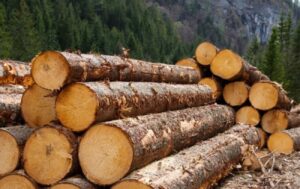
The moratorium on the export of unprocessed timber from Ukraine, which was introduced on November 1, 2015, for 10 years, has been temporarily extended by a decision of the Cabinet of Ministers of Ukraine until the end of the year in the form of a zero export quota.
“At the request of businesses, the government has made an important decision to temporarily ban the export of unprocessed timber. This is a necessary step to take care of people in winter, preserve the work of our enterprises, and reduce the burden on the environment,” Ukrainian Prime Minister Yulia Svyrydenko wrote on Friday on Telegram following her trip to the Rivne region.
She noted that the volume of logging in Ukraine has significantly decreased during the full-scale invasion by the Russian Federation. “Enterprises that could be operating are idle or working at minimum capacity due to a lack of wood. The army needs wood for its own needs. Life in rural communities, where firewood is a key resource for heating in winter, depends on the availability of wood,” the head of government wrote.
In addition, according to Svyrydenko, the war has caused significant damage to the environment, as part of the forests are temporarily occupied or damaged by hostilities. “Therefore, timber exports will create an additional burden on the environment,” the prime minister noted.
“The decision provides for export licensing – a zero quota until the end of the year. We continue to work on further steps to systematically address the timber shortage,” Svyrydenko said.
The head of the State Forest Resources Agency of Ukraine, Viktor Smal, previously told the agency that according to the law adopted in 2015, the moratorium on the export of unprocessed timber of all tree species, except pine (a 10-year moratorium was introduced for pine on January 1, 2017), will end on November 1, 2025.
Smal clarified that the extension of the moratorium for the duration of martial law and for another 10 years after it is provided for in the draft law on the timber market, which is currently being prepared for its first reading.
“In my opinion, 10 years is definitely enough to recover from all these shocks in terms of production and investment,” said the head of the State Forestry Agency.
He believes that the moratorium has been beneficial because a large number of production facilities have expanded and opened in Ukraine. “If we look at the structure of our exports, we will see that the depth of our wood processing leaves much to be desired. We should try to make not boards, not beams, not pallets, but cribs, kitchen chairs, tables, and export them,” Smal added.
As reported, in January-August 2025, Ukraine exported $1,131.3 million worth of wood and wood products, which is 15.5% more than in January-August 2024. However, during the same period, wood and wood products worth $160.5 million were imported, which is 8.8% more than in January-August 2024.
During this period, wood and other fibrous cellulose materials worth $186.2 million were exported (19.1% more than in January-August 2024), and $594.3 million worth were imported (1.7% less than in January-August 2024).



