

Kernel, one of Ukraine’s largest agricultural holdings, has discussed new opportunities for development in the EU market and agreed on prospects for deepening its partnership with Spanish sunflower and olive oil supplier Aceites Abril, the agricultural holding’s press service reported on Facebook.
It is noted that the topic of the meeting in Orense (Spain) was the expansion of vegetable oil supplies to Europe and the adaptation of logistics. The parties discussed the range, potential volumes, and practical solutions to ensure the stability and predictability of exports.
“We talked about specific things: logistics, supply flexibility, and opportunities to expand the range for the EU. It is important for us to build predictable, long-term models of cooperation. We continue to develop partnerships in the EU, focusing on supply stability, effective commercial solutions, and long-term mutually beneficial cooperation,” said Andriy Paladiy, director of oil and protein trading at the agricultural holding, whose words are quoted in the report.
Founded in 1962, Spanish company Aceites Abril S.A. is one of Spain’s leading family-owned vegetable oil producers. It specializes in the production of Extra Virgin and Virgin olive oil, as well as sunflower, soybean, and grape seed oil. The company owns a factory in the industrial zone of San Sibao das Vinhas and its own logistics terminal in the port of Vigo, which exports products to more than 60 countries around the world. The company is consistently among the ten largest players in the industry in Spain.
Before the war, the Kernel agricultural holding company ranked first in the world in sunflower oil production (about 7% of global production) and exports (about 12%). It is one of the largest producers and sellers of bottled oil in Ukraine. It is also involved in the cultivation and sale of agricultural products.

The European Commission expects wine consumption in Europe to decline by 0.9% annually over the next nine years, according to a report by the EC cited by the newspaper Le Figaro. According to the document, by 2035, wine consumption by European citizens over the age of 16 will decline from 21.2 liters per capita per year to 19.3 liters.
According to the International Organization of Vine and Wine, the main consumer of wine in Europe is France, followed by Italy, Germany, and Spain. According to a 2023 study by the Vin et Societe association, wine consumption in France has already declined significantly: while in the 1960s the figure was 127 liters per capita per year, the latest data shows that per capita consumption in France is now 40 liters per year.
The EC explains this trend by the fact that “consumers are concerned about their health, and also because national policy calls for moderate alcohol consumption.” In addition, the decline in consumption may be due to “changes in consumer habits and preferences.” Also, preference is often given to quality rather than quantity.
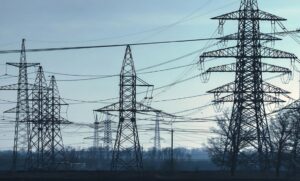
Naftogaz Group increased electricity imports from Europe this week based on a government decision and with the aim of stabilizing the situation in the energy system, said Sergey Koretsky, chairman of the board of Naftogaz of Ukraine.
“The volume of imported electricity already covers more than 50% of the needs of all the Group’s enterprises, as provided for by the government’s resolution,” he said in a Facebook post on Saturday.
Koretsky explained that the corresponding amount of electricity has been allocated for the needs of domestic consumers.
“We are coordinating our actions with the government in order to stabilize the situation in the energy system as quickly as possible after the Russian shelling,” the chairman of the board of Naftogaz emphasized.
As reported, amid the deteriorating situation in Ukraine’s energy system due to massive Russian shelling of energy infrastructure, the government has instructed state-owned companies to increase electricity imports.
During the “Question Time to the Government” in the Verkhovna Rada on January 16, First Deputy Prime Minister of Energy Denys Shmyhal pointed out that, on behalf of the government, Naftogaz of Ukraine, Ukrzaliznytsia, and part of the industrial complex will import at least 50% of their electricity needs.
“This will make it possible to free up 1.5 MW for people’s needs. I hope this will happen in the coming days,” Shmyhal said at the time.

The prolonged cold spell in Europe is pushing gas prices up. The spot price for “day ahead” delivery on the benchmark European TTF hub closed at $486 per 1,000 cubic meters on Wednesday, adding 11% in just one trading day. This is the highest level since June 2025.
On Thursday, trading opened at $491. At the moment, the price has adjusted to $477.
Air temperatures in Europe in January this year are falling to their lowest levels in the last decade and a half. Overall, January (which is already the coldest winter month) is expected to be three degrees colder than the climatic norm and four degrees colder than last year.
Clear weather is accompanied by low wind speeds, or even calm conditions. This increases the load on the power system, as it reduces the output of wind farms. The reliability of the power system is maintained primarily by underground gas storage facilities, which are the most flexible source and closest to the points of consumption.
The average level of gas reserves in underground storage facilities in Europe fell to 48.4% at the end of the gas day on January 20, according to data from Gas Infrastructure Europe. This is 15 percentage points lower than the average for the last five years. At the moment, European underground gas storage facilities are ahead of the usual rate of consumption by four weeks. Moreover, the GIE observation base knows of examples when such a level (or even much higher – 59%) of reserves was reached only by the end of the withdrawal season and the start of injection.
By the end of 2025, countries in the region had purchased 109 million tons of LNG (142 billion cubic meters in regasified volume), which is 28% more than in 2024. In January 2026, liquefied gas imports could reach 10 million tons, which is 24% higher than a year earlier. And this could be a new record for the European gas industry. Despite high demand, there remains a large unused capacity reserve – on January 20, terminals were operating at 51% of their capacity. There is also a noticeable trend of declining LNG stocks at terminals.

According to Serbian Economist, organized crime groups from the Western Balkans have ties in Venezuela and are involved in investigations related to cocaine smuggling, Radio Free Europe (RFE) reports.
According to RSE, networks from the Balkans are considered by international organizations, including Europol and Interpol, to be key players in the supply of cocaine from Latin America to Europe, with Venezuela seen as one of the links in this logistics chain.
Sasha Djordjevic, an expert at the Global Initiative against Transnational Organized Crime (GI-TOC), told RSE that Venezuela is important for cocaine flows as a “strategic outlet” to the Atlantic, although it is not the only and main point of support in the region for Balkan groups.
RSE notes that interest in Venezuela’s role in drug trafficking has intensified following the early January arrest of Venezuelan leader Nicolas Maduro, who has been charged in the US and pleaded not guilty in a New York court on January 5.
As one example, RSE cites the case of the detention of the Aressa off the coast of Aruba in February 2020, when, according to the publication, about five tons of cocaine were seized and 11 Montenegrin crew members were detained. In March 2021, an Aruban court sentenced them to prison terms ranging from nine to 15 years. In addition, according to RSE, Europol linked Serbian citizen Miroslav Starčević, who was detained in May 2023 along with other suspects, to this case, and the proceedings in Serbia are currently under judicial review, according to the publication.
RSE also notes that Europol reported no direct cooperation with Venezuela, so information about the possible involvement of Balkan groups is obtained indirectly – through the law enforcement agencies of the countries in the region, while the Interior Ministries of Serbia and Montenegro, according to RSE, did not respond to requests prior to the publication of the material.

In Numbeo’s European sample (Europe: Current Crime Index by City), the highest Crime Index is recorded in Marseille (France) – 66.7. It is followed by Birmingham (UK) – 63.8, Grenoble (France) – 62.6, Naples (Italy) – 62.3, and Coventry (UK) – 61.7.
At the bottom of the European list, i.e., among the most peaceful cities according to the ranking, are The Hague (Netherlands) – 19.9, Tampere (Finland) – 20.4, Eindhoven (Netherlands) – 20.9, as well as Trondheim (Norway) and Utrecht (Netherlands) – 21.0 each.
Numbeo publishes crime/safety indices based on user surveys. The current version is continuously updated and is based on data from the last five years. The project has been running since 2009 and is widely cited in the media and city comparison services, but the indicators reflect subjective perceptions of safety and are not a substitute for official statistics.



