

Vasyl Khmelnytskyy, founder of the “Bila Tserkva” Industrial Park, announced the suspension of plans to build three plants within the industrial park due to high risks.
“I know that fortune often favors the bold. But today I went to Bila Tserkva and made a decision: for now, not to begin new construction of three factories. We’ll finish what we’ve already started, but put the large-scale plans on hold. Right now, the risks are too great—both for the business and for the people. I’m ready to take responsibility for the business. Although, to be honest, I’m already at my limit. But I’m not ready to expose people to a risk I can’t control,” he said on social media.
According to him, such decisions are difficult to make, but an entrepreneur’s responsibility also includes knowing when to stop.
“I don’t like the phrase ‘until better times.’ So I’ll be more specific: we’ll return to these plans when the risks are lower. Right now, our task is to finish what we’ve started, keep the team together, and maintain the ability to move forward,” the entrepreneur emphasized.
The projects of entrepreneur Vasyl Khmelnytskyi’s holding company, UFuture—FOP “Bila Tserkva” and “Bila Tserkva 2”—were included in the Register of Industrial Parks in 2018. The parks are home to more than two dozen tenants (including foreign companies).
The total area of the parks is 70.3 hectares, of which 45 hectares have already been developed. More than 85,000 square meters of industrial and warehouse real estate have been commissioned.
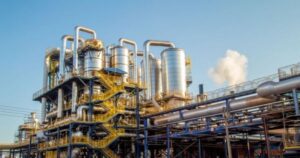
Following the completion of construction of the first phase of its bioethanol plant with an annual capacity of 83,000 metric tons, the OKKO Group plans to build the second phase with an annual capacity of 120,000 metric tons, according to the group’s CEO, Vasyl Danyliak.
“We are first building the first phase of the plant with a capacity of 83,000 metric tons of bioethanol, and then we will expand capacity. And we want to produce 120,000 metric tons of bioethanol per year in the second phase,” Danilyak said on the Fedoriv vlog on YouTube.
He added that the group plans to consume 50% of the bioethanol it produces in the future and export the remaining 50% to European markets.
Citing the experience of bioethanol production in the U.S., he noted that the capacity of plants in that country is at least 1 million metric tons, which, he said, allows for “economies of scale.”
As reported in early July 2026, citing Vasyl Danylyak, CEO of the OKKO Group of Companies, the group had to postpone the full launch of its EUR110 million bioethanol plant from the third quarter of 2026 to the first quarter of 2027. Danylyak attributed this to delays in the manufacture of certain units.
He noted, however, that part of the facility—specifically, the storage area for finished products—has already been completed.
Danylyak also pointed out that the retail chain itself would not be able to consume all of the plant’s bioethanol—which has a design capacity of 83,000 metric tons—even if it were to add 10% bioethanol to gasoline on its own. At the time, he noted that the group would be able to consume up to 60% of the bioethanol production capacity.
The group planned to sell the remainder to other retail chains or export it.
Of the total investment in the plant during 2024–2026, amounting to EUR 110 million, EUR 35 million is the group’s own contribution, and EUR 75 million is debt financing. Of this amount, EUR 60 million was provided by the EBRD for a nine-year term, and another EUR 15 million by Raiffeisen Bank Ukraine for a seven-year term.
According to Danilyak, the plant’s annual capacity is 83,000 metric tons of bioethanol, 70,000 metric tons of animal feed, and 270,000 metric tons of corn processing.
OKKO Group brings together more than 10 diverse businesses in the fields of manufacturing, trade, construction, insurance, services, and other sectors. The group’s flagship company is the “Galnaftogaz” concern, which operates one of Ukraine’s largest gas station networks under the “OKKO” brand, comprising approximately 400 gas stations.
The group’s founder and ultimate beneficiary is Vitaliy Antonov.
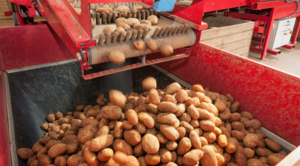
The first phase of Ukraine’s largest potato processing plant, located in the “Biosens” industrial park (Cherkasy region) with a capacity of 25,000 metric tons per year, is scheduled to begin operations in late 2026 or early 2027, according to Dmytro Kysilevsky, deputy chairman of the parliamentary committee on economic development.
“At the Biosens Industrial Park, installation of the steel structures for the walls and roof of the first phase of Ukraine’s largest potato processing plant has begun. The investment in the first phase of the plant, which will produce potato flour, amounts to 960 million hryvnias,” he wrote on Facebook on Tuesday.
Kysilevsky added that the construction of the 6,500-square-meter production building is utilizing weldless joining technology for high-strength steel components, and the production equipment has already been delivered.
“Ukraine currently imports 100% of its potato flour needs, which is brought in from abroad for use in the baking, confectionery, and meat-processing industries, as well as in the production of sauces and instant food mixes. But starting next year, our country will not only meet its own needs but will also become an exporter of potato flour,” the MP noted.
He emphasized that, with the help of state funding, work is currently underway at the “Biosens” industrial park to expand the access road and connect to the gas networks. In December 2025, the government allocated 24.7 million UAH for these projects on a 50:50 co-financing basis.
Kysilevsky noted that a mandatory condition for receiving state funding is the construction of at least 5,000 square meters of industrial space within the industrial park and the involvement of at least two participants.
“Biosens is currently preparing an additional application for further state funding to continue developing the industrial park’s engineering and transportation infrastructure,” he added.
According to Kysilevsky, construction of the plant’s second phase is scheduled for 2027—a French fries production facility with a capacity of 60,000–150,000 metric tons per year, requiring an investment of 2.5 billion hryvnias.
“McDonald’s and KFC currently import french fries for their Ukrainian chains due to the lack of specialized cultivation and processing technologies in our country. But such technologies will be available very soon,” he emphasized.
The plant’s third phase, which will also produce French fries, will require approximately 3 billion UAH in investment. In addition, the IP’s development plan calls for the construction of a 20,000-metric-ton potato storage complex, a facility for processing potato peels into protein and starch, and a greenhouse complex equipped with a cogeneration plant.
To accommodate the future facilities, the industrial park has already initiated the expansion of its existing area from 29.6 hectares to 40 hectares. Another 60-hectare plot located nearby is being considered as a reserve.
As previously reported, the “Biosens” Industrial Park was registered in August 2025 for a term of 30 years. The initiative to create the park came from the local company “Fitolan,” LLC, which is part of the “Mais” group of companies that is building a plant within the “Biosens” Industrial Park.
The agricultural company “Mais” is one of the largest producers of hybrid corn, hybrid sunflower, and soybean seeds in Ukraine and is the main asset of the “Mais” group of companies.
The co-owners of “APK Mais” LLC are Serhiy Tereshchuk, a member of the Ukrainian Parliament in the 4th and 6th convocations, and his wife, Maryna Cherednychenko; “Field-Group” is responsible for potato preservation and processing within the group.
The EFI Group investment group has invested EUR5 million in a new packaging plant in Zhytomyr, which has become the fourth packaging manufacturer in the group’s portfolio, according to EFI Group CEO Olga Batova.
“A month ago, we launched a small plant in Zhytomyr with a EUR5 million investment. This is our fourth packaging plant; it uses virgin pulp, while the other three use recycled paper,“ Batova wrote in the comments section of her post about the NovaSklo project presented at URC 2026, responding to a question from Denis Myrhorodskyi, co-owner of ”Zavod Preform,” regarding new projects.
The EFI Group’s press office has not yet provided details about the new facility in Zhytomyr.
Currently, according to information on the group’s website, the company’s portfolio of packaging manufacturers includes the Zhytomyr Cardboard and Paper Mill, which specializes in the production of corrugated egg trays, as well as corrugated cardboard and its components (containerboard and fluting paper).
The group also includes Sem Ecopack LLC, which was relocated in 2023 from the town of Tomakivka in Dnipropetrovsk Oblast to Sambir in Lviv Oblast, where a main production line was established for packaging made of pulped cardboard for food products—specifically for fruits (apples, melons, kiwis, etc.), berries, and bottle packaging.
In April of this year, EFI Group founder Ihor Liski wrote on Facebook about the Pulp Master project—the creation of disposable paper tableware and paper packaging made from cellulose fiber.
“Today, Ukraine does not have its own primary cellulose fiber—the market depends on imports. We have decided to change that. Our goal is to create a system for producing cellulose from byproducts of crop and fruit cultivation,” he wrote at the time.
He did not provide any further details.
EFI Group was founded in 2007. It focuses on implementing business projects in Ukraine. Its investment areas include healthcare and medtech, the paper, food, and woodworking industries, and the supply of agricultural products.
Its portfolio includes Feednova, a manufacturer of animal fats and feed additives; the “Bihive” honey production plant; the “Medical Star” honey retail chain; the Zhytomyr Cardboard Plant; “Sem Ecopack,” the timber processor “Forest Technology,” the agricultural products supplier “Efi Agro,” the online medical hub Doc.ua, and others.
The biopharmaceutical company “Biopharma” is building a plant in Romania, according to the company’s president, Konstantin Efimenko.
“We are already building a plant in Romania,” he said at the “Industrial Evolution: Manufacturing Drives the Economy” forum in Bila Tserkva (Kyiv Oblast) on Thursday, without specifying the project’s timeline.
Commenting on Ukraine’s investment appeal, Yefimenko noted that “no foreign companies will come here if things aren’t good for our own people.”
He also emphasized the importance of developing the education sector. “We need to keep the National Math Test in schools, but why aren’t we talking about the fact that math education in schools is weak, that children graduate from school knowing nothing? We have two ‘happiness’ classes a week, and chemistry just once every two weeks. What kind of technologies will we be able to develop?” he said, pointing out the outdated state of university facilities.
“Tear them down and forget about them—they can’t be renovated. We need to start from scratch,” he said.
Yefimenko reported that “Biofarma” plans to invest $25 million “in another laboratory,” without providing further details.
He also reported that “Biofarma” has registered its albumin product in Brazil.
“We need to create conditions so that no prosecutors come to us—only the tax inspectorate should visit us. Tell me, what difference does it make to the state how I registered my albumin in Brazil? I’m number one in Brazil right now. The Brazilians are happy, I’m happy. Anything that’s good for Biofarma is good for Ukraine, and for Bila Tserkva, at the very least. Why do you need to regulate what I’m doing in Brazil?” he said.
As previously reported, in 2024, Biofarma announced plans to build a plant in Romania.
“Biofarma” exports its products to dozens of countries and plans to expand its presence in Europe, the Middle East, and Latin America, while also continuing to increase its production capacity.
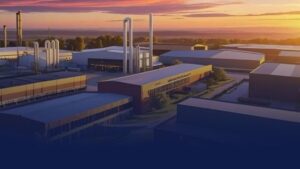
The new Smart Line plant in the VinIndustri industrial park (IP) (Vinnytsia) has begun production of paint booths for the metalworking industry; initial investments in the plant totaled 46 million UAH, according to Dmytro Kysilevsky, deputy chairman of the Verkhovna Rada Committee on Economic Development.
“The plant’s design capacity is 20 paint booths per month. The first phase covers an area of 2,800 square meters. The industrial facility for the second phase, with an area of 5,000 square meters, is scheduled to be built by the end of 2026, with commissioning in 2027. The planned investment in the second phase is 60 million UAH,” he wrote on Facebook on Thursday.
Kysilevsky emphasized that with the second phase, Smart Line will become Ukraine’s largest manufacturer of paint booths.
In total, the company plans to employ 150 workers; currently, 32 specialists are working there, and the search for another 15 employees is ongoing.
“The first paint booths manufactured in the industrial park have been exported. Deliveries have already been made to Poland and Moldova. An order from Estonia is currently being fulfilled,” the MP said.
He added that to import equipment for the second phase of the Smart Line plant, the company plans to take advantage of the incentives provided for industrial park participants, specifically the zero VAT rate and zero import duties on equipment.
“The company can also take advantage of a zero corporate income tax rate for a period of 10 years, provided that the freed-up funds are reinvested. The Vinnytsia City Council has reduced the land tax for industrial parks from 3% to 1%. In addition, park residents are exempt from property tax,” Kysilevsky noted.
The VinIndustri industrial park, covering 26 hectares, was established in 2021. The initiative came from the Vinnytsia City Council.
According to information on its website, the Smart Line powder coating equipment plant was founded in 2014, and at the end of April of this year, the company began moving to its own production facility.
The company’s co-owners are two entrepreneurs from Khmelnytskyi—company director Oleksandr Bebekh (66.7%) and Serhiy Korbin (33.3%).
As previously reported, among the declared residents of the VinIndustri industrial park are Firewood (a manufacturer of equipment for producing fuel briquettes and pellets), Vizardy (metalworking for construction and agriculture), and the pharmaceutical distributor BaDM.



