

More than 2 million consumers are already receiving new offers from suppliers for the 2026–2027 heating season. The stated price of gas is about 34 bani per kWh—approximately 20% higher than in the previous season.
The heating season will run from November 1, 2026, to March 31, 2027. At the same time, the final amount on bills will depend not only on the established tariff cap but also on the actual cost of gas purchased by suppliers for storage and additional deliveries during the winter.
Gas prices on the European market currently remain high. As a result, energy experts are warning of the risk of a significant increase in heating costs, especially for large buildings and high-consumption businesses.
Rising gas prices may also affect the prices of goods and services, as businesses factor higher heating and energy costs into their budgets.

The Spotlight International Light Art Festival will take place in Bucharest from October 9 to 11, 2026, bringing together artists and art studios from seven countries. The 10th anniversary festival will transform the central street of Calea Victoriei into a large-scale gallery of light and digital art.
Sixteen artists from Romania, Switzerland, France, Australia, Italy, Austria, and the United Kingdom will participate in Spotlight 2026. They will present 19 projects, including interactive light installations, new media art, immersive projects, and large-scale video mapping.
The theme of the tenth Spotlight will be “Playground.” According to the organizers’ vision, the city center will be transformed into a space for experimentation, where visitors interact with light, architecture, and new technologies, and familiar buildings and public spaces take on a completely different visual appearance.
Calea Victoriei will traditionally serve as the central venue. In 2026, the route has been expanded—it will run from the Radisson Blu Hotel to the intersection of Calea Victoriei and Splaiul Independenței. Individual events will also take place at ARCUB, Hanul Gabroveni, Mega Mall, and Promenada Mall. The total area of the festival space on Calea Victoriei will exceed 7,000 square meters.
One of the highlights of the program will be six large-scale video-mapping shows. Projections will appear on the facades of the Odeon Theater, the Telephone Palace, the Novotel Hotel, the National Military Club, the Corinthia Grand Hotel du Boulevard Bucharest, and the National Museum of Art of Romania.
Another 13 immersive installations will be placed along Calea Victoriei. Some of them will respond to visitors’ movements, blending the city’s physical space with digital images and lighting effects.
The scale of the festival can also be gauged by its technical specifications. Spotlight will require over 300 metric tons of equipment, 11 projection structures and towers, 20 laser video projectors, and over 200 light sources. Kilometers of cable and fiber-optic lines are also being used to set up the light installations.
Spotlight has been held in Bucharest since 2015 and was the first light art festival of this scale in Romania. According to the organizers, the event attracts over 300,000 visitors annually. The festival is organized by the Bucharest City Hall through the ARCUB Municipal Cultural Center.
In this anniversary year, Bucharest will also host the annual meeting of the International Light Festivals Organisation (ILO). On October 10, leaders and representatives of international light festivals, artists, and industry experts will gather at ARCUB—Hanul Gabroveni. Concurrently, on October 10–11, Spotlight Talks will take place under the theme “Light, Art & the City,” where, among other topics, the use of artificial intelligence in light installations will be discussed.
The festival will open on October 9 at 9:00 p.m. and run until 11:00 p.m. On October 10 and 11, the installations will be on view from 7:00 p.m. to 11:00 p.m. Admission to Spotlight 2026 is free.

The international forum “Rebuilding Ukraine: Security, Opportunities, Investment” will take place on October 22–23, 2026, at the ROMEXPO Exhibition Center in Bucharest, Romania.
The forum is organized by the New Strategy Center and the Romanian Chamber of Commerce and Industry. The event is expected to bring together representatives of government institutions from Ukraine, Romania, and other countries, as well as international financial organizations, businesses, investors, local authorities, and experts.
According to the preliminary program, the forum will last two days. The main topics of discussion will include infrastructure and transport connectivity, security and defense, financing mechanisms and business opportunities, energy, agriculture and sustainable development, the recovery of Ukrainian regions and cross-border cooperation, as well as human capital.
The forum is scheduled to open on the morning of October 22. George Scutaru, CEO of the New Strategy Center, and Mihai Daraban, President of the Romanian Chamber of Commerce and Industry, are scheduled to deliver opening remarks.
One of the first plenary discussions will be a panel titled “Business Bridges for Economic Recovery: The Strategic Role of Chambers of Commerce and Industry.” Among the confirmed participants are Gennadiy Chizhikov, President of the Ukrainian Chamber of Commerce and Industry; the heads of the chambers of commerce and industry of Romania, Poland, Italy, and Moldova; and Adrian Zuckerman, former U.S. Ambassador to Romania.
A separate segment of the program will be dedicated to the Romania-Ukraine-Moldova strategic transport and investment corridor. Representatives of the Ukrainian government, the Verkhovna Rada, UkraineInvest, and Romanian authorities are scheduled to participate in the discussion. At the same time, international mechanisms for financing reconstruction will be discussed with representatives from KfW, Poland’s BGK, and other financial institutions.
A significant portion of the forum will have a practical investment focus. Separate sessions are scheduled to present investment opportunities in the Kyiv, Zakarpattia, Ivano-Frankivsk, Vinnytsia, Chernivtsi, Odesa, and Kherson regions. The broader concept of the forum also includes the participation of the Mykolaiv region.
On the first day, discussions are also planned on the role of business associations in mobilizing capital for reconstruction, food security and Ukraine’s agricultural potential, the development of the Danube logistics hub, attracting private capital to reconstruction efforts, Black Sea security, unmanned systems, the restoration of housing and cities, Ukraine’s energy transition, and the return of human capital.
Among the announced participants in the finance panel are representatives from the European Investment Bank, the Japan Bank for International Cooperation, the Romanian Commercial Bank (BCR), Poland’s BGK, and Romania’s Investment and Development Bank.
The second day, October 23, will begin with a plenary discussion on ending Russian aggression against Ukraine, international pressure, negotiations, and security guarantees. The program also includes panels on Ukraine’s experience with unmanned systems, the reintegration of veterans, the restoration of the power grid, the role of
the Danube as a strategic transport corridor, and the development of connections between Poland, Ukraine, and Romania.
Separate discussions will address sanctions and post-war reparations, energy cooperation in the Black Sea region, the participation of Romanian companies in Ukraine’s reconstruction, joint production of dual-use goods, and the use of EU programs to develop cross-border cooperation.
According to the program, simultaneous interpretation into Ukrainian, English, and Romanian will be provided at the forum.
The organizers emphasize that the program published as of September is preliminary; therefore, the list of participants, panel titles, and their schedules are subject to change.
Advance registration is required to participate in the forum. The contact person on the Ukrainian side is Kateryna Dadiverina, tel. +40 721 616 747, e-mail: ecaterina.dadiverina@newstrategycenter.ro.
For questions regarding partnerships, sponsorship packages, and exhibition booths, please contact the New Strategy Center: Ana-Maria Shaer, tel. +40 753 103 310, email: ana.schaer@newstrategycenter.ro.
Detailed information and the latest forum program are available on the official website of Rebuilding Ukraine: Security, Opportunities, Investment.
The “Rebuilding Ukraine: Security, Opportunities, Investment” forum’s media partners are, as usual, Interfax-Ukraine and Open4Business.
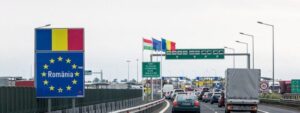
Starting October 1, 2026, a new electronic toll system called TollRo will go into effect in Romania for freight vehicles with a maximum authorized mass exceeding 3.5 metric tons, according to the National Company for Road Infrastructure Administration of Romania (CNAIR).
The new system will apply to vehicles designed for the transport of goods with a maximum authorized mass exceeding 3.5 metric tons. For the purposes of TollRo, mixed-use vehicles will be treated as commercial vehicles.
Unlike the traditional vignette system, the fee for heavy freight vehicles will be based on actual use of the road infrastructure.
The fee amount will depend, in particular, on the distance traveled, the vehicle category, and its environmental characteristics. Thus, for international carriers that regularly transit through Romania, the cost of using the road network will increasingly depend on the specific route and the truck’s characteristics.
To administer the payments, Romania has established the STRR electronic toll collection system, which will operate through the national SETRE platform.
The introduction of TollRo is also significant for Ukrainian international trucking companies, as Romania is one of the key road routes for Ukrainian exports and imports to the EU, as well as for the transit of goods to Central and Southeastern Europe.
Accordingly, transportation companies using trucks weighing more than 3.5 metric tons in Romania must take the new road toll model into account when calculating transportation costs after October 1.
CNAIR clarifies that August 31, 2026, was the deadline for establishing the necessary STRR and TollRo infrastructure, while the actual collection of the new tolls, in accordance with the law, begins on October 1.
The next step will be the integration of the Romanian system with similar systems in other European Union countries. According to Romanian law, interoperability via the European Electronic Toll Service (EETS) is scheduled to begin on January 15, 2027.
The transition to distance-based tolling is in line with a general trend in the EU, where road tolls for heavy commercial vehicles are increasingly linked to actual infrastructure use and the environmental performance of vehicles.
Official information about the system’s launch and its operating rules is available on the SETRE National Electronic Registry platform.
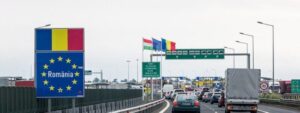
In Romania, a new electronic road toll system called TollRo will take effect on October 1, 2026, for freight vehicles with a maximum allowable weight exceeding 3.5 metric tons, according to the National Company for Road Infrastructure Administration of Romania (CNAIR).
The new system will apply to vehicles intended for freight transport with a maximum authorized mass exceeding 3.5 metric tons. For the purposes of TollRo, mixed-use vehicles will be treated as freight vehicles.
Unlike the traditional vignette system, the fee for heavy freight transport will be based on actual use of the road infrastructure.
The amount of the fee will depend, in particular, on the distance traveled, the vehicle category, and its environmental characteristics. Thus, for international carriers that regularly transit through Romania, the cost of using the road network will increasingly depend on the specific route and the truck’s specifications.
To administer the charges, Romania has established the STRR electronic toll collection system, which will operate via the national SETRE platform.
The introduction of TollRo is also significant for Ukrainian international trucking companies, as Romania is one of the key road routes for Ukrainian exports and imports to the EU, as well as for the transit of goods to Central and Southeastern Europe.
Accordingly, transportation companies using trucks weighing more than 3.5 metric tons in Romania must take the new road toll model into account when calculating transportation costs after October 1.
CNAIR clarifies that August 31, 2026, was the deadline for establishing the necessary STRR and TollRo infrastructure, while the actual collection of the new tolls, in accordance with the law, begins on October 1.
The next step will be the integration of the Romanian system with similar systems in other European Union countries. According to Romanian law, interoperability via the European Electronic Toll Service (EETS) is scheduled to become operational on January 15, 2027.
The transition to distance-based tolling is in line with a general trend in the EU, where road tolls for heavy commercial vehicles are increasingly linked to actual infrastructure use and the environmental performance of vehicles.
Official information about the system’s launch and its operating rules is available on the SETRE National Electronic Registry platform.
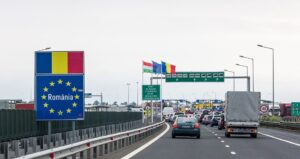
In Romania, a new payment system for using national roads will take effect on October 1, 2026: the cost of the vignette for passenger cars will depend on the vehicle’s environmental standard, while a per-kilometer TollRo system will be implemented for trucks weighing more than 3.5 metric tons.
Romania’s National Road Infrastructure Management Company (CNAIR) has confirmed that the new vignette and TollRo rates will take effect on October 1, 2026. The new model is based on the principle that vehicles that pollute the environment more or use the road infrastructure more intensively pay more.
Three rate categories are being introduced for passenger cars and minibuses with up to nine seats. Electric vehicles and Euro VI-compliant cars will pay 254 lei per year, Euro IV–V vehicles will pay 292 lei, and Euro III and older vehicles will pay 330 lei. A one-day vignette will cost 22, 26, and 29 lei, respectively. For a 10-day period, the fee will be 30, 35, or 39 lei; for 30 days, 48, 55, or 62 lei; and for 60 days, 76, 87, or 99 lei, depending on the vehicle’s emissions class.
As a result, for owners of new vehicles, the annual fee will remain virtually unchanged and will even decrease slightly compared to the current rate, while for older vehicles, it will increase significantly. Specifically, owners of vehicles meeting the Euro III standard or lower will pay approximately 25% more for an annual vignette than under the current system.
Previously purchased vignettes for passenger cars will remain valid until their expiration dates.
For commercial vehicles with a maximum permitted weight exceeding 3.5 metric tons, the TollRo system will be introduced on October 1. Unlike the traditional vignette, the fee will be calculated based on the actual distance traveled by the truck, its technical specifications, and its emission level.
CNAIR confirms that the new system will apply specifically to trucks weighing over 3.5 metric tons.
At the same time, Romania is abolishing a number of individual tolls for crossing bridges over the Danube. Starting October 1, tolls will no longer be collected at the Fetești-Cernavodă bridge complex—one of the main road routes leading to Romania’s Black Sea coast—as well as on the Giurgiu-Vadu Oi bridge.
The toll on the Giurgiu-Ruse bridge when traveling from Romania to Bulgaria is also being eliminated. However, the toll in the opposite direction—from Ruse to Giurgiu—is collected by the Bulgarian side and remains in effect. The toll for crossing the Calafat-Vidin bridge will also remain in effect.
CNAIR reported that drivers who have purchased toll passes in advance for the bridges where tolls are being abolished will be able to request a refund for unused trips.
The new system is part of a broader reform of road tolls in Romania. Starting January 15, 2027, Romania’s electronic toll collection system is set to become compatible with the European Electronic Toll Service (EETS), which will allow for its integration with similar systems in other EU countries.



