

U.S. President Donald Trump again stated that Canada could eventually become the 51st U.S. state, linking this to trade relations between the two countries.
He made this statement on October 14 during a campaign rally in Bullhead City, Arizona.
“Eventually, they’ll become the 51st state, because that’s the only way it works. We don’t need them, but they need us. And why should we lose $80 billion, $90 billion, $100 billion a year to support a country that isn’t part of us?” Trump said.
Prior to this, the U.S. president accused Canada of pursuing a harsh tariff policy and stated that Canadian automakers are moving production to the U.S. to avoid American tariffs. After mentioning the possibility of making Canada the 51st state, Trump also drew a parallel with Greenland.
However, the $80–100 billion figure he cited does not correspond to official data on the trade balance between the two countries. According to the Office of the U.S. Trade Representative, in 2025, the U.S. trade deficit in goods with Canada stood at $48.3 billion. At the same time, the U.S. had a trade surplus in services with Canada of $27.7 billion. Total trade in goods and services between the two countries was estimated at $872.3 billion.
Trump repeatedly returned to the idea of making Canada a U.S. state after his return to the White House. In May 2025, during a meeting in Washington, Canadian Prime Minister Mark Carney stated outright that the country was “not for sale” and would never be sold. In response, Trump said at the time, “Never say never.”
The U.S. remains Canada’s main trading partner. According to the USTR, more than three-quarters of Canadian merchandise exports go to the U.S. market, while nearly half of Canada’s imports come from the U.S. The economies of the two countries are particularly closely linked in the automotive industry, the energy sector, and cross-border supply chains.

According to Interfax-Ukraine, U.S. President Donald Trump accused Ukrainian President Volodymyr Zelenskyy of being unwilling to end the war with Russia.
“Zelenskyy could have resolved this war many, many times. He chose not to. … Zelenskyy wants to create problems for the world. He wants to create problems for our farmers by striking Russian oil refineries,” Trump told reporters.
“I suggest that Ukraine get a new leader who is capable of making deals. For some reason, Zelenskyy never makes deals,” Trump said.
“We told Zelenskyy, ‘Do whatever you want, but don’t target diesel fuel.’ And what does he do? He goes and targets diesel fuel. He can do whatever he wants, but he can’t do that,” the U.S. president added.
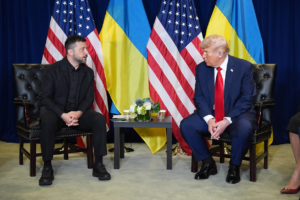
U.S. President Donald Trump said that he hopes an agreement between Ukrainian President Volodymyr Zelenskyy and Kremlin leader Vladimir Putin will be reached before the onset of the harsh winter.
“But you know what I want from Zelenskyy? I want him to make a deal. I want him to reach an agreement with Putin, and I want Putin to reach an agreement with him,” Trump said while speaking with journalists.
Asked by a journalist about Patriot missiles, Trump noted that he had spoken with Zelenskyy a lot, but did not give a specific answer to the question.
“I have spoken with him a lot; the process is moving forward, Putin is acting too, and one day — I hope in the not-too-distant future, perhaps even before the onset of the harsh winter — they will reach an agreement,” Trump emphasized.
As reported, Ukrainian President Volodymyr Zelenskyy earlier emphasized that during a meeting in New York on the sidelines of the UN General Assembly, U.S. President Donald Trump said that Ukraine would receive licenses to manufacture Patriot missiles.
“President Trump, during his last meeting with me, emphasized that ‘yes, I have made a final decision — Ukraine will receive licenses to manufacture Patriot missiles,’” the president said at the time.
Patriot, PATRIOT MISSILES, PEACE TALKS, PUTIN, TRUMP, UKRAINE, UN General Assembly, UNITED STATES, ZELENSKYY
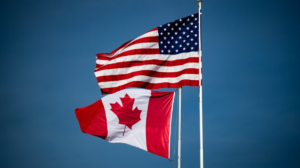
On August 27, U.S. President Donald Trump signed an executive order renaming Lake Ontario “Lake America.”
However, it is important to note that this does not constitute an international renaming of the lake. Lake Ontario is located on the border between the U.S. and Canada, and Trump’s executive order applies only to federal agencies and official U.S. geographic names. Canada is under no obligation to recognize the new name and continues to use “Lake Ontario.”
According to Executive Order No. 14420, the U.S. Secretary of the Interior, together with the U.S. Board on Geographic Names, must add the name “Lake America” to the federal Geographic Names Information System within 30 days. After that, the new name must be used in documents, maps, and communications by U.S. federal agencies.
Trump explained this decision by citing the lake’s economic and historical significance to the United States. The text of the executive order highlights the lake’s role in American trade, shipping, and military history, as well as Washington’s investments in protecting the Great Lakes ecosystem.
The decision was made against the backdrop of a new escalation in trade relations between the U.S. and Canada. Negotiations between the two countries on a trade agreement were suspended on August 21 after Canadian Prime Minister Mark Carney stated that the terms proposed by Washington did not serve the country’s interests. Canada subsequently announced that it was preparing corresponding trade measures.
The Canadian side did not recognize the renaming. Carney stated that in Canada, the body of water would continue to be called Lake Ontario. The name “Ontario” itself comes from the language of Indigenous peoples and was in use long before the modern United States and Canada came into existence.
While signing the executive order, Trump also floated the idea of further geographical renaming.
“We have a bay, and now we have a lake. We need an ocean,” the U.S. president said, adding that Washington could theoretically consider a new name for the Atlantic or Pacific Ocean—or both. So far, there are no executive orders or official procedures regarding the renaming of oceans.
This decision continues the trend of geographical renaming during Trump’s second presidential term. In January 2025, he ordered U.S. federal agencies to use the name “Gulf of America” instead of “Gulf of Mexico” and restored the name “Mount McKinley” to Denali in Alaska.
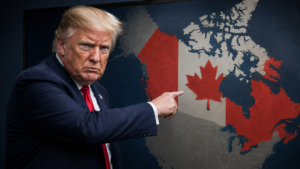
U.S. President Donald Trump has sharply stepped up pressure on Canada amid an escalating trade conflict between the two countries, calling Canadian leaders “clowns” and warning of significantly harsher economic consequences if Ottawa does not change its position.
Trump published the statement on Truth Social on August 24, 2026, following a new exchange of accusations with Canadian Prime Minister Mark Carney and Ontario Premier Doug Ford.
“America has carried Canada on its back for decades, but that will no longer happen,” the U.S. president wrote. At the end of his message, he called for the Canadian leadership to be made to “fall in line,” otherwise the consequences for the country would be “much worse.”
Trump spoke particularly harshly about Doug Ford, who had previously threatened to use electricity and critical mineral supplies to the United States as a retaliatory measure against U.S. tariffs.
The U.S. president also said that Canada was economically dependent on the United States and noted that a significant share of the electricity, oil and gas received by the country was transported through U.S. territory.
Official statistics, however, show a more complex picture. The two countries’ energy systems are indeed extremely closely interconnected, but Canada remains a major net exporter of energy resources to the United States.
According to the Canada Energy Regulator, in 2025 Canada exported CAD157.5 billion worth of oil, petroleum products, natural gas and gas condensate to the United States, while importing only CAD34.4 billion worth of similar products from the United States.
About 90.8% of Canadian hydrocarbon exports were sent specifically to the United States. In particular, Canada exported 4.3 million barrels of oil per day, of which about 3.9 million barrels went to the U.S. market.
In the opposite direction, Canada imported about 0.5 million barrels of oil per day, with approximately 76% of these supplies coming from the United States. Canada is also a major net exporter of natural gas: in 2025, it supplied about 8.6 billion cubic feet of gas per day, almost entirely to the United States, while simultaneously importing 2.5 billion cubic feet per day, predominantly from the United States.
The two countries’ electricity systems are also integrated. In 2025, Canada exported 32.7 TWh of electricity to the United States and imported 22.1 TWh. At the same time, all of Canada’s international electricity trade is conducted with the United States.
Thus, Trump’s statements have some basis in terms of the Canadian economy’s high dependence on U.S. transportation and energy infrastructure. At the same time, however, Canada is one of the most important suppliers of energy resources to the United States itself. In 2025, it accounted for 63.4% of U.S. crude oil imports, almost 100% of natural gas imports and 81.3% of electricity imported by the United States.
Trump’s statements followed the collapse of U.S.-Canadian trade negotiations.
The United States has already imposed 50% tariffs on approximately $20 billion worth of Canadian goods, while on August 24 Trump additionally threatened to raise tariffs on all cars, trucks and automotive components imported from Canada to 50% beginning January 1, 2027.
Washington had previously proposed reducing duties on Canadian passenger cars and light trucks from 25% to 15% and on steel and aluminum from 50% to 25% as part of an agreement. The negotiations collapsed, however, because of several disagreements.
Canada is preparing retaliatory measures. Ottawa announced that it would impose retaliatory tariffs on U.S. goods beginning September 8, while provincial authorities have not ruled out using energy and critical minerals as additional instruments of pressure.
Ontario Premier Doug Ford said that, in the event of further escalation, “everything is on the table,” including restrictions on supplies of electricity and strategic raw materials. According to him, electricity from Ontario supplies about 1.5 million homes and businesses in the United States.
Canadian Prime Minister Mark Carney, in turn, said that Ottawa was prepared to return to negotiations only if Canada was treated as a sovereign partner rather than as a territory dependent on the United States.
Trade relations between the two countries remain among the largest in the world. In 2025, trade in goods and services between the United States and Canada amounted to approximately $872.3 billion, with about three-quarters of Canadian merchandise exports going to the U.S. market.
Another claim made in Trump’s message is not supported by official statistics. The U.S. president said that unemployment in Canada had reached 10%, while the latest data from Statistics Canada showed that it stood at 6.4% in July 2026 — its lowest level in two years.
U.S. President Donald Trump stated that the agreement on rare earth resources concluded with Ukraine provides the United States with access to Ukraine’s mineral resources and may prove more beneficial than the amount of U.S. aid provided.
“We’ve signed an agreement on rare earth elements… We have a signed contract. As for rare earth resources, we can go in there at any time. We can take practically whatever we want. It was a pretty good deal,” Trump said in an interview with Voice of Real America.
According to the U.S. president, Ukraine is “very rich” in rare earth resources, and the value of the agreement, in his view, could significantly exceed the amount of U.S. aid.
He suggested that the cost of access to these resources could exceed $300 billion, but the contract is still profitable and Washington will “get its money back.”
An analysis of rare earth elements is available on the YouTube channel of the Experts Club think tank – https://youtu.be/UHeBfpywpQc?si=CWejQ_1mj5Si5DwD



